
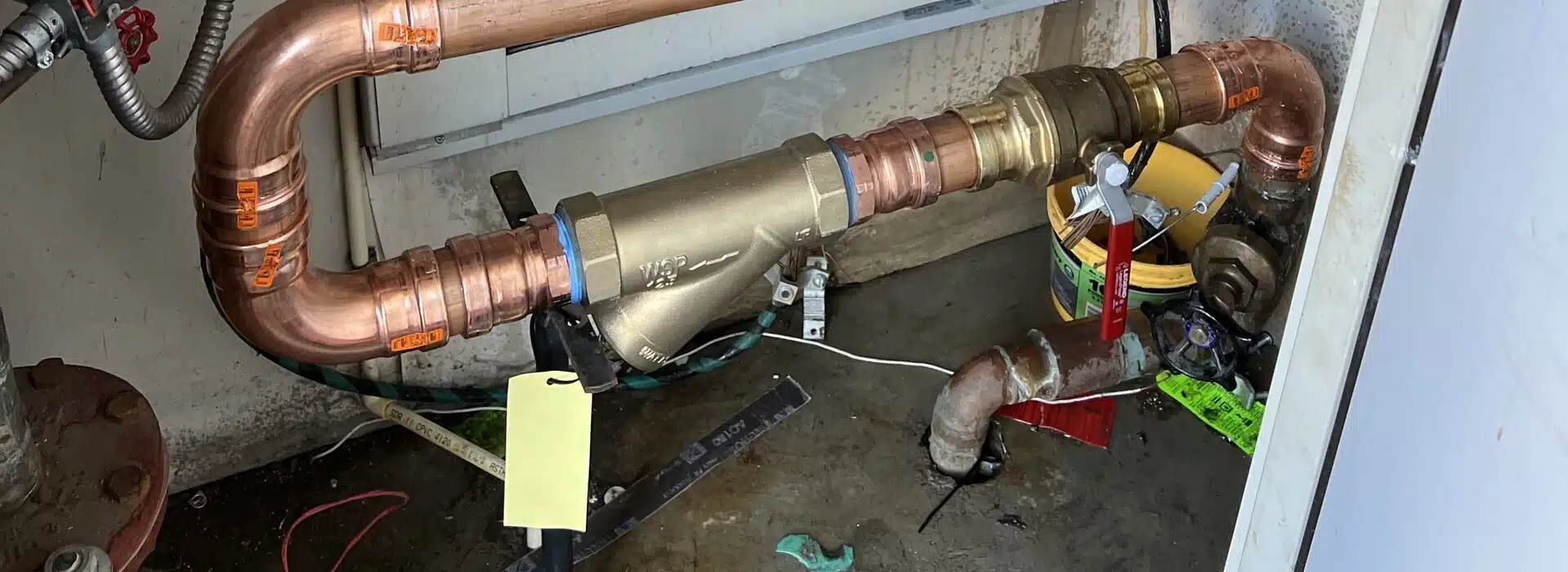
Backflow prevention services in Broomfield, CO are essential for maintaining clean drinking water by preventing contaminated water from reversing into the public supply. Proper installation and regular testing of backflow devices help protect against health hazards and comply with local regulations.
- Backflow devices act as barriers to keep drinking water safe from contamination. They need to be properly installed and regularly tested to function effectively.
- Broomfield's unique elevation and climate create specific pressure dynamics that can affect backflow prevention systems.
- Our certified technicians provide thorough inspections, testing, and documentation to ensure compliance with local health regulations.
Backflow prevention refers to the use of devices that protect a home's plumbing system from contamination by ensuring that water flows in one direction only. These devices prevent polluted water from reversing into the clean water supply, thereby safeguarding public health and maintaining the quality of drinking water.
Backflow Prevention Services in Broomfield, CO
That glass of water from your kitchen tap should contain only clean, treated municipal water – nothing else. Backflow prevention devices serve as the critical barrier between your home's plumbing system and the public water supply, stopping contaminated water from flowing backward into drinking water lines. When these devices fail or aren't installed properly, the consequences range from unpleasant tastes and odors to serious health hazards from sewage, chemicals, or other contaminants entering your water supply.
Backflow occurs when pressure changes in your plumbing system cause water to reverse direction. This can happen during water main breaks, firefighting operations, or even when you're watering your lawn with a garden hose submerged in standing water. Broomfield's semi-arid climate, aging infrastructure in certain neighborhoods, and elevation changes across the city create specific pressure dynamics that make professional backflow prevention assessment particularly valuable.
- Protection of your family's drinking water from cross-contamination
- Compliance with Colorado Department of Public Health and Environment regulations
- Prevention of costly water damage and health emergencies
- Annual testing documentation for municipal requirements and property records
Professional diagnosis matters because backflow prevention involves understanding both mechanical device function and the hydraulic conditions specific to your property. Broomfield's water system operates under varying pressures depending on your location relative to water storage facilities, and the city's mix of residential, commercial, and light industrial zones creates diverse contamination risk profiles that require expert evaluation.
Common Backflow Issues in Broomfield, CO
Broomfield sits at approximately 5,400 feet elevation with terrain that slopes from the foothills toward the eastern plains. This topography creates natural pressure variations throughout the municipal water system. Homes in higher elevation areas near the Flatirons Vista or along the western portions of the city often experience different baseline pressures than properties closer to Highway 287 or the Interlocken business district.
The city's housing stock spans several decades – from established neighborhoods built in the 1960s and 1970s to newer developments constructed after Broomfield became a consolidated city-county in 2001. Older homes may have outdated or missing backflow prevention devices, while newer construction typically includes modern reduced pressure zone assemblies but requires regular testing to maintain compliance. Irrigation systems installed across different eras present particular challenges, as connection standards have evolved significantly.
Local Factors Affecting Backflow Risk
- Elevation variations – Pressure differentials between Broomfield's higher western neighborhoods and lower eastern areas can stress backflow devices and create siphonage conditions
- Freeze-thaw cycles – Colorado's dramatic temperature swings between day and night, especially in spring and fall, cause expansion and contraction that damages valve seals and check mechanisms
- Irrigation system prevalence – Broomfield's landscaping requirements and semi-arid climate mean most homes have underground sprinkler systems – a primary backflow risk point
- Water main work – Ongoing infrastructure improvements throughout the city create temporary pressure drops that test existing backflow prevention
- Mixed-use development – Commercial and residential zones in close proximity increase cross-connection risks
- Hard water mineral buildup – Calcium and magnesium deposits from Front Range water sources can impair valve function over time
Warning signs that your backflow prevention may need attention include discolored water after irrigation system use, unusual tastes or odors from taps, visible corrosion on outdoor backflow assemblies, and failed annual tests. Seasonal considerations matter too – devices should be inspected before spring irrigation startup and properly winterized before the first hard freeze, typically arriving in late October or early November in Broomfield.
How Cardom Plumbing & Heating Addresses Backflow Prevention
Our approach to backflow prevention combines systematic inspection with practical solutions tailored to Broomfield properties. Every service begins with understanding your specific plumbing configuration and potential contamination sources.
Our Backflow Service Process
- Initial property assessment – We survey your plumbing system to identify all cross-connection points, including irrigation systems, boiler connections, swimming pool fills, and any chemical injection equipment
- Device inspection and testing – Using calibrated differential pressure gauges, we test existing backflow preventers according to Colorado certification standards, checking relief valve operation, check valve tightness, and overall assembly function
- Documentation and reporting – Test results are recorded on approved forms and submitted to the appropriate water authority, with copies provided for your records
- Repair or replacement recommendations – If devices fail testing, we explain what's wrong, discuss repair versus replacement options, and provide clear information about each approach
- Installation when needed – New backflow preventers are installed according to manufacturer specifications and local code requirements, with proper clearances for future testing access
- System verification – After any repair or installation, we retest to confirm proper function before completing the service
Methods and Techniques
- Differential pressure testing using annually calibrated gauge assemblies
- Visual inspection for corrosion, freeze damage, and physical deterioration
- Check valve seat examination and cleaning when appropriate
- Relief valve discharge testing and adjustment
- Winterization services including proper drainage and insulation
- Spring startup procedures with full operational testing
Communication remains straightforward throughout the process. We explain what we find in plain language, show you the device and any issues we identify, and discuss options before proceeding with any work beyond the initial test. You'll receive documentation suitable for municipal records, insurance purposes, or property transactions.
Why Choose Cardom Plumbing & Heating
Backflow prevention testing requires specific certification beyond standard plumbing licensure. Our technicians hold Colorado-certified backflow assembly tester credentials, maintained through continuing education and annual gauge calibration verification. This specialized training means we understand not just how to test devices, but why they function as they do and how local conditions affect their performance.
Working throughout Broomfield and surrounding Front Range communities gives us direct familiarity with the area's plumbing infrastructure. We know which neighborhoods have older galvanized supply lines that affect pressure readings. We understand the specific requirements of Broomfield's water utility and can navigate the documentation and compliance process efficiently.
- Certified testing credentials – State-approved backflow assembly testers with current certifications
- Calibrated equipment – Test gauges verified annually by certified calibration facilities
- Local expertise – Direct experience with Broomfield's water system, housing types, and municipal requirements
- Complete service range – Testing, repair, replacement, and new installation capabilities
- Clear documentation – Proper paperwork for regulatory compliance and your records
- Scheduling flexibility – Appointments available to accommodate your timeline, including seasonal testing windows
We stand behind our work with follow-up support if questions arise after service. If a device we install or repair fails a subsequent test within the warranty period, we address the issue promptly. Our goal is functional, compliant backflow prevention that protects your water supply and satisfies regulatory requirements without unnecessary complications.
Housing Characteristics & Backflow Prevention Considerations
Broomfield's housing landscape reflects the city's evolution from a small agricultural community to a thriving suburban center. Understanding these housing patterns helps identify backflow prevention needs specific to different property types throughout the city.
Housing Era and Plumbing Implications
- Pre-1980 homes – Properties in Original Broomfield and surrounding established neighborhoods often lack dedicated backflow protection on irrigation systems, which were frequently added after initial construction without proper cross-connection controls
- 1980s-1990s construction – Homes in developments like Broadlands and parts of Interlocken often have pressure vacuum breakers on irrigation – functional but requiring annual testing and more susceptible to freeze damage than newer designs
- 2000s and newer builds – Modern subdivisions typically feature reduced pressure zone assemblies installed at irrigation tie-ins, offering superior protection but requiring professional testing and maintenance
- Townhomes and condominiums – Multi-family properties present unique challenges with shared water services and HOA-managed irrigation systems requiring coordinated testing schedules
Basement configurations also affect backflow considerations. Broomfield homes commonly feature finished basements with additional bathrooms, laundry facilities, or wet bars. These below-grade plumbing fixtures require proper venting and may need individual backflow protection depending on their configuration relative to the main sewer line.
Property-Specific Risk Factors
Homes with boiler heating systems – common in some Broomfield neighborhoods – need backflow prevention between the potable water supply and the closed-loop heating system. Swimming pools, hot tubs, and decorative water features create additional cross-connection points. Even garden hose connections technically require protection, though hose bibb vacuum breakers provide this function on newer construction.
- Irrigation system age and original installation standards
- Presence of auxiliary water-using equipment (pools, boilers, water softeners)
- Basement bathroom and utility sink configurations
- Proximity to commercial or industrial properties
- Well water supplementation on some larger properties
Environmental Conditions & Backflow Prevention Implications
Broomfield's Front Range location creates specific environmental conditions that directly impact backflow prevention device selection, installation, and maintenance requirements. Understanding these factors helps property owners make informed decisions about protecting their water supply.
Water Quality Characteristics
Broomfield receives water from multiple sources, including the Colorado-Big Thompson Project and local surface water supplies. The municipal treatment process produces water that meets all federal and state standards but contains mineral content typical of Front Range supplies. This moderately hard water – generally ranging from 100 to 200 parts per million hardness – contributes to gradual mineral accumulation inside backflow prevention devices.
- Calcium deposits can impair check valve seating over time
- Mineral buildup may affect relief valve operation
- Regular testing helps identify developing problems before device failure
- Periodic cleaning during maintenance extends device lifespan
Climate Impacts on Backflow Devices
Colorado's climate presents significant challenges for outdoor backflow assemblies. Winter temperatures in Broomfield regularly drop below freezing, with occasional extreme cold snaps pushing well below zero. Conversely, summer temperatures can exceed 95°F, and intense UV exposure at elevation accelerates degradation of rubber seals and plastic components.
- Freeze damage – Water trapped in backflow assemblies can freeze and crack bronze bodies or damage internal components; proper winterization prevents costly replacements
- Thermal cycling – Daily temperature swings of 30-40 degrees stress seals and gaskets, particularly during spring and fall transition seasons
- UV degradation – Higher altitude means more intense solar radiation, which breaks down rubber components faster than at lower elevations
- Hail exposure – Broomfield experiences periodic severe hail events that can damage exposed backflow assemblies
Soil and Drainage Considerations
Broomfield's soils range from clay-heavy compositions in some areas to sandier profiles in others. Expansive clay soils – common throughout the Front Range – create ground movement that can stress underground piping and affect backflow device connections. Properties with poor drainage may experience standing water around outdoor assemblies, accelerating corrosion and creating freeze risks.
Proper installation accounts for these conditions through appropriate support, drainage provisions, and protection from ground movement. Testing protocols include inspection of the installation environment, not just the device itself.
Broomfield Water System Infrastructure & Cross-Connection Control
Broomfield operates its own municipal water system serving approximately 70,000 residents through a network of treatment facilities, storage tanks, and distribution mains. The city's cross-connection control program – administered through the Public Works department – requires annual testing of backflow prevention assemblies on commercial properties and residential irrigation systems connected to the municipal supply.
Municipal Water System Data
- Water sources – Primarily surface water from the Colorado-Big Thompson Project supplemented by local supplies
- Treatment capacity – The city's water treatment plant processes millions of gallons daily to meet demand
- Distribution system – Hundreds of miles of water mains ranging from recently installed to several decades old
- Storage facilities – Multiple elevated and ground-level tanks positioned throughout the city to maintain pressure
- System pressure – Varies by location and elevation, typically ranging from 40 to 80 PSI at residential connections
The city's cross-connection control program requires that backflow prevention assemblies be tested annually by certified testers. Test reports must be submitted to the city within specified timeframes, and devices that fail testing require repair or replacement followed by successful retest. Properties with untested or non-compliant devices may face water service restrictions.
How Infrastructure Affects Backflow Prevention Needs
Broomfield's ongoing growth means continuous infrastructure expansion and maintenance. Water main repairs, new development connections, and system upgrades can create temporary pressure fluctuations that test backflow prevention devices throughout the distribution system. Properties near active construction or infrastructure projects may experience more frequent pressure variations.
- Main breaks and repairs cause sudden pressure drops that can trigger backflow events
- Fire hydrant use during emergencies or testing affects local system pressure
- New development tie-ins may temporarily impact neighboring properties
- Seasonal demand variations – higher summer irrigation use – affect system-wide pressure
Working with a certified tester familiar with Broomfield's system helps ensure your backflow prevention meets both regulatory requirements and practical protection needs. Cardom Plumbing & Heating maintains current knowledge of local requirements and submits test documentation directly to the appropriate municipal offices, simplifying compliance for property owners.


