
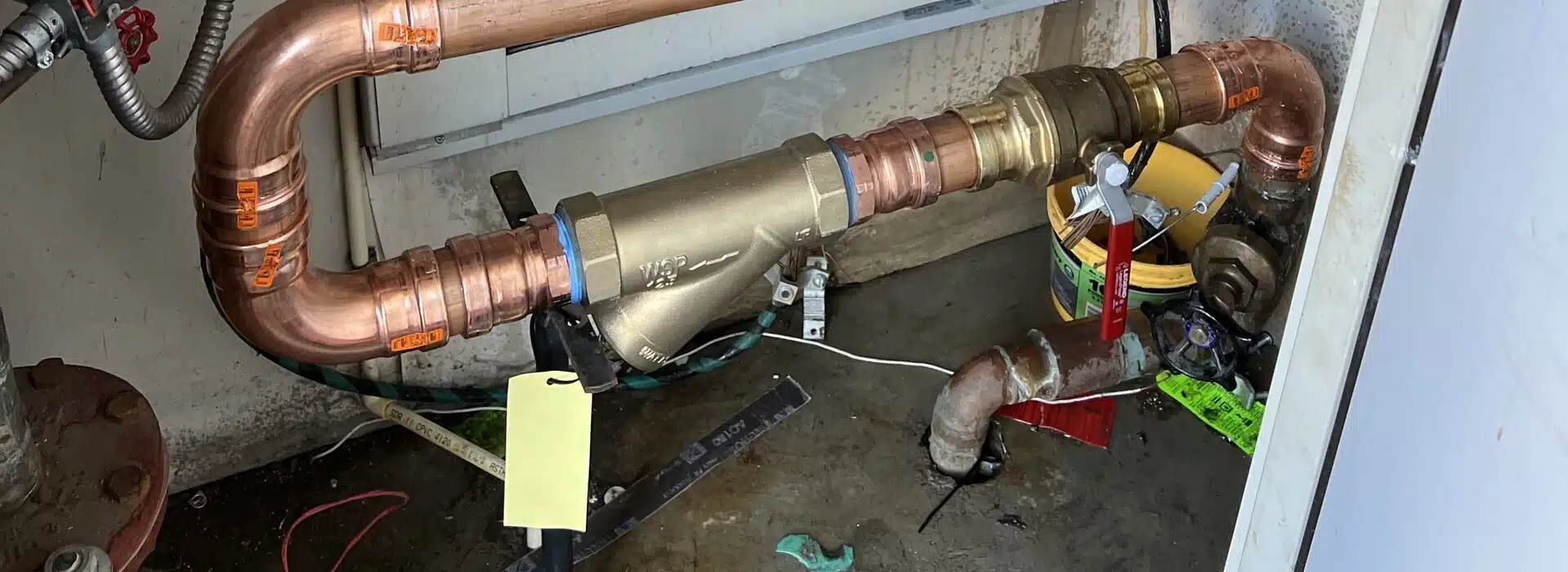
Backflow prevention is essential for protecting Boulder residents' drinking water from contamination due to pressure changes in plumbing systems. The company offers specialized services to install, test, and maintain devices that prevent non-potable water from mixing with clean water.
- They provide thorough assessments to identify potential cross-connections in plumbing systems. Their certified technicians ensure proper installation and compliance with local regulations. The company offers same-day responses for emergency situations and proactive testing reminders for annual certifications.
- Backflow Prevention Services in Boulder, CO That morning cup of coffee tastes different when you consider what could be flowing backward through your pipes.
- Backflow prevention protects your drinking water from contamination – a concern that Boulder residents take seriously given our community’s commitment to clean water and environmental stewardship.
Backflow prevention is a method used to protect drinking water from contamination by preventing the reverse flow of water in plumbing systems. This is particularly important in areas like Boulder, where changes in water pressure can allow contaminated water from sources such as irrigation systems or pools to enter the potable water supply.
Backflow Prevention Services in Boulder, CO
That morning cup of coffee tastes different when you consider what could be flowing backward through your pipes. Backflow prevention protects your drinking water from contamination – a concern that Boulder residents take seriously given our community's commitment to clean water and environmental stewardship. When pressure changes occur in your plumbing system, contaminated water from irrigation systems, pools, or industrial processes can reverse direction and enter your potable water supply.
Backflow prevention involves installing, testing, and maintaining specialized devices that act as one-way gates in your plumbing system. These assemblies – including pressure vacuum breakers, double check valves, and reduced pressure zone devices – prevent non-potable water from mixing with your clean water supply. Boulder's unique combination of elevation changes, seasonal pressure fluctuations, and diverse water usage patterns makes professional backflow assessment particularly valuable.
Key Benefits of Professional Backflow Prevention
- Protection of your family's drinking water from chemical and biological contaminants
- Compliance with Boulder's municipal water regulations and annual testing requirements
- Prevention of costly cross-connection incidents that can affect entire neighborhoods
- Peace of mind knowing your irrigation, fire suppression, and domestic systems remain safely separated
Boulder's mountain water supply, aging infrastructure in certain neighborhoods, and dramatic elevation changes across the city create specific backflow risks that require local expertise to address properly.
Common Backflow Issues in Boulder, CO
Cardom Plumbing & Heating provides Backflow Prevention services in all neighborhoods of Boulder including Arapahoe Ridge, Dakota Ridge, East Aurora, Frazier Meadows, Goss-Grove, Holiday, Keewaydin, Martin Acres, Meadow Glen, Park East, Promontory North, Table Mesa, The Hill, The Promontory, Washington Village, and Wonderland Hills.
Boulder's geography creates a unique pressure landscape for residential and commercial plumbing systems. Properties at higher elevations near Chautauqua Park experience different water pressure than those in the Gunbarrel area, and these variations intensify during peak usage periods. When municipal pressure drops – whether from firefighting activities, water main breaks, or high summer irrigation demand – the conditions for backflow events multiply.
The city's housing stock ranges from historic homes near Pearl Street built in the early 1900s to modern developments in the Wonderland Hills area. Older properties often lack adequate backflow protection, while some newer installations may have devices that haven't been tested or maintained in years. Boulder's hard water – measuring between 100-150 parts per million of calcium carbonate – accelerates wear on backflow preventer components, causing seals and springs to degrade faster than in soft water regions.
Local Factors Affecting Backflow Risk
- Elevation variations of over 1,000 feet across the city creating inconsistent pressure zones
- Seasonal irrigation system activation in spring causing sudden pressure demands
- Historic homes with cross-connections that predate modern plumbing codes
- Hard water mineral deposits compromising valve seats and check mechanisms
- Freeze-thaw cycles damaging above-ground backflow assemblies left unprotected
- High water table areas near Boulder Creek increasing groundwater intrusion risks
Watch for these warning signs that suggest backflow problems: discolored water after irrigation system use, unusual tastes or odors from faucets, visible leaking from backflow devices, and failed annual certification tests. Rubber gaskets in backflow preventers typically last three to five years in Boulder's conditions – shorter than manufacturer estimates based on milder climates.
How Cardom Plumbing & Heating Addresses Your Backflow Prevention Needs
Backflow prevention requires methodical assessment and precise installation. Our approach begins with understanding your property's specific risks and ends with documented protection that satisfies both safety requirements and municipal regulations.
Our Backflow Prevention Process
- Initial System Assessment – We survey your property to identify all potential cross-connections, including irrigation systems, boiler feeds, swimming pools, and any auxiliary water sources
- Pressure Testing and Analysis – Using calibrated gauges, we measure your system's baseline pressure and identify vulnerability points where backflow could occur
- Device Selection and Sizing – Based on the hazard level and flow requirements, we recommend the appropriate backflow preventer type for each application
- Professional Installation – Our certified technicians install devices according to manufacturer specifications and Boulder's plumbing code requirements
- Comprehensive Testing – We perform differential pressure testing on all installed assemblies to verify proper operation
- Documentation and Certification – You receive complete test reports suitable for submission to the City of Boulder's cross-connection control program
Methods and Techniques We Employ
- Differential pressure testing using ASSE-certified test equipment
- Video inspection for identifying hidden cross-connections in older systems
- Thermal imaging to detect moisture around buried or concealed assemblies
- Flow rate calculations to prevent pressure loss at fixtures
- Winterization services for above-ground devices exposed to freezing temperatures
Throughout the process, we maintain clear communication about what we find, what we recommend, and why. You'll understand exactly how your backflow prevention system protects your water supply before we complete any work.
Why Choose Cardom Plumbing & Heating
Backflow prevention certification requires specific training and testing credentials that not every plumber holds. Our technicians maintain current certification through the American Society of Sanitary Engineering and carry the credentials required by Colorado's cross-connection control regulations. We've worked with Boulder's water utility on compliance issues and understand the specific documentation requirements for annual testing submissions.
Local knowledge matters when assessing backflow risks. We know which Boulder neighborhoods have galvanized supply lines that create pressure restrictions. We understand how the city's pressure zones shift during peak irrigation season. We've seen how properties near the foothills experience different challenges than those in the flatlands toward Longmont. This familiarity translates into faster diagnostics and more accurate recommendations.
What Sets Us Apart
- Certified backflow assembly testers on staff – not subcontracted
- Same-day response available for emergency backflow situations
- Direct submission of test reports to Boulder's cross-connection control program
- Proactive testing reminders before your annual certification deadline
- Detailed photo documentation of all installed devices and test results
- Warranty coverage on parts and labor for new installations
We answer calls from a Boulder office, not a distant call center. When you need backflow testing before a real estate closing or emergency repair after a device failure, you're talking to someone who can dispatch a technician within hours – not days.
Housing Characteristics & Backflow Prevention Considerations
Boulder's housing stock presents a diverse range of backflow prevention challenges. The city's older neighborhoods – including Mapleton Hill, Whittier, and parts of University Hill – contain homes built between 1890 and 1940 that predate modern cross-connection control requirements. These properties often have plumbing configurations that were acceptable under earlier codes but now represent potential contamination pathways.
Housing Age and Backflow Implications
- Pre-1950 homes – May have direct connections between irrigation and domestic water without any backflow protection; often require complete cross-connection surveys
- 1950s-1970s construction – Typically have basic atmospheric vacuum breakers that may not provide adequate protection for current hazard assessments
- 1980s-2000s builds – Usually have code-compliant devices at installation, but many are now past their service life and require replacement
- New construction – Built with current code requirements but still need annual testing and maintenance
Boulder's mix of single-family homes, duplexes, and multi-unit buildings each present different backflow scenarios. Properties with shared irrigation systems, common boiler loops, or commercial spaces on lower floors require more complex protection schemes. The city's strict building codes for new construction don't eliminate backflow risks – they simply establish a baseline that requires ongoing verification.
Common Housing-Related Backflow Scenarios
- Basement-level boiler systems in older homes creating thermal expansion backflow risks
- Detached accessory dwelling units with separate irrigation sharing main water service
- Historic properties with original lead service lines requiring careful device selection
- Homes with solar thermal systems needing protection between glycol loops and potable water
Ranch-style homes common in Table Mesa and Martin Acres often have slab-on-grade construction where irrigation connections run beneath concrete – making visual inspection impossible without specialized equipment. Split-level homes prevalent in the Baseline Road corridor frequently have multiple pressure zones within a single structure, complicating backflow device placement.
Environmental Conditions & Backflow Prevention Implications
Boulder's water originates primarily from Barker Reservoir and the Boulder Creek watershed, supplemented by water from the Colorado-Big Thompson Project. The city's water treatment facility produces water that meets all federal standards, but the journey from treatment plant to your tap involves miles of distribution piping where pressure fluctuations and cross-connection risks exist. Understanding these environmental factors helps explain why backflow prevention remains essential even with high-quality source water.
Water Quality Characteristics
- Hardness levels averaging 120 mg/L – harder than many Front Range communities
- pH typically between 7.2 and 7.8 – slightly alkaline, affecting rubber components in backflow devices
- Chlorine residual maintained throughout distribution system – can degrade elastomers over time
- Seasonal turbidity variations during spring runoff affecting system pressure
Boulder's semi-arid climate with over 300 days of sunshine creates high irrigation demand from April through October. During peak watering periods, municipal system pressure can drop significantly – especially in higher elevation zones. These pressure drops create the exact conditions under which backflow events occur. When your neighbor's sprinkler system draws heavily while a fire hydrant opens down the street, the resulting pressure differential can pull contaminated water backward through unprotected connections.
Climate Impacts on Backflow Systems
- Winter temperatures regularly dropping below 0°F, freezing unprotected above-ground assemblies
- Rapid temperature swings causing thermal expansion stress on device housings
- UV exposure at 5,430 feet elevation degrading plastic components faster than at sea level
- Low humidity accelerating drying and cracking of rubber seals and gaskets
- Soil freeze depth reaching 36 inches – deeper than many buried device installations
The Boulder Creek floodplain and high water table areas in east Boulder create additional backflow concerns. Properties in flood-prone zones face groundwater intrusion risks that can overwhelm standard backflow protection during major precipitation events. Soil composition – ranging from clay-heavy areas near the foothills to sandy deposits in the eastern portions – affects how underground devices drain and whether standing water accelerates corrosion.
Boulder's Cross-Connection Control Program and Testing Requirements
The City of Boulder operates one of Colorado's more rigorous cross-connection control programs, administered through the Utilities Division. Property owners with backflow prevention assemblies must submit annual test reports from certified testers – a requirement that applies to residential irrigation systems, commercial properties, and any connection deemed a potential contamination source. Understanding these local regulations helps property owners maintain compliance and avoid service interruptions.
Boulder's Backflow Regulations at a Glance
- Annual testing required for all testable backflow prevention assemblies
- Test reports must be submitted within 10 days of testing
- Failed tests require repair and retest before the compliance deadline
- New installations require inspection and testing before activation
- Non-compliance can result in water service termination after notice period
Boulder issues approximately 8,000 backflow testing notices annually, reflecting the widespread presence of irrigation systems, fire suppression connections, and commercial water uses throughout the city. The utility maintains a database of all registered assemblies and tracks testing compliance. Properties changing ownership trigger new compliance verification – making backflow certification a common element in real estate transactions.
Local Compliance Statistics and Trends
- Approximately 15-20% of tested assemblies fail initial annual inspection
- Most common failure points: relief valve fouling, first check valve debris, and seal deterioration
- Average device lifespan in Boulder conditions: 8-12 years before replacement needed
- Testing deadline extensions available with documented repair scheduling
The city's cross-connection control staff works with property owners to resolve compliance issues, but they enforce deadlines consistently. Properties with lapsed certifications receive escalating notices, and continued non-compliance results in water service shutoff – a significant consequence that affects both residential comfort and commercial operations. Staying ahead of testing deadlines through proactive maintenance prevents these disruptions and ensures your backflow protection actually functions when pressure events occur.


