Tankless water heaters in Wheat Ridge, CO provide an efficient solution for hot water needs, eliminating the energy waste associated with traditional tank systems. These units heat water on demand, ensuring a continuous supply while requiring professional installation to address local infrastructure challenges.
Tankless systems heat water only when needed, saving energy and space. They have an extended lifespan of over 20 years with proper maintenance. Local conditions, such as hard water and high altitude, can affect performance, requiring specialized service.
Tankless Water Heater Services in Wheat Ridge, CO That moment when hot water runs out mid-shower feels like a small betrayal – especially during a Wheat Ridge winter when temperatures plunge well below freezing.
Traditional tank water heaters work hard in this climate, cycling constantly to maintain standby temperatures while you’re at work or asleep.
What is a tankless water heater?
A tankless water heater is a system that heats water on demand, providing hot water only when needed. Unlike traditional tank heaters that maintain a constant supply of hot water, tankless models operate efficiently by heating water instantly as it flows through the unit, making them ideal for colder climates like Wheat Ridge.
Tankless Water Heater Services in Wheat Ridge, CO
That moment when hot water runs out mid-shower feels like a small betrayal – especially during a Wheat Ridge winter when temperatures plunge well below freezing. Traditional tank water heaters work hard in this climate, cycling constantly to maintain standby temperatures while you're at work or asleep. Tankless water heaters eliminate that inefficiency entirely by heating water only when you turn on the faucet.
A tankless system – also called an on-demand water heater – uses high-powered burners or electric elements to rapidly heat water as it flows through the unit. There's no storage tank keeping 40 or 50 gallons perpetually hot. When you open a hot water tap, cold water travels through the unit, sensors detect the flow, and the heating mechanism activates instantly. The result is a continuous supply of hot water without the energy waste of maintaining tank temperature around the clock.
Professional installation and diagnosis matter significantly with tankless systems. These units require proper gas line sizing, adequate venting, and electrical connections that meet specific manufacturer requirements. In Wheat Ridge homes – many built between the 1950s and 1980s – existing infrastructure often needs modifications to support tankless technology safely and effectively.
Endless hot water supply without waiting for tank recovery
Energy savings of 24-34% compared to conventional tank heaters for most households
Compact wall-mounted design that frees up valuable floor space
Extended lifespan of 20+ years with proper maintenance – nearly double that of tank units
Common Tankless Water Heater Issues in Wheat Ridge, CO
Cardom Plumbing & Heating provides Tankless Water Heater services in all neighborhoods of Wheat Ridge including Applewood Lane, Kipling Villiage, Outlook Clear Creek, The Ridge, and Vista Village.
Wheat Ridge sits at approximately 5,400 feet elevation along Clear Creek, creating specific challenges for water heating systems. The combination of hard water from Denver Water's treatment facilities, cold incoming water temperatures during winter months, and the unique demands of high-altitude combustion all affect tankless water heater performance in ways that differ from lower-elevation communities.
Mineral buildup presents the most persistent issue for Wheat Ridge tankless units. Denver Water reports moderate hardness levels averaging 4-8 grains per gallon, which deposits calcium and magite scale inside heat exchangers over time. This scaling reduces heating efficiency, triggers error codes, and eventually restricts water flow. Homes with older galvanized pipes compound the problem by introducing additional sediment into the system.
Local Factors Affecting Tankless Performance
Extreme temperature rise requirements – Incoming water in January can drop to 37-42°F, requiring the unit to raise temperature by 70+ degrees to reach comfortable levels
High-altitude combustion adjustments – Gas-fired units need proper altitude compensation; many installers overlook this calibration
Aging gas infrastructure – Many Wheat Ridge homes have undersized gas lines that cannot deliver adequate BTU flow for tankless demand
Freeze potential in exterior installations – Units installed in garages or exterior walls face freeze damage risk during sub-zero cold snaps
Electrical capacity limitations – Older homes often lack the 200-amp service that whole-house electric tankless units require
Venting compatibility issues – Existing B-vent from old tank heaters cannot be reused for high-efficiency condensing tankless units
Seasonal timing affects tankless performance dramatically. Summer months mask undersized units because incoming water arrives warmer and requires less heating. Winter exposes capacity problems when the same unit struggles to deliver adequate hot water for simultaneous shower and dishwasher use. Many Wheat Ridge homeowners first notice issues during November through February when demand peaks and incoming water temperatures bottom out.
Warning Signs Your Tankless System Needs Attention
Fluctuating water temperature during showers – the "cold water sandwich" effect
Error codes appearing on the unit's display panel
Reduced water pressure at hot water fixtures only
Unusual noises during operation – clicking, humming, or rumbling
Visible mineral deposits around connections or relief valve
Unit cycling on and off repeatedly during low-flow situations
How Cardom Plumbing & Heating Approaches Tankless Water Heater Services
Every tankless water heater service call begins with understanding your household's specific hot water demands and your home's existing infrastructure. We don't assume one solution fits every Wheat Ridge home.
Our Diagnostic and Installation Process
Initial assessment and load calculation – We evaluate how many fixtures might run simultaneously, measure incoming water temperature, and calculate the BTU or kilowatt capacity your household actually needs
Infrastructure evaluation – Our technicians inspect gas line sizing, electrical panel capacity, venting options, and water line conditions to identify any modifications required
System recommendation – Based on findings, we present options that match your usage patterns – whether that's a whole-house gas unit, point-of-use electric heaters, or a hybrid approach
Professional installation – Licensed technicians handle all gas connections, venting, electrical work, and water line modifications according to manufacturer specifications and local codes
System commissioning – We calibrate altitude settings, adjust temperature parameters, verify gas pressure, and test multiple fixture scenarios before considering the job complete
Customer walkthrough – You'll understand how to operate your new system, recognize normal operation sounds, and know when to schedule maintenance
Maintenance and Repair Techniques
Tankless units require annual maintenance to perform reliably in Wheat Ridge's hard water conditions. Our service visits address the components most affected by local water quality and climate.
Descaling flush – We circulate food-grade vinegar solution through the heat exchanger to dissolve mineral buildup without harsh chemicals
Inlet filter cleaning – Sediment screens trap debris before it enters the unit; clogged filters restrict flow and trigger error codes
Burner inspection – Gas units accumulate dust and debris that affects combustion efficiency and flame pattern
Venting verification – We check for blockages, proper slope, and secure connections that prevent carbon monoxide issues
Pressure relief valve testing – This safety component must operate freely to protect against dangerous over-pressurization
Error code diagnosis – When units display fault codes, we trace the specific cause rather than simply resetting the system
Communication remains consistent throughout any service visit. We explain what we find, present options clearly, and obtain approval before proceeding with repairs or modifications. You'll receive documentation of work performed and recommendations for future maintenance scheduling.
Recent Work
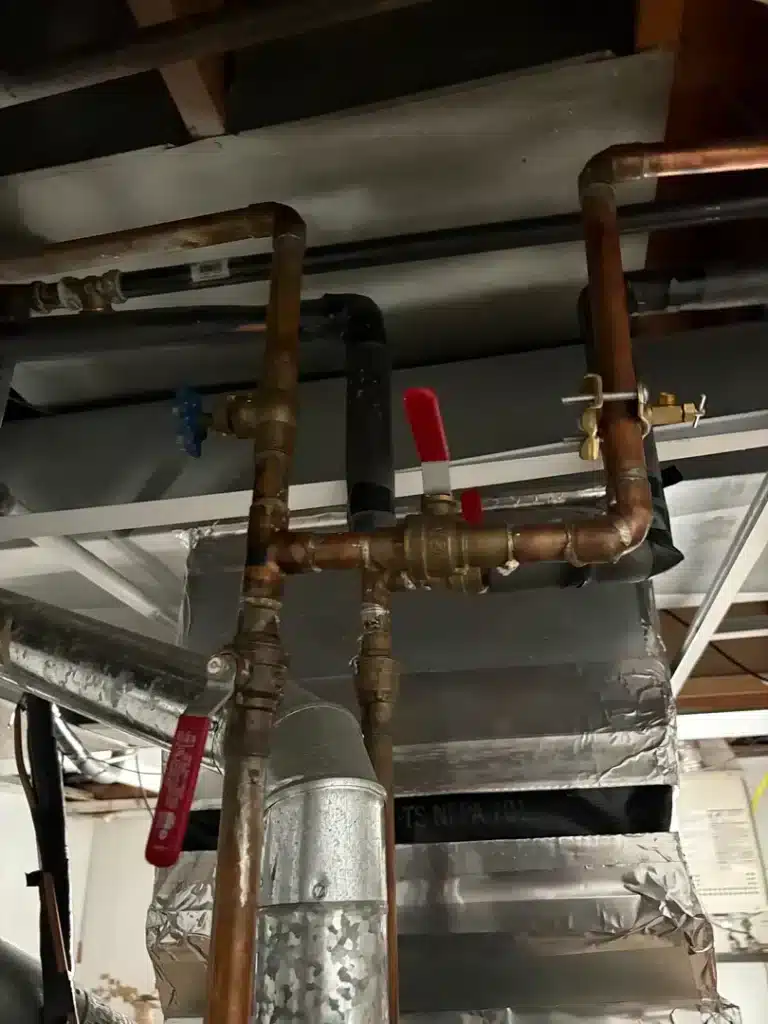
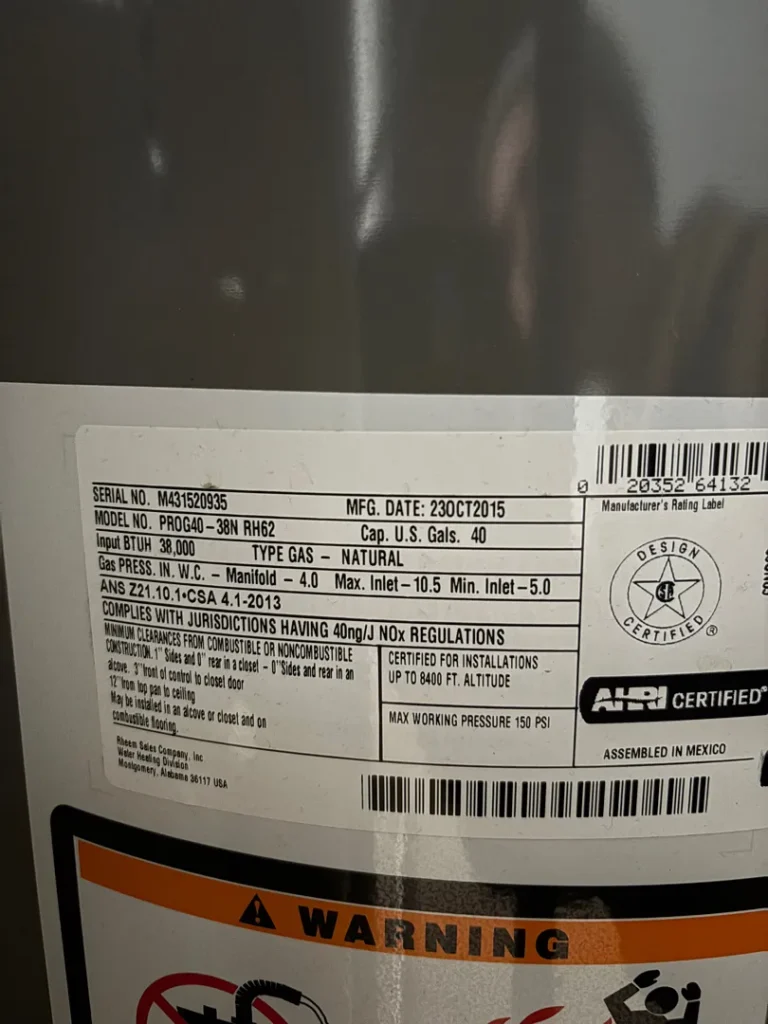
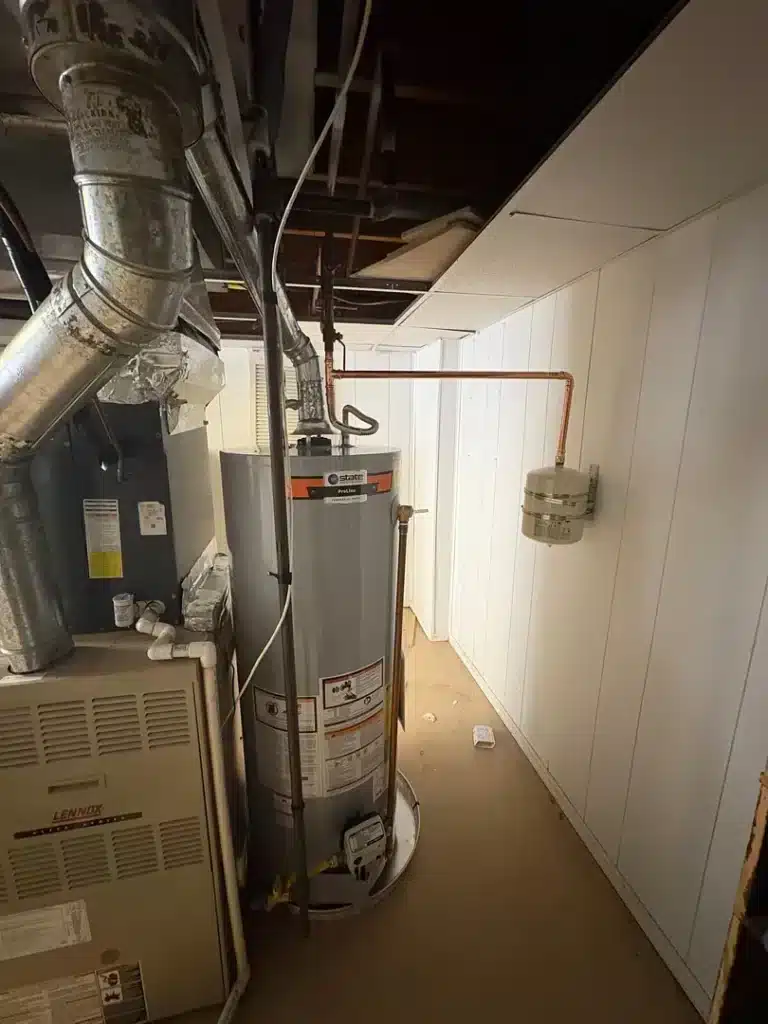
Water Heater is Not Working - Wheat Ridge
Problem:Water heater not working and needs to be replaced.
Found:12 years old water heater
Fixed:Replaced heater and corrected all the code problems. ( Expansion tank, water heater pan, Gas line.) Installed heater and tested it out. Turn on the valve and fix the water closet.
Outcome:Tested heater and it is working perfectly. Remove and dispose of old heater.
Why Choose Cardom Plumbing & Heating
Tankless water heater work requires more than general plumbing knowledge. These systems blend plumbing, gas fitting, electrical work, and manufacturer-specific programming into a single appliance. Cardom Plumbing & Heating maintains licensing across all relevant trades and holds certifications from major tankless manufacturers including Rinnai, Navien, and Noritz. That training means we install and service units according to factory specifications – protecting your warranty and your investment.
Our presence in the Wheat Ridge area gives us direct experience with the housing stock and infrastructure challenges specific to this community. We've worked in mid-century ranches with original gas lines, newer construction in Applewood, and everything between. That local knowledge translates into accurate assessments and realistic recommendations rather than generic advice that ignores your home's actual conditions.
What Sets Our Service Apart
Same-day response availability – Hot water emergencies don't wait for convenient scheduling; neither do we
Upfront pricing before work begins – No surprises when the job finishes
Workmanship backed by written guarantees – We stand behind our installations and repairs
Video inspection capability – When diagnosing complex issues, we can show you exactly what we find
Permit handling – We pull required permits and schedule inspections so installations meet Jefferson County code requirements
Follow-up verification – After installations, we check in to confirm your system performs as expected
We answer our phones with knowledgeable staff who can discuss your situation immediately – not automated systems that delay real help. When you describe symptoms or ask questions, you get useful information from people who understand tankless technology and Wheat Ridge conditions.
Housing Characteristics & Tankless Water Heater Considerations
Wheat Ridge developed primarily during the post-war suburban expansion, with significant building activity occurring between 1950 and 1980. This housing age creates specific considerations for tankless water heater installations that differ from newer construction or historic Denver neighborhoods.
Common Housing Types and Their Implications
1950s-1960s ranch homes – Typically feature 100-amp electrical panels, 1/2-inch gas lines to water heaters, and mechanical rooms in basements or utility closets with limited space for venting modifications
1970s split-levels and bi-levels – Often have water heaters in crawl spaces or garage areas where freeze protection becomes critical for tankless installations
1980s-1990s two-story homes – Generally offer better electrical capacity but may have long pipe runs that create hot water delivery delays tankless units can address
Recent infill construction – Newer homes typically accommodate tankless systems easily but may have been built with undersized tank heaters that struggle with modern fixture demands
Pipe materials vary considerably across Wheat Ridge's housing stock. Homes built before 1970 often contain galvanized steel supply lines that corrode internally and restrict flow. Properties from the 1970s and 1980s may have copper throughout or combinations of copper and early plastic piping. These material differences affect both tankless performance and the scope of work required during installation.
Infrastructure Upgrade Considerations
Many Wheat Ridge homes require infrastructure modifications before tankless installation can proceed safely. Gas-fired tankless units typically need 3/4-inch gas lines – sometimes larger – to deliver adequate BTU flow. Electric whole-house units often demand 150-200 amp service panels that older homes lack. We evaluate these factors during initial assessments to provide accurate project scopes.
Gas line upsizing from meter to unit location
Electrical panel upgrades or dedicated circuit installation
Environmental Conditions & Tankless Water Heater Implications
Wheat Ridge experiences the full range of Front Range climate conditions – from summer afternoons exceeding 95°F to winter nights dropping below zero. These temperature extremes directly impact tankless water heater sizing, installation location, and maintenance requirements in ways that moderate climates don't experience.
Water Quality Characteristics
Denver Water supplies most of Wheat Ridge through a treatment system that draws from mountain reservoirs including Dillon, Gross, and Ralston. The water arrives with moderate mineral content that accumulates inside tankless heat exchangers over time.
Hardness levels – Typically 4-8 grains per gallon, classified as moderately hard
pH range – Generally 7.0-8.5, slightly alkaline which can accelerate scale formation on heated surfaces
Chlorine residual – Present for disinfection but can affect rubber seals and gaskets in water heating equipment
Sediment potential – Seasonal variations in source water and aging distribution mains can introduce particulates
Annual descaling maintenance becomes non-negotiable in Wheat Ridge conditions. Without regular flushing, mineral deposits reduce heat transfer efficiency, trigger error codes, and eventually damage heat exchangers that cost hundreds of dollars to replace.
Climate Impacts on System Performance
The dramatic temperature swings in Wheat Ridge create unique demands on tankless systems. Winter incoming water temperatures can drop to the upper 30s, requiring units to produce 70+ degree temperature rises to deliver comfortable hot water. Summer temperatures moderate this demand significantly, which is why undersized units often perform adequately for months before winter exposes their limitations.
Freeze protection requirements – Units installed in garages, crawl spaces, or exterior walls need freeze protection features and may require supplemental heat during extended cold snaps
Altitude combustion effects – At 5,400 feet, gas-fired units receive approximately 17% less oxygen per cubic foot of air, requiring altitude-compensated gas valves and proper calibration
Soil conditions – Clay soils common in Wheat Ridge expand and contract seasonally, potentially stressing underground gas and water lines feeding tankless equipment
Storm drainage considerations – Condensate from high-efficiency units must drain properly; frozen discharge lines can damage equipment
Wheat Ridge Water Quality and Infrastructure Data
Denver Water's 2023 annual quality report confirms that Wheat Ridge receives treated surface water meeting all federal and state standards. However, the journey from treatment plant to your tankless water heater involves miles of distribution mains – some dating to the mid-20th century – that affect what actually arrives at your fixtures.
Distribution System Characteristics
Jefferson County and Denver Water maintain the distribution infrastructure serving Wheat Ridge. Portions of this system include cast iron and ductile iron mains installed during the community's primary development decades. While these materials remain structurally sound, they can contribute to water quality variations that affect tankless equipment.
Distribution main age – Many primary lines in established Wheat Ridge neighborhoods date to 1950s-1970s installation
Service line materials – Individual property connections vary; some older homes retain original copper or galvanized service lines
Pressure variations – System pressure typically ranges 40-80 PSI depending on elevation and distance from pressure zones
Seasonal quality fluctuations – Spring runoff and reservoir turnover can temporarily increase sediment and mineral content
How Local Water Conditions Affect Tankless Systems
The combination of moderate hardness and aging infrastructure means Wheat Ridge tankless water heaters face consistent mineral exposure that accumulates faster than in soft-water areas. Homes closer to major distribution mains typically experience more stable pressure and quality than those at the end of smaller branch lines.
We factor these local conditions into every tankless recommendation. Homes with particularly hard water or older plumbing may benefit from whole-house water treatment systems installed upstream of tankless units. Properties with pressure exceeding 80 PSI need pressure-reducing valves to protect tankless equipment from damage. These aren't upsells – they're practical considerations based on Wheat Ridge's actual infrastructure conditions that protect your investment and extend equipment lifespan.
A tankless water heater, also known as an on-demand water heater, heats water directly without the use of a storage tank. When you turn on a hot water tap, cold water travels through the unit, and high-powered burners or electric elements heat the water instantly, providing a continuous supply of hot water.
Tankless water heaters work by using sensors to detect water flow. When you turn on the faucet, the unit activates its heating mechanism, which can be either gas or electric, to heat the water as it passes through the system. This process eliminates the need for a storage tank and reduces energy waste.
In Wheat Ridge, where winters can be harsh, a tankless water heater provides endless hot water without the wait for a tank to refill. Additionally, these units are more energy-efficient, potentially saving you 24-34% on energy bills compared to traditional tank heaters.
Tankless water heaters offer several benefits, including a continuous supply of hot water, energy savings, and a compact design that frees up floor space. They also have a longer lifespan, lasting over 20 years with proper maintenance, which is nearly double that of conventional tank heaters.
Yes, tankless water heaters in Wheat Ridge can face specific challenges due to the area's elevation and water quality. Hard water can lead to mineral buildup inside the unit, affecting performance and efficiency. Regular maintenance is essential to prevent scaling and ensure optimal operation.
You can find tankless water heater services throughout Wheat Ridge, including neighborhoods like Applewood Lane, Kipling Village, and Vista Village. Local plumbing companies, such as Cardom Plumbing & Heating, offer installation, maintenance, and repair services tailored to the unique needs of the area.
The cost to install a tankless water heater in Wheat Ridge can vary based on factors like the unit's size, the complexity of the installation, and any necessary modifications to existing plumbing or electrical systems. On average, homeowners can expect to pay between $1,000 and $3,000 for installation.