In Boulder, CO, residents facing issues with traditional tank water heaters may benefit from upgrading to tankless systems, which provide on-demand hot water and improved energy efficiency. Cardom Plumbing & Heating offers specialized installation and maintenance services tailored to the unique challenges of Boulder’s high altitude and hard water.
Tankless water heaters eliminate standby energy losses, providing endless hot water and saving space in homes. They have a longer lifespan of over 20 years compared to traditional models.
Boulder’s specific conditions require expert installation to address issues like hard water scaling and gas line adjustments for altitude.
Cardom Plumbing & Heating combines thorough diagnostics with local expertise to ensure optimal performance and reliability of tankless systems.
What is a tankless water heater?
A tankless water heater, also known as an on-demand or instantaneous water heater, heats water directly as it flows through the unit. This system eliminates the standby energy losses found in traditional tank water heaters, providing a more efficient solution for consistent hot water supply without the need for a large storage tank.
Tankless Water Heater Services in Boulder, CO
That moment when hot water runs out mid-shower feels especially brutal during a Boulder winter morning. If you're dealing with inconsistent water temperatures, waiting several minutes for hot water to reach your faucet, or watching your utility bills climb despite conservation efforts, your traditional tank water heater may be signaling it's time for an upgrade. Tankless water heater systems – also called on-demand or instantaneous water heaters – heat water directly as it flows through the unit, eliminating the standby energy losses associated with keeping 40 to 80 gallons constantly heated.
Professional installation and service matter significantly with tankless systems because these units require precise gas line sizing, proper venting configurations, and electrical connections that match Boulder's building codes. The city's elevation of 5,430 feet affects combustion efficiency, and our mineral-rich water supply creates scaling challenges that can reduce unit lifespan without proper planning. A qualified plumber evaluates your home's specific demands – from simultaneous fixture usage to incoming water temperature – before recommending the right system.
Endless hot water supply without recovery time between uses
Space savings – wall-mounted units free up valuable floor space in Boulder's compact homes
Extended equipment lifespan of 20+ years compared to 10-12 years for traditional tanks
Reduced energy consumption – the U.S. Department of Energy estimates 24-34% greater efficiency for homes using less than 41 gallons daily
Common Tankless Water Heater Issues in Boulder, CO
Cardom Plumbing & Heating provides Tankless Water Heater services in all neighborhoods of Boulder including Arapahoe Ridge, Dakota Ridge, East Aurora, Frazier Meadows, Goss-Grove, Holiday, Keewaydin, Martin Acres, Meadow Glen, Park East, Promontory North, Table Mesa, The Hill, The Promontory, Washington Village, and Wonderland Hills.
Boulder's unique combination of high altitude, hard water, and extreme temperature swings creates specific challenges for tankless water heater operation. Understanding these local factors helps homeowners recognize when professional service becomes necessary and prevents small issues from escalating into system failures.
The Front Range's notorious temperature fluctuations – where mornings can start at 15°F and afternoons reach 55°F – force tankless units to work harder than in moderate climates. Incoming groundwater temperatures in winter often drop to 40°F or below, requiring significantly more energy to reach your desired output temperature. This thermal demand stresses components and can trigger error codes or cold water sandwiches – those uncomfortable bursts of cold water between hot water draws.
Local Factors Affecting Tankless Performance
Hard water mineral content: Boulder's water contains calcium and magnesium that accumulate on heat exchangers, reducing efficiency by up to 25% annually without descaling
High altitude combustion: Gas-fired units require altitude adjustment kits and proper air-fuel mixture calibration above 4,500 feet
Freeze risk: Exterior-mounted units or those in unheated spaces face freeze damage when temperatures drop below 20°F
Electrical supply fluctuations: Boulder's grid can experience voltage irregularities during storms, potentially damaging electronic control boards
Venting complications: Many older Boulder homes have venting systems designed for traditional water heaters that require modification for tankless units
Simultaneous demand overload: Running multiple fixtures during morning routines can exceed unit capacity, causing temperature drops
Warning Signs Requiring Professional Attention
Watch for these indicators that your tankless system needs service:
Error codes appearing on the digital display
Fluctuating water temperatures during single-fixture use
Unusual noises – clicking, rumbling, or high-pitched sounds
Visible scale buildup around connections or venting
Longer delays before hot water arrives at fixtures
Pilot light repeatedly extinguishing on gas units
Recent Work
No Hot Water in the Unit. - Boulder
Problem:No hot water to the residence
Found:Found an error code on the circuit board and it was labeled "PCB connection.
Fixed:Checked spade connections and found no issues. Turned off power to tankless and cycled the heater. Reset the error code and ran many cycles on heater and did not get any other errors.
Outcome:Heater is working perfectly at this time.
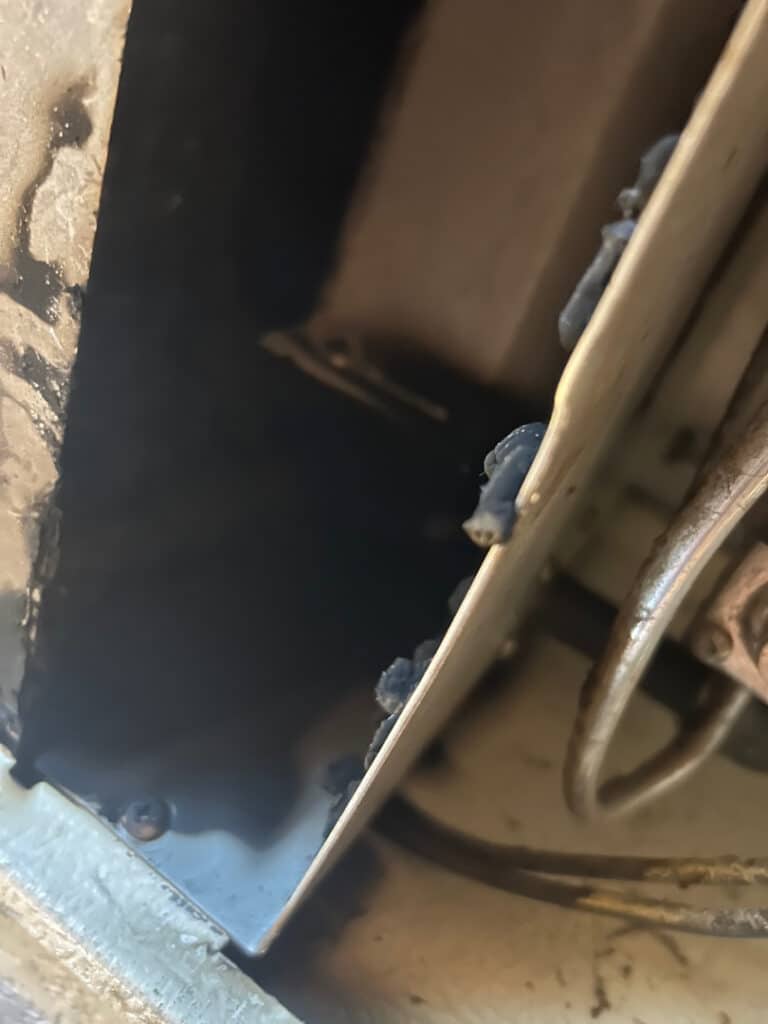
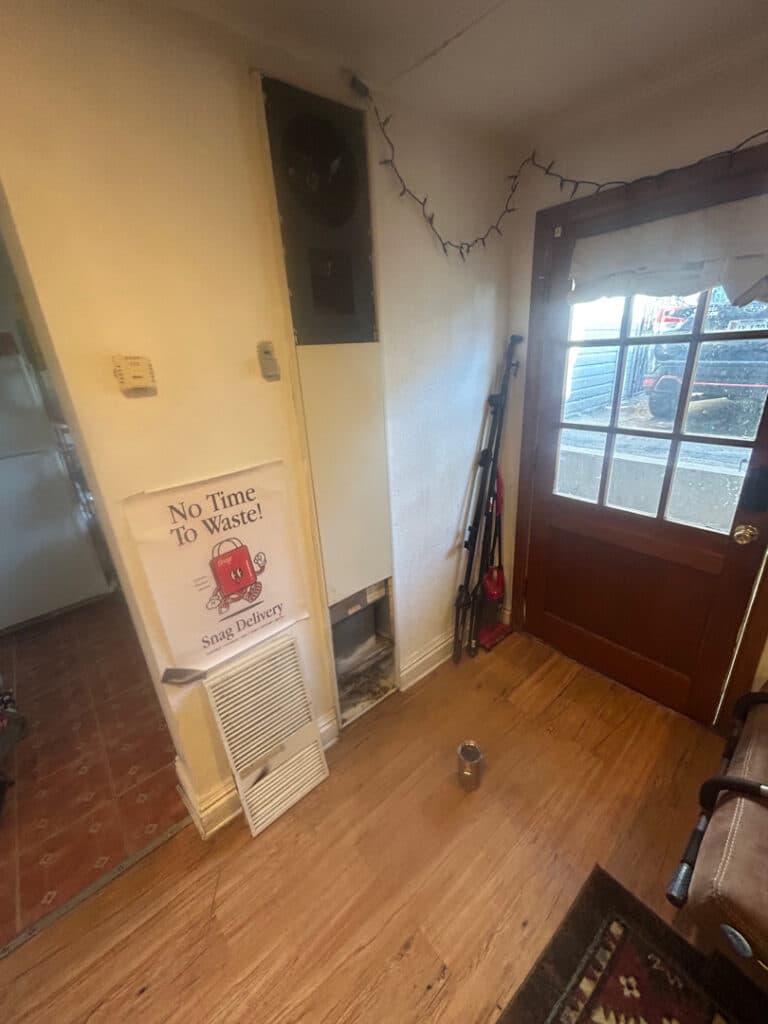
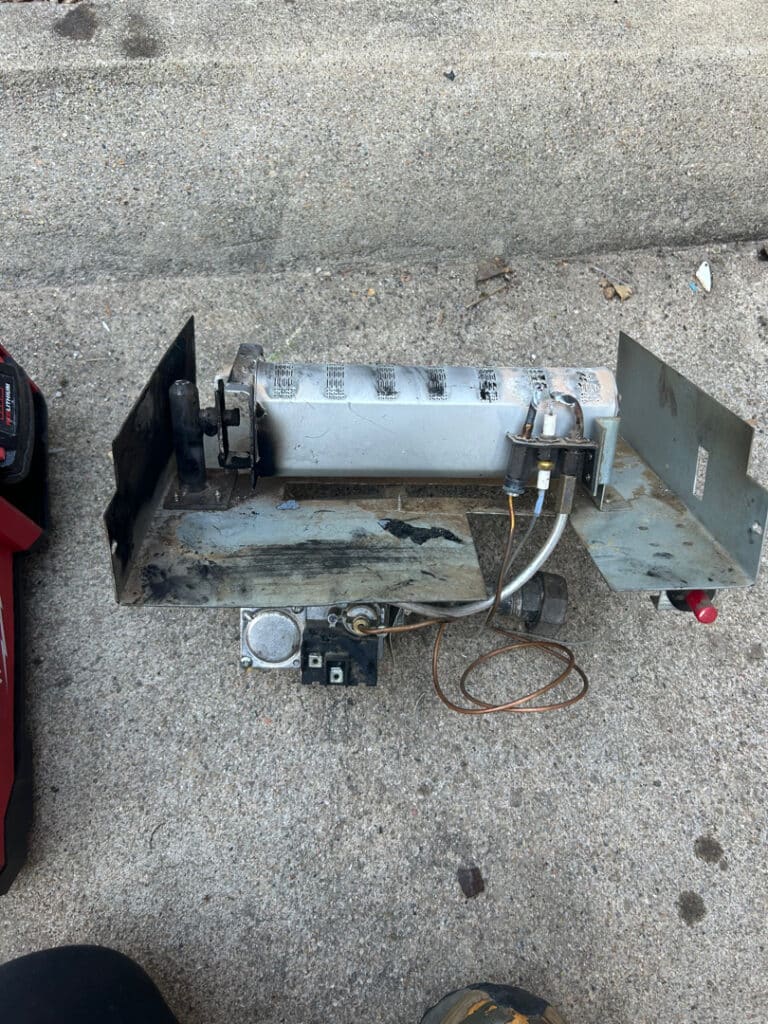
Space Heater Issue - Boulder
Problem:Flame was rolling out of burner assembly aggressively causing soot to make its way past cover
Found:Entire flue was soothed up very badly
Fixed:Reinstalled gcv with gas left isolated to unit and low voltage wires left disconnected
Outcome:We strongly recommended that the unit get replaced with one that has all the proper safeties.
How Cardom Plumbing & Heating Addresses Your Tankless Water Heater Needs
Our approach to tankless water heater service combines thorough diagnostics with installation practices specifically adapted for Boulder's conditions. Every service call follows a systematic process designed to identify root causes rather than just treating symptoms.
Our Service Process
Initial assessment: We evaluate your current hot water usage patterns, fixture count, and simultaneous demand requirements to understand your household's specific needs
System inspection: For existing units, we examine the heat exchanger, burner assembly, venting system, and electronic controls using diagnostic equipment that reads error code history
Water quality testing: We measure hardness levels and assess scaling accumulation to determine descaling frequency and whether a water softener or treatment system would extend equipment life
Gas line evaluation: Our technicians verify that gas supply lines provide adequate pressure and volume for the unit's BTU rating – undersized lines cause chronic performance issues
Repair or installation execution: We complete work according to manufacturer specifications and Boulder building codes, including altitude adjustments for gas combustion
Performance verification: Before leaving, we test hot water delivery at multiple fixtures, check temperature rise across various flow rates, and verify proper venting draft
Techniques and Methods We Employ
Vinegar or commercial descaling solutions circulated through the heat exchanger to remove mineral deposits
Combustion analysis testing to verify proper air-fuel ratios at Boulder's elevation
Flow rate measurement at each fixture to identify restrictions or undersized supply lines
Thermal imaging to detect heat loss in connections or identify component stress
Venting integrity testing including draft measurement and carbon monoxide detection
Throughout the service process, we maintain clear communication about what we're finding and what options exist. You'll understand the condition of your system and the reasoning behind our recommendations before any work proceeds.
Why Choose Cardom Plumbing & Heating
Tankless water heater installation and repair demands expertise that goes beyond general plumbing knowledge. Cardom Plumbing & Heating technicians hold manufacturer certifications for major tankless brands and complete ongoing training on the latest system technologies. Our team understands how Boulder's specific conditions – from water chemistry to altitude effects – impact equipment selection and installation requirements.
Local presence matters when your hot water fails. We've served Boulder and surrounding communities long enough to understand the plumbing quirks of different neighborhoods – from the older infrastructure near University Hill to the modern systems in newer developments. This familiarity allows us to anticipate common issues and arrive prepared with appropriate parts and solutions.
What Sets Us Apart
Altitude-specific expertise: We properly adjust gas units for high-elevation operation, preventing the efficiency losses and error codes that plague improperly installed systems
Responsive scheduling: When your hot water fails, we prioritize getting you back to normal operation – not next week, but as soon as possible
Transparent recommendations: We explain whether repair or replacement makes more financial sense based on your unit's age, condition, and repair history
Quality verification: Every installation includes performance testing under real-world conditions, not just a quick function check
Follow-up support: We provide maintenance guidance specific to Boulder's water quality and remain available for questions after service completion
Our diagnostic approach uses modern tools including combustion analyzers, flow meters, and manufacturer-specific diagnostic interfaces. This technology allows us to pinpoint issues accurately rather than relying on trial-and-error replacement of components.
Housing Characteristics & Tankless Water Heater Considerations
Boulder's housing stock presents a diverse range of installation scenarios for tankless water heaters. The city's architectural history spans from 1890s Victorian homes near downtown to contemporary construction in neighborhoods like Newlands and Dakota Ridge. Each era brings distinct plumbing infrastructure that affects tankless system compatibility and installation complexity.
Housing Age and Plumbing Infrastructure
Pre-1960 homes: Often feature undersized gas lines (typically 1/2-inch) that require upsizing to support tankless unit BTU demands – these homes may also have galvanized steel supply lines that restrict flow rates
1960s-1980s construction: Generally have adequate gas line sizing but may lack the electrical capacity for electronic ignition systems without panel upgrades
1990s-2000s homes: Usually accommodate tankless installation with minimal modification, though venting routes designed for tank heaters often need reconfiguration
New construction: Frequently pre-plumbed for tankless systems with appropriately sized gas lines and dedicated electrical circuits
Architectural Considerations
Boulder's commitment to preserving neighborhood character means many homes have limited options for exterior venting or equipment placement. Older homes with finished basements may require creative routing for condensate drains – high-efficiency condensing tankless units produce acidic condensate that needs proper drainage. The city's energy codes also influence equipment selection, with many homeowners opting for condensing units that achieve 95%+ efficiency ratings.
Homes in flood-prone areas near Boulder Creek require elevated installation to protect equipment from water damage. Properties with well water rather than municipal supply face additional water treatment requirements to prevent accelerated scaling and component damage.
Compact lot sizes in central Boulder often limit exterior installation options
Historic district regulations may restrict visible exterior venting
Multi-story homes benefit from recirculation systems to reduce wait times at upper-floor fixtures
Homes with radiant floor heating can integrate tankless units as combination systems for space and water heating
Environmental Conditions & Tankless Water Heater Implications
Boulder's environmental conditions directly impact tankless water heater performance, longevity, and maintenance requirements. Understanding these factors helps homeowners make informed decisions about equipment selection and service scheduling.
Water Quality Characteristics
Boulder's municipal water supply – sourced primarily from Barker Reservoir and Boulder Creek – registers as moderately hard at 4-7 grains per gallon. While not as severe as some Front Range communities, this mineral content still causes significant scaling in tankless heat exchangers over time. The city treats water with chloramine rather than chlorine, which is less aggressive on plumbing components but requires specific considerations for water heater anode rods and connections.
Annual descaling recommended for most Boulder homes – every 6 months for homes with particularly hard water
Scale accumulation reduces heat transfer efficiency and can trigger overheating protection shutoffs
Whole-house water softeners extend tankless unit lifespan significantly but require proper sizing to avoid flow restrictions
Point-of-use scale inhibitor systems offer a less expensive alternative for protecting the water heater specifically
Climate Impacts on System Operation
Boulder experiences approximately 155 days annually where temperatures drop below freezing. This freeze frequency creates ongoing risk for tankless systems, particularly those installed in garages, crawl spaces, or exterior locations. Most quality tankless units include freeze protection features, but these rely on electrical power – a significant vulnerability during winter storms that cause outages.
Winter incoming water temperature: Groundwater drops to 38-42°F, requiring units to produce a 70-80°F temperature rise – pushing many systems to their performance limits
Summer conditions: Warmer incoming water (55-65°F) allows units to operate more efficiently with lower energy consumption
Altitude effects: Reduced oxygen density at 5,430 feet requires gas unit derating and proper combustion air supply
Low humidity: Boulder's dry climate can affect electronic components and gaskets over time
Soil and Drainage Considerations
The clay-heavy soils common in many Boulder neighborhoods create drainage challenges for condensate lines from high-efficiency tankless units. Improper condensate disposal can lead to ice formation on walkways in winter or foundation damage from concentrated discharge. Professional installation includes proper condensate routing and neutralization when required by code.
Boulder Energy Usage and Utility Data
Boulder's commitment to sustainability makes energy efficiency a priority for many homeowners, and water heating represents a significant portion of residential energy consumption. According to the U.S. Energy Information Administration, water heating accounts for approximately 18% of home energy use – second only to space heating and cooling. For Boulder households, this translates to meaningful savings potential when upgrading from conventional tank systems to tankless technology.
Xcel Energy, Boulder's primary gas and electric utility, reports that residential natural gas rates have increased approximately 15-20% over the past five years. This trend makes the efficiency gains from tankless systems increasingly valuable. A conventional 50-gallon gas water heater operates at roughly 60-65% efficiency, while modern tankless units achieve 80-98% efficiency depending on whether they use condensing technology.
Local Energy Statistics
Average Boulder household uses 55-70 therms annually for water heating with a conventional tank system
Tankless conversion typically reduces water heating gas consumption by 25-35%
Boulder's EnergySmart program has provided rebates and incentives for high-efficiency water heater installations
Colorado offers sales tax exemptions for certain energy-efficient appliances
Xcel Energy has historically offered rebates for qualifying tankless installations – availability varies by program year
The city's Climate Commitment goals include reducing community-wide greenhouse gas emissions, and residential energy efficiency plays a role in meeting these targets. Tankless water heaters align with Boulder's sustainability values while providing practical benefits for homeowners. The combination of lower operating costs, reduced carbon footprint, and extended equipment lifespan makes tankless systems particularly appealing to Boulder's environmentally conscious residents. When properly sized and installed for local conditions, these systems deliver reliable performance while supporting both household budgets and community environmental goals.
A tankless water heater, also known as an on-demand or instantaneous water heater, heats water directly as it flows through the unit. This means you get hot water only when you need it, eliminating the standby energy losses associated with traditional tank heaters.
Tankless water heaters work by using powerful heating elements or burners that activate when you turn on a hot water tap. As cold water travels through the unit, it is heated instantly, providing a continuous supply of hot water without the need for a storage tank.
In Boulder, where winters can be harsh and water temperatures can drop significantly, a tankless water heater provides an endless supply of hot water and is more energy-efficient. This can lead to lower utility bills and a longer lifespan compared to traditional tank heaters.
Tankless water heaters offer several benefits, including endless hot water, space savings due to their compact size, and a longer lifespan of over 20 years. They also consume less energy, which can result in significant savings on your energy bills.
While tankless water heaters have many advantages, they can have higher upfront costs and may require modifications to your home's plumbing or electrical systems. Additionally, if multiple fixtures are used simultaneously, it may affect the water temperature.
Choosing the right tankless water heater involves evaluating your home's hot water needs, including the number of fixtures used at once and the incoming water temperature. Consulting with a qualified plumber can help you determine the best system for your specific requirements.
Regular maintenance for a tankless water heater includes descaling to prevent mineral buildup, checking the filters, and ensuring proper ventilation. It's advisable to have a professional inspect and service your unit annually to keep it running efficiently.