Morrison homeowners face unique challenges with their hot water supply, making tankless water heaters an efficient solution. These systems provide instant hot water without standby energy losses, tailored for the area's high-altitude conditions.
Tankless water heaters heat water on demand, eliminating energy waste from traditional tanks. They can last over 20 years, significantly longer than conventional units.
Proper installation is crucial in Morrison due to altitude and water quality, requiring expertise to avoid performance issues.
Regular maintenance, including descaling, is necessary to prevent mineral buildup that can damage the system and void warranties.
What is a tankless water heater?
A tankless water heater is a system that heats water on demand, providing a continuous supply of hot water without the energy losses associated with traditional tank heaters. This type of heater is particularly beneficial for homeowners in Morrison, CO, as it efficiently meets the unique demands of local water conditions.
Tankless Water Heater Services in Morrison, CO
That moment when hot water runs out mid-shower isn't just inconvenient – it's a sign your water heating system may be working harder than it should. Morrison homeowners face unique demands on their hot water supply, from the elevation-related efficiency challenges to the mineral-rich mountain water that flows through local pipes. A tankless water heater offers a fundamentally different approach to delivering hot water on demand, without the standby energy losses of traditional tank systems.
Tankless water heaters – also called on-demand or instantaneous water heaters – heat water directly as it flows through the unit rather than storing pre-heated water in a reservoir. When you turn on a hot water tap, cold water travels through a pipe into the unit where either a gas burner or electric element heats the water instantly. This technology eliminates the 20-40% energy loss that occurs when a conventional tank maintains water temperature around the clock.
Continuous hot water supply without waiting for tank recovery
Reduced energy consumption through elimination of standby heat loss
Space-saving wall-mounted installation frees up valuable floor area
Extended equipment lifespan of 20+ years compared to 10-15 years for tank units
Professional installation matters significantly in Morrison's mountain environment. Proper gas line sizing, venting configuration, and electrical capacity assessment require expertise specific to high-altitude conditions. The combination of lower atmospheric pressure, hard water characteristics, and temperature extremes means a tankless system must be correctly specified and installed to perform reliably year after year.
Common Tankless Water Heater Issues in Morrison, CO
Cardom Plumbing & Heating provides Tankless Water Heater services in all neighborhoods of Morrison including Indian Hills and Morrison.
Morrison sits at approximately 5,800 feet elevation along Bear Creek at the base of the foothills – a location that creates specific challenges for tankless water heater operation. The reduced oxygen levels at altitude affect gas combustion efficiency, requiring units rated for high-altitude performance and potentially modified gas orifices. Many homeowners discover their tankless system underperforms simply because it wasn't properly configured for mountain conditions during installation.
The water supply in Morrison carries mineral content typical of Front Range mountain communities. Calcium and magnesium deposits accumulate inside the heat exchanger over time, reducing efficiency and potentially causing system shutdowns. Without regular descaling – typically recommended annually in this area – mineral buildup can permanently damage internal components and void manufacturer warranties.
Local Factors Affecting Tankless Performance
High-altitude combustion challenges – Gas units require altitude adjustment kits and proper oxygen-to-fuel ratios to burn efficiently above 5,000 feet
Cold incoming water temperatures – Winter groundwater temperatures drop into the 30s and 40s, demanding higher BTU output to achieve desired hot water temperature
Hard water mineral content – Morrison's water carries dissolved minerals that accelerate scale formation inside heat exchangers
Electrical supply limitations – Many older Morrison properties have electrical panels that cannot support the amperage demands of electric tankless units
Propane dependency – Homes without natural gas service rely on propane, which requires different equipment specifications and tank maintenance considerations
Freeze protection requirements – Outdoor-mounted units and units in unheated spaces need freeze protection features and proper drainage capability
Seasonal timing affects tankless water heater performance dramatically in Morrison. During winter months, the temperature rise required – the difference between incoming cold water and desired output temperature – can exceed 70 degrees. This strains even properly sized units and may reduce flow rates. Conversely, summer brings its own challenges as monsoon season humidity affects venting and outdoor unit performance.
Warning Signs Your Tankless System Needs Attention
Fluctuating water temperatures during use – sometimes called the "cold water sandwich" effect
Reduced hot water flow rate compared to initial installation
Error codes appearing on the unit's digital display
Unusual sounds during operation – popping, clicking, or rumbling
Visible mineral deposits or discoloration around connections
Delayed hot water delivery despite unit activation
Every tankless water heater project begins with a thorough assessment of your home's specific conditions and hot water demands. We evaluate your current system, measure incoming water temperature, assess gas line capacity or electrical service, and discuss your household's usage patterns before recommending any equipment.
Our Tankless Water Heater Process
Initial consultation and site assessment – We examine your existing water heater setup, measure available gas pressure or electrical capacity, and identify any infrastructure modifications needed
Load calculation and equipment selection – Based on fixture count, simultaneous use patterns, and incoming water temperature, we determine the appropriate unit size and model for Morrison's altitude
Installation planning – We map out venting routes, gas line modifications, electrical requirements, and condensate drainage before beginning work
Professional installation – Our technicians complete all plumbing connections, gas or electrical work, venting, and mounting according to manufacturer specifications and local codes
System commissioning and testing – We verify proper operation across multiple fixtures, check for leaks, confirm combustion efficiency, and program unit settings for optimal performance
Homeowner orientation – We walk you through system operation, maintenance requirements, error code meanings, and warranty documentation
Techniques and Methods We Use
Combustion analysis testing to verify safe and efficient gas burner operation at altitude
Flow rate measurement at multiple fixtures to confirm adequate hot water delivery
Gas pressure testing before and after installation to confirm proper supply
Water quality assessment to establish appropriate descaling schedule
Thermal imaging to verify heat exchanger performance and identify potential issues
Communication throughout the project keeps you informed at every stage. We provide detailed estimates before beginning work, explain any unexpected findings during installation, and document all work completed for your records. Our technicians take time to answer questions and address concerns rather than rushing through the job.
Quality control procedures include pressure testing all connections, verifying proper venting operation, and running the system through multiple heating cycles before considering the installation complete. We don't leave until we've confirmed everything works as intended.
Why Choose Cardom Plumbing & Heating
Cardom Plumbing & Heating brings specific expertise in high-altitude tankless water heater installation that generic plumbing companies often lack. Our technicians hold certifications from major tankless manufacturers including Rinnai, Navien, and Noritz – training that covers the altitude adjustments and modifications required for reliable operation in mountain communities like Morrison. We maintain current licensing through Jefferson County and carry comprehensive insurance coverage for all work performed.
Local knowledge makes a measurable difference in tankless water heater performance. We understand Morrison's water characteristics, the typical electrical and gas infrastructure in area homes, and the specific challenges posed by the local climate. This familiarity allows us to anticipate issues before they become problems and recommend solutions proven effective in this community.
What Sets Us Apart
High-altitude specialization – We stock altitude adjustment kits and understand the combustion modifications required above 5,000 feet
Responsive service availability – We prioritize Morrison and surrounding foothill communities with prompt scheduling for both installations and repairs
Diagnostic technology – Our technicians use combustion analyzers, thermal cameras, and digital testing equipment to verify system performance
Transparent pricing – We provide detailed written estimates and explain all costs before beginning work
Follow-up commitment – We check in after installation to confirm satisfaction and address any questions that arise during initial use
Our approach emphasizes doing the job correctly rather than quickly. Tankless water heater installation involves multiple trades – plumbing, gas fitting, electrical, and venting – and cutting corners in any area compromises long-term performance. We take the time to complete every aspect properly, which means fewer callbacks and better reliability for years to come.
Housing Characteristics & Tankless Water Heater Considerations
Morrison's housing stock reflects the town's history as one of Colorado's oldest communities, with structures ranging from late 1800s stone buildings to contemporary mountain homes built in recent decades. This diversity creates varied tankless water heater installation scenarios. Older homes often feature smaller utility spaces, outdated gas lines, and electrical panels with limited capacity – all factors that influence equipment selection and installation complexity.
Common Housing Types and Their Implications
Historic downtown structures – Often have limited utility space, requiring compact tankless units and creative venting solutions through thick masonry walls
Mid-century ranch homes – Typically feature adequate gas line sizing but may need electrical panel upgrades for electric tankless options
Mountain contemporary homes – Usually built with modern infrastructure but may have long pipe runs that affect hot water delivery time
Cabin-style properties – Frequently rely on propane rather than natural gas, requiring LP-compatible equipment and proper tank sizing
Many Morrison homes sit on sloped lots with walk-out basements or crawl spaces where water heaters are typically located. These installations require attention to freeze protection, especially for units positioned against exterior walls or in unheated spaces. Proper insulation of water lines and selection of units with built-in freeze protection features prevents cold-weather damage.
The compact footprint of tankless water heaters appeals to Morrison homeowners dealing with limited mechanical room space. Wall-mounted units free up floor area previously occupied by 40-80 gallon tanks – valuable square footage in mountain homes where every inch matters. However, venting requirements and clearance specifications must still be met regardless of space constraints.
Pipe Material Considerations
Homes built before 1970 may contain galvanized steel pipes that restrict flow and introduce rust particles into the water supply. Tankless water heaters require minimum flow rates to activate – typically 0.5 to 0.75 gallons per minute – and corroded galvanized pipes can prevent units from firing consistently. We assess existing pipe condition as part of our evaluation process and recommend upgrades when necessary for reliable tankless operation.
Recent Work
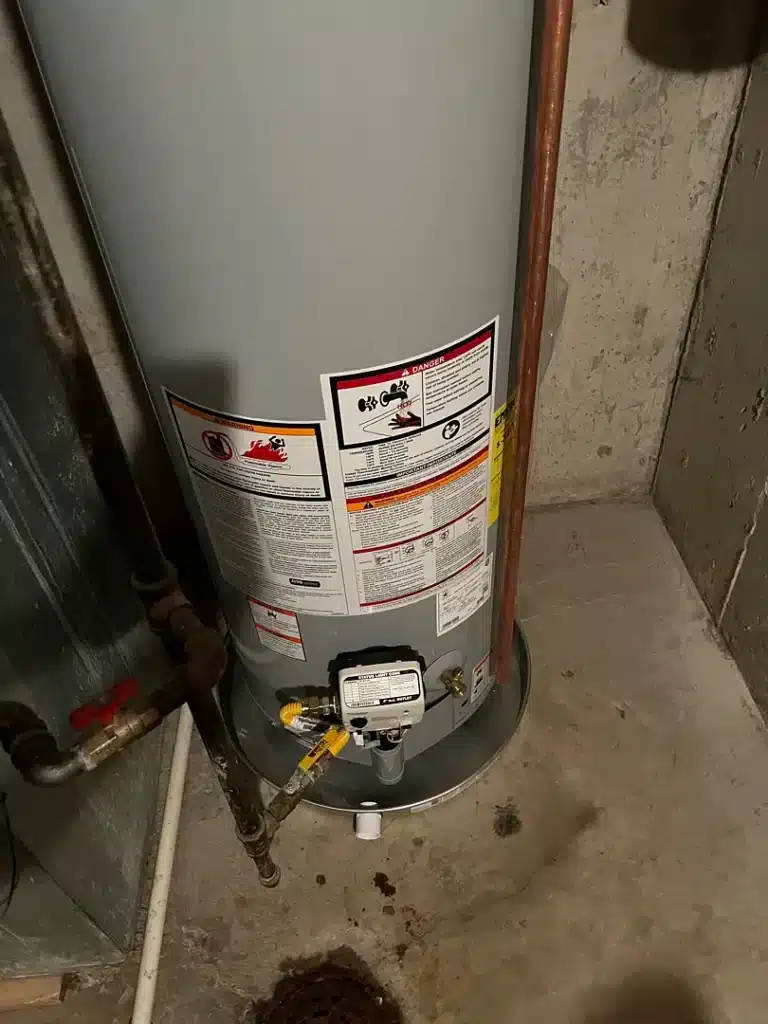
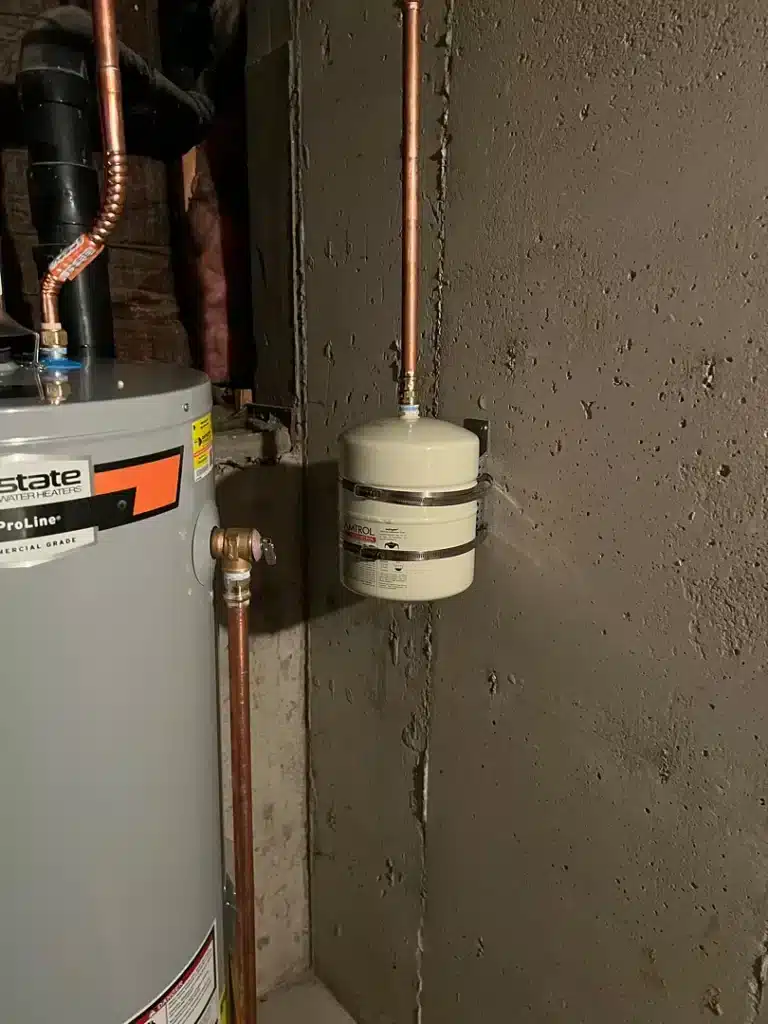
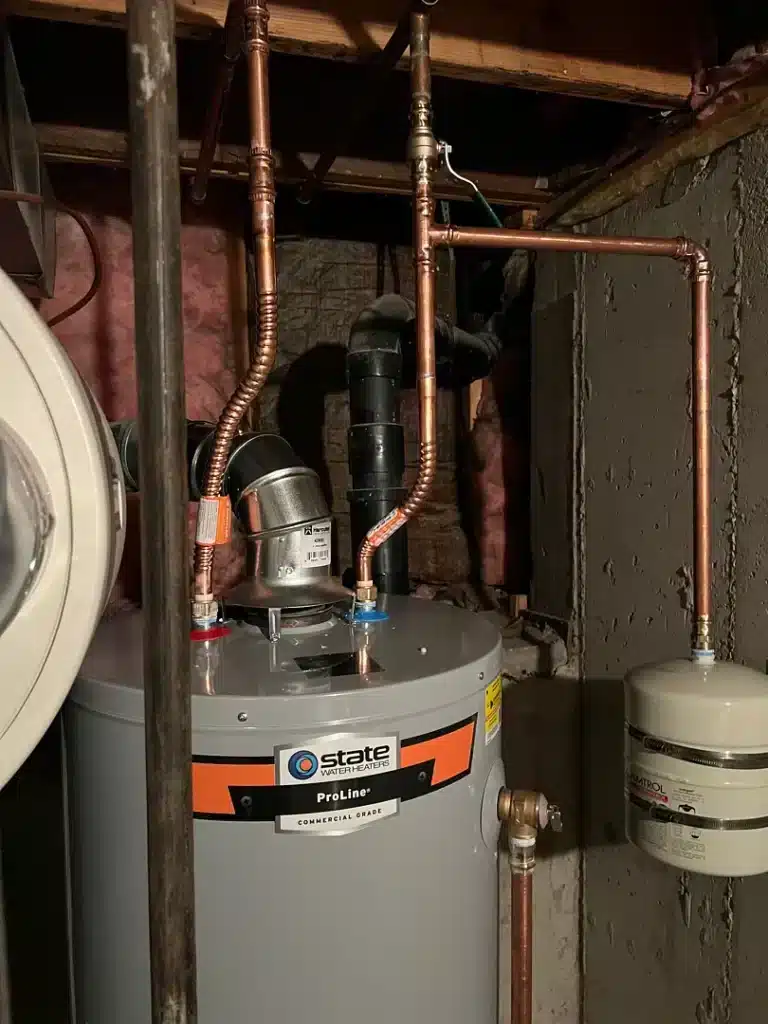
Replace 40-Gallon water Heater with New - Morrison
Problem:Remove and replace water heater
Found:Old gallon
Fixed:Add a new isolation valve. Add an expansion tank in a tank holder. Add a water heater pan. Reconnect a new gas flex on the heater. Hooke up the flue piping. Run the relief valve discharge to the pan below.
Environmental Conditions & Tankless Water Heater Implications
Morrison's position at the mouth of Bear Creek Canyon creates a microclimate distinct from both the Denver metro area and higher mountain communities. Temperature swings of 40 degrees or more within a single day are common, and winter nights frequently drop well below freezing while afternoon sun warms exposed surfaces significantly. These fluctuations stress plumbing systems and demand equipment capable of handling extreme temperature variations.
Water Quality Characteristics
Morrison receives water from the Denver Water system, which sources primarily from mountain snowmelt collected in reservoirs along the Continental Divide. While this water meets all federal quality standards, it carries dissolved minerals – particularly calcium and magnesium – that accumulate inside tankless water heater heat exchangers over time.
Hardness levels – Denver Water reports hardness averaging 50-100 mg/L, considered moderately hard and sufficient to cause scale buildup
pH levels – Typically slightly alkaline at 7.5-8.0, which can accelerate mineral precipitation when water is heated
Chlorine treatment – Residual chlorine used for disinfection can affect certain gasket and seal materials over time
Annual descaling service is recommended for tankless water heaters operating in Morrison. This process involves circulating a vinegar-based solution through the heat exchanger to dissolve mineral deposits and restore efficiency. Neglecting this maintenance can reduce unit lifespan by half and cause premature component failures.
Climate Impacts on System Performance
Winter temperature extremes – Incoming water temperatures in January and February may drop to 35-40°F, requiring maximum BTU output to achieve comfortable hot water temperatures
Rapid temperature changes – Chinook wind events can raise temperatures 30+ degrees in hours, affecting venting draft and combustion air conditions
Summer monsoon humidity – July and August afternoon storms increase humidity levels that can affect condensing unit performance
Wildfire smoke events – Particulate matter from regional fires can clog combustion air intakes on outdoor units
The soil composition in Morrison – primarily decomposed granite and clay – affects underground plumbing and can shift with moisture changes. While this primarily impacts water supply lines rather than tankless units themselves, ground movement can stress connections and cause leaks that reduce system pressure below activation thresholds.
Energy Efficiency and Utility Considerations in Morrison
Morrison residents served by Xcel Energy have access to rebate programs that offset tankless water heater installation costs. Current incentives for high-efficiency gas tankless units can reduce out-of-pocket expenses significantly, making the upgrade more financially accessible. These rebates require installation by licensed contractors and equipment meeting specific efficiency thresholds – typically units with Uniform Energy Factor ratings of 0.87 or higher.
Energy Cost Comparisons
Natural gas prices in the Denver metro area have fluctuated considerably in recent years, but tankless water heaters consistently demonstrate lower operating costs compared to conventional tank units. The elimination of standby heat loss – energy wasted keeping 40-80 gallons of water hot around the clock – translates to measurable monthly savings.
Standby loss elimination – Traditional tank heaters lose 20-40% of energy to standby heat loss; tankless units eliminate this waste entirely
Condensing technology advantages – High-efficiency condensing tankless units capture heat from exhaust gases, achieving efficiency ratings up to 98%
Right-sizing benefits – Properly sized tankless units avoid the inefficiency of oversized tank heaters cycling on and off unnecessarily
Long-term cost recovery – Higher upfront costs typically pay back within 5-8 years through reduced utility bills
For Morrison homes using propane rather than natural gas, tankless water heaters offer even more significant savings potential. Propane costs more per BTU than natural gas, making the efficiency gains of tankless technology proportionally more valuable. However, propane tankless units require specific equipment rated for LP gas and proper tank sizing to maintain adequate fuel supply during high-demand periods.
Electric tankless water heaters present an alternative for homes without gas service, though installation requirements differ substantially. Whole-house electric tankless units typically require 150-200 amp electrical service and dedicated circuits – infrastructure many older Morrison homes lack. Point-of-use electric units serving individual fixtures offer a middle-ground solution for specific applications without major electrical upgrades.
A tankless water heater, also known as an on-demand or instantaneous water heater, heats water directly as it flows through the unit. Unlike traditional systems that store hot water in a tank, tankless models provide hot water only when needed, eliminating standby energy losses.
When you turn on a hot water tap, cold water travels through a pipe into the tankless unit. A gas burner or electric element then heats the water instantly, providing a continuous supply of hot water without waiting for a tank to refill.
Tankless water heaters are ideal for Morrison homeowners due to their energy efficiency and space-saving design. They provide endless hot water, which is especially beneficial in areas with high demand, and they typically last longer than traditional tank systems.
The main benefits include reduced energy consumption, as there are no standby heat losses, and a longer lifespan of over 20 years compared to 10-15 years for tank units. Additionally, their compact size allows for wall-mounted installation, freeing up floor space.
Yes, the reduced oxygen levels at high altitudes can affect gas combustion efficiency. It's important to choose tankless models rated for high-altitude performance and ensure proper installation to handle the unique conditions in Morrison.
Regular maintenance is crucial for tankless water heaters, especially in areas with hard water like Morrison. Annual descaling is recommended to prevent mineral buildup, which can reduce efficiency and potentially damage the unit.
You can find professional installation services for tankless water heaters in Morrison through local plumbing companies. It's important to choose a service that understands the specific installation requirements for high-altitude conditions.