Louisville homeowners are increasingly opting for tankless water heaters, which provide hot water on demand without the limitations of traditional storage tanks. These systems not only eliminate the risk of running out of hot water but also offer energy savings and a longer lifespan.
Tankless water heaters heat water directly as it flows, ensuring a continuous supply without waiting for a tank to refill.
They can reduce energy bills by 24-34% since they only heat water when needed.
Professional installation is crucial due to local factors like elevation and water quality that affect performance.
What is a tankless water heater?
A tankless water heater is a system that heats water on demand, providing a continuous supply of hot water without the limitations of a traditional storage tank. This type of heater is becoming popular among homeowners in Louisville, CO, as it efficiently meets household hot water needs without running out during use.
Tankless Water Heater Services in Louisville, CO
That moment when you step into the shower and the hot water runs out mid-rinse – it's more than inconvenient. It's a sign your traditional water heater is struggling to keep pace with your household's demands. Louisville homeowners are increasingly discovering that tankless water heater systems offer a smarter approach to delivering hot water exactly when and where you need it, without the limitations of a storage tank.
A tankless water heater – also called an on-demand or instantaneous water heater – heats water directly as it flows through the unit rather than storing pre-heated water in a reservoir. When you turn on a hot water tap, cold water travels through a pipe into the unit where either a gas burner or electric element heats it instantly. This means you're not paying to keep 40 or 50 gallons of water hot around the clock, and you'll never face that dreaded cold shower scenario again.
Professional installation and diagnosis matter significantly with these systems. Louisville's elevation of approximately 5,335 feet affects gas combustion efficiency, while the region's hard water can impact heat exchanger longevity. A qualified plumber understands these local variables and can recommend the right unit sizing, venting configuration, and maintenance schedule for your specific situation.
Continuous hot water supply – no more waiting for a tank to recover between showers
Reduced energy consumption – heating water only when needed can lower utility bills by 24-34%
Space-saving design – wall-mounted units free up valuable floor space in basements and utility rooms
Extended lifespan – tankless units typically last 20+ years compared to 10-15 years for traditional tanks
Whether you're considering a new tankless installation, troubleshooting an existing unit, or scheduling routine maintenance, our approach focuses on thorough assessment and clear communication throughout the process.
Our Tankless Water Heater Service Process
Initial consultation and site evaluation – We assess your household's hot water demands, examine existing infrastructure, and identify any modifications needed for optimal performance
System sizing calculation – Using flow rate requirements and temperature rise needs specific to Louisville's incoming water temperature, we determine the appropriate unit capacity
Infrastructure assessment – We evaluate gas line sizing, electrical capacity, venting options, and installation location to prevent performance issues
Professional installation – Our technicians handle all aspects including gas connections, venting, condensate drainage, and system programming
System testing and calibration – We verify proper operation across multiple fixtures, check for gas leaks, and adjust settings for your household's patterns
Homeowner orientation – We walk you through system operation, maintenance requirements, and how to interpret error codes
Diagnostic and Repair Techniques
When your tankless unit displays error codes or performs inconsistently, accurate diagnosis saves time and money. Our technicians use manufacturer-specific diagnostic tools alongside hands-on expertise.
Combustion analysis testing to verify proper air-fuel mixture at Louisville's altitude
Flow rate measurement to identify restrictions in water supply lines
Heat exchanger inspection using specialized cameras to assess scale accumulation
Gas pressure testing at the meter and at the unit to confirm adequate supply
Electrical component testing including ignition systems, flame sensors, and control boards
Venting inspection for proper draft, condensate drainage, and code compliance
Maintenance Services
Louisville's water quality makes annual maintenance particularly valuable for tankless systems. Our maintenance visits include descaling the heat exchanger, cleaning inlet filters, inspecting the burner assembly, and testing safety controls – all the steps that keep your unit running efficiently for decades.
Tankless water heater work demands specialized knowledge that goes beyond general plumbing skills. Our technicians hold manufacturer certifications from leading brands and receive ongoing training on the latest tankless technology. We understand the specific requirements for high-altitude installations – from combustion air adjustments to proper venting configurations – that generic plumbing companies often overlook.
As a locally-operated company serving Louisville and surrounding Boulder County communities, we've built our reputation on responsive service and honest assessments. When your tankless unit stops producing hot water on a January morning, you need a team that answers the phone and arrives prepared. We stock common replacement parts for major tankless brands, reducing wait times for repairs.
What Sets Us Apart
Factory-trained technicians certified on Rinnai, Navien, Noritz, and other leading brands
High-altitude expertise – we understand the combustion and venting modifications required above 5,000 feet
Transparent pricing provided before work begins – no surprises on your invoice
Follow-up contact after installations to confirm system performance meets expectations
Digital documentation including photos of completed work and system specifications for your records
Coordination with local inspectors to streamline permit processes when required
We also recognize that tankless installation represents a significant investment. Our team takes time to explain options honestly – including situations where a tankless system might not be the best fit for your household's needs or existing infrastructure. That straightforward approach has earned us repeat customers throughout Louisville who trust our recommendations.
Recent Work
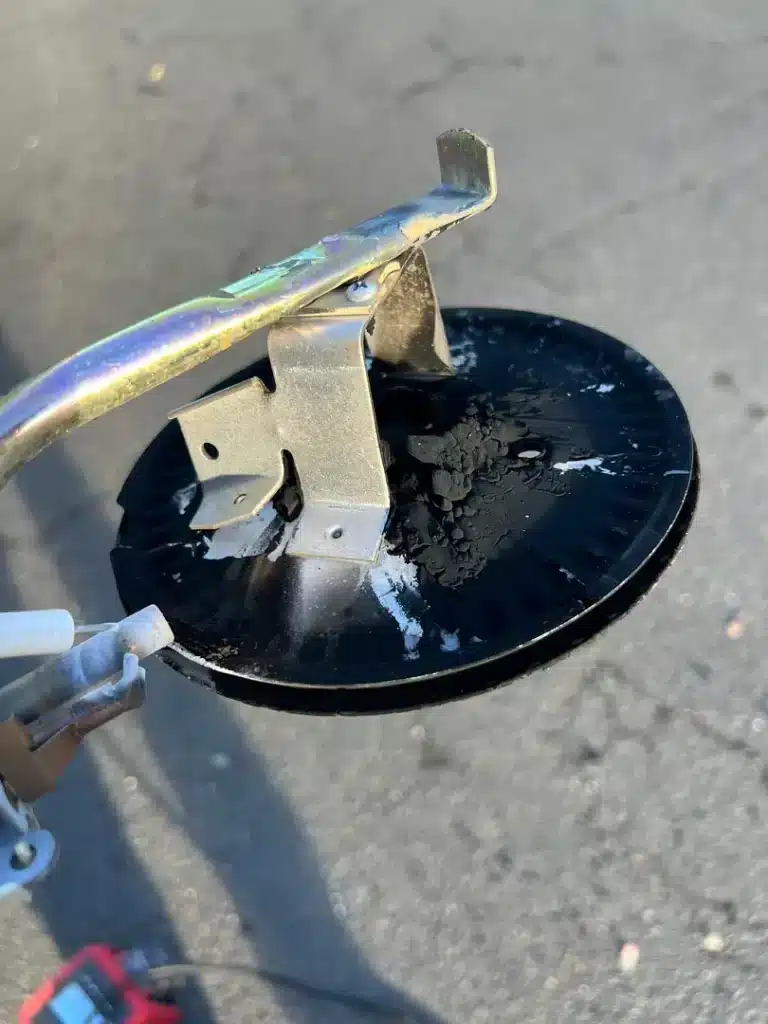
Water Heater Not Working - Louisville
Problem:Clean out heater and try to restart
Found:Noticed it was badly sooted up. Scraped all the soot and blew out the main burner and pilot with my compressor.
Fixed:Cleaned the ignition sparker to remove carbon build up. 4.Reassembled all parts. Tried to relight but still main burner was snuffed out after 3 seconds. Could not get the pilot light to stal lit any further.
Outcome:Tested
Housing Characteristics & Tankless Water Heater Considerations
Louisville's residential landscape tells the story of a community that evolved from a coal mining town into a desirable Front Range suburb. The original town center features homes dating from the 1880s through the 1940s – charming structures with character but often challenging infrastructure. These older properties typically have galvanized steel or copper piping, smaller diameter gas lines, and electrical panels that may require upgrades before supporting modern tankless systems.
Housing Age Distribution and Implications
Pre-1950 historic homes – Often require gas line upsizing, electrical panel upgrades, and creative venting solutions due to construction methods
1960s-1980s ranch and split-level homes – Generally have adequate infrastructure but may need gas pressure verification and updated venting
1990s-2000s developments – Most have sufficient gas and electrical capacity; installation focuses on optimal placement and venting routes
Post-2010 construction – Many newer homes came pre-plumbed for tankless installation with dedicated gas lines and proper venting infrastructure
The 2021 Marshall Fire devastated portions of Louisville and neighboring Superior, destroying over 1,000 structures. Rebuilding efforts have incorporated modern building codes and energy-efficient systems, with many replacement homes featuring tankless water heaters as standard equipment. This reconstruction has also prompted homeowners in unaffected areas to evaluate their own systems and consider upgrades.
Common Louisville Home Configurations
Single-family homes dominate Louisville's housing stock, though the community includes townhomes, condominiums, and multi-family units – each presenting different tankless installation considerations.
Basement installations remain most common, offering easy access to gas lines and exterior venting
Attached garages provide alternative installation locations but require freeze protection measures
Townhomes and condos may have HOA restrictions on exterior venting that affect unit selection
Two-story homes with bathrooms on multiple levels benefit from properly sized units or point-of-use supplemental heaters
Homes with radiant floor heating systems require careful integration with tankless domestic hot water systems
Environmental Conditions & Tankless Water Heater Implications
Louisville's semi-arid climate and Front Range location create environmental factors that directly impact tankless water heater selection, installation, and maintenance. Understanding these conditions helps homeowners make informed decisions and maintain their systems effectively.
Water Quality Characteristics
Louisville receives treated water primarily from the city's own treatment facility processing Coal Creek water, supplemented by Denver Water supplies during peak demand periods. Water quality testing consistently shows moderate to high mineral content.
Total hardness typically ranges from 120-180 mg/L – classified as moderately hard to hard water
Seasonal variations occur as snowmelt dilutes mineral concentrations in spring and early summer
The city maintains pH levels between 7.2-8.2, which affects corrosion rates in system components
Annual flushing with descaling solution becomes necessary rather than optional given local water chemistry
Climate Impact on System Performance
Louisville experiences over 300 days of sunshine annually, but winter conditions present real challenges for water heating systems. Incoming water temperatures drop to 40-45°F during winter months, requiring tankless units to work harder to achieve desired output temperatures.
Winter temperature extremes reaching -10°F or colder require freeze protection measures for units in unconditioned spaces
Rapid barometric pressure changes during weather fronts can affect combustion in gas units
Low humidity – often below 30% – can dry out gaskets and seals over time
Summer monsoon moisture may affect exterior venting components and air intake filters
Wildfire smoke events introduce particulates that can clog combustion air filters
Soil and Drainage Considerations
Louisville's clay-heavy soils expand and contract with moisture changes, occasionally shifting foundations and affecting plumbing connections. Condensing tankless units produce acidic condensate that requires proper drainage – typically to a floor drain or condensate pump – and cannot be discharged directly onto clay soils where it may cause erosion near foundations.
Louisville operates its own municipal water utility, serving approximately 8,500 residential and commercial accounts throughout the city. The water treatment plant processes an average of 2.5 million gallons daily, with capacity to handle peak summer demands exceeding 6 million gallons. This infrastructure directly affects tankless water heater performance and installation requirements.
Water pressure throughout Louisville's distribution system typically ranges from 50-80 psi, depending on elevation and distance from pressure zones. Some hillside neighborhoods experience pressure at the higher end of this range, potentially requiring pressure regulation to protect tankless units and other plumbing fixtures. Conversely, homes at system extremities may have marginal pressure that affects flow rates through tankless heat exchangers.
Relevant Infrastructure Statistics
Municipal water system serves a population of approximately 21,000 residents
Distribution system includes over 100 miles of water mains ranging from 4-inch to 16-inch diameter
Average residential water usage: 4,500-5,500 gallons per month per household
Natural gas service provided by Xcel Energy with adequate capacity for residential tankless installations
Electrical grid reliability supports electric tankless options, though gas units remain more common due to lower operating costs
Building department requires permits for tankless water heater installations involving gas line modifications or new venting
Energy Considerations for Louisville Homeowners
Colorado's energy landscape makes tankless water heaters particularly attractive. Natural gas prices in the region remain relatively stable, and the efficiency gains from on-demand heating translate to meaningful savings over traditional tank systems. Louisville's participation in Boulder County's sustainability initiatives has also increased interest in energy-efficient home systems, with tankless water heaters qualifying for various rebate programs through local utilities and energy offices.
Xcel Energy offers rebates for qualifying high-efficiency gas tankless units
Energy Star certified tankless models meet federal efficiency standards for potential tax credits
Louisville's building codes align with International Energy Conservation Code requirements
Local contractors must hold appropriate licenses for gas and plumbing work within city limits
Common Tankless Water Heater Issues in Louisville, CO
Louisville sits at the intersection of the Rocky Mountain foothills and the Colorado Front Range, creating a unique set of challenges for water heating systems. The city's water supply comes from multiple sources including Coal Creek and treated Denver Water, resulting in mineral content that varies seasonally. This hard water deposits calcium and magnesium inside heat exchangers over time, reducing efficiency and potentially causing premature failure if left unaddressed.
Winter temperatures in Louisville regularly drop below freezing from November through March, with occasional arctic blasts pushing readings well below zero. Tankless water heaters installed in unheated spaces – garages, crawl spaces, or exterior walls – face freeze risk that can crack heat exchangers and damage internal components. Even units with built-in freeze protection may struggle during extended power outages when backup systems can't operate.
The housing stock in Louisville ranges from historic homes near downtown built in the early 1900s to newer developments in the Coal Creek and Superior areas. This mix creates varied installation scenarios – older homes may have undersized gas lines or outdated electrical panels that require upgrades before tankless installation, while newer construction might have pre-planned infrastructure for on-demand systems.
Local Factors Affecting Tankless Performance
High altitude reduces oxygen availability – gas units require specific high-altitude venting and combustion adjustments
Groundwater temperature averaging 45-50°F means units work harder to achieve desired output temperatures
Seasonal water hardness fluctuations from 120-180 ppm accelerate scale buildup in heat exchangers
Rapid temperature swings – Louisville can experience 40-degree temperature changes in a single day – stress system components
Older neighborhood infrastructure may have insufficient gas pressure for high-demand tankless units
Wildfire smoke events can clog air intake filters on condensing units, triggering error codes
Warning Signs Your Tankless System Needs Attention
Fluctuating water temperature during use – often indicates scale buildup or flow sensor issues
Error codes appearing on the digital display – each code points to specific diagnostic needs
Reduced hot water flow rate compared to when the unit was new
Unusual noises – clicking, humming, or rumbling during operation
Yellow or orange flame visible through the viewing window instead of blue
Increased gas bills without changes in usage patterns
A tankless water heater, also known as an on-demand or instantaneous water heater, heats water directly as it flows through the unit. Unlike traditional heaters that store hot water in a tank, tankless systems provide hot water only when needed, eliminating the risk of running out during a shower.
When you turn on a hot water tap, cold water travels through a pipe into the tankless unit. A gas burner or electric element then heats the water instantly, providing a continuous supply of hot water without the need for a storage tank.
Tankless water heaters offer several advantages, including a continuous supply of hot water, reduced energy consumption, and a space-saving design. They also have a longer lifespan compared to traditional water heaters, typically lasting over 20 years.
Switching to a tankless water heater can lower your energy bills by 24-34%. Since these systems heat water only when needed, you avoid the costs associated with keeping a large tank of water hot around the clock.
Yes, tankless water heaters are suitable for homes in Louisville. However, local factors such as elevation and hard water can affect performance, so it's important to have a qualified plumber assess your specific needs and recommend the right unit.
Regular maintenance for a tankless water heater includes descaling the unit to remove mineral buildup, checking the filters, and ensuring proper ventilation. Scheduling routine inspections with a professional can help extend the lifespan and efficiency of your system.
You can have a tankless water heater installed by qualified plumbing services in Louisville. It's advisable to choose a local plumber who understands the specific requirements of the area, including gas line sizing and water quality.