
Recent Posts
Categories
Identifying and Fixing Low Water Pressure in Arvada
Low water pressure in Arvada homes typically results from mineral buildup, failing pressure regulators, or aging galvanized pipes. Homeowners can test pressure with a simple gauge and try basic fixes before calling a plumber.
- Normal residential water pressure ranges from 40 to 60 PSI. Arvada's moderately hard water causes mineral scale that narrows pipes over time - soaking aerators in vinegar often restores flow.
- Pressure regulators last 10 to 15 years and many 1970s-80s Arvada homes still have original valves. Older neighborhoods may have galvanized steel pipes that corrode from the inside and require repiping.
- Common repairs range from $75 for aerator replacement to $6,000 for service line leak repair with excavation. Annual water heater flushing and regular PRV testing help prevent pressure problems.
Low water pressure in Arvada homes typically results from mineral buildup in pipes, corroded plumbing, partially closed shut-off valves, or issues with the municipal water supply. Older neighborhoods like Olde Town often experience pressure problems due to aging infrastructure, while newer areas may face issues from high demand during peak usage times.
You turn on the shower in your Arvada home and get a weak trickle instead of a steady stream. Low water pressure in Arvada frustrates homeowners across neighborhoods from Olde Town to Candelas. The cause is rarely random.
Arvada sits along the Front Range at elevation, with older homes on galvanized pipe and newer builds tied into hard municipal water. Both create pressure problems worth knowing about.
Below you will find the real reasons your pressure drops, how to test it yourself, what repairs cost, and when to call a plumber.
Why Is My Water Pressure Low? Quick Answer
Low water pressure happens when something restricts or reduces water flow between the city main and your fixture. In Arvada homes, the usual culprits are mineral buildup, a failing pressure regulator, or aging galvanized pipe.
Normal residential water pressure sits between 40 and 60 PSI. Anything under 40 PSI feels weak. Anything over 80 PSI violates plumbing code and damages fixtures.
How to Test Your Water Pressure at Home
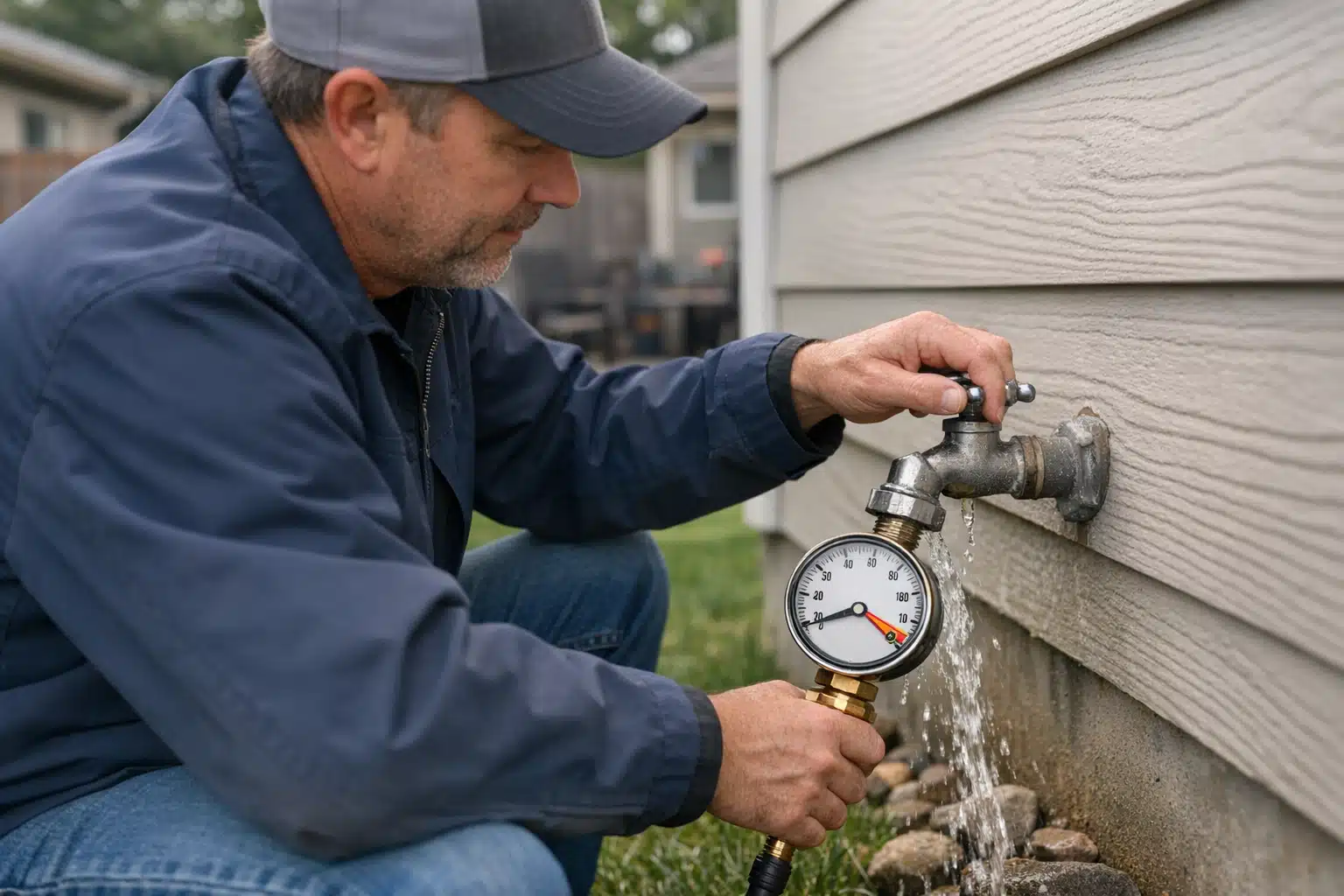
You can check pressure yourself in under ten minutes with a $12 gauge from any hardware store.
- Screw a pressure gauge onto an outdoor hose bib or laundry faucet.
- Turn the faucet on all the way.
- Read the PSI on the dial.
- Test again with other fixtures running to see how much it drops.
A reading of 30 PSI at rest points to a system-wide issue. A reading that only drops during use points to pipe restriction or demand overload.
Common Causes of Low Water Pressure in Arvada Homes
Arvada’s water and housing stock create pressure problems you might not see in other cities. Here are the causes we find most.
Hard Water and Mineral Scale
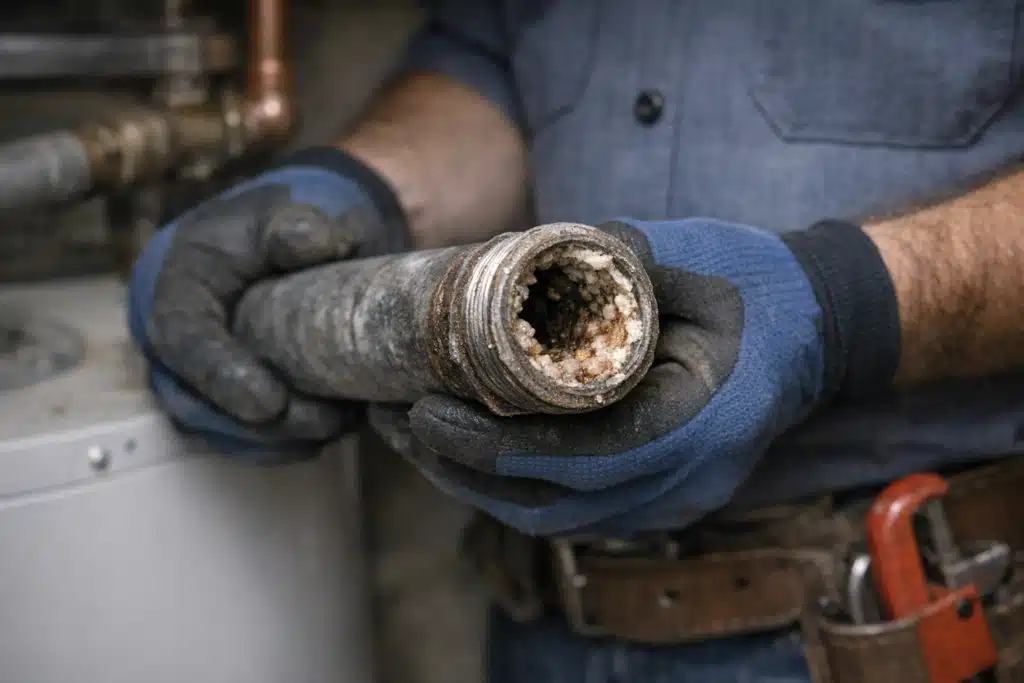
Arvada water is moderately hard, carrying calcium and magnesium from Front Range sources. Over years, minerals coat the inside of pipes and clog aerators.
Scale narrows pipe diameter. A half-inch supply line can lose a third of its flow capacity to buildup. Fixtures in homes 20 years or older show this first.
Quick fix: Unscrew faucet aerators and showerheads. Soak them in white vinegar overnight to dissolve mineral crust. This one step restores flow for many callers.
Failing Pressure Regulator (PRV)
A pressure reducing valve sits where the city line enters your home. It steps down high street pressure to safe household levels.
When a PRV fails, pressure either spikes or collapses. Many Arvada homes built in the 1970s and 80s still run original regulators well past their lifespan.
PRVs last 10 to 15 years. If yours is older and pressure drops house-wide, the valve is the likely suspect.
Aging Galvanized Steel Pipe
Older Arvada neighborhoods like Lamar Heights and Arvada Plaza still have galvanized supply lines. Steel corrodes from the inside out.
Rust and sediment build up until the pipe interior nearly closes. Hot water lines clog faster than cold because heat speeds corrosion.
Repiping with copper or PEX restores full flow. It is the permanent fix once galvanized pipe fails.
Municipal Supply and Elevation Factors
Arvada water travels uphill to homes in higher elevation areas like West Arvada and Leyden. Gravity works against pressure at the top of the grid.
Water main repairs or hydrant flushing can drop pressure city-wide for hours. If your whole street loses pressure at once, check with neighbors before calling a plumber.
Hidden Leaks
A leak upstream steals pressure from the rest of your home. Slab leaks and underground service line breaks are common along the Front Range’s shifting clay soil.
Watch for wet spots in the yard, a spinning water meter with everything off, or an unexplained bill spike. Any of these signals a hidden leak.
Low Water Pressure Arvada: Room-by-Room Diagnosis
Where the problem shows up tells you where to look.
- One faucet only: Clogged aerator or cartridge. Cheap and easy.
- One bathroom: Restricted branch line or a partially closed shutoff valve.
- Hot water only: Sediment in the water heater or corroded hot lines.
- Whole house: Failing PRV, main line leak, or municipal supply drop.
- Worse upstairs: Normal elevation loss, made worse by low base pressure.
The Water Heater Connection
Sediment settles at the bottom of every tank water heater over time. Arvada’s hard water speeds this buildup.
Heavy sediment blocks the hot outlet and cuts hot-side pressure. Flushing your tank once a year clears it and extends heater life.
DIY Plumbing Fixes You Can Try First
Some pressure problems have simple answers. Try these before booking a visit.
- Clean every aerator and showerhead. Vinegar soak removes scale.
- Check main shutoff valves. A partly closed valve chokes flow to the whole house.
- Inspect the meter valve. Confirm it is fully open after any recent work.
- Flush your water heater. Clears sediment on the hot side.
- Ask neighbors. Rule out a city-wide supply issue.
If pressure stays low after these steps, the cause runs deeper into your system.

 Posted on Google
When to Call a Plumber and What Repairs Cost
Some jobs need a licensed hand. Here is what common Arvada pressure repairs run.
- Pressure regulator replacement: $350 to $600, parts and labor.
- Water heater flush: $100 to $200.
- Aerator and cartridge replacement: $75 to $200 per fixture.
- Section repipe (galvanized to PEX): $1,000 to $4,000, depending on access.
- Service line leak repair: $1,500 to $6,000 with excavation.
Prices vary by home age, access, and scope. A pressure test and inspection pin down the true cause before any work starts.
Signs You Should Not Wait
Call right away if you notice these warning signs:
- Sudden pressure loss across the whole house.
- Discolored or rusty water at the tap.
- Wet ground over your service line in winter.
- A water meter that runs with all fixtures off.
Each points to a leak or failure that worsens fast if ignored.
Preventing Low Water Pressure Year-Round
Arvada’s climate and water chemistry reward steady maintenance. A few habits keep pressure strong.
- Flush your water heater every fall before the cold season.
- Install a water softener to slow mineral scale in pipes and fixtures.
- Have your PRV tested every few years once it passes the ten-year mark.
- Insulate exposed pipes in crawlspaces to avoid freeze restrictions.
- Clean aerators twice a year in hard-water homes.
Winter and Frozen Pipe Concerns
A partial freeze mimics low pressure. Ice narrows the pipe before it bursts completely.
If one line drops to a trickle during a cold snap, treat it as a freeze risk. Keep a faucet dripping and warm the area until flow returns.
Conclusion
Low water pressure in Arvada usually traces back to hard-water scale, an aging pressure regulator, or corroded galvanized pipe. Start with a pressure test and simple plumbing fixes like cleaning aerators before moving to bigger repairs. Regular maintenance keeps your pressure steady through every Front Range season.
Still fighting weak water pressure? Call or text Cardom Plumbing & Heating at 720‑775‑8322 or email tomd@cardomcolorado.com for fast service across Arvada, Wheat Ridge, Westminster, and nearby communities.
Sources
- U.S. Environmental Protection Agency – WaterSense
- U.S. Geological Survey – Hardness of Water
- U.S. Department of Energy – Water Heaters


