
Recent Posts
Categories
How to Detect and Fix Hidden Leaks in Arvada Homes
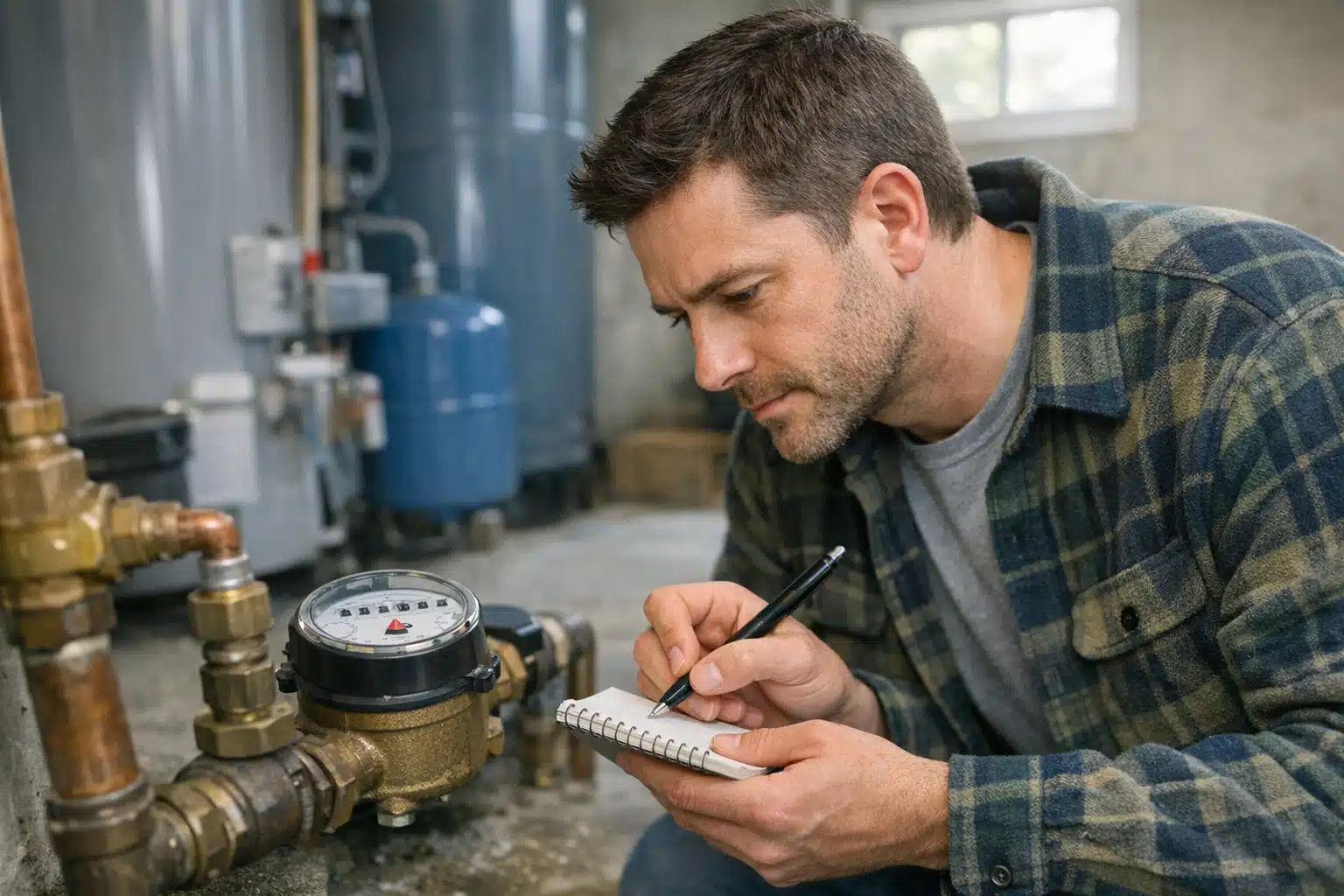
A sudden spike in your water bill often signals a hidden leak. This guide from a local Arvada plumbing team explains how to detect leaks early, what repairs cost, and how to prevent winter pipe damage.
- The water meter test can confirm a leak - turn off all water, record the meter reading, wait two hours, and check for any movement. Warning signs include warm floor spots, musty smells, bubbling paint, and unexplained pressure drops.
- Common leak locations include toilet flappers - which can waste 200 gallons daily - slab pipes stressed by clay soil, water heaters, and outdoor hose bibs that freeze and split over winter.
- Repair costs range from $15 for a flapper to $4,500 for slab leaks. Prevention tips include disconnecting hoses before October, insulating pipes, and installing a pressure regulator if water pressure exceeds 80 psi.
Start by checking your water meter while all fixtures are off - if it keeps moving, you have a leak. Common hiding spots include under sinks, behind toilets, and near water heaters. Listen for running water sounds and look for damp spots on walls or floors. For hard-to-find leaks, hire a plumber with thermal imaging or acoustic detection equipment to pinpoint the source without tearing up walls.
A water bill that jumps $40 for no reason usually means one thing: a hidden leak somewhere in your home. In Arvada homes, pipes fight freeze-thaw cycles, hard water buildup, and shifting clay soil that stresses connections year-round.
This post shows you how to catch leaks early, what repairs cost, and how to stop them before winter hits. You will learn the subtle signs most people miss until a ceiling stains or a slab cracks.
As a local plumbing team working Arvada, Wheat Ridge, and Westminster, we see the same quiet leaks over and over. Catching them early saves thousands.
How to Find Hidden Leaks in Your Home
Start with your water meter. It gives a clear yes-or-no answer about whether water is escaping somewhere you cannot see.
The Water Meter Test
Follow these steps on a quiet evening when no one needs water:
- Turn off every faucet, appliance, and ice maker in the house.
- Find your water meter, usually near the street or in a basement pit.
- Write down the exact reading, including the small leak-detection triangle.
- Wait two hours without using any water at all.
- Check the meter again. Any movement means water is leaking somewhere.
Many Arvada meters have a small red or blue triangle that spins with flow. If it moves while everything is off, you have a leak.
Subtle Signs Most Homeowners Miss
Big leaks announce themselves. The quiet ones cost you for months first.
- Warm spots on the floor — a sign of a hot-water slab leak under concrete.
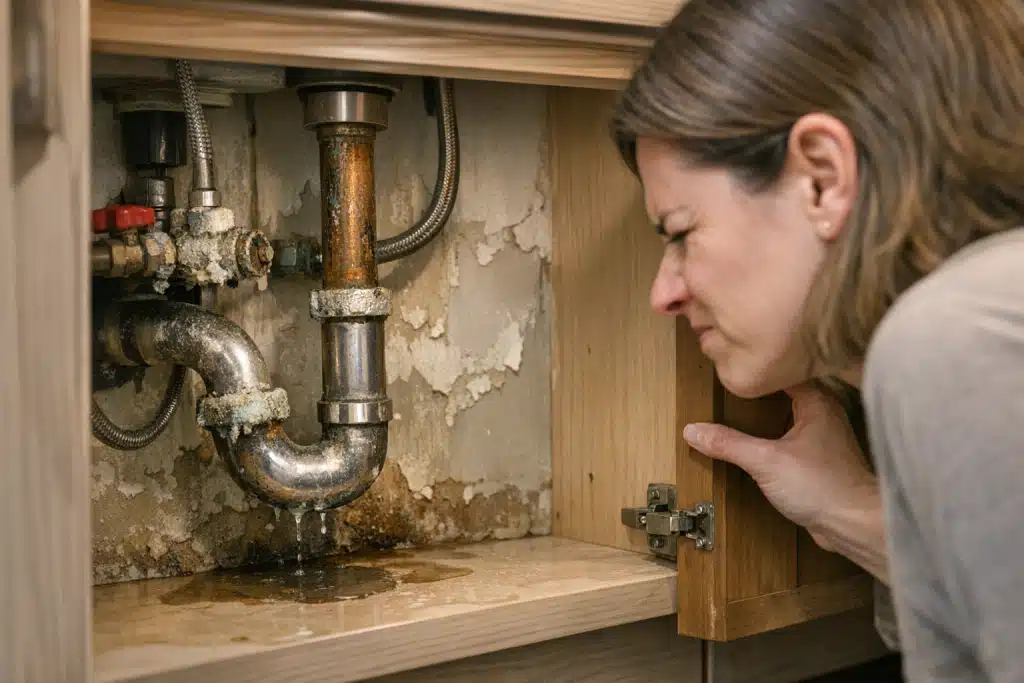
- A faint musty smell near cabinets or baseboards, pointing to slow pipe seepage.
- Mineral crust or white staining on supply lines from hard-water drips.
- Paint that bubbles or peels on a single wall section with no clear cause.
- The sound of running water inside walls when all fixtures are off.
- Grass growing greener in one yard patch over a buried water line.
In older Arvada neighborhoods like Olde Town, galvanized supply lines corrode from the inside. The first clue is a drop in pressure, not a visible drip.
Common Hidden Leak Locations in Arvada Homes
Leaks hide in predictable places. Knowing where to look cuts your search time in half.
Toilet Flapper Leaks
A worn toilet flapper wastes up to 200 gallons a day silently. Add ten drops of food coloring to the tank, then wait 15 minutes. Color in the bowl means the flapper is leaking.
This single fix is the most common leak we repair in Arvada and Broomfield homes. A flapper costs under $15.
Slab Leaks
A slab leak is a break in a water line running beneath your concrete foundation. Arvada’s expansive clay soil shifts with moisture, and that movement cracks copper lines over time.
Watch for warm floors, a spike in the gas bill from the water heater running, or the sound of water with no fixtures on. Slab leaks need electronic detection, not guesswork.
Water Heater and Pressure Issues
Front Range water pressure sometimes runs above 80 psi. High pressure wears out valves, fittings, and water heater tanks faster than normal.
Check for moisture around the base of your water heater. A damp spot or rust streak means the tank or a fitting is failing.
Outdoor and Hose Bib Leaks
Frozen hose bibs are one of the most frequent spring calls we get across Arvada. Water freezes inside the pipe over winter, splits it, then leaks behind the wall when you open the spigot in April.
Turn on each outdoor faucet in spring and feel the wall inside for moisture. A quiet indoor leak often starts at the hose bib.
5 Signs of a Hidden Leak in Westminster and Wheat Ridge Homes
Property managers and homeowners nearby see the same warning signs. Act when you notice any of them.
- A water bill rising month over month with no change in household use.
- Low pressure at one faucet while others stay strong.
- Stains spreading on ceilings below bathrooms.
- Cracks in drywall appearing fast near plumbing walls.
- Mold returning in the same corner after every cleaning.
How to Fix a Hidden Leak
Some leaks are a quick DIY job. Others need a plumber with detection equipment. Here is how to tell them apart.
Repairs You Can Handle
- Toilet flapper — replace in 10 minutes with a store-bought kit.
- Dripping faucet — a worn washer or cartridge swap stops most drips.
- Loose supply line — hand-tighten the nut under a sink, then check again.
- Showerhead drip — fresh plumber’s tape on the threads usually seals it.
Repairs That Need a Plumber
Call a licensed plumber when the leak is behind walls, under slab, or in your main line. Detection without the right tools means cutting open drywall and guessing.
We use acoustic listening devices and thermal cameras to pinpoint leaks within inches. That means a small access cut instead of a torn-out wall.
What Leak Repairs Cost in the Arvada Area
Prices vary by location and pipe type. Rough ranges for the Front Range:
- Toilet flapper or faucet drip: $15–$150 for parts and basic labor.
- Leak detection service: $150–$400 depending on access.
- Pipe repair behind a wall: $300–$900.
- Slab leak repair: $1,500–$4,500 based on depth and rerouting.
- Main water line replacement: $2,000–$6,000.
Catching a slab leak early can mean a simple reroute instead of a full foundation opening. That difference saves thousands.

 Posted on Google
Preventing Hidden Leaks Before Winter
Arvada winters drop below freezing for weeks at a stretch. Frozen pipes are the top cause of sudden leaks here.
- Disconnect garden hoses before the first hard freeze in October.
- Insulate pipes in crawl spaces, garages, and exterior walls.
- Install a pressure regulator if your water runs above 80 psi.
- Let a faucet drip on sub-zero nights to keep water moving.
- Know where your main shutoff valve is before an emergency hits.
A $20 foam pipe sleeve prevents a $3,000 burst-pipe repair. Winter prep pays off every January.
When to Shut Off Your Water Fast
If you find a sudden leak, these steps limit the damage:
- Shut off the main water valve to the house.
- Turn off the water heater to protect the tank.
- Move belongings away from the wet area.
- Call a plumber before mold sets in, usually within 24 to 48 hours.
Conclusion
Hidden leaks give quiet clues: a rising bill, a warm floor, a musty smell, or a faint sound of running water. Catch them early with the meter test and regular checks, and you avoid slab damage and mold. Small drips are DIY jobs, but slab and main-line leaks need a plumber with detection tools.
If you suspect a hidden leak in your Arvada home, call Cardom Plumbing & Heating at 720‑775‑8322, text the same number, or email tomd@cardomcolorado.com. We serve Arvada, Wheat Ridge, Westminster, Broomfield, and nearby Front Range communities with fast local response.
Sources
- U.S. Environmental Protection Agency – Fix a Leak Week
- U.S. Environmental Protection Agency – WaterSense Statistics and Facts
- Ready.gov – Winter Weather Preparedness


