
Recent Posts
Categories
Denver’s Unique Plumbing Challenges: High-Elevation Considerations
Denver's 5,280-foot elevation creates specific plumbing challenges including altered water heater combustion, pressure fluctuations, and freeze-thaw pipe stress that homeowners from lower altitudes often overlook.
- Gas water heaters need high-altitude orifices above 5,500 feet because thinner air causes incomplete combustion, soot buildup, and carbon monoxide risks with sea-level units.
- Pressure reducing valves are often necessary since atmospheric pressure drops at elevation and unregulated pressure above 80 psi damages pipes and appliance hoses.
- Denver's dramatic temperature swings between day and night stress pipes more than steady cold, making frozen hose bibs and burst pipes in crawl spaces common winter emergencies.
Denver's high elevation causes water to boil at lower temperatures, which affects how water heaters, pressure systems, and drainage function throughout the Front Range. Plumbing systems must account for reduced atmospheric pressure, which can lead to faster water evaporation, altered pipe pressure dynamics, and adjustments needed for appliances like water heaters to operate efficiently at altitude.
Why Plumbing at 5,280 Feet Behaves Differently
Water boils at a lower temperature in Arvada than it does at sea level. That single physics fact changes how water heaters, pressure systems, and drainage behave across the Front Range.
Many homeowners move here from lower altitudes and assume their fixtures will act the same. They won’t. The plumbing challenges tied to Denver high elevation are real, measurable, and worth addressing before they cost you money.
Below, you learn how altitude affects your pipes, water heater, and gas appliances. You also get seasonal prevention tips specific to Arvada, Wheat Ridge, Broomfield, and Westminster homes.
How Denver High Elevation Affects Water Heaters
At altitude, there is less oxygen in the air. Gas-burning appliances need oxygen to combust fuel cleanly and safely.
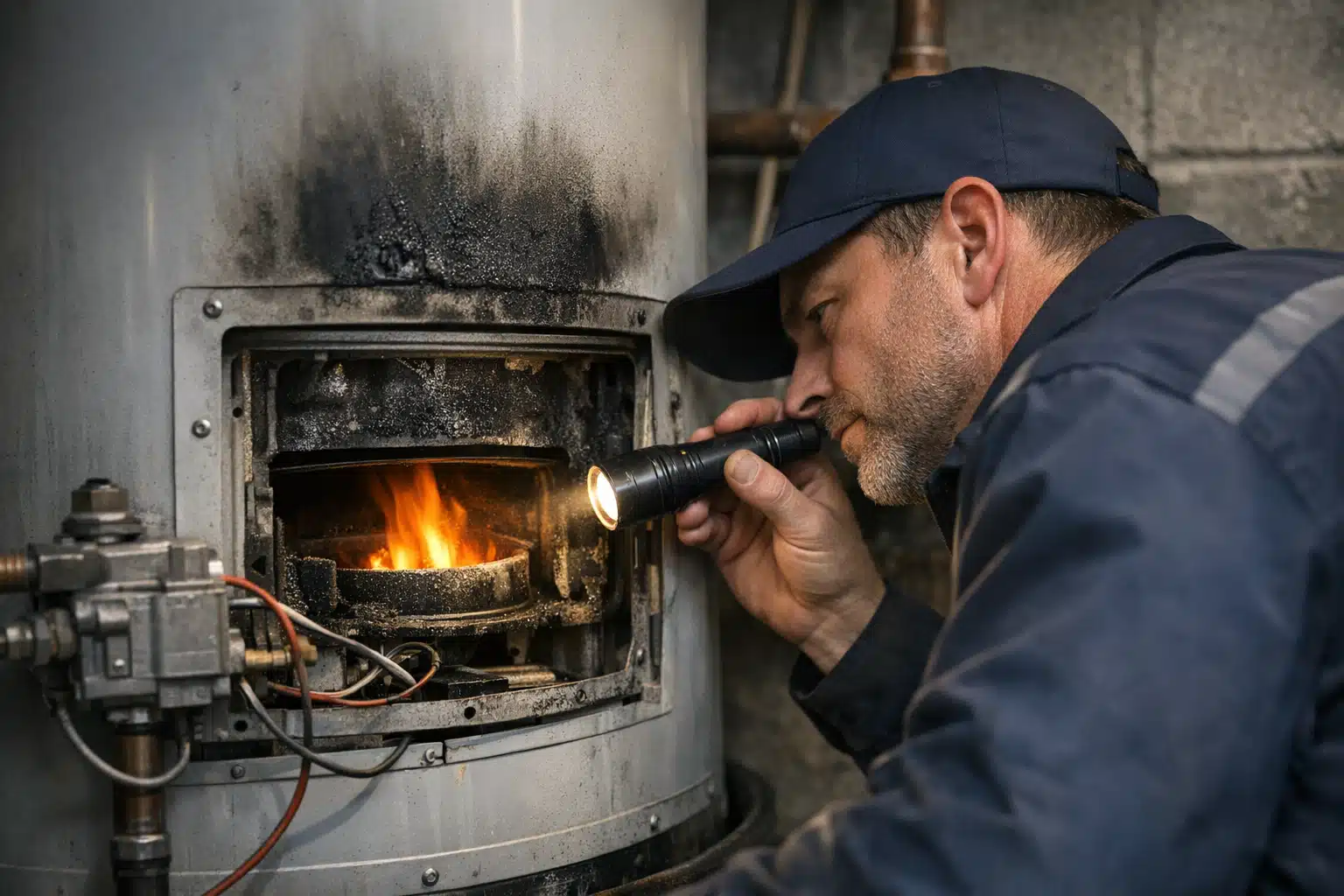
A gas water heater built for sea level burns too rich in Arvada. That means incomplete combustion, soot buildup, and poor efficiency.
The High-Altitude Orifice Problem
Gas water heaters use a small opening called an orifice to control fuel flow. Units shipped to Colorado need a high-altitude orifice rated above 5,500 feet.
We regularly find sea-level units installed in Denver-area basements. The symptoms are easy to spot:
- Yellow or orange burner flame instead of blue
- Soot or black residue near the burner chamber
- Pilot lights that refuse to stay lit
- Longer recovery times after a hot shower
Colorado code requires appliances rated for the installed elevation. An improperly rated unit is both inefficient and a carbon monoxide risk.
What This Means for Replacement Costs
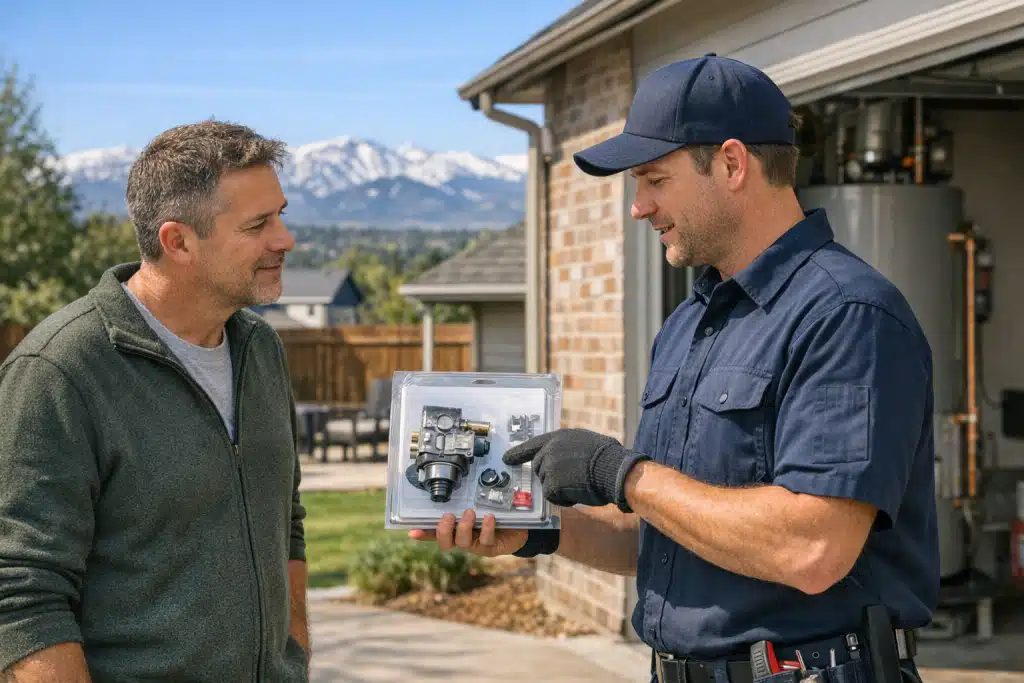
When replacing a water heater in Arvada, ask whether the unit ships high-altitude ready. Some manufacturers include a conversion kit; others require a factory-rated model.
A tankless water heater needs the same attention. Many tankless units lose rated output above 5,000 feet unless adjusted during install.
Water Pressure Problems Tied to Elevation
Atmospheric pressure drops as elevation rises. Combined with Denver Water’s municipal supply quirks, pressure management becomes a real concern.
Homes in higher parts of Arvada and Westminster sometimes see pressure swings during peak summer demand. Low pressure frustrates showers; high pressure damages pipes.
Why Pressure Regulators Matter Here
A pressure reducing valve, or PRV, keeps incoming water within a safe range. Most fixtures are rated for 60 to 80 psi.
Pressure above 80 psi stresses joints, fittings, and appliance hoses. We see failed washing machine hoses and burst supply lines from unregulated pressure every year.
If your home sits on a hill or near a main line, have the static pressure tested. A simple gauge reading tells you whether a PRV is needed or failing.
Boiling Points, Steam, and Hidden Effects
Water boils near 203°F in Denver instead of 212°F at sea level. This small shift affects more than cooking.
Hydronic heating systems and boilers must account for the lower boiling point. Expansion tanks and relief valves are sized with altitude in mind.
A boiler calibrated for sea level can build pressure and trip its relief valve early. That leads to nuisance leaks and wasted energy across a Colorado winter.
Frozen Pipes and the Front Range Freeze-Thaw Cycle
Denver’s climate swings hard between day and night. A 60°F afternoon can drop below 20°F overnight in January.
This freeze-thaw pattern stresses pipes more than steady cold does. Water expands, contracts, and finds weak points fast.
5 Common Winter Plumbing Emergencies in Arvada Homes
- Frozen hose bibs on exterior walls, often from leaving garden hoses attached
- Burst pipes in uninsulated crawl spaces, common in older Wheat Ridge homes
- Frozen kitchen lines along north-facing exterior walls
- Water heater failure during cold snaps when demand peaks
- Cracked outdoor spigots discovered only when spring water turns on
How to Protect Your Pipes Before a Cold Snap
- Disconnect and drain garden hoses before the first hard freeze
- Install foam sleeves on exposed pipes in garages and crawl spaces
- Keep interior cabinet doors open on bitter nights to let warm air reach pipes
- Let a faucet drip when temperatures drop below 10°F
- Know where your main shutoff is before an emergency hits
Hard Water and Mineral Buildup Along the Front Range
Denver-area water carries moderate hardness from the Rocky Mountain source. Mineral content builds inside pipes, water heaters, and fixtures over time.
Scale buildup shortens appliance life and reduces flow. Combined with altitude-related combustion stress, your water heater takes a double hit.
Signs Hard Water Is Costing You Money
- White crust around faucets and showerheads
- Spotty glassware after the dishwasher runs
- Reduced hot water output year over year
- Popping or rumbling sounds from the water heater tank
Flushing your water heater once a year clears sediment. A whole-home conditioner reduces scale throughout the system.

 Posted on Google
Drainage and Venting at Altitude
Thinner air affects how drain and vent systems move waste and gas. Proper venting prevents slow drains and sewer odor inside the home.
Air pressure differences can pull water from traps more easily at elevation. An empty trap lets sewer gas enter living spaces.
If you smell sewer gas near an unused floor drain, pour water into the trap. Recurring odor points to a venting problem worth inspecting.
What to Ask Before Any Plumbing Install in Denver
Elevation-aware work separates a lasting repair from a repeat call. Before any major install, ask your plumber the following:
- Is this appliance rated or converted for 5,000-plus feet of elevation?
- What is my home’s static water pressure, and do I need a PRV?
- Does my boiler’s expansion tank account for the lower boiling point?
- Are my vents and traps sized correctly for altitude?
A plumber working daily across Arvada and Denver knows these answers without hesitation. Local knowledge saves you from avoidable failures.
Cost Expectations for Common Elevation-Related Fixes
Prices vary by home and material, but these ranges help you plan:
- Pressure reducing valve install: roughly $300 to $600
- Water heater flush: around $100 to $200
- High-altitude orifice or conversion: part of a proper install quote
- Frozen pipe repair: varies with access and damage
Getting elevation details right during install avoids far larger repair bills later. Prevention stays cheaper than emergency work.
Conclusion
Denver’s altitude changes how water heaters, pressure systems, and boilers perform in your home. The plumbing challenges here are predictable once you account for thinner air, freeze-thaw cycles, and hard water.
Working with a plumber who understands elevation keeps your system safe and efficient. Local expertise makes the difference between a one-time fix and a recurring headache.
For elevation-aware plumbing help in Arvada, Denver, Wheat Ridge, Broomfield, or Westminster, contact Cardom Plumbing & Heating. Call or text 720‑775‑8322, email tomd@cardomcolorado.com, or visit https://www.cardomcolorado.com.
Sources
- U.S. Consumer Product Safety Commission – Carbon Monoxide Information Center
- U.S. Department of Energy – Water Heating
- U.S. Environmental Protection Agency – WaterSense
- Denver Water – Water Quality


