
Recent Posts
Categories
Understanding Denver’s Plumbing Compliance: Key Regulations for 2026
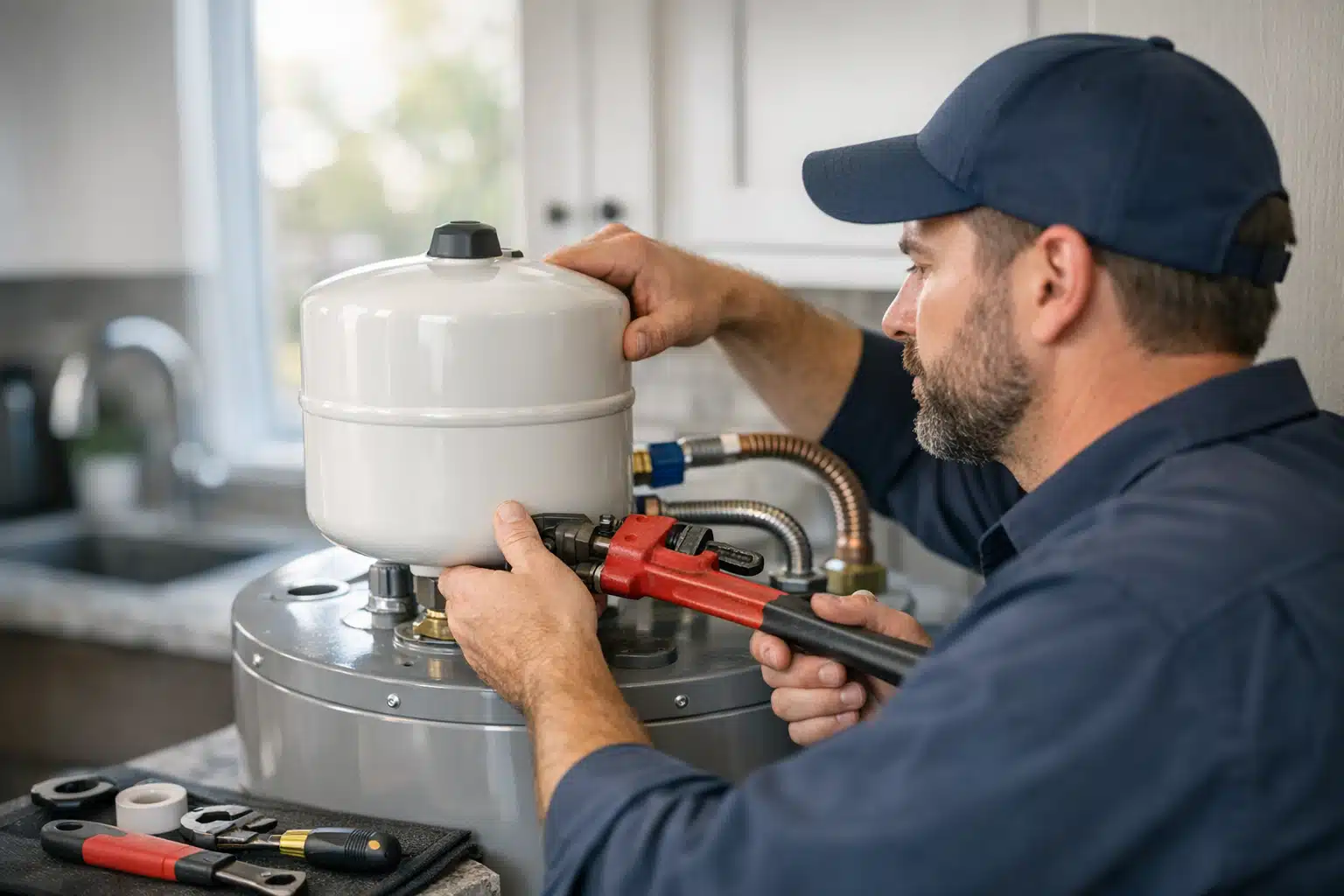
Denver plumbing compliance rules for 2026 focus on expansion tanks, backflow testing, water efficiency standards, and proper permits. Homeowners in Denver, Arvada, and surrounding areas should address code gaps early to avoid inspection failures and protect home value.
- Expansion tanks are now strictly enforced on closed water heater systems, and backflow prevention devices require annual testing with documented records. Missing either can trigger inspection failures or service shutoffs.
- Permits are required for water heater replacements, repiping, sewer repairs, and fixture relocations. Unpermitted work can void insurance claims and cause problems during home sales.
- Common compliance issues include missing expansion tanks, improper S-traps, unvented island sinks, and corroded dielectric unions. Most can be fixed in a single visit by a licensed plumber.
Denver plumbing compliance refers to the set of local regulations and codes that govern plumbing installations, repairs, and inspections in the Denver metro area. Following these rules matters because non-compliant work can result in failed inspections, rejected permits, and costly delays - especially problematic during winter emergencies when burst pipes need immediate attention and temperatures drop below zero.
A burst pipe at 6 a.m. in January is bad enough without a failed inspection making it worse. Many Arvada homeowners find out about Denver plumbing compliance rules only after a repair goes sideways or a permit gets rejected. That timing costs money and delays repairs when temperatures drop below zero.
The code books shift every few years, and 2026 brings changes worth knowing before you remodel, sell, or replace a water heater. Below are the updates that matter most for homes across Denver, Arvada, Wheat Ridge, and the Front Range.
What Are the Latest Denver Plumbing Compliance Rules for 2026?
Denver bases its plumbing rules on the International Plumbing Code, amended locally by the city and county. The 2026 regulations align with the 2021 IPC family, with Denver-specific amendments layered on top.
Arvada follows Colorado state adoption of the IPC through Jefferson County building oversight. The practical result: both cities enforce similar standards, with small permitting differences.
Here are the headline changes homeowners should track:
- Expansion tank requirements on closed water heater systems are being enforced more strictly during inspections.
- Backflow prevention testing documentation now requires annual records for irrigation and boiler connections.
- Water efficiency fixture standards cap flow rates on new faucets and showerheads.
- Permit thresholds clarify which repairs need a licensed plumber pull a permit.
Permits: When You Need One in Arvada and Denver
A permit protects you during resale and after a claim. Skipping one can void insurance payouts on water damage.
You need a plumbing permit in Denver and Arvada for most work beyond a simple fixture swap. A permit is a city authorization to perform regulated plumbing work with inspection.
Work That Requires a Permit
- Water heater replacement, including tankless conversions
- Repiping or adding new supply and drain lines
- Sewer line repair or replacement
- Moving fixtures during a bathroom or kitchen remodel
- Gas line modifications for appliances
Work That Usually Does Not
- Replacing a faucet in the same location
- Swapping a toilet with no plumbing changes
- Clearing a drain clog
- Fixing a leaking supply stop valve
When in doubt, call before you cut. A rejected inspection costs more than the permit fee.
Water Heater Rules That Trip Up Denver Homeowners
Water heater code enforcement is one of the top reasons Arvada inspections fail. The 2026 cycle keeps a sharp focus on three items.
Expansion Tanks on Closed Systems
Most Denver homes now have a pressure-reducing valve or check valve on the main line. That creates a closed system where water cannot flow backward.
Without an expansion tank, heated water has nowhere to expand. Pressure spikes, the T&P valve drips, and the tank wears out early.
If your water heater lacks an expansion tank, expect an inspector to flag it during replacement. Adding one runs $150 to $350 installed in most Arvada homes.
Seismic and Clearance Requirements
Gas water heaters in garages must sit on a raised platform with the ignition source off the floor. Combustion air clearances are checked on every install.
Tankless Venting and Gas Sizing
Tankless units draw more gas than tank models. Many older Arvada homes have undersized gas lines that fail inspection on conversion.
A proper install includes gas line sizing, Category IV venting, and condensate drainage. Budget $3,000 to $5,500 for a code-compliant tankless swap here.
Backflow Prevention and Denver Plumbing Compliance
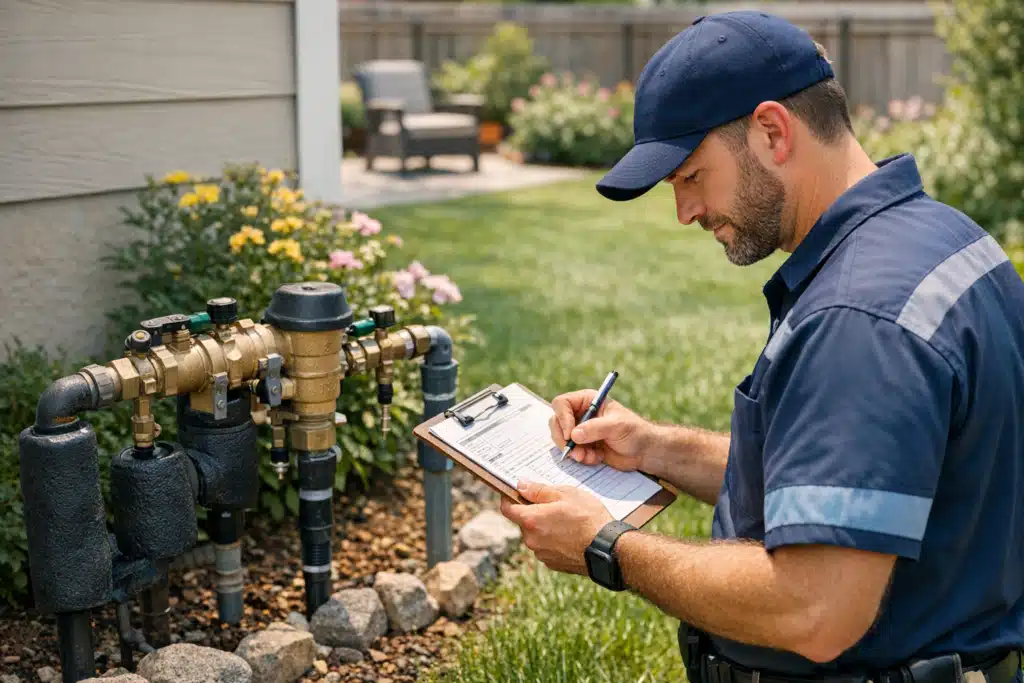
Backflow prevention stops contaminated water from reversing into the clean supply. Denver Water treats this as a public health matter and audits records.
Homes with these features need a tested backflow device:
- Lawn irrigation systems with underground sprinklers
- Boiler-based heating connected to potable water
- Secondary wells or rainwater reuse connected to the house
Under the 2026 enforcement push, annual testing by a certified tester is expected, with records kept on file. A test runs $75 to $150 and takes under an hour.
Arvada residents on Denver Water service should watch for mailed test notices. Missing a deadline can lead to shutoff warnings on irrigation lines.
Water Efficiency Standards for New Fixtures
Colorado law sets maximum flow rates on fixtures sold in the state. The 2026 cycle keeps these caps in force for new installations.
- Toilets: 1.28 gallons per flush maximum
- Showerheads: 2.0 gallons per minute maximum
- Bathroom faucets: 1.5 gallons per minute maximum
- Kitchen faucets: 1.8 gallons per minute maximum
Front Range water is hard, and high mineral content clogs low-flow aerators fast. Choosing fixtures rated for hard water keeps pressure steady over the years.
5 Compliance Problems We See in Arvada Homes
From real service calls across Arvada and Wheat Ridge, the same issues repeat. Catching them early saves inspection headaches.
- Missing expansion tank on a water heater behind a pressure-reducing valve.
- Improper S-traps under older sink drains instead of code-approved P-traps.
- Unvented island sinks added during DIY kitchen remodels.
- No permit records for a prior water heater or sewer job, flagged at resale.
- Corroded dielectric unions where copper meets steel, causing slow leaks.
Each of these is fixable. Most get corrected in a single visit by a licensed plumber.

 Posted on Google
Sewer Line and Backwater Valve Rules
Older Arvada neighborhoods sit on clay sewer laterals prone to root intrusion. When these lines are replaced, current code applies to the full repair.
Homes in low-lying areas benefit from a backwater valve. A backwater valve is a one-way flap that blocks sewage from backing into your basement during heavy flow.
Denver and Arvada both allow and encourage these on at-risk properties. A permitted install usually falls between $1,500 and $4,000 depending on access and depth.
Selling a Home? Compliance Affects Your Sale
Buyers’ inspectors flag unpermitted work fast. A water heater without a permit record can stall closing or force a price cut.
Before listing in Arvada, gather these items:
- Permit history for major plumbing work
- Recent backflow test records, if you have irrigation
- Proof of expansion tank and current water heater install
- Sewer scope results if the line is older than 40 years
Fixing small code gaps before listing keeps negotiations clean. It costs far less than a buyer credit demand.
Winter Timing and Compliance Work
Front Range freeze-thaw cycles stress supply lines and outdoor hose bibs. Code calls for frost-proof sillcocks on exterior connections.
Replacing an old hose bib with a frost-free model prevents the classic January burst. Pair that with insulated supply lines in crawl spaces and garages.
Scheduling non-emergency compliance upgrades in fall avoids the winter rush. Inspectors and plumbers both move faster before the first hard freeze.
Key Takeaways for Denver and Arvada Homeowners
Denver plumbing compliance in 2026 focuses on expansion tanks, backflow testing, water efficiency, and proper permits. Arvada follows closely matched standards under Jefferson County oversight.
Handle small code gaps early, keep your permit and test records, and verify any major work with an inspection. These steps protect your home’s value and your insurance coverage.
Need help meeting current code in Arvada, Denver, Wheat Ridge, Broomfield, or Westminster? Call or text Cardom Plumbing & Heating at 720‑775‑8322, email tomd@cardomcolorado.com, or visit https://www.cardomcolorado.com to schedule a compliance check.
Sources
- City and County of Denver – Denver Building and Fire Code
- Denver Water – Cross-Connection Control and Backflow Prevention
- International Code Council – 2021 International Plumbing Code
- Colorado Department of Public Health and Environment – Plumbing Regulations


