
Recent Posts
Categories
How to Prevent Faucet Leaks Caused by Denver’s Water Chemistry
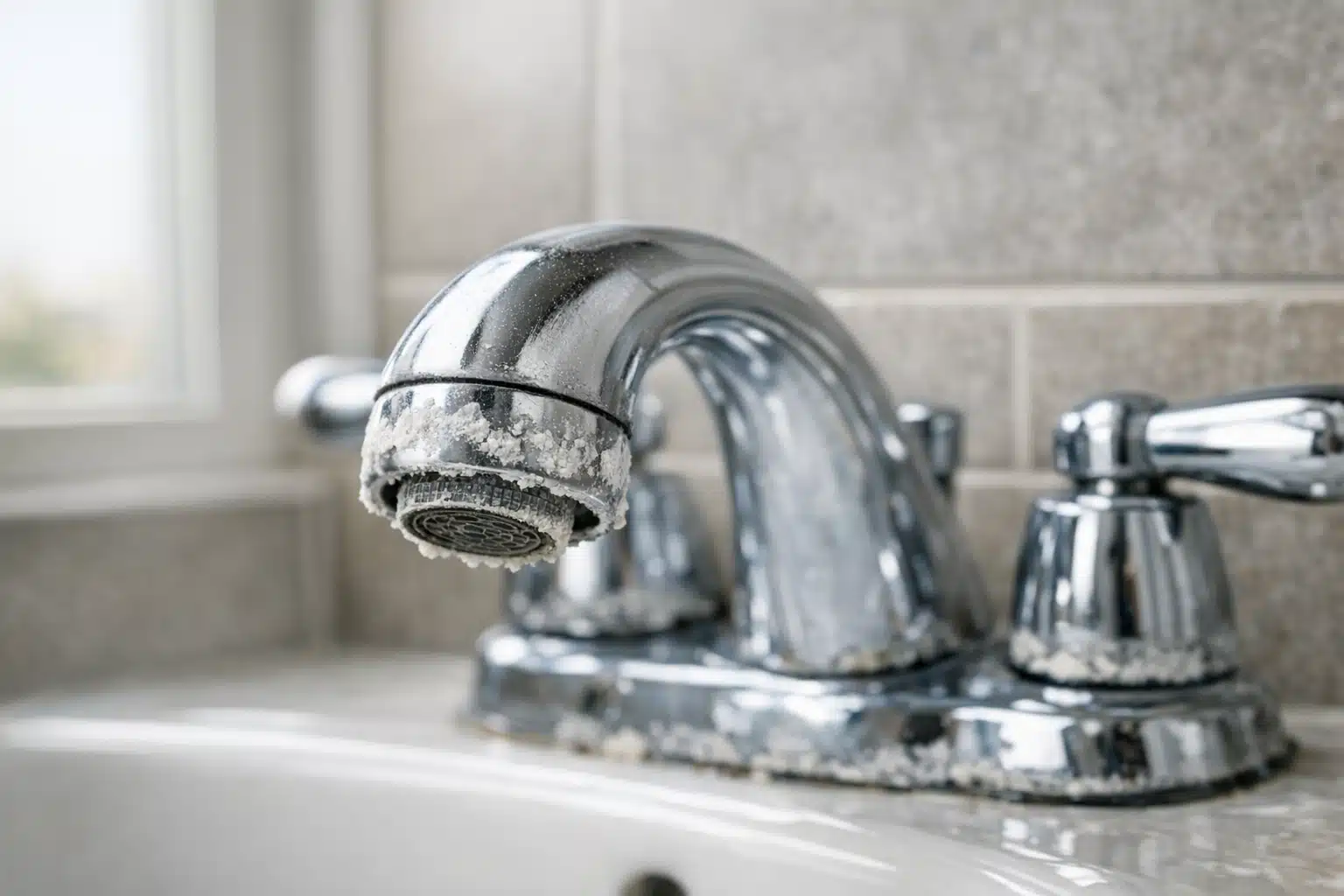
Faucet leaks in Denver-area homes are often caused by mineral-heavy water from the South Platte River and mountain snowmelt, which builds scale on internal faucet parts and accelerates wear.
- Hard water contains high calcium and magnesium levels that crystallize into scale on cartridges, O-rings, washers, and aerators - causing friction, stiffness, and eventual leaks.
- Prevention steps include cleaning aerators every three months with vinegar, wiping fixtures dry after use, replacing worn cartridges before they fail, and installing a whole-home water softener.
- Seasonal factors matter - late summer brings harder water and heavier scale buildup, while winter cold can crack already-damaged seals. Checking faucets each fall helps catch damage early.
To prevent faucet leaks caused by Denver's hard water, install a whole-house water softener to reduce mineral buildup on internal components. Replace rubber washers and O-rings annually since minerals degrade them faster. Clean aerators monthly with white vinegar to remove calcium deposits, and consider upgrading to ceramic disc cartridges that resist mineral damage better than standard rubber parts.
A dripping bathroom faucet at 2 a.m. keeps plenty of Arvada homeowners awake. The culprit is rarely bad luck. In most cases, faucet leaks trace back to the mineral-heavy water flowing from the South Platte River and mountain snowmelt into Denver-area homes.
This post breaks down what causes those leaks, why local water chemistry speeds up wear, and the steps you can take to stop drips before they start.
What Causes Faucet Leaks in Denver Homes?
A faucet leak happens when the internal parts that seal off water flow wear out or corrode. Denver’s water makes that wear happen faster.
The Front Range sits on hard water. That means high levels of dissolved calcium and magnesium. As water dries, those minerals crystallize into the white, chalky scale you see on fixtures.
Inside a faucet, that same scale builds up on the moving parts. The result is friction, stiffness, and eventually a leak.
The Parts That Fail First
Most faucet leaks start in one of a few small components:
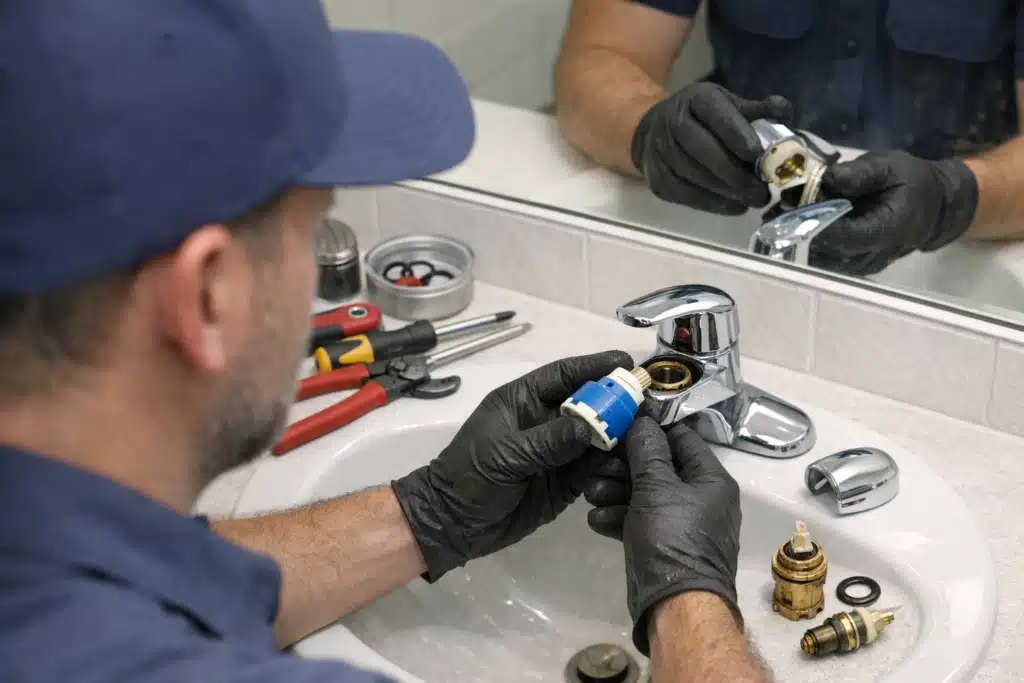
- Cartridges – The plastic-and-rubber valve inside single-handle faucets. Scale scratches the seals and causes drips at the spout.
- O-rings – Small rubber rings that seal the base and handle. Mineral grit dries them out and cracks them.
- Washers and seats – Found in older two-handle faucets. Hard water grinds the washer against a corroded seat.
- Aerators – The screen at the tip of the spout. Scale clogs it, raising pressure and stressing seals upstream.
How Denver’s Water Chemistry Speeds Up Wear
Denver Water reports hardness levels that swing between roughly 45 and 150 milligrams per liter depending on the source and season. Snowmelt months tend to run softer, late summer runs harder.
That seasonal shift matters. A faucet exposed to harder late-summer water builds scale faster than one running on spring snowmelt.
Homes on well water in the foothills west of Arvada see even higher mineral loads. We have pulled cartridges from Golden-area homes coated in enough calcium to look sandblasted.
Warning Signs a Faucet Is About to Leak
Catching a faucet early saves money and water. Watch for the signals below.
- A stiff or grinding handle. Scale is binding the cartridge or stem.
- Reduced flow from one tap. The aerator or valve is clogging.
- A faint whistle when running. Mineral buildup is narrowing the water path.
- White crust around the spout base. Minerals are already drying on seals.
- Intermittent drips after shutoff. The seat or washer is no longer sealing clean.
One slow drip wastes over 3,000 gallons a year, according to the EPA. At Denver Water rates, that adds up fast across a household.
How to Prevent Faucet Leaks Caused by Hard Water
You cannot change the water coming into your home overnight. You can slow the damage it does to your fixtures.
1. Clean Aerators Every Three Months
Unscrew the aerator by hand or with tape-wrapped pliers. Soak it in white vinegar for an hour to dissolve scale. Rinse and reinstall.
This one habit prevents pressure spikes that kill cartridges early. It takes ten minutes per faucet.
2. Wipe Fixtures Dry After Heavy Use
Standing water leaves mineral deposits. A quick wipe on the spout and handle base keeps scale off the seals you cannot reach.
3. Replace Worn Cartridges Before They Fail
If a handle feels stiff, do not force it. Forcing a scaled cartridge tears the internal seals and turns a cheap fix into a flood.
A cartridge swap runs far less than repairing water-damaged cabinetry under a sink.
4. Install a Whole-Home Water Softener
A softener trades calcium and magnesium for sodium or potassium. Softer water means almost no scale on faucet internals.
For Arvada, Westminster, and Broomfield homes on hard municipal water, this is the single best step to extend fixture life. Many of our clients report cartridges lasting years longer after installation.
5. Match New Fixtures to Local Water
When you replace a faucet, choose models rated for hard water. Ceramic disc valves hold up far better than cheap rubber-washer designs against Front Range minerals.
Repair or Replace? What Denver Homeowners Should Know
Not every leaky faucet needs a full replacement. Here is how we decide on the job.
- Repair when the faucet body is solid and only the cartridge, O-ring, or washer has worn. Common on faucets under 10 years old.
- Replace when the valve seat is pitted, the finish is flaking, or parts are discontinued. Scale corrosion on older fixtures usually tips the scale toward replacement.
Typical Cost Ranges in the Denver Metro
Prices vary by faucet type and access, but local ballpark figures help you plan:
- Cartridge or washer repair: roughly $100–$250 for parts and labor.
- Standard faucet replacement: roughly $250–$500 plus the fixture.
- Whole-home water softener install: roughly $1,500–$3,500 depending on system size.
A softener pays for itself over time by protecting faucets, water heaters, and appliances from the same mineral attack.

 Posted on Google
Seasonal Faucet Problems Across the Front Range
Water chemistry is not the only force at work here. Colorado’s climate adds its own stress.
- Late summer hardness spikes leave the heaviest scale on kitchen and bath faucets.
- Winter cold snaps stiffen rubber O-rings, making scaled seals more likely to crack.
- Outdoor hose bibs in Wheat Ridge and Westminster fail when scale meets freezing temperatures.
- Dry indoor air speeds the drying of mineral deposits around spouts.
- Spring thaw pressure shifts can jar already-worn cartridges into dripping.
Checking faucets each fall catches summer scale damage before winter makes it worse.
When to Call a Plumber in Arvada
Some faucet jobs are fine for a confident homeowner. Others need a trained hand.
Call us when a faucet keeps dripping after a cartridge swap. That points to a corroded valve seat or a hidden supply-line issue.
Call sooner if you see water under the sink, a spreading stain, or mineral buildup on connections. Those signs mean the leak has moved past the faucet itself.
Our team knows the water flowing into Arvada, Wheat Ridge, Broomfield, and Westminster homes. We stock the cartridges and parts that match local fixtures, which cuts repair time.
Protect Your Faucets From Denver’s Hard Water
Faucet leaks in the Denver metro trace back to mineral-rich water wearing down small seals and valves. Regular aerator cleaning, prompt cartridge replacement, and a water softener stop most drips before they start.
If a faucet is dripping or a handle feels stuck, reach out to Cardom Plumbing & Heating. Call or text us at 720‑775‑8322, email tomd@cardomcolorado.com, or visit https://www.cardomcolorado.com to book service in Arvada and nearby Front Range communities.
Sources
- Denver Water – Water Hardness
- U.S. EPA WaterSense – Fix a Leak Week
- USGS Water Science School – Hardness of Water


