Boiler installation in Wheat Ridge, CO requires a thorough understanding of each home's unique heating needs and local conditions. The process involves careful assessment, proper sizing, and professional installation to ensure efficient and reliable heating during harsh winters.
Wheat Ridge homes face unique challenges due to altitude and varying infrastructure, impacting boiler performance. Professional installation includes evaluating existing systems and ensuring safe gas connections.
Older homes often have outdated boiler systems that may not meet modern efficiency standards, leading to increased energy costs and uneven heating.
Cardom Plumbing & Heating offers tailored solutions, focusing on specific home characteristics and providing ongoing support to ensure optimal system performance.
What are the signs that indicate a boiler needs installation?
Signs that indicate a boiler needs installation include unusual noises like rumbling, inconsistent heating across rooms, and rising energy bills over time. Homeowners should pay attention to these symptoms, as they often signal that the boiler system is failing and may require replacement for reliable heating.
Boiler Installation in Wheat Ridge, CO
That rumbling sound from your basement. The inconsistent heat that leaves some rooms freezing while others feel like saunas. Maybe your energy bills have climbed steadily for three winters straight. These signals point to a boiler system that's struggling – and Wheat Ridge homeowners know better than most how much reliable heating matters when January temperatures plunge below zero.
Boiler installation involves far more than swapping out old equipment for new. The process encompasses careful assessment of your home's heating load, evaluation of existing piping and radiator systems, proper sizing calculations, and integration with your water supply and gas lines. A professional approach addresses every connection point – from the gas manifold to the expansion tank, from the circulator pumps to each zone valve throughout your home.
Why Professional Diagnosis Matters
Wheat Ridge presents unique challenges for boiler systems. Homes here range from 1950s ranch-style builds with original cast iron radiators to modern constructions requiring high-efficiency condensing units. The city's elevation of approximately 5,400 feet affects combustion efficiency. Municipal water characteristics influence system longevity. Getting these factors right from the start prevents costly callbacks and premature equipment failure.
Proper sizing prevents short-cycling and reduces energy waste by matching output to your home's actual heating demands
Professional gas line connections protect your household from carbon monoxide risks and combustion hazards
Correct venting installation accounts for Wheat Ridge's altitude and ensures safe exhaust dispersal
System integration with existing radiators or baseboard units maximizes heat distribution efficiency
Cardom Plumbing & Heating provides Boiler Installation services in all neighborhoods of Wheat Ridge including Applewood Lane, Kipling Villiage, Outlook Clear Creek, The Ridge, and Vista Village.
Wheat Ridge sits at the intersection of aging infrastructure and demanding climate conditions. Many neighborhoods feature homes built during the post-war housing boom of the 1950s and 1960s – structures that often still rely on original boiler systems well past their expected lifespan. These older units weren't designed with modern efficiency standards in mind, and decades of thermal cycling have taken their toll on heat exchangers, valves, and piping connections.
The Front Range climate creates particular stress on heating equipment. Winter temperature swings can shift 40 degrees in a single day, forcing boilers to cycle repeatedly between standby and full operation. This constant on-off pattern accelerates wear on ignition systems, circulator pumps, and thermostatic controls. Spring and fall bring their own challenges – systems that sit dormant for months can develop seized valves, corroded connections, and sediment buildup that only becomes apparent when heating demand returns.
Local Factors Affecting Boiler Performance
Altitude effects – At 5,400 feet, atmospheric pressure reduces combustion efficiency; boilers require specific adjustments to burn fuel properly and prevent incomplete combustion
Hard water mineral content – Wheat Ridge water contains calcium and magnesium that accumulate inside heat exchangers, reducing heat transfer and causing localized overheating
Aging gas infrastructure – Older neighborhoods may have undersized gas lines that struggle to deliver adequate fuel volume during peak heating demand
Foundation settling – Decades of Colorado's expansive clay soils have shifted many homes, stressing boiler connections and piping runs
Freeze-thaw cycling – Repeated temperature fluctuations stress expansion tanks and pressure relief systems
Delayed maintenance – Many Wheat Ridge boilers have operated for years without professional servicing, accumulating problems that compound over time
Warning Signs Indicating Replacement Need
Watch for these indicators that suggest your boiler may need replacement rather than repair:
Visible corrosion or rust staining around the boiler jacket or piping connections
Repeated pressure loss requiring frequent system refilling
Uneven heating across zones that persists despite thermostat adjustments
Yellow or orange burner flames instead of steady blue combustion
Increasing frequency of repair calls over consecutive heating seasons
Energy bills climbing despite consistent thermostat settings
Every boiler installation begins with understanding your specific situation. We don't apply cookie-cutter solutions to Wheat Ridge homes because no two heating systems present identical circumstances.
Our Installation Process
Initial assessment – We evaluate your existing boiler, inspect all connected piping, examine radiators or baseboard units, and identify any underlying issues that might affect new equipment performance
Heat load calculation – Using Manual J methodology adjusted for Wheat Ridge's altitude, we determine the precise heating capacity your home requires – avoiding both undersizing and wasteful oversizing
Equipment selection – Based on your home's characteristics, budget considerations, and efficiency goals, we recommend appropriate boiler options and explain the tradeoffs of each
Preparation work – Before installation day, we address any necessary upgrades to gas lines, venting pathways, or electrical connections that the new system requires
Professional installation – Our technicians complete the physical installation, including all gas connections, water supply integration, venting, and control wiring
System commissioning – We fire the new boiler, adjust combustion settings for altitude, balance zone flow rates, and verify proper operation across all heating circuits
Owner orientation – Before leaving, we walk you through system operation, thermostat programming, and maintenance requirements
Methods and Techniques
Combustion analysis testing to verify safe and efficient fuel burning at Wheat Ridge elevation
Pressure testing of all gas connections using electronic leak detection equipment
Flow rate measurement at each zone to confirm balanced heat distribution
Expansion tank pre-charge verification to prevent pressure fluctuations
Safety control testing including high-limit switches and low-water cutoffs
Carbon monoxide monitoring throughout the commissioning process
Quality Control and Communication
We photograph key connection points and document all installation parameters for your records. You'll receive clear explanations at each project phase – no surprises, no hidden complications. If we encounter unexpected conditions during installation, we discuss options with you before proceeding.
Why Choose Cardom Plumbing & Heating
Boiler work demands specific expertise that general contractors simply don't possess. Our technicians hold certifications in hydronic heating systems and maintain current training on high-efficiency condensing boiler technology. We understand the particular requirements of radiant floor systems, steam boilers, and hot water baseboard configurations – the variety of heating approaches found throughout Wheat Ridge neighborhoods.
Local Knowledge That Matters
We've worked in Wheat Ridge homes for years. We know which neighborhoods have older cast iron systems. We understand the gas pressure variations across different parts of the city. We've seen how the local water quality affects different boiler brands. This accumulated experience translates into installations that perform reliably through harsh Colorado winters.
Licensed and insured – not just certified – for all gas and hydronic work in Jefferson County
Altitude-specific combustion tuning that many out-of-area contractors overlook
Relationships with local equipment suppliers ensuring parts availability
Familiarity with Wheat Ridge building department requirements and inspection processes
Service Commitments
When heating fails in January, waiting days for service isn't acceptable. We prioritize response times that reflect the urgency of heating emergencies. Our follow-up procedures include post-installation check-ins to verify system performance and address any questions that arise during your first heating season with new equipment.
Detailed written proposals with clear scope descriptions
Permit acquisition and inspection coordination handled on your behalf
Worksite cleanup that leaves your mechanical room organized
Warranty registration and documentation provided at project completion
Wheat Ridge developed primarily during two distinct building periods, each presenting different boiler installation requirements. The first wave came during the 1950s and 1960s when the area transitioned from agricultural land to residential suburbs. These mid-century homes typically feature full basements – ideal locations for boiler equipment – but often contain original cast iron radiator systems that require careful evaluation before connecting to modern high-efficiency units.
Housing Stock by Era
1950s–1960s ranch homes – Typically 1,000–1,400 square feet with basements; often have original gravity-fed or early circulator boiler systems; cast iron radiators may still function well with proper integration
1970s–1980s split-levels – Multiple floor levels create zoning challenges; original boilers often undersized for actual heating loads; baseboard convectors common
1990s–2000s infill construction – Mixed heating approaches; some forced air, some hydronic; tighter building envelopes require careful load calculations
Recent renovations – Many older homes have added square footage without upgrading heating capacity; existing boilers may be severely undersized
Structural Considerations
Wheat Ridge sits on expansive clay soils that have caused foundation movement in many older homes. This settling can stress boiler connections and piping runs, creating leak points that worsen over time. During installation assessments, we examine not just the boiler itself but the entire distribution system for signs of stress-related damage.
Basement configurations vary significantly across Wheat Ridge neighborhoods. Some homes have finished basements where boiler equipment shares space with living areas – requiring careful attention to noise levels and aesthetic integration. Others have unfinished utility spaces with ample room for equipment but potential moisture issues that affect installation approaches.
Ceiling heights in older basements sometimes limit equipment options
Existing chimney flues may require relining for modern condensing boilers
Electrical panel capacity in 1950s homes often needs evaluation for new equipment demands
Access pathways for equipment delivery can be challenging in some floor plans
Wheat Ridge's environmental characteristics directly influence boiler system design, installation methods, and long-term performance. Understanding these local conditions helps explain why generic installation approaches often fall short in this community.
Water Quality Characteristics
Consolidated Mutual Water Company and Denver Water serve different portions of Wheat Ridge, each with distinct water chemistry profiles. Both sources contain moderate mineral content that affects boiler systems over time.
Water treatment approaches vary seasonally, affecting pH levels and corrosion potential
Proper system water treatment during installation helps protect new equipment from mineral accumulation
Closed-loop systems require specific inhibitor chemistry to prevent internal corrosion
Climate Impacts on Heating Systems
The Front Range climate subjects boiler systems to demanding operating conditions. Winter temperatures regularly drop below zero, requiring sustained high-output operation. Yet daytime warming can push temperatures into the 50s, causing rapid cycling that stresses components.
Temperature extremes – Design temperatures of -5°F to -10°F require properly sized equipment; undersized boilers run continuously during cold snaps
Low humidity – Wheat Ridge's semi-arid climate means heating systems run frequently; dry conditions accelerate wear on seals and gaskets
Altitude effects – At 5,400 feet, air contains roughly 17% less oxygen than sea level; combustion systems require specific adjustment for proper fuel burning
Rapid pressure changes – Weather fronts crossing the mountains cause barometric swings that affect draft conditions in atmospheric-vented boilers
Soil and Drainage Considerations
Wheat Ridge's clay-heavy soils create challenges for any underground components of heating systems. Ground-source heat pump loops – sometimes paired with boiler backup systems – require careful installation to account for soil expansion and contraction. Condensate drainage from high-efficiency boilers must be routed to prevent freezing during winter months, particularly in homes with exterior condensate lines.
Recent Work
Repair Boiler Leaks - Wheat Ridge
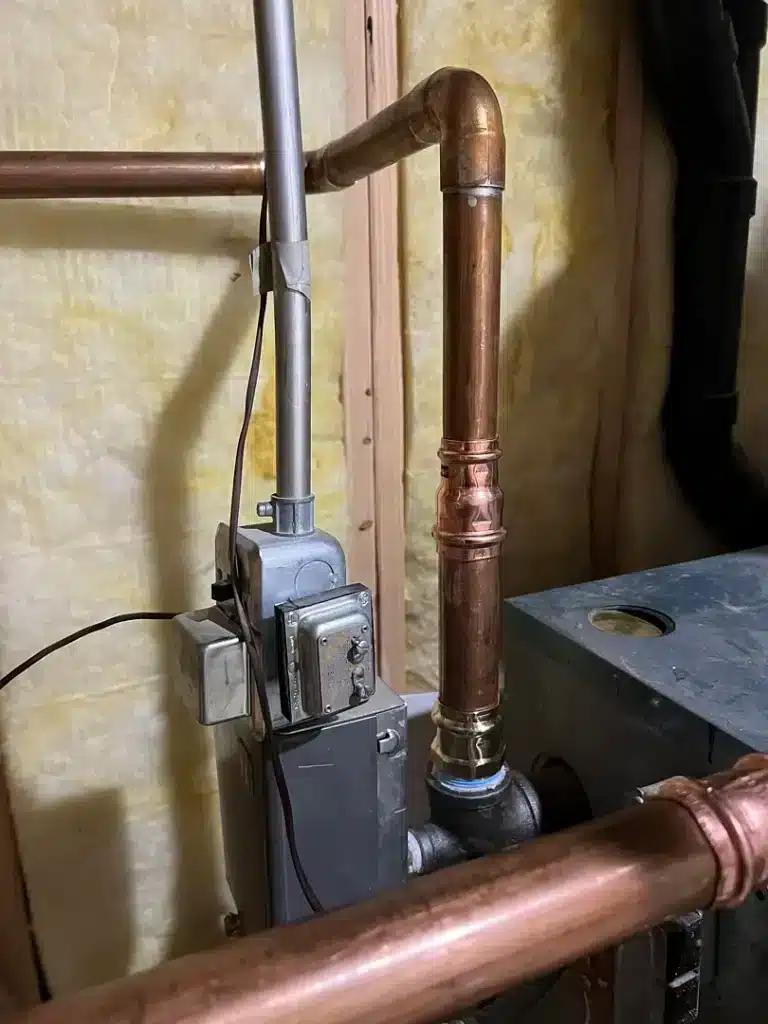
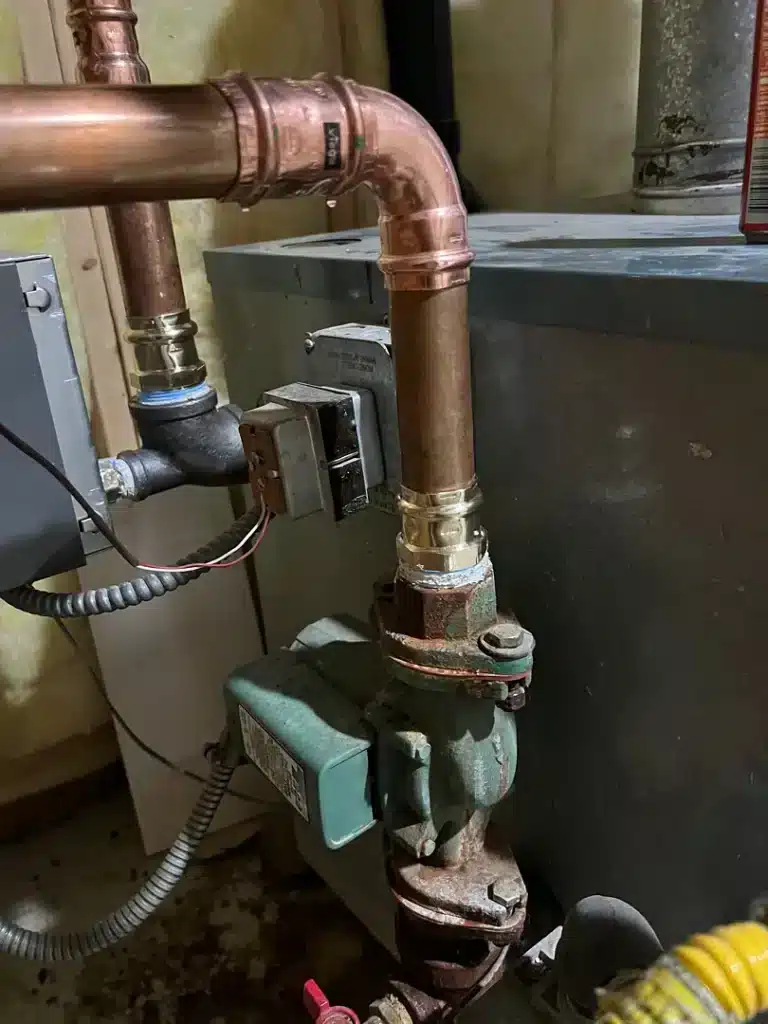
Problem:Repair two boiler leaks on the supply and return mains at the boiler.
Found:Rotted pipes.
Fixed:Repipe the supply main with new copper and steel fittings. Reinstall the aquastate relay into the tee fittings. Repipe the return main with copper fittings. Turn on the water and fill the system. Purge air as much as possible from the boiler system before opening up all isolation valves.
Outcome:Start up the boiler and test.
Boiler Repairs and Upgrade - Wheat Ridge
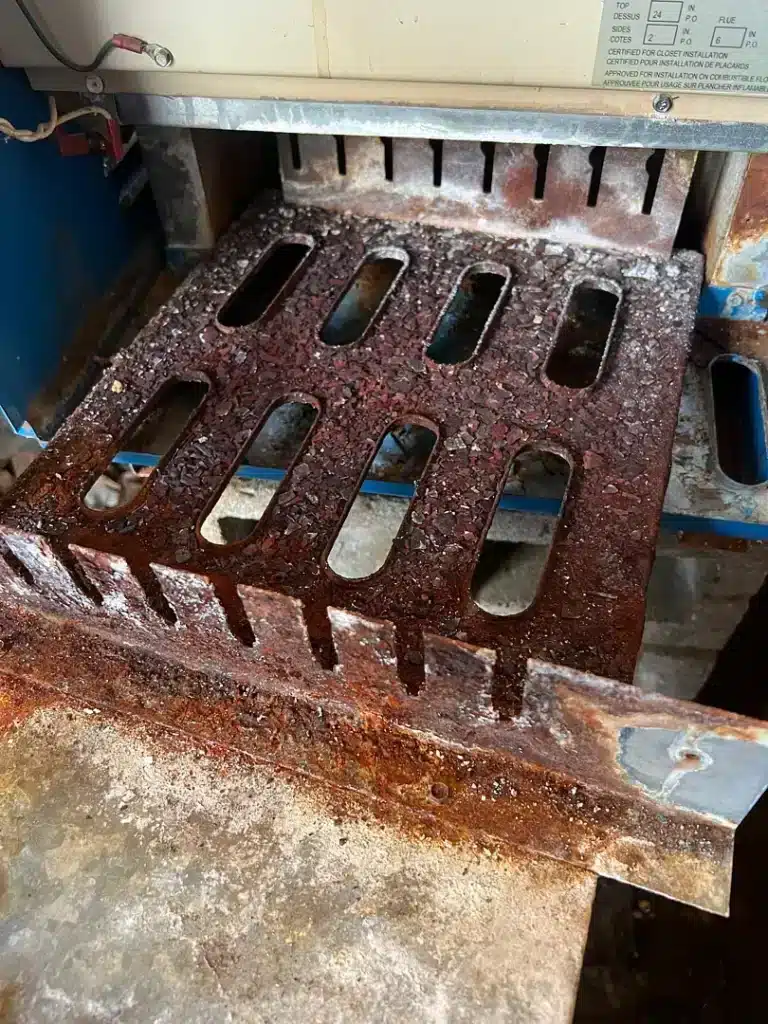
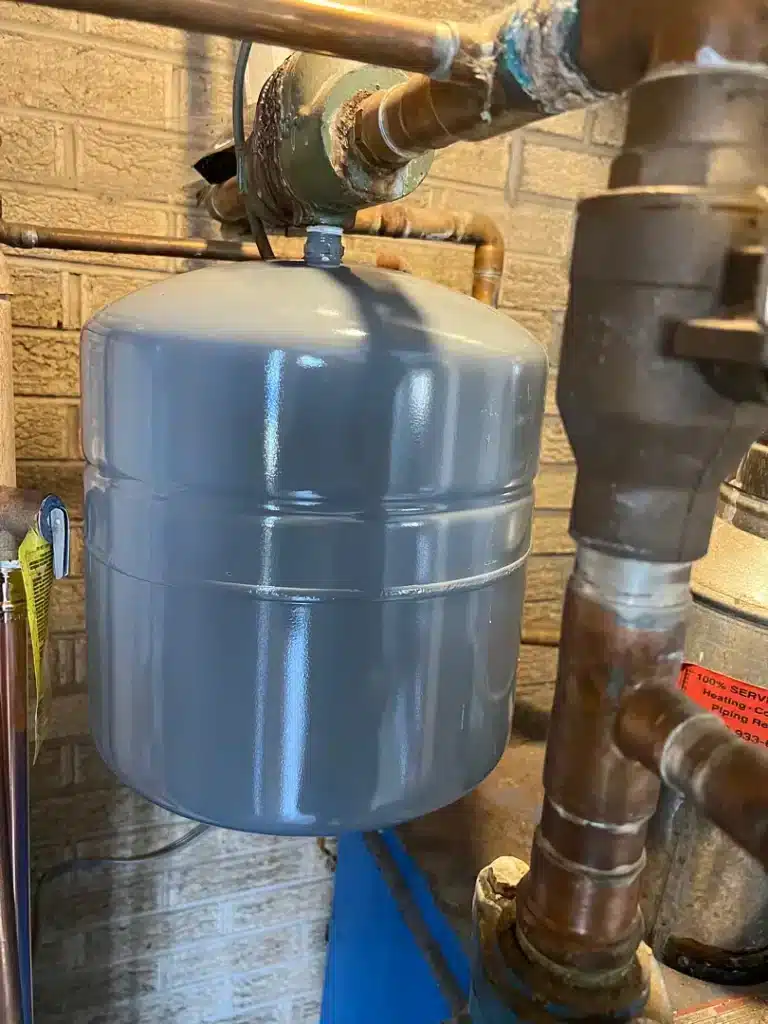
Problem:Numerous small boiler repairs and upgrade.
Found:Boiler was very dirty and rusty at the burners and need a thorough cleaning.
Fixed:Clean boiler, remove and replace , air vent, relief valve and expansion tank. Also pipe water heater relief to floor.
Outcome:Fill boiler back up and test, no issues found.
Wheat Ridge Energy Infrastructure and Heating Demand Data
Wheat Ridge residents face heating demands that reflect both the community's climate and its housing stock characteristics. Jefferson County data indicates that residential heating accounts for a substantial portion of household energy consumption, with natural gas serving as the primary fuel source for the majority of Wheat Ridge homes. Xcel Energy, the dominant natural gas provider in the area, reports that residential customers in the Denver metropolitan region – including Wheat Ridge – experience peak demand periods from December through February when sustained cold weather drives continuous heating operation.
Local Energy Consumption Patterns
Average Wheat Ridge homes consume 600–900 therms of natural gas annually, with 70–80% attributed to space heating
Older homes with original boiler equipment often consume 20–40% more fuel than comparable homes with modern high-efficiency units
Colorado's Energy Office reports that heating system upgrades represent one of the highest-impact efficiency improvements for Front Range homeowners
Rebate programs through Xcel Energy provide financial incentives for high-efficiency boiler installations, reducing upfront costs
Infrastructure Age and Capacity
Much of Wheat Ridge's gas distribution infrastructure dates to the community's primary development period in the 1950s and 1960s. While Xcel Energy has upgraded main distribution lines, individual service connections to older homes may still reflect original sizing. This matters for boiler installation because modern high-efficiency units sometimes have different gas pressure requirements than the equipment they replace.
Homes in older Wheat Ridge neighborhoods occasionally require gas line upgrades to support new boiler installations – particularly when replacing small atmospheric boilers with larger modulating condensing units. Identifying these requirements during the assessment phase prevents installation delays and ensures the new system receives adequate fuel supply during peak demand periods. Cardom Plumbing & Heating evaluates gas line capacity as a standard part of every boiler installation assessment, coordinating any necessary upgrades before equipment delivery.
Common signs include strange noises from your boiler, inconsistent heating throughout your home, and rising energy bills. If your boiler is over 15 years old and showing these issues, it may be time for a replacement.
Typically, a boiler installation can take anywhere from a few hours to a full day, depending on the complexity of the system and any necessary modifications to your home. A professional will assess your specific situation to provide a more accurate timeline.
The cost can vary based on the type of boiler you choose, the complexity of the installation, and any additional work needed, such as updating piping or radiators. Local labor rates and the specific requirements of your home also play a significant role.
Yes, most boiler installations require a permit to ensure compliance with local building codes and safety regulations. A qualified contractor will typically handle the permitting process for you.
Choosing the right boiler involves assessing your home's heating needs, considering the size of your space, and evaluating energy efficiency ratings. A professional can help you determine the best option based on your specific requirements.
Regular maintenance includes annual inspections, checking for leaks, and ensuring the system is operating efficiently. Flushing the system and checking the pressure levels are also important to prolong the life of your boiler.
While some homeowners may consider a DIY installation, it is highly recommended to hire a professional. Proper installation is crucial for safety and efficiency, and professionals have the expertise to navigate local codes and ensure everything is set up correctly.