

Boiler installation in Northglenn, CO, is essential for homeowners facing heating issues or high utility bills. The process involves careful assessment and professional installation to ensure safety and efficiency.
- Homeowners may need to replace aging boilers due to inefficiency or failure. Proper installation requires evaluating heating loads and existing systems.
- Northglenn's elevation and climate create unique challenges for boiler performance and selection. Professional installation helps prevent hazards and equipment strain.
- Cardom Plumbing & Heating offers comprehensive services, including safety testing and homeowner education, ensuring a smooth installation process.
Boiler installation in Northglenn, CO, involves assessing the existing heating system, selecting an appropriate modern boiler, and ensuring proper installation to enhance efficiency. This process typically includes removing the old unit, connecting the new boiler to existing plumbing and electrical systems, and conducting safety checks to guarantee optimal performance.
Boiler Installation in Northglenn, CO
Your home's heating system stopped working mid-January, and you're watching your breath fog inside your own living room. Or maybe your current boiler has been making alarming noises, cycling on and off constantly, or driving your utility bills through the roof. These scenarios push Northglenn homeowners toward a decision they've been putting off – replacing an aging or failing boiler with a modern, efficient system.
Boiler installation involves far more than simply swapping out equipment. The process requires careful assessment of your home's heating load, evaluation of existing hydronic piping and radiator systems, proper gas line connections, venting configuration, and integration with your home's water supply. Professional installation matters because improper sizing leads to short-cycling and premature wear, while incorrect venting creates carbon monoxide hazards.
Northglenn's Front Range location brings specific challenges that affect boiler selection and installation. The city sits at approximately 5,400 feet elevation, which impacts combustion efficiency and requires altitude-adjusted equipment. Winter temperatures regularly drop below freezing, demanding reliable heating capacity. Many Northglenn homes date from the 1960s through 1980s – an era when boiler technology differed significantly from today's high-efficiency condensing units.
- Proper sizing calculations prevent energy waste and equipment strain
- Modern condensing boilers achieve 90-98% efficiency ratings compared to older units at 80% or less
- Professional installation includes safety testing for gas leaks and carbon monoxide
- Correct venting protects your family from combustion byproducts while meeting local code requirements
Common Boiler Issues in Northglenn, CO
Cardom Plumbing & Heating provides Boiler Installation services in all neighborhoods of Northglenn including Arden Karl's Farm, Fox Run, Heritage at Stone Mountain, Red Hawk Ranch, Regatta, Reserve at Northglenn, and Village at North Hills.
Northglenn's semi-arid climate creates a demanding environment for heating systems. Winter brings extended periods below freezing – sometimes for weeks at a stretch – forcing boilers to run continuously. This constant operation accelerates wear on components like circulator pumps, expansion tanks, and heat exchangers. The dry air also affects system pressure, as evaporation from expansion tanks and minor leaks becomes more pronounced than in humid climates.
The city's water supply comes from multiple sources including Standley Lake and the Farmers Reservoir and Irrigation Company. This blended supply contains minerals that accumulate inside boiler heat exchangers over time. Scale buildup reduces heat transfer efficiency, increases fuel consumption, and eventually causes overheating that damages internal components. Homes with older galvanized supply lines often see accelerated sediment accumulation in their heating systems.
Local Factors Affecting Boiler Performance
- Elevation effects – At 5,400 feet, atmospheric pressure is roughly 17% lower than sea level, affecting gas combustion and requiring properly rated equipment
- Temperature swings – Northglenn experiences 40-50 degree daily temperature variations, causing expansion and contraction stress on boiler components
- Hard water minerals – Calcium and magnesium deposits reduce heat exchanger efficiency by 10-25% over a boiler's lifespan
- Aging housing stock – Many homes built during Northglenn's 1970s growth period have original heating systems approaching or exceeding their expected lifespan
- Soil movement – Expansive clay soils common in the area can shift foundations and stress connected gas and water piping
- Dry air conditions – Low humidity accelerates evaporation from system components and can cause pressure fluctuations
Warning Signs Your Boiler Needs Replacement
Recognizing when repair no longer makes sense saves money and prevents emergency breakdowns during Colorado's coldest weather. Watch for these indicators:
- Boiler age exceeding 15-20 years
- Frequent repairs – more than two service calls per heating season
- Uneven heating throughout your home despite radiator adjustments
- Yellow or orange pilot flame instead of blue
- Visible corrosion, rust stains, or water pooling near the unit
- Rising energy bills despite consistent thermostat settings
- Strange noises including banging, whistling, or gurgling sounds
Recent Work
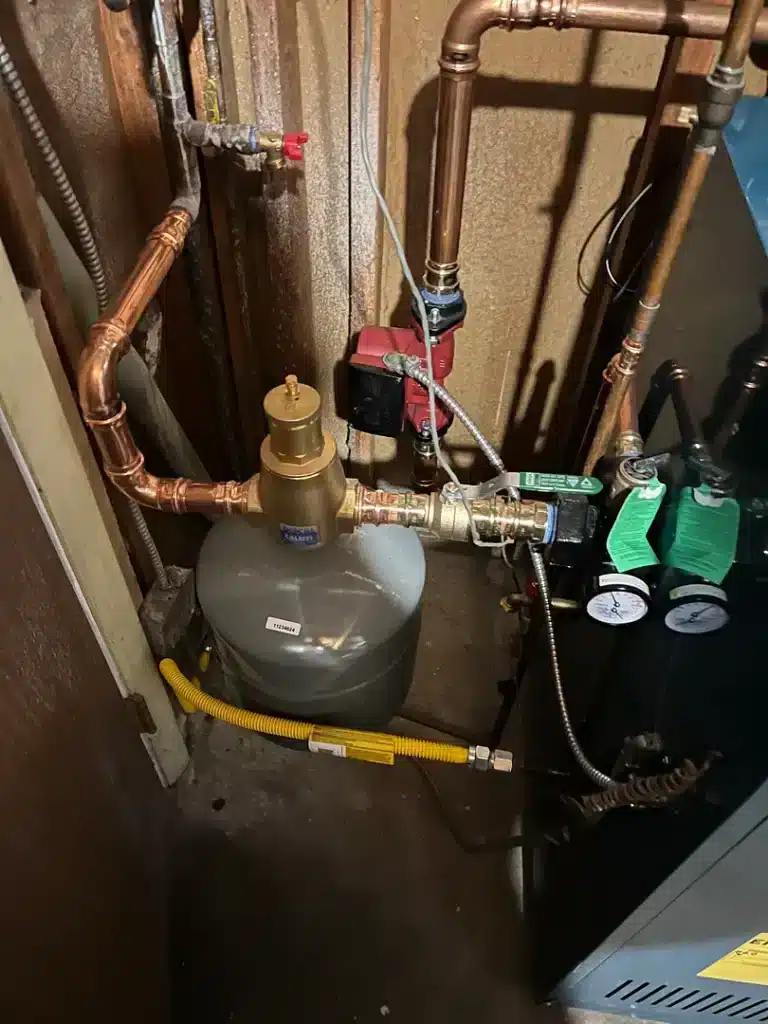
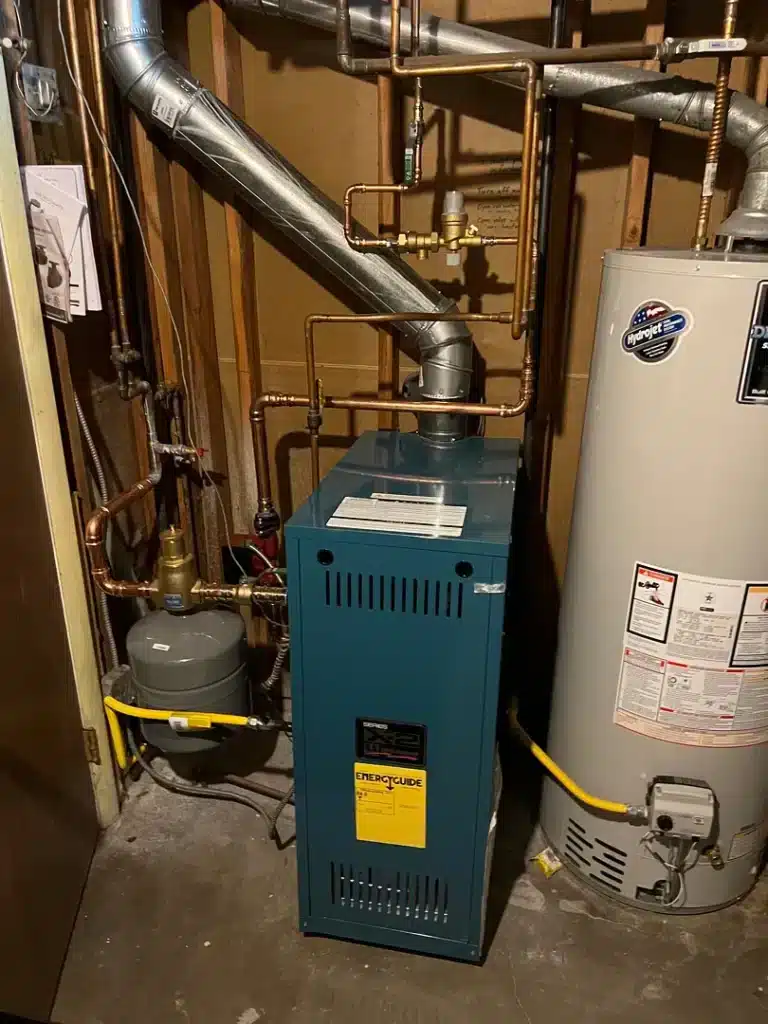
Replace boiler - Northglenn
- Problem: Replace boiler with new
- Found: Removed old boiler drain
- Fixed: Pipe in new circ pump. New fill valve. Pipe in isolation ball valves to boiler. Installed new air scoop and expansion tank. New gas valve and flex line added. Removed old boiler drain and installed new. Piped relief to 6 above finished floor.
- Outcome: Filled boiler with water and turned on tested operation, boiler works great no issues found .
How Cardom Plumbing & Heating Can Help
Boiler installation requires methodical planning and precise execution. Our approach addresses every aspect of the project – from initial assessment through final testing and homeowner education.
Our Installation Process
- Initial home assessment – We evaluate your existing heating system, measure your home's square footage and insulation levels, examine current piping and radiator configurations, and identify any code compliance issues
- Heat load calculation – Using Manual J methodology adapted for Northglenn's elevation and climate data, we determine the precise BTU capacity your home requires
- Equipment selection – Based on calculations and your budget, we recommend appropriate boiler models with altitude-rated burners and efficiency levels that match your needs
- Pre-installation preparation – We coordinate permits, schedule inspections, and prepare the installation area including any necessary piping modifications
- Professional installation – Our technicians remove old equipment, install the new boiler, connect gas supply and venting, integrate with existing hydronic distribution, and install any required safety devices
- System testing and commissioning – We perform combustion analysis, check for gas leaks, verify proper venting, test all safety controls, and balance the system for even heat distribution
- Homeowner walkthrough – We explain system operation, demonstrate thermostat programming, review maintenance requirements, and answer all questions
Methods and Techniques
Quality installation depends on proper technique at every stage. Our methods reflect current best practices and manufacturer specifications.
- Combustion analysis – Electronic testing verifies proper fuel-air mixture and confirms the unit operates at rated efficiency
- Pressure testing – We test all gas connections and hydronic piping to detect leaks before system startup
- Venting verification – Proper draft testing confirms combustion gases exhaust safely and completely
- Expansion tank sizing – Correct tank capacity prevents pressure spikes that damage components
- Water treatment assessment – We evaluate whether your system would benefit from water softening or treatment to extend equipment life
- Zone balancing – For multi-zone systems, we adjust flow rates to deliver consistent temperatures throughout your home
Communication Throughout the Project
You'll know what's happening at every stage. We provide written estimates before work begins, explain any unexpected findings immediately, and document all work performed. Our technicians take time to answer questions – we want you to understand your new system and feel confident operating it.
Why Choose Cardom Plumbing & Heating
Boiler installation demands specialized knowledge that goes beyond general plumbing or HVAC work. Our technicians hold certifications specific to hydronic heating systems and maintain current training on high-efficiency condensing boiler technology. We understand the particular requirements of installing heating equipment at Colorado's elevation – including proper burner orifice sizing and venting calculations that differ from sea-level installations.
Working throughout the Northglenn area has given us direct experience with the housing stock, common system configurations, and local code requirements. We've installed boilers in 1960s ranch homes with original copper piping, 1980s split-levels with zoned heating, and newer construction requiring integration with modern building systems. This familiarity means fewer surprises during installation and better recommendations during the planning phase.
What Sets Us Apart
- Licensed and insured – Full Colorado licensing with liability coverage protecting your property
- Manufacturer relationships – Direct access to technical support and warranty processing for major boiler brands
- Permit handling – We manage permit applications and schedule required inspections
- After-installation support – Questions that arise after we leave get prompt attention
- Diagnostic equipment – Combustion analyzers, pressure testing tools, and thermal imaging help us verify proper installation
- Workmanship standards – Clean installation with properly supported piping, neat wiring, and professional appearance
Emergency heating failures don't wait for convenient timing. When your boiler fails during a cold snap, we prioritize getting your home warm again. Our service vehicles carry common parts and diagnostic equipment, allowing us to respond effectively to urgent situations throughout the Northglenn service area.
Housing Characteristics & Boiler Installation Considerations
Northglenn's development history directly shapes boiler installation requirements across the city. The community incorporated in 1969 during a period of rapid suburban expansion north of Denver. Much of the housing stock dates from this era through the early 1980s, with additional development continuing through subsequent decades.
Housing Age and Construction Patterns
Different construction periods present distinct installation scenarios:
- 1960s-1970s homes – Often feature original cast iron boilers, copper or galvanized distribution piping, and baseboard radiators. These systems typically require complete replacement including updated venting to meet current codes
- 1980s construction – May have early high-efficiency equipment that's now reaching end-of-life. Piping systems are generally in better condition and often compatible with modern boiler connections
- 1990s-2000s builds – More likely to have forced-air heating, but some homes feature hydronic radiant floor heating that requires specific boiler configurations
- Recent construction – New homes in Northglenn typically meet current energy codes and may have combination boiler systems serving both heating and domestic hot water
Foundation and Basement Configurations
Most Northglenn homes include full or partial basements – the typical location for boiler equipment. Basement installations require attention to floor drain availability for relief valve discharge, adequate combustion air supply, and proper clearances around equipment. Homes on slab foundations present different challenges, often requiring utility room installations with specific venting arrangements.
Neighborhood-Specific Considerations
- Original Northglenn neighborhoods – Smaller lot sizes may limit exterior venting options for high-efficiency condensing boilers
- Newer subdivisions – Tighter construction requires careful combustion air calculations
- Townhomes and condos – Shared walls affect venting routes and may require association approval for exterior modifications
Environmental Conditions & Boiler Installation Implications
Northglenn's environmental characteristics influence every aspect of boiler selection and installation. Understanding these factors helps ensure your new system performs reliably for its full expected lifespan.
Water Quality Characteristics
The city receives water from multiple sources managed by the Farmers Reservoir and Irrigation Company and treated at the city's water treatment facility. This supply contains dissolved minerals that affect boiler operation over time.
- Hardness levels – Northglenn water tests moderately hard, with calcium and magnesium content that deposits inside heat exchangers
- pH balance – Slightly alkaline water can accelerate corrosion in certain boiler materials
- Sediment content – Older distribution mains may contribute particulates that accumulate in heating systems
- Treatment recommendations – Many installations benefit from water softening or chemical treatment to protect boiler internals
Climate Impacts on Heating Systems
Northglenn experiences a semi-arid continental climate with significant seasonal and daily temperature variations. These patterns stress heating equipment in specific ways.
- Heating degree days – The area averages approximately 6,000 heating degree days annually, indicating substantial heating demand
- Freeze risk – Temperatures below 32°F occur roughly 160 days per year, requiring reliable heating throughout extended cold periods
- Rapid temperature changes – Chinook winds can raise temperatures 30-40 degrees in hours, causing thermal stress on system components
- Low humidity – Dry conditions averaging 30-40% relative humidity affect system pressure and component longevity
Soil and Foundation Effects
The expansive clay soils common throughout Northglenn create ground movement that can affect boiler installations. Foundation settling may stress gas supply lines and hydronic piping connections. Proper flexible connections and adequate pipe support help accommodate this movement without developing leaks. Underground gas service lines may also experience stress, making pre-installation inspection of existing gas supply infrastructure worthwhile.
Energy Costs and Heating Efficiency Data in Northglenn
Natural gas prices and consumption patterns directly influence boiler installation decisions for Northglenn homeowners. Xcel Energy serves the area, providing natural gas that powers most residential boilers. Understanding local energy costs helps homeowners evaluate the return on investment when upgrading to high-efficiency equipment.
Colorado residential natural gas rates have fluctuated significantly in recent years, with winter heating costs representing a substantial portion of household utility expenses. The average Northglenn home uses between 700-1,000 therms annually for heating, depending on home size, insulation quality, and thermostat settings. At current rates, this translates to annual heating costs ranging from several hundred to over a thousand dollars.
Efficiency Upgrade Economics
Replacing an older 80% efficient boiler with a modern 95% condensing unit reduces fuel consumption proportionally. For a home using 800 therms annually:
- Old boiler at 80% efficiency – Requires approximately 1,000 therms of gas input to deliver 800 therms of usable heat
- New boiler at 95% efficiency – Requires approximately 842 therms to deliver the same heat output
- Annual savings – Roughly 158 therms, representing 15-20% reduction in heating fuel costs
- Payback period – Efficiency gains typically offset the premium for high-efficiency equipment within 7-12 years
Rebates and Incentives
Xcel Energy periodically offers rebates for high-efficiency heating equipment installation. Federal tax credits may also apply to qualifying equipment. These incentives can significantly reduce the net cost of upgrading to modern boiler technology. We help homeowners identify applicable programs and provide documentation needed for rebate applications.
Colorado's commitment to reducing building energy consumption means efficiency standards continue to tighten. Installing high-efficiency equipment now positions your home favorably for future requirements while delivering immediate savings on monthly utility bills.


