

Boiler installation in Lakewood, CO requires careful assessment and precise calculations to ensure optimal performance in the region's challenging climate. Homeowners should be aware of the signs indicating their heating system may need replacement and the importance of professional installation.
- Homeowners should watch for rising heating bills and uneven heating as signs for potential boiler replacement. Professional installation considers local climate factors and specific home needs for efficient heating. Cardom Plumbing & Heating offers a systematic approach to installation, ensuring compliance with local codes and thorough assessments.
- Boiler Installation in Lakewood, CO That aging boiler in your basement has been making strange sounds all winter.
- Maybe it’s cycling on and off more frequently than last year, or perhaps your heating bills have crept steadily upward while your home comfort has declined.
Signs that a boiler may need to be replaced include unusual noises, frequent cycling on and off, and rising heating bills despite declining comfort levels in the home. Homeowners in Lakewood should pay attention to these indicators to determine if their heating system is nearing the end of its service life.
Boiler Installation in Lakewood, CO
That aging boiler in your basement has been making strange sounds all winter. Maybe it's cycling on and off more frequently than last year, or perhaps your heating bills have crept steadily upward while your home comfort has declined. These are the signals Lakewood homeowners recognize when their heating system approaches the end of its service life.
Boiler installation involves far more than simply swapping out old equipment for new. A proper installation requires careful assessment of your home's heating demands, precise sizing calculations, integration with existing hydronic distribution systems, and compliance with local building codes. The process connects directly to your plumbing infrastructure – boilers heat water that circulates through radiators, baseboard heaters, or radiant floor systems to warm your living spaces.
Why Professional Installation Matters
Lakewood sits at approximately 5,500 feet elevation along the Front Range, where winter temperatures regularly drop below freezing and can plunge into single digits. This climate demands heating systems that perform reliably under stress. Professional diagnosis before installation identifies:
- Current system inefficiencies and failure points affecting your comfort
- Proper BTU requirements based on your home's square footage, insulation, and window exposure
- Compatibility with existing piping, radiators, and zone controls
- Venting requirements and gas line adequacy for modern high-efficiency units
Lakewood's housing stock ranges from mid-century homes near Belmar to newer construction in Green Mountain Village – each presenting distinct installation considerations that generic approaches simply cannot address.
Common Boiler Issues in Lakewood, CO
Cardom Plumbing & Heating provides Boiler Installation services in all neighborhoods of Lakewood including Applewood, Avenida Lakewood 55+ Active Living, Barnum West, Camden Lakeway, Edgemont, Green Mountain Village, Heron Shores, Marston, Nevada Place, Parkview Terrace, Ponderosa Ridge, Rooney Valley, Sage Corner, Shadow Hills, Spivak, and West Link at Oak Station.
Lakewood's geographic position creates specific challenges for boiler systems that homeowners throughout Jefferson County experience firsthand. The semi-arid climate brings dramatic temperature swings – sometimes 40 degrees or more within a single day – forcing boilers to cycle repeatedly between standby and full operation. This thermal stress accelerates wear on components designed for more moderate operating patterns.
Many Lakewood neighborhoods developed during the 1950s through 1970s, meaning original boiler installations in these homes have long exceeded their expected service life. Cast iron boilers from this era, while durable, often operate at 60-70% efficiency compared to modern condensing units that achieve 95% or higher. The mineral content in Denver Water's supply – drawn primarily from mountain snowmelt – contributes to gradual scale buildup within heat exchangers and distribution piping over decades of operation.
Seasonal Timing Considerations
Winter installation demands present unique challenges in the Lakewood area. Ground frost penetration affects gas line work, while frozen or near-frozen conditions complicate any necessary plumbing modifications. Smart homeowners schedule installations during fall months before heating demand peaks.
Local Factors Affecting Boiler Performance
- Altitude effects: Combustion at 5,500 feet requires specific burner adjustments – sea-level settings cause incomplete combustion and efficiency losses
- Hard water deposits: Calcium and magnesium minerals accumulate in heat exchangers, reducing heat transfer efficiency by 10-25% over time
- Aging gas infrastructure: Older neighborhoods may have undersized gas lines that restrict flow to modern high-capacity units
- Foundation settling: Colorado's expansive clay soils cause gradual shifting that can stress boiler connections and piping
- Freeze protection needs: Exterior venting and condensate lines require proper slope and insulation to prevent ice blockages
- Dry air combustion: Low humidity affects combustion air quality and can accelerate corrosion in non-condensing units
Warning Signs Indicating Replacement
Watch for these indicators that your current boiler may need replacement rather than repair:
- Heating bills increasing 15% or more year-over-year without rate changes
- Uneven heating between rooms or floors despite bleeding radiators
- Visible corrosion, rust staining, or mineral deposits around the unit
- Frequent pilot light outages or ignition failures
- Boiler age exceeding 20 years for cast iron or 15 years for steel units
Recent Work
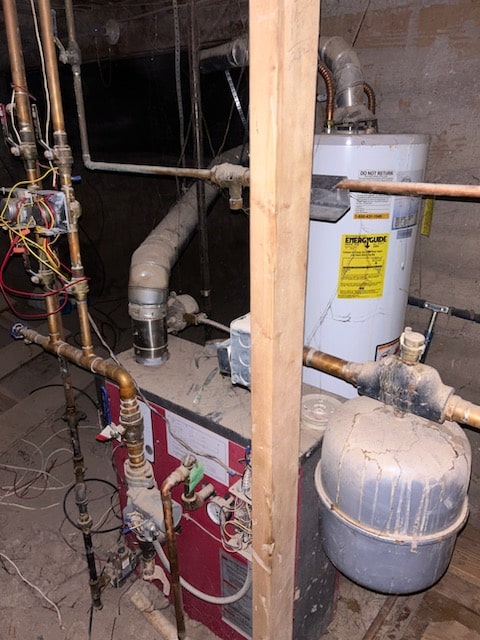
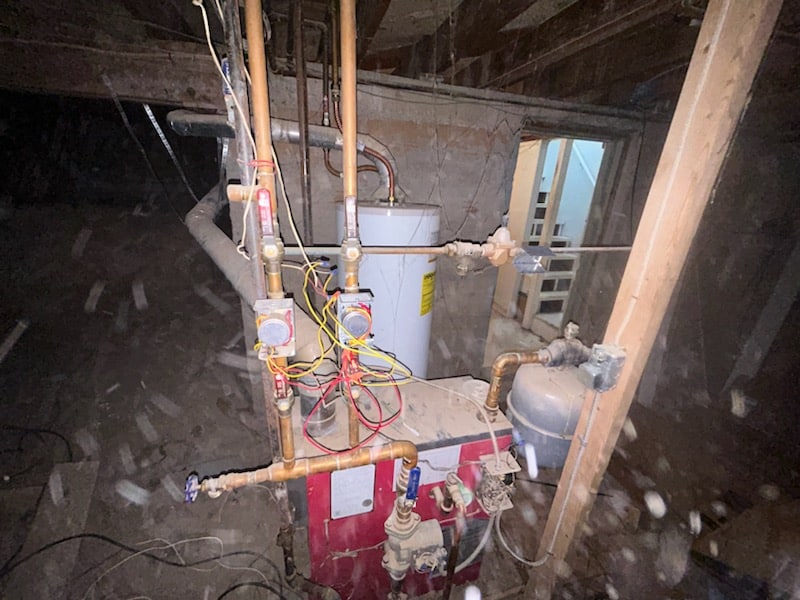
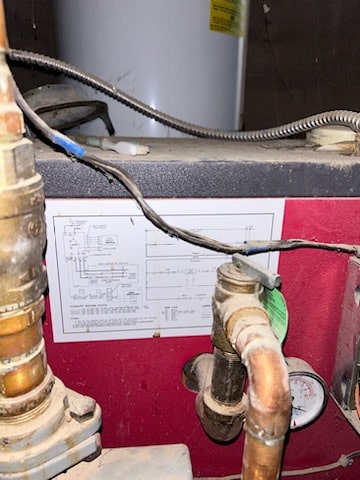
Small Mystery Leak - Lakewood
- Problem: Water leaking in house that is empty
- Found: We did find that when we manually filled the boiler to proper pressure with a hose, the boiler relief valve dumped water on the floor.
- Fixed: Picked up the proper size relief valve and installed on the boiler. This stopped the leak. Purged the air from the zone by filling the boiler with a garden hose and manually purging air from the system using the isolation valve and boiler drain on the system.
- Outcome: Boiler is working now at this time and the relief valve is no long dumping.
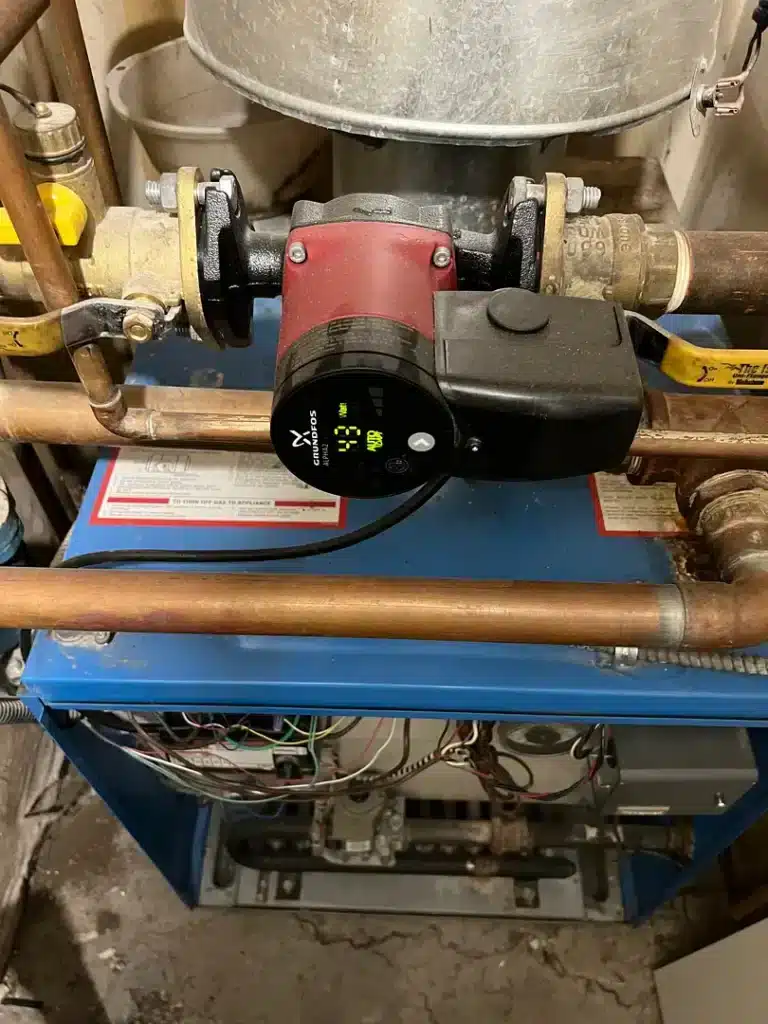
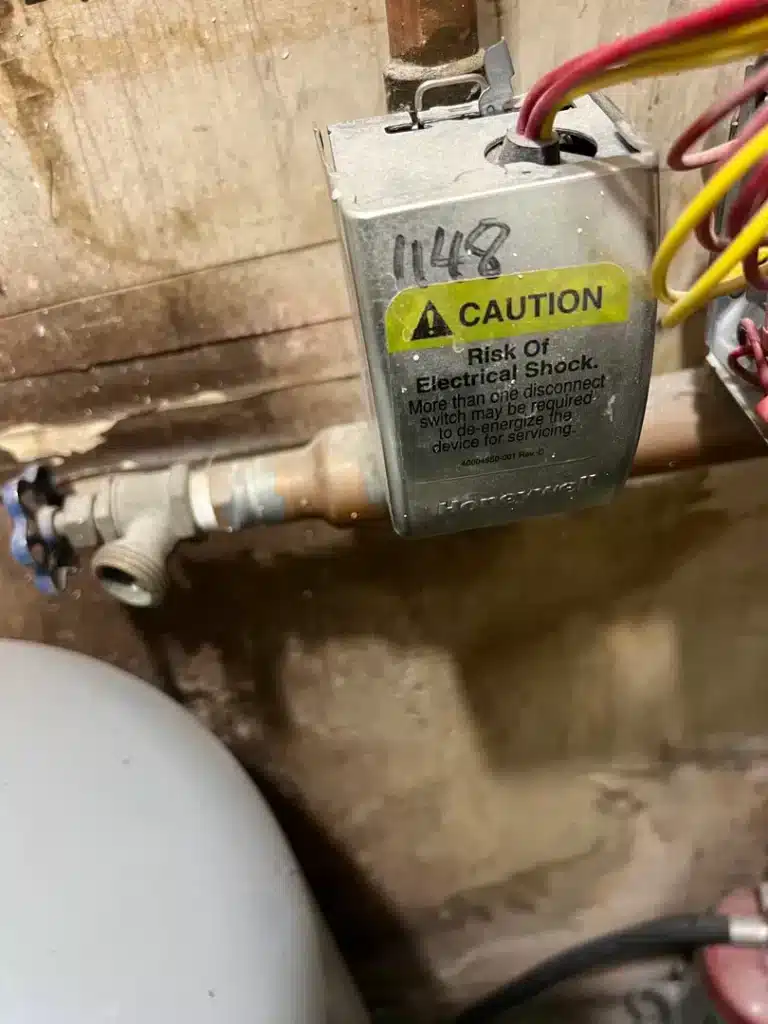
Boiler Start Up for Season for this 6-Plex - Lakewood
- Problem: Start up boiler for the 6-plex
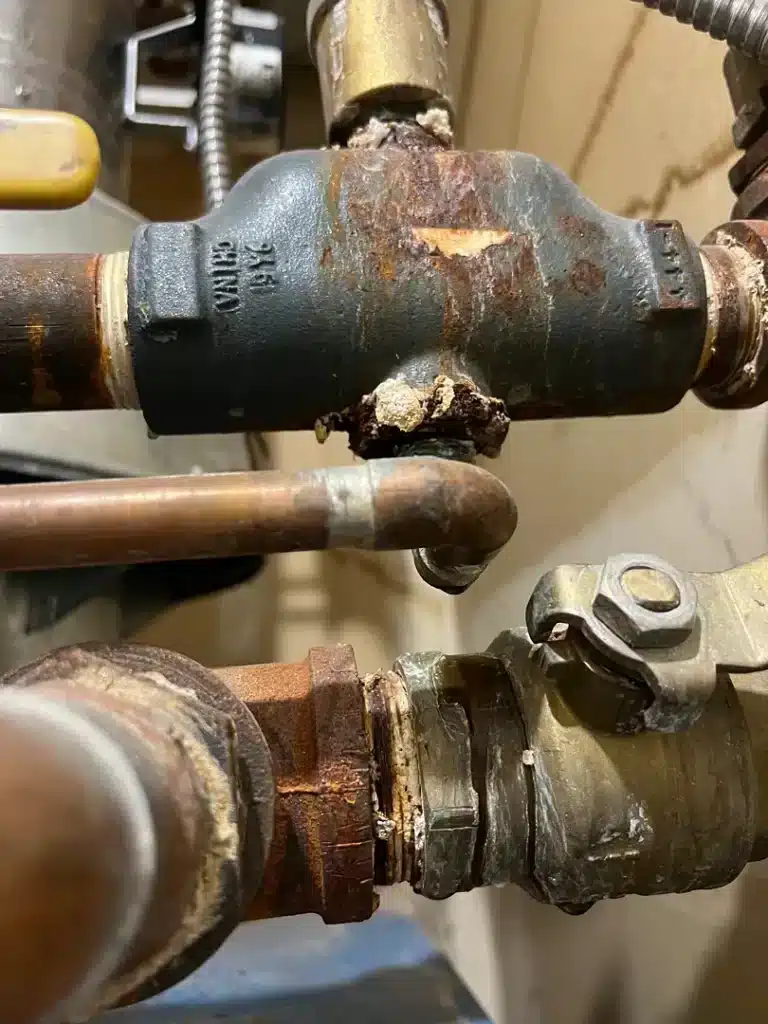
- Found: Weird noises. Leak at air scoop, looks rusted.
- Fixed: The flame sensor is dirty or going bad so I cleaned it up.
- Outcome: Refired and did not have an issue again.
How Cardom Plumbing & Heating Can Help
Our installation process follows a systematic approach developed specifically for Front Range conditions. We don't rush to remove your existing equipment – proper preparation prevents the complications that lead to callbacks and customer frustration.
Our Step-by-Step Installation Process
- Initial home assessment: We evaluate your current system's condition, measure heat loss through windows and walls, and calculate precise BTU requirements for Lakewood's climate
- Equipment selection consultation: Based on assessment findings, we present appropriate options – explaining the tradeoffs between standard efficiency, high-efficiency condensing, and combination units
- Pre-installation preparation: We verify gas line capacity, inspect venting pathways, and identify any plumbing modifications needed before equipment arrives
- Old system removal: Careful disconnection and removal protects your home's finishes while properly disposing of old equipment and refrigerants
- New unit installation: Precise positioning, secure mounting, and proper connection to gas, water, and electrical systems following manufacturer specifications
- Distribution system integration: Connection to existing radiators, baseboards, or radiant loops with appropriate valves, air eliminators, and expansion tanks
- Testing and commissioning: Complete system pressure testing, combustion analysis, and operational verification before final walkthrough
- Homeowner training: We demonstrate thermostat operation, maintenance access points, and warning indicators to watch for
Methods and Techniques We Employ
- Combustion analysis using digital flue gas analyzers to verify proper air-fuel ratios at altitude
- Hydrostatic pressure testing to identify any distribution system leaks before startup
- Infrared thermal imaging to confirm even heat distribution after installation
- Digital manometer readings to verify gas pressure at the burner assembly
- Water chemistry testing to determine if treatment equipment benefits system longevity
Quality Control and Communication
Every installation receives a final inspection by a senior technician separate from the installation crew. This independent review catches details that might otherwise be overlooked. We photograph key connection points and system settings, providing you documentation for future reference.
Throughout the process, you'll receive updates at each major phase. We don't leave you wondering when work will resume or what's happening behind closed doors. Questions get answered promptly – our office staff can reach technicians directly when you call.
Why Choose Cardom Plumbing & Heating
Our technicians hold certifications from major boiler manufacturers including Weil-McLain, Burnham, and Navien – meaning we install according to factory specifications rather than generic procedures. Colorado requires specific licensing for gas work, and our team maintains current credentials with Jefferson County and the State of Colorado. We carry comprehensive liability coverage and workers' compensation – protecting your property and giving you peace of mind throughout the installation.
Local Knowledge That Matters
We've served the Lakewood community for years, building familiarity with neighborhood-specific conditions that affect installations. The older homes near Mountair have different challenges than the townhomes in Belmar or the custom builds along Green Mountain. This local experience translates to faster problem-solving and fewer surprises during your project.
Our Service Commitments
- Same-day response for emergency heating failures during winter months
- Written proposals with detailed scope – no surprise charges for standard installation components
- Post-installation follow-up within two weeks to verify system performance
- Direct access to the technicians who performed your installation for any questions
- Assistance with rebate paperwork for high-efficiency equipment through Xcel Energy programs
We invest in diagnostic technology that many competitors skip. Our combustion analyzers, thermal cameras, and pressure testing equipment identify issues that visual inspection alone cannot detect. This upfront investment in proper tools means your installation performs correctly from day one – not after multiple service calls to address preventable problems.
Housing Characteristics & Boiler Installation Considerations
Lakewood's residential development occurred in distinct waves, each leaving behind housing stock with particular heating system characteristics. Understanding your home's era helps predict what an installation project will involve.
Mid-Century Homes (1950s-1970s)
Neighborhoods like Eiber, Morse Park, and Mountair feature predominantly single-story ranch and split-level designs built during Lakewood's initial suburban expansion. These homes commonly include:
- Original cast iron boilers – often oversized by modern standards
- Copper or galvanized steel distribution piping with decades of mineral accumulation
- Baseboard radiator systems with manual air bleeders at each unit
- Atmospheric venting through masonry chimneys – requiring liner evaluation for modern units
- Electrical panels with limited capacity for modern controls and pumps
1980s-1990s Construction
Homes from this period in areas like Green Mountain and Applewood often transitioned to forced-air systems. However, properties that retained hydronic heating typically feature:
- Steel boilers with standing pilot ignition systems
- Copper piping with fewer mineral deposits than older homes
- Zone valves allowing room-by-room temperature control
- B-vent or direct-vent configurations more compatible with modern replacements
Contemporary Installations
Newer Lakewood construction and major renovations increasingly specify radiant floor heating – particularly in finished basements and bathroom additions. These systems demand precise water temperature control that modern condensing boilers provide efficiently. Combination boiler-water heater units have gained popularity in smaller homes and condominiums where space constraints limit equipment options.
Regardless of your home's age, foundation type matters for installation logistics. Lakewood homes sit on full basements, crawl spaces, and slab-on-grade foundations in roughly equal proportions. Basement installations offer the most straightforward access, while crawl space and slab homes may require creative solutions for equipment placement and distribution routing.
Environmental Conditions & Boiler Installation Implications
Lakewood's environmental conditions directly influence boiler selection, installation methods, and long-term system performance. Ignoring these factors leads to premature failures and efficiency losses that cost homeowners thousands over a system's lifespan.
Water Quality Characteristics
Denver Water supplies Lakewood through an extensive treatment and distribution network. The water arrives moderately hard – typically 50-150 parts per million of dissolved minerals depending on seasonal source blending. While safe for consumption, these minerals create operational considerations for boiler systems:
- Scale accumulation on heat exchanger surfaces reduces thermal transfer efficiency
- Mineral deposits in narrow passages can restrict flow in high-efficiency condensing units
- Sediment accumulation in expansion tanks reduces effective volume over time
- Periodic flushing requirements vary based on water hardness at your specific location
We test incoming water hardness during assessment and recommend treatment equipment when levels warrant the investment. A properly sized water softener or scale inhibitor system can extend boiler life by years while maintaining peak efficiency.
Climate Impacts on System Design
Lakewood experiences approximately 150 days annually where heating is necessary – concentrated between October and April. Design temperature for sizing calculations uses historical lows around -10°F, though actual temperatures below zero occur only a handful of days most winters. This climate profile favors:
- Modulating boilers that adjust output to match actual demand rather than cycling on/off
- Outdoor reset controls that reduce water temperature during milder weather
- Condensate management systems rated for freezing conditions
- Combustion air provisions that account for altitude and low humidity
Soil and Foundation Considerations
Jefferson County's expansive clay soils create foundation movement that affects boiler installations indirectly. Rigid piping connections can develop stress cracks over time as foundations shift seasonally. Modern installation practices incorporate flexible connectors at critical points and support piping independently from the structure where practical. Underground gas lines serving boilers require proper bedding and protection from soil movement – a detail that matters when upgrading service capacity for larger replacement units.
Natural Gas Infrastructure & Utility Programs in Lakewood
Xcel Energy provides natural gas service throughout Lakewood, maintaining an extensive distribution network that dates to the city's suburban development period. Understanding this infrastructure helps homeowners anticipate installation requirements and available incentive programs.
Gas Service Capacity Considerations
Many Lakewood homes built before 1980 have 3/4-inch gas service lines – adequate for the appliances of that era but potentially restrictive for modern high-capacity boilers. When installing units rated above 150,000 BTU, service line evaluation becomes part of our standard assessment. Xcel Energy offers service upgrades when existing lines prove inadequate, though lead times for this work vary seasonally.
- Service line upgrades typically require 2-4 weeks scheduling with Xcel Energy
- Meter capacity verification prevents pressure drops during peak demand
- Interior gas piping may require upsizing for high-efficiency condensing units
- Proper gas pressure at the burner assembly affects both efficiency and safety
Available Rebate Programs
Xcel Energy's efficiency rebate programs significantly offset the cost premium for high-efficiency boiler installations. Current programs offer rebates for AFUE ratings of 90% and above, with additional incentives for ENERGY STAR certified equipment. These programs change annually, so we verify current offerings during your consultation.
Typical rebate values for qualifying boiler installations range from $300 to $800 depending on efficiency rating and equipment type. Combined with federal tax credits for certain high-efficiency heating equipment, total incentives can reduce net installation costs by 15-25%. We assist with rebate documentation and submission – handling the paperwork so you receive the incentives you've earned without administrative hassle.
Service Reliability Data
Xcel Energy reports gas service reliability exceeding 99.9% across their Colorado service territory. However, localized pressure fluctuations can occur during extreme cold snaps when residential heating demand peaks simultaneously across neighborhoods. Modern boilers with electronic ignition and modulating burners tolerate these fluctuations better than older atmospheric units with standing pilots – another consideration favoring replacement of aging equipment before failure occurs during the coldest weather.


