
Recent Posts
Categories
Selecting the Right Sink Material for Hard Water Areas in Colorado
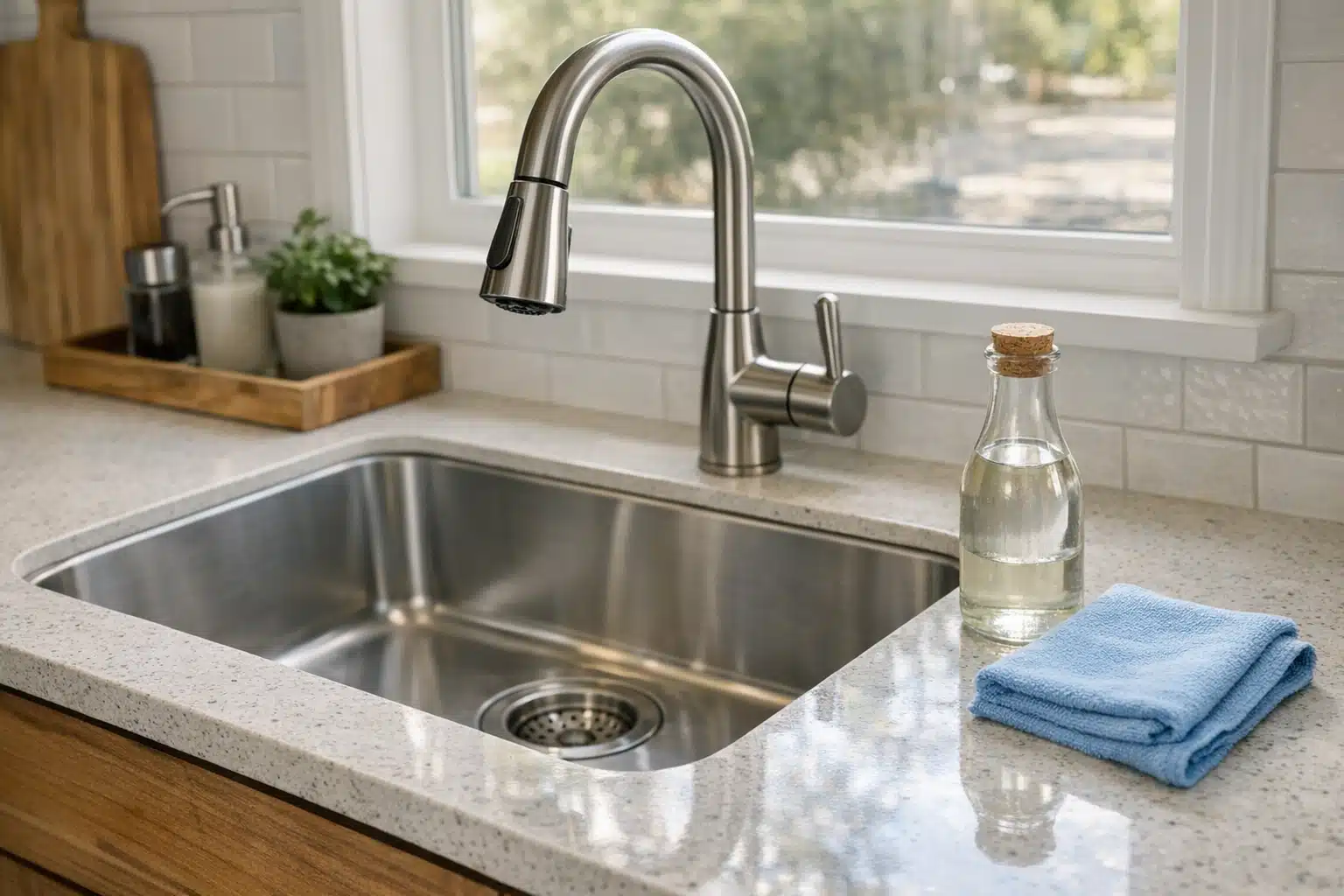
Arvada and Front Range homes face rapid mineral buildup on kitchen sinks due to Colorado's hard water, which ranges from 100 to 150 mg/L. The right sink material determines whether spots wipe away easily or cause permanent damage.
- Granite composite and brushed stainless steel perform best without a water softener. These non-porous surfaces resist mineral penetration and clean up easily with vinegar.
- Fireclay, enameled cast iron, and copper work well only in homes with water softeners installed. Without treatment, these materials chip, rust, or discolor within a few years.
- Avoid acrylic, cheap composite, thin stainless steel, and unsealed natural stone in hard water areas. Regular wiping and weekly vinegar cleaning help prevent scale buildup on any surface.
Stainless steel and fireclay are the best sink materials for hard water areas. Stainless steel resists mineral buildup and wipes clean easily, while fireclay offers a non-porous glazed surface that prevents calcium deposits from etching in. Composite granite also performs well, as its sealed surface repels hard water stains and requires minimal maintenance compared to natural stone options.
Water in Arvada carries heavy mineral content, and it shows up fast on kitchen sinks. Homeowners near Ralston Creek and along the Front Range see chalky white spots within days of cleaning. The sink material you pick decides whether those spots wipe away or etch into the surface permanently.
This post covers which sink surfaces hold up against Colorado’s mineral-rich water. You will learn how each material reacts to calcium and magnesium deposits. You will also get real cost ranges and cleaning tips from local plumbing work.
Why Hard Water Damages Sinks in Arvada and Denver
Colorado sits on limestone and granite aquifers that load tap water with dissolved minerals. Denver Water reports hardness levels around 100 to 150 mg/L in many Front Range neighborhoods. That mineral load leaves scale, film, and rust-colored staining on sink surfaces.
Hard water affects sinks in three main ways:
- Scale buildup around drains and faucet bases
- Cloudy white spotting after water evaporates
- Etching and dulling on softer or coated surfaces
We see the worst damage in Westminster and Broomfield homes with older fixtures. Untreated well water in outlying areas causes even faster staining than city supply.
Which Sink Material Handles Colorado Hard Water Best
Not every surface fights mineral deposits the same way. Some shrug off scale with a quick wipe. Others trap minerals in tiny pores and stain for good.
Stainless Steel
Stainless steel ranks near the top for Arvada kitchens. A high-nickel grade like 304 (18/10) resists corrosion and mineral etching. Spots still appear, but they wipe off with vinegar and a soft cloth.
Best pick: 16-gauge stainless with a brushed or satin finish. Brushed surfaces hide water spots far better than mirror finishes. Expect a range of $150 to $600 for a good undermount model.
Granite Composite
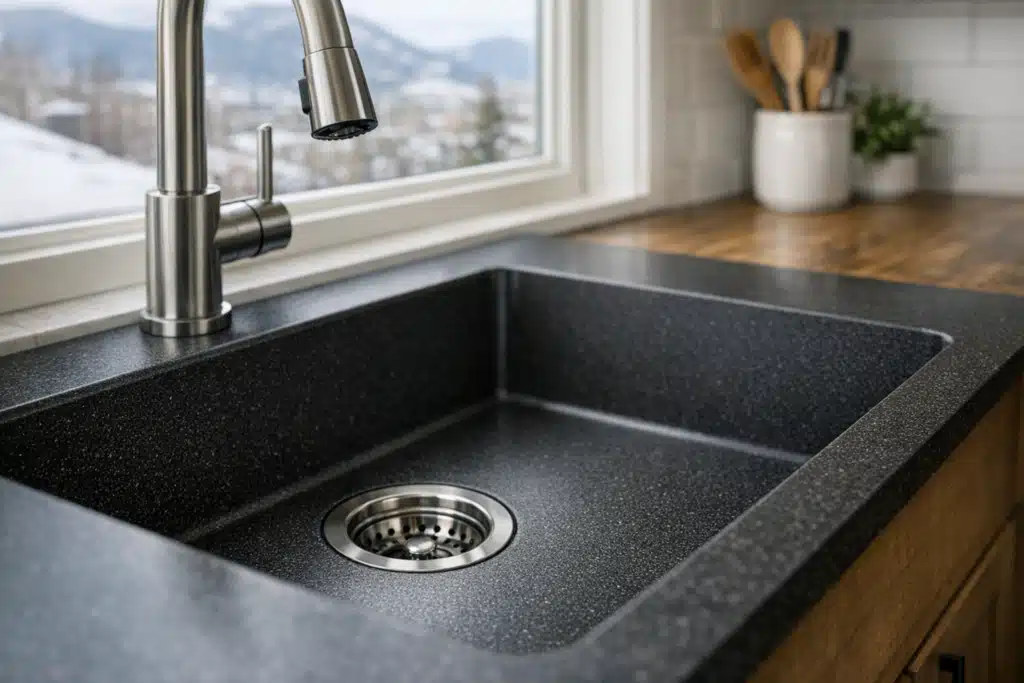
Granite composite mixes crushed stone with acrylic resin. The dense, non-porous surface blocks mineral penetration. It resists scratches, heat, and staining better than most surfaces we install locally.
Dark colors show white scale faster than lighter shades. A gray or beige composite hides Colorado’s calcium film best. Pricing runs $200 to $500 for a standard single-basin sink.
Fireclay
Fireclay handles hard water well thanks to a glazed, sealed finish. Minerals sit on the surface and rinse off without etching. The glaze resists chipping better than standard porcelain.
Farmhouse-style fireclay sinks fit older Wheat Ridge and Arvada homes. Cost sits higher, around $400 to $900 for quality units.
Enameled Cast Iron
Enameled cast iron looks classic but demands care in mineral-heavy water. The enamel resists staining, yet chips expose iron that rusts fast. One chip in a hard water home turns into a brown ring quickly.
We suggest this surface only for homes with a water softener installed. Without treatment, damage shows within a few years.
Sink Materials to Avoid in Hard Water Zones
Some surfaces stain no matter how you clean them. Skip these if you have untreated Front Range water:
- Acrylic and cheap composite — porous and prone to permanent film
- Copper — reacts with minerals and shifts color unevenly
- Low-grade stainless (18-gauge or thinner) — pits and stains fast
- Unsealed natural stone — absorbs minerals and discolors
Copper appeals to many homeowners for its look. In Broomfield homes without softeners, we have seen copper sinks turn blotchy within one season.
How to Match Sink Material to Your Water Situation
Your best pick depends on whether you treat your water. Follow this quick decision path:
- No water softener? Choose granite composite or brushed stainless steel.
- Have a softener? Fireclay, cast iron, and copper become safe picks.
- Well water in outlying areas? Stick with granite composite for maximum resistance.
- Rental or high-traffic property? Go with 16-gauge stainless for easy upkeep.
A water softener changes everything. Removing calcium and magnesium protects any surface you install. We pair sink installs with softener recommendations for lasting results.
Cleaning Tips for Sinks in Mineral-Rich Water
The right surface still needs the right routine. Colorado water spots return without regular care. Use these methods to keep sinks clear:
- Wipe dry after each use to stop spotting before it sets
- Use white vinegar weekly to dissolve fresh scale
- Skip abrasive pads on composite and enamel surfaces
- Rinse and dry the faucet base where scale gathers fastest
For heavy buildup, soak a vinegar-dampened cloth on the spot for ten minutes. The acid breaks down calcium without scratching. Avoid harsh acids on enameled cast iron.

 Posted on Google
Signs Your Sink Damage Points to a Bigger Problem
Sometimes staining signals more than surface scale. Watch for these warning signs in your Arvada home:
- Green or blue stains near the drain, hinting at pipe corrosion
- Persistent low water flow from scale inside supply lines
- Faucet aerators clogging every few weeks
- Rust rings that return after every cleaning
Recurring clogged aerators point to scale inside your plumbing, not just the sink. At that stage, a whole-home softener protects your pipes and fixtures. Our team checks water hardness during every install visit.
What a Sink Upgrade Costs in the Arvada Area
Budget helps narrow your pick. Here are typical installed ranges for local homes:
- Brushed stainless steel: $250 to $800 installed
- Granite composite: $350 to $750 installed
- Fireclay farmhouse: $600 to $1,300 installed
- Enameled cast iron: $400 to $1,000 installed
Undermount installs cost more than drop-in models. Adding a water softener runs an extra $1,200 to $2,500 for most homes. That upfront cost protects your sink and plumbing for years.
Conclusion
Granite composite and brushed stainless steel resist Colorado hard water best without treatment. A water softener opens the door to fireclay, copper, and cast iron surfaces. Match your sink material to your water, and clean spots early to keep surfaces looking fresh.
Cardom Plumbing & Heating installs hard-water-ready sinks across Arvada, Denver, Wheat Ridge, Broomfield, and Westminster. Call or text us at 720‑775‑8322, email tomd@cardomcolorado.com, or visit https://www.cardomcolorado.com to schedule your sink upgrade.
Sources
- U.S. Geological Survey – Hardness of Water
- Denver Water – Water Quality
- U.S. EPA – Ground Water and Drinking Water


