
Recent Posts
Categories
How to Choose the Right Water Softener for Broomfield Homes
Broomfield homes face high water hardness levels of 12-20 grains per gallon, requiring properly sized water softeners matched to local water chemistry and household needs.
- Water hardness in Broomfield varies by location and season, with areas near Highway 36 reaching 20+ grains per gallon. Testing your specific water hardness is the first step in selecting the right system.
- Calculate system capacity by multiplying household members by 80 gallons, then by hardness level and 7 days, adding 25% buffer. A family of four typically needs a 48,000 grain system.
- Ion exchange systems work best for most Broomfield homes due to high mineral concentrations, while salt-free systems only suit hardness levels below 12 grains per gallon.
To choose the right water softener for Broomfield homes, start by testing your water hardness levels, which often exceed 15 grains per gallon in the area. Match your local water chemistry to the correct system size and technology. Consider your household water usage and the specific mineral concentrations in your neighborhood to select a system that handles the Front Range's hard water challenges.
Broomfield homes face some of the highest mineral concentrations in the Front Range, with water hardness levels exceeding 15 grains per gallon in many neighborhoods. Choosing the right water softener Broomfield residents need requires understanding your local water chemistry and matching it to the correct system size and technology. This step-by-step walkthrough helps you select a water softener that handles Broomfield’s specific mineral challenges.
You’ll learn how to test your water hardness, calculate the right system capacity, and pick between salt-based and salt-free systems. We’ll cover the key differences between ion exchange and template-assisted crystallization technologies for local water conditions.
Understanding Broomfield’s Water Hardness Levels
Broomfield receives water from multiple sources, creating varying hardness levels across different areas. The Flatiron Reservoir and Coal Creek supply contain 12-18 grains per gallon of dissolved calcium and magnesium. Homes near Highway 36 and West 120th Avenue experience the hardest water, reaching 20+ grains per gallon.
Hard water creates three main problems for Broomfield homeowners:
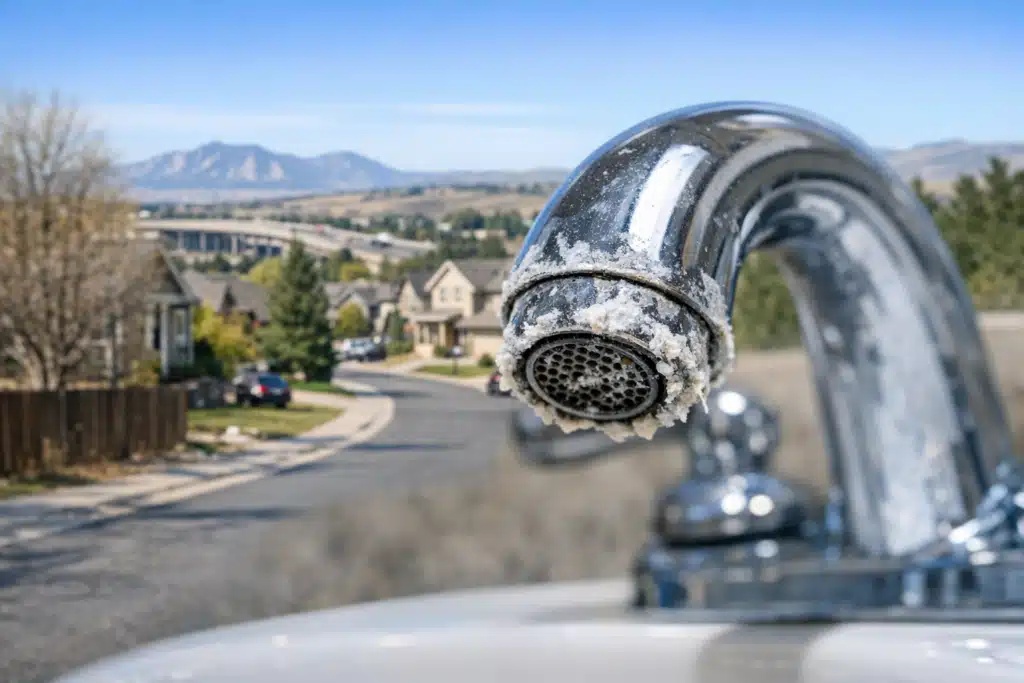
- Scale buildup – White deposits clog faucets, showerheads, and water heater elements
- Reduced soap effectiveness – Minerals bind with soap, creating film on dishes and skin
- Shortened appliance life – Dishwashers and washing machines fail 3-5 years earlier with untreated hard water
Most Broomfield homes need water softening when hardness exceeds 7 grains per gallon. Testing your specific water hardness becomes the first step in system selection.
Testing Your Home’s Water Hardness
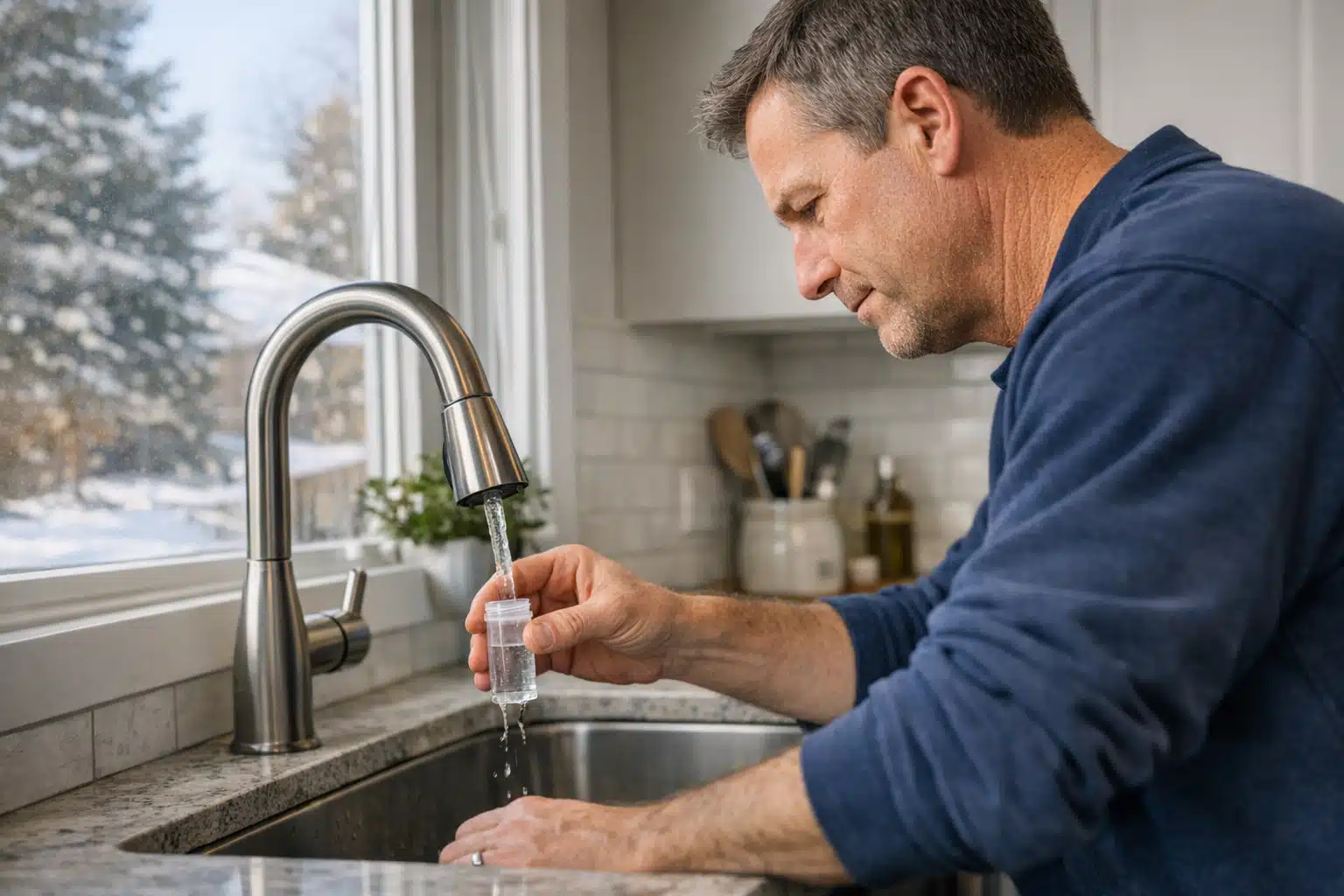
Free water test strips from hardware stores provide basic hardness readings. For accurate results, collect water samples from your kitchen cold water tap in clean containers. Mail-in lab tests cost $25-40 but reveal iron content, pH levels, and other minerals affecting system performance.
Broomfield’s water hardness changes seasonally. Spring snowmelt reduces mineral concentrations to 10-12 grains per gallon. Fall and winter levels climb to 15-20 grains as ground water sources dominate the supply mix.
Calculating the Right Water Softener Capacity for Broomfield Homes
Water softener capacity gets measured in grains of hardness removal between regeneration cycles. Choosing water softener capacity depends on your household size, daily water usage, and measured hardness levels.
Use this calculation for Broomfield homes:
- Multiply people in household by 80 gallons daily usage
- Multiply result by your water hardness in grains per gallon
- Multiply by 7 days for weekly grain removal needed
- Add 25% buffer for seasonal hardness increases
A family of four with 15-grain hard water needs: 4 × 80 × 15 × 7 × 1.25 = 42,000 grain capacity system. Round up to the next available size, typically 48,000 grains.
Broomfield Home Size Recommendations
Most Broomfield homes fall into these capacity ranges:
- 1-2 people: 24,000-32,000 grain systems
- 3-4 people: 40,000-48,000 grain systems
- 5+ people: 64,000+ grain systems
Homes with high-efficiency fixtures use 20% less water. Older homes with standard fixtures may need 15% larger capacity systems.
Ion Exchange vs Salt-Free Systems for Local Water
Two main technologies handle Broomfield’s hard water: traditional ion exchange and newer salt-free conditioning systems. Each works differently with local mineral compositions.
Ion exchange systems swap calcium and magnesium ions for sodium ions using resin beads. These systems completely remove hardness minerals, preventing scale formation. Salt-based systems work best when Broomfield water hardness exceeds 10 grains per gallon.
Salt-free systems change mineral structure without removing them. Template-assisted crystallization converts dissolved minerals into microscopic crystals that don’t stick to pipes. These systems work better with moderate hardness levels under 15 grains per gallon.
Which Technology Fits Broomfield Water Conditions
Most Broomfield homes benefit from traditional ion exchange systems due to high mineral concentrations. Salt-free systems struggle with hardness levels above 15 grains, common throughout the city.
Ion exchange systems handle additional minerals found in Broomfield water:
- Iron removal – Reduces rust staining from 2-4 ppm iron levels
- Manganese reduction – Prevents black staining in fixtures
- pH buffering – Handles alkaline water common in Front Range supplies
Choose salt-free systems only if your hardness stays below 12 grains and you want to avoid sodium addition to drinking water.
Key Features for Broomfield Installation Success
Broomfield’s climate and water conditions require specific system features for reliable operation. Temperature fluctuations from -10°F to 105°F stress water softener components. Choose systems rated for outdoor installation if your equipment stays in unheated garages or crawl spaces.
Look for these features in Broomfield water softener installations:
- Electronic controls – Handle power outages better than mechanical timers
- Demand-based regeneration – Saves salt during low-usage periods
- Bypass valves – Allow maintenance without shutting off home water
- Drain line freeze protection – Prevents winter damage in cold installations
Meters that track actual water usage work better than timer-based systems for Broomfield homes with variable occupancy.
Installation Location Requirements
Broomfield building codes require water softeners near the main water line entry point. Systems need 110V electrical outlets within 6 feet and drain connections within 20 feet of the unit.
Basement installations work best, protecting equipment from temperature extremes. Garage installations need insulation around the unit and drain lines to prevent freezing during Colorado winters.

 Posted on Google
Maintenance Needs for Local Water Conditions
Broomfield’s hard water requires more frequent maintenance than softer water areas. High mineral content clogs injectors and control valves faster, needing cleaning every 6-12 months instead of annually.
Monthly maintenance tasks include:
- Check salt levels – keep tanks 1/3 full minimum
- Break up salt bridges with plastic tools
- Clean brine tank annually to remove sediment
- Test system output hardness monthly
Iron content in some Broomfield water supplies creates additional maintenance needs. Iron fouling turns resin beads red-brown and reduces softening capacity. Systems handling iron need resin cleaning with specialized solutions every 3-6 months.
Salt Selection for Broomfield Systems
Use pure salt products in Broomfield water softeners. Rock salt contains impurities that accumulate in brine tanks. Solar salt dissolves cleaner but costs more than pellet salt.
Iron-fighting salts help homes with iron-stained water. These products contain additives that keep resin beads cleaner between service cycles.
Cost Expectations for Broomfield Installations
Water softener costs vary based on system size, features, and installation complexity. Basic 32,000 grain systems start around $800-1,200. Mid-range 48,000 grain units with electronic controls cost $1,500-2,500.
Installation costs in Broomfield range from $400-800 for straightforward basement setups. Complex installations requiring new electrical or extensive plumbing modifications cost $800-1,500 additional.
Operating costs include:
- Salt: $60-120 annually for average households
- Electricity: $25-50 annually for electronic controls
- Maintenance: $100-200 annually for professional service
Higher hardness levels increase salt consumption and regeneration frequency, raising annual costs 20-30% above average.
When to Call Professional Help
Some homeowners install basic water softeners themselves. However, Broomfield installations face challenges that benefit from plumbing expertise.
Call professionals for installations involving:
- Copper pipe modifications requiring soldering
- Electrical work for control panels
- Complex drain routing in finished basements
- Systems handling iron or unusual water chemistry
Professional installation includes permits, code compliance, and warranty protection. Licensed plumbers understand Broomfield water conditions and recommend appropriate system sizing.
The right water softener protects your home’s plumbing and improves daily water use. Start with accurate water testing, calculate capacity needs based on household size, and choose systems designed for Colorado’s mineral-rich water. For expert water softener selection and installation in Broomfield, contact Cardom Plumbing & Heating at 720-775-8322.
Sources
- EPA – National Primary Drinking Water Regulations
- Water Quality Association – Water Hardness Information
- USGS – Water Science School: Hardness of Water


