Recent Posts
Categories
How Arvada’s High Mineral Content Affects Plumbing Fixtures

Arvada homeowners face significant challenges due to high mineral content in their water, which can lead to costly plumbing issues. Understanding the effects of minerals like calcium and magnesium on plumbing fixtures is essential for maintaining water systems and avoiding premature replacements.
- High mineral levels in Arvada water can cause scale buildup, reducing water flow and damaging fixtures. Regular maintenance and cleaning can help prevent permanent mineral deposits.
- Water softening systems can effectively remove harmful minerals, extending the lifespan of plumbing fixtures and appliances.
- Homeowners should look for signs of mineral damage, such as reduced water pressure and stains, to address issues before they escalate.
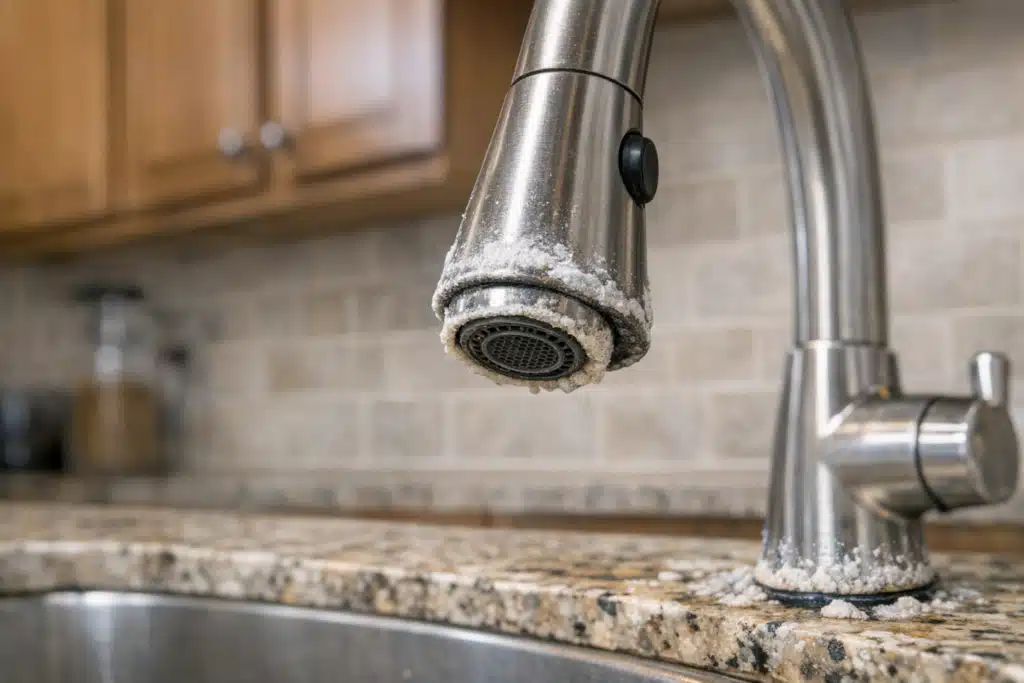
High mineral content in Arvada's water supply leads to white buildup on faucets and reduced water pressure in showerheads. These minerals can accumulate over time, causing significant damage to plumbing fixtures and potentially shortening their lifespan.
Your faucets show white buildup. Your showerhead barely produces water pressure. Arvada homeowners face unique challenges from high mineral content in their water supply, and these issues can destroy plumbing fixtures faster than you expect.
The Front Range’s geological composition creates water with elevated calcium and magnesium levels. This mineral content plumbing problem costs homeowners thousands in premature fixture replacements and repairs.
Understanding how minerals damage your plumbing helps you protect your investment and maintain your home’s water systems.
Understanding Arvada’s Water Mineral Profile
Arvada receives water from multiple sources, including Clear Creek and the South Platte River system. As water travels through Colorado’s mineral-rich soil and rock formations, it picks up calcium, magnesium, iron, and other dissolved minerals.
The city’s water typically measures 8-12 grains per gallon of hardness. Water above 7 grains per gallon classifies as hard water, making Arvada water quality moderately to very hard throughout most neighborhoods.
This hardness level creates ongoing challenges for plumbing systems. The minerals don’t stay dissolved forever – they precipitate out as scale deposits that accumulate inside pipes and fixtures.
Common Minerals Found in Arvada Water
- Calcium carbonate: Creates white, chalky buildup on fixtures
- Magnesium: Forms soap scum and reduces cleaning product effectiveness
- Iron: Causes rust stains and metallic taste
- Manganese: Creates black or brown staining
- Sulfates: Contribute to corrosion in metal pipes
How Mineral Content Plumbing Issues Damage Your Fixtures
High mineral water attacks plumbing fixtures through multiple mechanisms. Scale buildup restricts water flow, while mineral deposits create rough surfaces that harbor bacteria and accelerate wear.
Calcium and magnesium form hard scale deposits when heated. Your water heater, dishwasher, and washing machine suffer the most damage because they heat water regularly.
Faucets and Showerheads
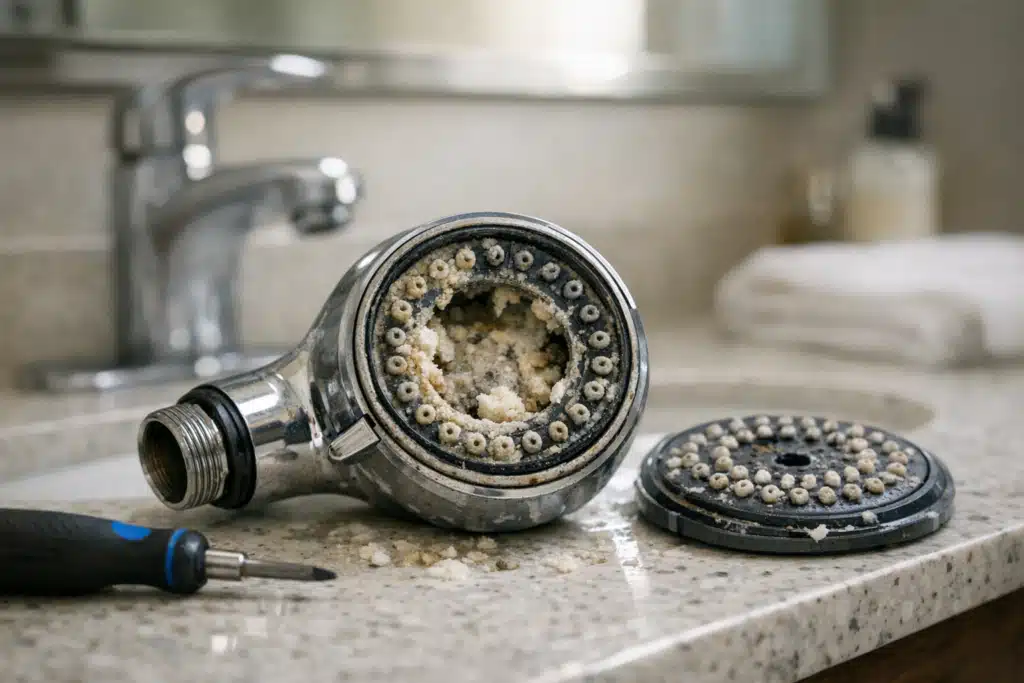
Mineral deposits clog small openings in faucet aerators and showerhead nozzles. You’ll notice reduced water pressure as scale accumulates over months.
The white, crusty buildup around faucet bases indicates calcium carbonate precipitation. This scale eventually damages rubber seals and metal finishes, causing leaks and premature replacement needs.
Toilet Components
Tank components face constant mineral exposure. Fill valves, flush valves, and flappers degrade faster in hard water conditions.
Mineral buildup under the toilet rim reduces flush effectiveness. Hard water stains become permanent without regular cleaning with acidic products.
Appliance Connections
Washing machine and dishwasher inlet valves accumulate scale deposits. These appliances may show error codes or reduced performance as mineral buildup restricts water flow.
Supply lines to appliances can develop internal scale that reduces water pressure and increases energy costs as systems work harder to maintain flow rates.
Signs Your Arvada Home Has Mineral Damage
Recognizing early warning signs helps prevent expensive repairs. Most homeowners notice cosmetic issues before functional problems develop.
Visual Indicators
- White or yellow stains around faucets and showerheads
- Soap scum that resists normal cleaning products
- Cloudy or spotted glassware from the dishwasher
- Rust-colored stains in toilets and tubs
- Reduced water pressure from fixtures
Performance Problems
Water pressure drops indicate internal scale buildup in pipes or fixtures. Hot water systems may make rumbling sounds as scale interferes with heating elements.
Appliances may run longer cycles or show reduced cleaning effectiveness. Your water heater might produce less hot water or take longer to heat water.

 Posted on Google
Protecting Your Plumbing from Mineral Damage
Prevention costs less than replacement. Several strategies help minimize mineral damage to your plumbing fixtures and extend their lifespan.
Water Softening Systems
Whole-house water softeners remove calcium and magnesium through ion exchange. These systems protect all fixtures and appliances connected to your water supply.
Salt-based softeners provide the most complete mineral removal. Alternative systems like template-assisted crystallization change mineral structure without removing them entirely.
Regular Maintenance Schedule
Monthly cleaning prevents permanent mineral buildup. Use white vinegar or citric acid solutions to dissolve calcium deposits on faucets and showerheads.
- Remove and soak showerheads in vinegar overnight
- Clean faucet aerators monthly
- Flush water heater tanks annually
- Use water softener salt as directed
- Replace toilet flappers every two years
Fixture Selection Strategies
Choose fixtures designed for hard water conditions. Stainless steel and bronze finishes resist mineral staining better than chrome or brushed nickel.
Select showerheads with easy-clean nozzles that allow mineral removal without disassembly. Avoid intricate designs with small passages that clog quickly.
When to Call Professional Plumbers
Some mineral-related problems require professional diagnosis and repair. Advanced scale buildup inside pipes or water heater tanks needs specialized equipment for removal.
Water pressure problems throughout your home suggest extensive internal pipe scaling. Professional plumbers can assess whether pipe replacement or chemical descaling provides better value.
Emergency Situations
Complete fixture failure from mineral buildup can create water damage. Frozen valves or burst fittings require immediate professional attention to prevent property damage.
Water heater failures often result from mineral accumulation. Professional replacement ensures proper sizing and installation for Arvada’s water conditions.
Long-Term Solutions for Arvada Homeowners
Investing in comprehensive water treatment protects your entire plumbing system. The upfront cost of quality equipment pays for itself through extended fixture life and reduced maintenance.
Consider your home’s age, plumbing materials, and family size when selecting treatment options. Older homes with original fixtures benefit most from aggressive mineral removal systems.
Cost-Benefit Analysis
Water softener systems cost $1,500-$3,000 installed but can extend fixture life by 50-75%. Compare this to replacing faucets, showerheads, and appliances every few years without treatment.
Professional installation ensures optimal system sizing and performance. Local plumbers understand Arvada’s specific water challenges and recommend appropriate solutions.
Arvada’s mineral-rich water creates ongoing challenges for plumbing fixtures, but proper treatment and maintenance prevent expensive damage. Regular cleaning, quality fixtures, and professional water softening protect your investment.
Don’t let hard water destroy your plumbing system. Contact Cardom Plumbing & Heating today for expert water quality solutions and fixture protection services throughout Arvada and surrounding Front Range communities.