
Recent Posts
Categories
Navigating Denver’s Water Heater Recycling Regulations in 2026
Denver's 2026 regulations require water heaters to be recycled as scrap metal rather than sent to landfills. Homeowners can drop tanks at scrap yards, use municipal programs, or have plumbers handle removal during installation.
- Tank-style water heaters go to metal recyclers for free or a small payment, while heat pump units need certified refrigerant recovery first - costing $75 to $150.
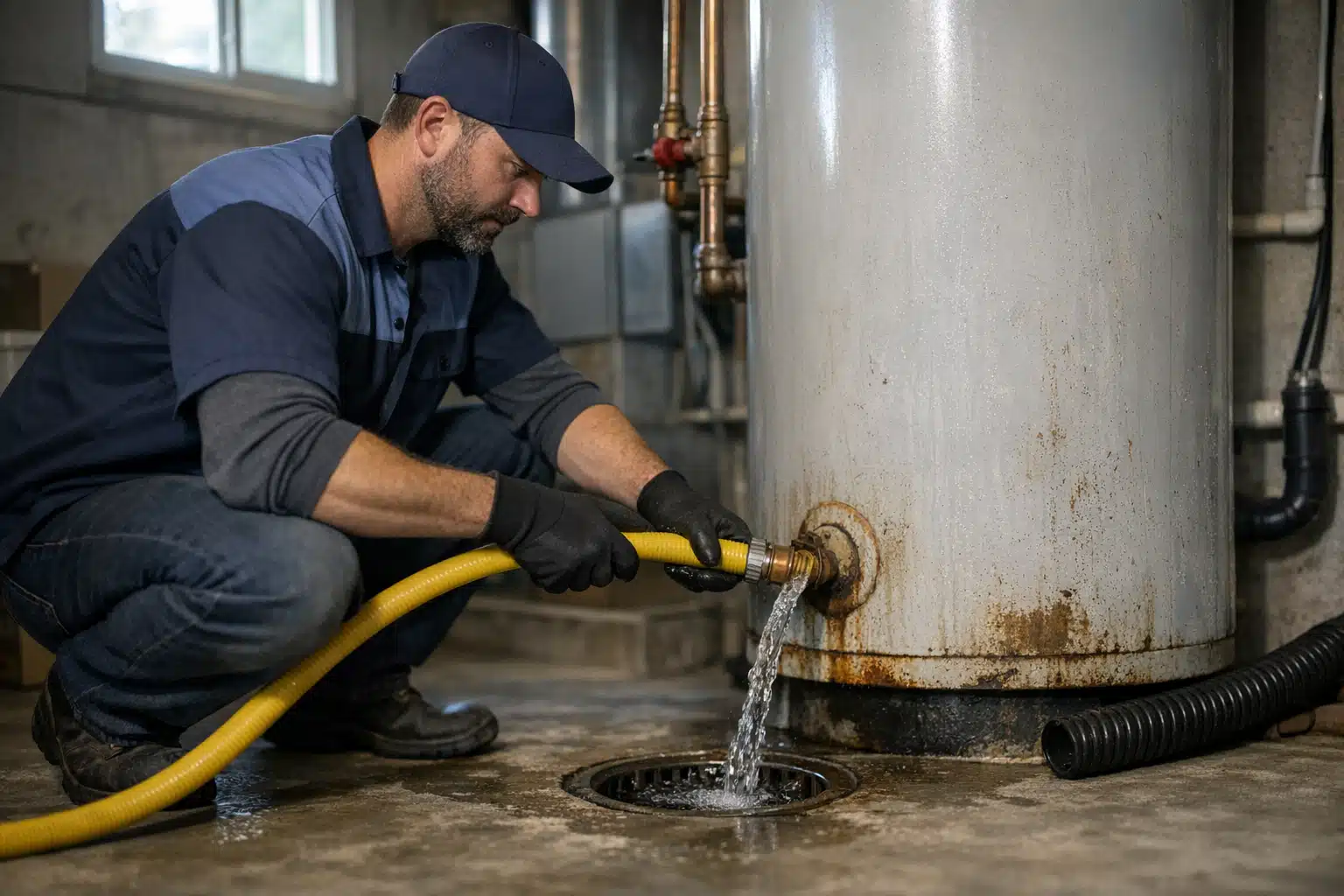
- To prepare a tank for recycling, shut off power or gas, drain the water completely, disconnect supply lines, and use a dolly to move the 100 to 150 pound empty unit.
- Front Range hard water causes tanks to fail in eight to twelve years, and Cardom Plumbing serves Arvada, Denver, Wheat Ridge, Broomfield, and Westminster with replacement and compliant recycling.
To recycle a water heater in Denver under 2026 regulations, homeowners must take the unit to an approved metal recycling facility or schedule a bulky item pickup through their waste service provider. Most scrap yards accept water heaters for free due to their steel content. Some plumbing contractors also offer removal services when installing a new unit, handling disposal on your behalf.
Your 12-year-old water heater just failed, and a rusty puddle is spreading across your Arvada basement floor. Now you own a 150-pound steel tank full of sediment, and the trash service refuses to touch it. This post covers water heater recycling under Denver’s updated 2026 rules, including where to take your old unit, what it costs, and how local homeowners stay compliant.
Front Range residents from Wheat Ridge to Broomfield face the same question every time a tank dies. We answer it below with specifics you can act on this week.
How Do I Recycle My Old Water Heater in Denver?
To recycle a water heater in the Denver metro area, drain the tank, disconnect it, and take it to a certified metal recycler or scrap yard. Most yards accept steel tanks at no charge because the metal has resale value. Many plumbers haul away and recycle your old unit as part of installation.
Here are the main paths available to Arvada and Denver homeowners:
- Plumber removal: Your installer takes the old tank when replacing it.
- Scrap metal yards: Drop-off locations that accept steel and copper.
- Municipal recycling events: Seasonal collection days in local cities.
- Bulk item pickup: Scheduled service from your waste hauler.
What Changed in the 2026 Denver Regulations
The 2026 Denver regulations tightened how appliances containing metal and refrigerants leave the waste stream. Standard tank-style gas and electric water heaters are treated as scrap metal, not landfill trash. Placing one at the curb for regular pickup can trigger a rejection or a fine.
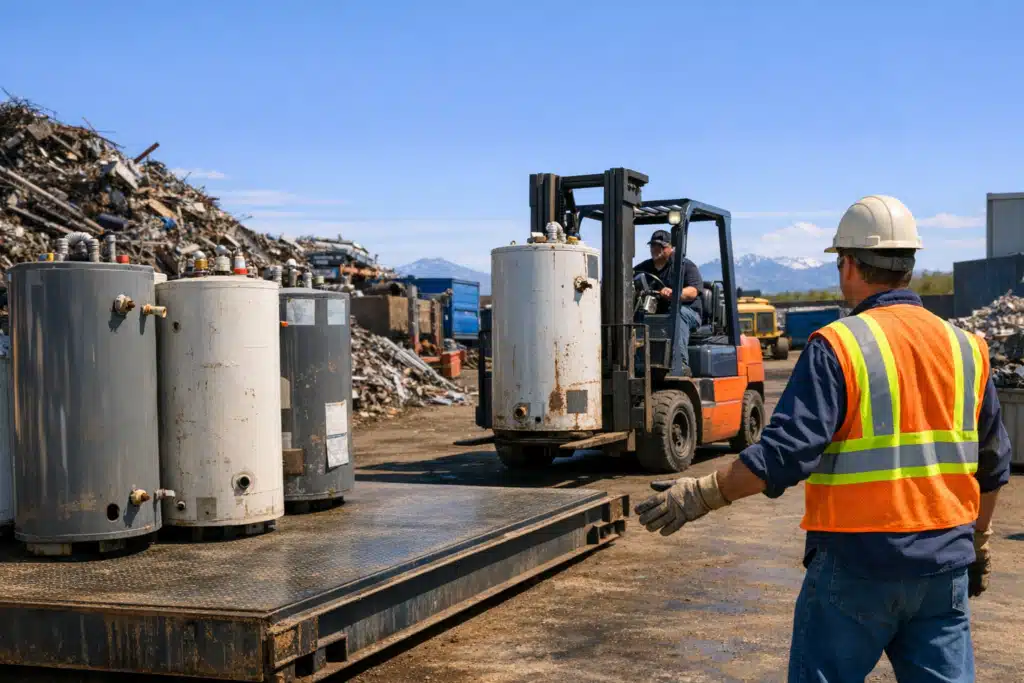
The rules matter most for the heat pump water heaters gaining traction across the Front Range. Those units contain refrigerant that must be recovered by a certified technician before disposal.
Tank-Style Water Heaters
A traditional 40- or 50-gallon steel tank counts as recyclable scrap. Denver’s 2026 code steers it to a metal recycler rather than the landfill. The tank, burner assembly, and copper fittings all hold value.
Heat Pump and Hybrid Units
Hybrid electric models use a sealed refrigerant loop. Federal EPA rules require refrigerant recovery before scrapping. A licensed plumber or HVAC tech handles that step, then the shell goes to metal recycling.
Tankless Water Heaters
Tankless units are smaller and heavy with copper and stainless components. They carry strong scrap value and are welcomed at most Denver-area yards. Gas models need no refrigerant recovery.
Step-by-Step: Preparing Your Water Heater for Recycling
If you plan to haul the tank yourself, follow this order. Skipping the drain step leaves you lifting 400 pounds of water and metal.
- Shut off power or gas. Flip the breaker or set the gas valve to off.
- Turn off the cold water supply. Close the valve at the top of the tank.
- Connect a hose to the drain valve. Run it to a floor drain or outside.
- Open a hot tap upstairs. This breaks the vacuum and speeds draining.
- Drain the tank fully. Expect sediment and rusty water on older units.
- Disconnect supply lines and venting. Cap the gas line if applicable.
- Move the tank on a dolly. Empty steel tanks still weigh 100 to 150 pounds.
Gas line work carries real risk. If you smell gas or feel unsure, stop and call a licensed plumber.
Where to Recycle a Water Heater Near Arvada
Metro Denver has several routes for dropping off or scheduling pickup. Call ahead, since hours and acceptance rules shift.
Scrap Metal Yards
Yards in Denver, Commerce City, and along the I-70 corridor buy steel tanks. Many pay a few dollars per unit based on weight. Bring a photo ID, since Colorado law requires it for scrap transactions.
Municipal Programs
- Arvada: Check the city’s bulk item and appliance pickup schedule.
- Wheat Ridge: Waste hauler pickup available for large appliances.
- Westminster: Seasonal cleanup events accept metal appliances.
- Broomfield: Scheduled bulk collection with advance booking.
- Denver: Large item pickup for residents on city trash service.
Let Your Plumber Handle It
The easiest route is having your installer remove the old unit. At Cardom Plumbing & Heating, we take the old tank when we set your new one. That keeps you compliant with the 2026 rules without a trip to the scrap yard.
What Water Heater Recycling Costs in the Denver Metro
Costs depend on the route you choose. Here is what Front Range homeowners can expect:
- Scrap yard drop-off: Free, and some yards pay $5 to $20.
- Bulk item pickup: $25 to $75 per appliance, city depending.
- Plumber haul-away with install: Frequently included or a small add-on.
- Refrigerant recovery (heat pump units): $75 to $150 for certified service.
Rolling removal into a new installation is usually the cheapest path. You avoid rental trucks, dolly rentals, and disposal fees.
Why the 2026 Rules Matter for Colorado
Water heaters are heavy metal appliances that waste landfill space. A single steel tank recovers roughly 100 pounds of recyclable steel. Multiply that across thousands of failed units each winter along the Front Range.
Denver’s harder water speeds tank failure. Mineral buildup shortens the life of many units to eight or ten years. That means more tanks reaching end of life, and more reason for clear recycling rules.
Hard Water and Faster Tank Failure
Front Range water carries dissolved minerals that settle as sediment. That layer insulates the burner and forces longer heating cycles. Tanks in Arvada and Westminster commonly fail earlier than the manufacturer estimate.
Flushing your tank once a year slows the buildup. A plumber can add this to routine maintenance during a service visit.

 Posted on Google
Common Water Heater Problems We See Across the Front Range
Before you decide to replace and recycle, confirm the tank is truly done. Some failures are repairs, not replacements.
- Rusty hot water: Often a failing anode rod or corroded tank interior.
- Popping or rumbling: Sediment cooking at the tank bottom.
- Water pooling at the base: Tank corrosion, usually terminal.
- No hot water on gas units: Pilot, thermocouple, or gas valve issue.
- Lukewarm water only: Failed heating element on electric models.
A leaking tank body cannot be repaired and should be replaced. That is the point where recycling enters the picture.
Recycling and Replacement Together
When your tank leaks, replacement and disposal happen the same day. A single visit removes the old unit, sets the new one, and hauls the old tank for recycling. That combined visit keeps your basement dry and your disposal compliant.
For Arvada property managers with multiple units, batch replacement saves on repeat trips. We coordinate removal and recycling across several buildings at once.
Frequently Asked Questions
Can I put a water heater in my regular trash?
No. Denver’s 2026 rules classify water heaters as recyclable metal appliances. Curbside trash pickup will reject them.
Do scrap yards pay for old water heaters?
Many do, based on steel weight. Expect a small amount, roughly $5 to $20 per tank.
How long does a water heater last in Arvada?
Hard water shortens the average to eight to twelve years. Annual flushing extends that range.
Recycle the Right Way With Local Help
Denver’s 2026 rules route old water heaters to metal recyclers, not the landfill. Drain and haul the tank yourself, use a city program, or let your plumber handle removal during a new install. Heat pump units need certified refrigerant recovery first.
Cardom Plumbing & Heating serves Arvada, Denver, Wheat Ridge, Broomfield, and Westminster with water heater replacement and compliant recycling. Call or text 720‑775‑8322, email tomd@cardomcolorado.com, or visit https://www.cardomcolorado.com to schedule service.
Sources
- U.S. Environmental Protection Agency – Section 608 Refrigerant Management Requirements
- City and County of Denver – Solid Waste Management
- U.S. Department of Energy – Water Heating


