
Recent Posts
Categories
How to Protect Your Plumbing During Arvada’s Spring Thaw
Arvada homeowners face spring thaw plumbing stress when frozen ground softens and snowpack melts, causing pipes that cracked silently in winter to leak once ice melts in March.
- Test your main shut-off valve, inspect exposed pipes for hairline cracks, and check outdoor spigots by covering the opening with your thumb to detect hidden leaks behind walls.
- Common spring problems include burst outdoor spigots, basement seepage near pipe entries, sump pump failure, slab leaks, and water heater strain from near-freezing incoming water.
- Repairs range from $150 to $350 for hose bib replacement up to $4,000 for slab leak detection - catching issues early prevents costly flood damage to drywall and flooring.
Protect your plumbing during spring thaw by inspecting exposed pipes for cracks caused by winter freezing, clearing gutters and downspouts to direct meltwater away from your foundation, and checking your sump pump operation. Monitor your basement for moisture, insulate vulnerable pipes, and address any pooling water near your home's perimeter before it seeps into your foundation or damages water lines.
Every March, Arvada homeowners call us about water pooling in basements that stayed bone-dry all winter. The cause is almost always spring thaw plumbing stress. When frozen ground softens and snowpack melts along the Front Range, your pipes, foundation, and water lines face pressure they avoided during the deep freeze.
This post walks you step by step through protecting your home before and during the Arvada melt. You will learn what to inspect, which repairs matter most, and what fixes cost.
Why Spring Thaw Plumbing Problems Are Different in Arvada
Arvada sits at roughly 5,300 feet with a semi-arid climate and wild temperature swings. A single March day can jump from 20°F at dawn to 60°F by afternoon.
That freeze-thaw cycle is the real trouble. Water inside tiny pipe cracks expands overnight, then melts and shifts by noon.
Our clay-heavy Front Range soil makes it worse. Wet clay swells and dries fast, moving underground lines and stressing foundation walls where supply pipes enter.
The Hidden Winter Damage That Shows Up in Spring
Many pipes freeze in January without bursting. The crack forms silently, sealed shut by ice.
When that ice melts in March, water escapes. Homeowners think the leak is new, but the damage started weeks earlier.
Step-by-Step Arvada Protection for the Spring Melt
Follow this order. Each step builds on the last and targets the most common failure points we see in Arvada and Wheat Ridge homes.
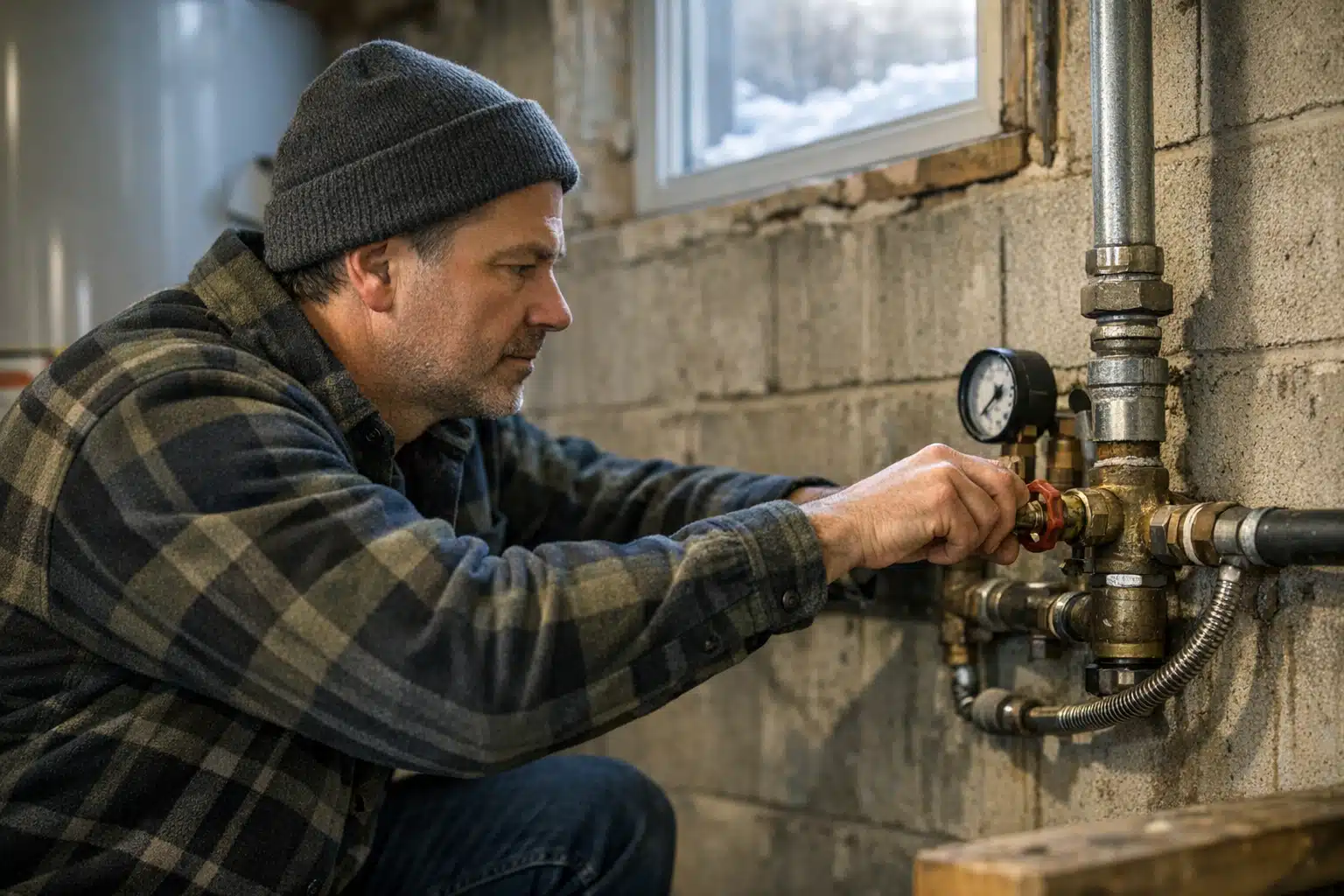
- Shut off and test your main water valve. Find it near the front foundation wall or in the basement. Turn it fully off, then on. A valve that sticks or drips needs replacement before an emergency hits.
- Inspect exposed pipes for hairline cracks. Check crawl spaces, garages, and unheated basements. Look for white mineral stains, which mark slow leaks.
- Reconnect and test outdoor hose bibs. Turn one on and watch the pipe inside. Water dripping inside the wall means a frozen, cracked spigot.
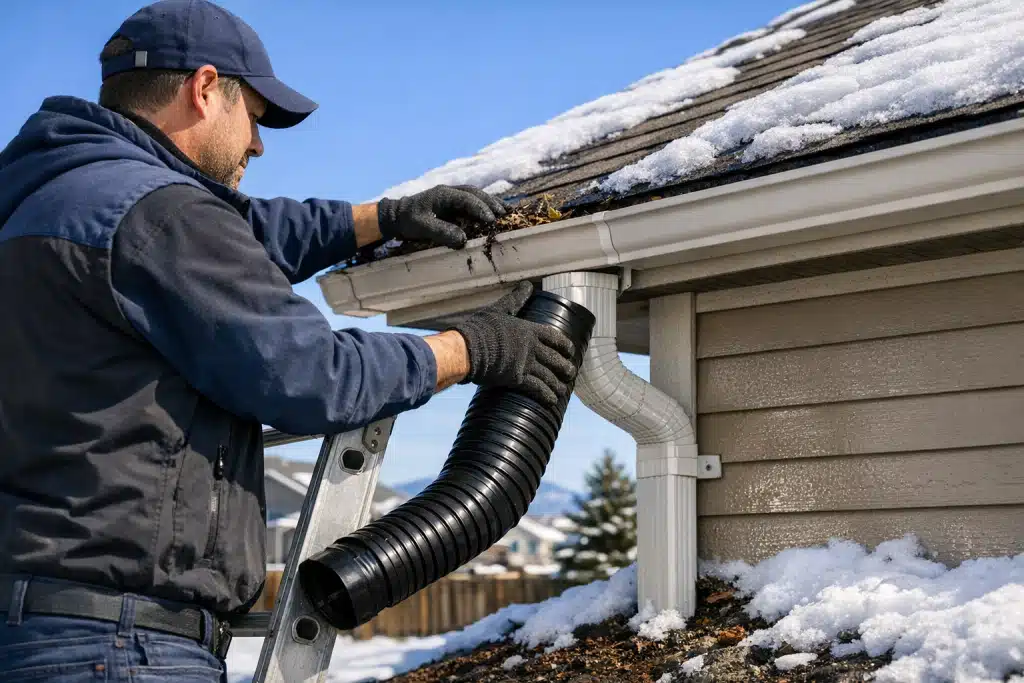
- Clear gutters and extend downspouts. Melting snow needs to drain away from your foundation, not pool against supply lines.
- Test your sump pump. Pour a bucket of water into the pit. A pump that fails to kick on leaves your basement open to thaw flooding.
How to Check a Frost-Free Hose Bib the Right Way
Frost-free spigots fail in a specific way. The valve seals deep inside the wall, so a crack hides out of sight.
Turn the water on full and cover the opening with your thumb. If pressure drops or you hear water behind the wall, the pipe cracked over winter.
Spring Thaw Plumbing Emergencies We See Most in Arvada Homes
Over years of March service calls across Arvada, Westminster, and Broomfield, five problems come up again and again.
- Burst outdoor spigots. The number one spring call. The crack formed in winter and leaks the moment you turn it on.
- Basement seepage near pipe entries. Shifting clay soil pulls apart seals where water lines enter the foundation.
- Sump pump failure. Pumps that sat idle all winter seize up right when snowmelt peaks.
- Slab leaks. A slab leak is a break in a water line running under your concrete foundation. Soil movement during thaw is a common trigger.
- Water heater strain. Incoming water drops to near freezing during the melt, forcing older heaters to overwork and fail.
Why Sump Pumps Fail During the Arvada Melt
Snowmelt raises the groundwater table fast. A pump that worked fine in fall may lack the capacity for peak March flow.
Test yours now. A backup pump with a battery adds protection during the power outages that spring storms bring.
What Spring Plumbing Repairs Cost in the Arvada Area
Price depends on access and severity. Below are typical ranges for common spring thaw plumbing repairs along the Front Range.
- Hose bib replacement: $150–$350, depending on pipe access inside the wall.
- Main shut-off valve replacement: $200–$500.
- Sump pump replacement: $400–$900, with battery backup adding $300–$600.
- Slab leak detection and repair: $1,000–$4,000, based on location under the foundation.
- Water heater replacement: $1,200–$2,800 for standard tank models.
Catching a cracked spigot early turns a $250 fix into a prevented flood. Waiting until water reaches drywall and flooring raises the bill fast.
When a Small Leak Signals a Bigger Problem
A damp spot on a basement wall rarely stays small. Clay soil movement that opens one seal usually stresses others nearby.
An early inspection catches the pattern before multiple failures stack up in the same spring.
Protecting Your Water Heater and Fixtures During the Thaw
Cold snowmelt feeding your home drops the incoming water temperature sharply. Your water heater runs longer to keep up.
Older units show their age in spring. Sediment buildup plus the extra workload leads to leaks and failures right when demand climbs.
Flush your tank once a year to clear sediment. If your heater is past ten years old, plan ahead instead of waiting for a cold-shower morning.
Hard Water and Front Range Fixtures
Arvada water carries minerals that build scale inside valves and aerators. Spring is a good time to clean faucet aerators and check for restricted flow.
Scale buildup strains fixtures already working against temperature swings. A quick cleaning restores pressure and extends fixture life.

 Posted on Google
A Simple Spring Checklist for Arvada Homeowners
Run this list once the overnight lows stay above freezing. Most steps take under an hour.
- Test the main shut-off valve.
- Inspect exposed pipes for cracks and stains.
- Check every outdoor spigot under full pressure.
- Pour water in the sump pit to confirm the pump works.
- Flush the water heater and check its age.
- Clean faucet aerators to clear mineral scale.
- Extend downspouts away from the foundation.
Property managers overseeing Arvada rentals should repeat this for each unit. One missed spigot in a multi-unit building can flood a shared wall.
When to Call a Plumber Instead of DIY
Some steps are safe for any homeowner. Testing valves and clearing gutters need no special tools.
Call for help when you find water behind walls, hear running water with everything off, or spot warm floor patches that hint at a slab leak. These point to hidden damage that needs equipment to locate.
Our team knows Arvada’s soil, water chemistry, and older home layouts. That local knowledge speeds up diagnosis and keeps repair costs down.
Conclusion
Arvada’s freeze-thaw swings stress pipes, foundations, and water heaters every spring. Testing your shut-off valve, spigots, and sump pump early stops small cracks from becoming flooded basements. Smart Arvada protection comes down to catching winter’s hidden damage before the melt reveals it.
Ready for a spring inspection? Contact Cardom Plumbing & Heating for fast local service in Arvada, Wheat Ridge, Westminster, and Broomfield. Call or text 720‑775‑8322, email tomd@cardomcolorado.com, or visit https://www.cardomcolorado.com.
Sources
- National Weather Service – Denver/Boulder Forecast Office
- U.S. Environmental Protection Agency – Fix a Leak Week
- American Red Cross – Preventing and Thawing Frozen Pipes


