Gas leak detection is essential for ensuring safety in Westminster, CO, where aging infrastructure and environmental factors create unique challenges. Professional services utilize advanced technology to identify leaks that may not be detectable by smell alone, safeguarding homes and businesses.
Gas leaks can pose serious safety risks and require immediate attention from professionals. Westminster's infrastructure and soil conditions can lead to undetected leaks that are hazardous.
Technicians use specialized equipment to locate gas leaks, including electronic sensors and pressure testing tools. This thorough approach minimizes disruption while ensuring safety.
Cardom Plumbing & Heating offers prompt response and detailed documentation to support repairs and insurance claims, emphasizing their commitment to safety and quality service.
What is gas leak detection?
Gas leak detection is the process of identifying the presence of gas leaks in residential or commercial properties. It involves using specialized equipment and techniques to locate leaks, which can pose serious safety risks. In Westminster, professional detection services are essential for ensuring the safety of families and properties from potential hazards.
Gas Leak Detection in Westminster, CO
That faint sulfur smell near your furnace or the unexplained hissing sound behind your stove – these moments demand immediate attention. Gas leaks represent one of the most serious safety concerns in any home or business, and Westminster residents face unique challenges that make professional detection services a critical safeguard for families and properties throughout the community.
Gas leak detection involves specialized diagnostic procedures to identify escaping natural gas or propane from supply lines, connections, appliances, and underground piping. This service goes far beyond simply sniffing for odors – professional technicians use calibrated electronic sensors, pressure testing equipment, and systematic inspection protocols to locate leaks that might otherwise go unnoticed until they create dangerous conditions.
Why Professional Detection Matters
Natural gas is odorless in its pure form – utility companies add mercaptan to create that distinctive rotten egg smell. However, this odorant can fade in soil or dissipate in certain conditions, making some leaks nearly impossible to detect without proper equipment. Westminster's aging infrastructure and soil composition can accelerate corrosion on underground lines, creating leak points that homeowners cannot identify through smell alone.
Electronic detection equipment identifies gas concentrations as low as 1 part per million – far below human detection thresholds
Pressure decay testing reveals micro-leaks in supply lines that waste energy and pose cumulative safety risks
Systematic inspection protocols examine every connection point, valve, and appliance interface
Professional documentation supports insurance claims and real estate transactions
Cardom Plumbing & Heating provides Gas Leak Detection services in all neighborhoods of Westminster including Abbey, Arrowhead, Berkley, Bradburn, Cedar Bridge, Downtown Westminster, Eagles Landing at Church Ranch, Hillcrest, Home Farm, Huntington Trails, Madison Hill, Northridge Manor, The Meadows at Timber Lake, Wallace Village, Westcliff, and Westfield Village.
Westminster's position along the Front Range creates environmental and infrastructure conditions that directly affect gas system integrity. The city's housing stock spans several decades, with significant construction occurring during the 1970s through 1990s – periods when certain pipe materials and installation practices were common that have since proven problematic over time.
The region's clay-heavy soils expand and contract dramatically between wet and dry seasons. This soil movement stresses underground gas lines, particularly at connection points and where pipes transition from buried sections to above-ground entry points. Westminster properties built on expansive soils face higher risks of pipe separation and joint failures than homes in areas with more stable ground conditions.
Seasonal Factors Affecting Gas Systems
Colorado's extreme temperature swings place significant stress on gas infrastructure. Winter lows dropping below zero cause metal pipes to contract, while summer heat exceeding 90 degrees creates expansion. This thermal cycling gradually loosens threaded connections and fatigues flexible connectors over years of service.
Freeze-thaw cycles – Ground movement during spring thaw season frequently damages underground service lines
Heating season demands – Increased gas flow during winter months can reveal marginal leaks that weren't apparent during lighter summer usage
Dry soil conditions – Extended drought periods cause soil shrinkage that can expose and stress buried piping
Monsoon moisture – Late summer storms saturate soils rapidly, potentially washing away protective cover and accelerating corrosion
Furnace cycling stress – Frequent on-off cycles during shoulder seasons work connections and valves harder than steady operation
Appliance condensation – High-efficiency furnaces produce acidic condensate that can corrode nearby gas fittings
Warning Signs Requiring Immediate Attention
Westminster residents should remain alert to indicators suggesting potential gas leaks in their homes or on their properties.
Sulfur or rotten egg odors near appliances, meters, or along property lines
Hissing, whistling, or roaring sounds near gas lines or equipment
Dead vegetation in strips or patches over buried gas lines
Visible dust or dirt blowing from ground near gas service entry
Unexplained increases in gas utility bills
Pilot lights that repeatedly extinguish or burn with unusual colors
Our gas leak detection process follows a systematic approach designed to identify every potential leak point while minimizing disruption to your home or business. We combine advanced electronic detection technology with decades of hands-on experience working on Westminster's diverse housing stock.
Our Detection Process
Initial safety assessment – Upon arrival, our technicians evaluate immediate conditions and ensure safe working environment before beginning diagnostic procedures
Visual inspection – We examine all visible gas piping, connections, valves, and appliance interfaces for signs of corrosion, damage, or improper installation
Electronic detection sweep – Using calibrated combustible gas detectors, we scan all accessible areas where gas piping runs or where leaks might accumulate
Pressure testing – We isolate sections of your gas system and monitor pressure decay to identify leaks too small for electronic detection
Leak location pinpointing – When leaks are detected, we use soap solution testing and precise electronic locating to identify exact leak points
Documentation and reporting – We provide detailed findings including leak locations, severity assessments, and recommended repair priorities
Detection Methods and Equipment
Our technicians employ multiple detection technologies to provide thorough coverage of your gas system.
Combustible gas analyzers – Detect gas concentrations in ambient air with parts-per-million sensitivity
Manometer pressure testing – Measures pressure stability in isolated pipe sections to identify system integrity
Ultrasonic leak detectors – Identify high-frequency sounds produced by gas escaping through small openings
Tracer gas injection – For difficult-to-locate leaks, we can introduce detectable tracer gases that pinpoint exact leak locations
Thermal imaging – Identifies temperature differentials that may indicate gas flow through unintended pathways
Communication and Follow-Up
Throughout the detection process, we keep you informed about our findings and observations. If we identify active leaks, we discuss immediate safety measures and repair options before proceeding. Our detailed reports include photographs, diagrams, and clear explanations that help you understand exactly what we found and what steps come next.
Why Choose Cardom Plumbing & Heating
Gas leak detection demands technicians who understand both the science of gas behavior and the practical realities of how homes and businesses in Westminster are constructed. Our team brings licensed expertise combined with specific knowledge of local building practices, soil conditions, and infrastructure characteristics that affect gas system performance in this community.
We maintain current certifications for gas system work and invest in detection equipment that meets or exceeds industry standards. Our technicians receive ongoing training on the latest detection methods and safety protocols – because gas work leaves no room for shortcuts or guesswork.
What Sets Us Apart
Local response capability – We understand that gas leak concerns require prompt attention and prioritize these calls accordingly
Comprehensive documentation – Our detailed reports satisfy insurance requirements, real estate transaction needs, and utility company requests
Repair coordination – When detection reveals problems, we can often perform repairs immediately rather than requiring separate appointments
Utility company liaison – We work directly with Xcel Energy when situations require coordination with the gas utility
After-hours availability – Gas leak concerns don't wait for business hours, and neither do we
Our reputation in Westminster depends on thorough, honest work. We won't recommend unnecessary services, but we also won't minimize genuine safety concerns. When we inspect your gas system, you receive a complete picture of its condition – not just the obvious issues.
Housing Characteristics & Gas Leak Detection Considerations
Westminster's residential development occurred in distinct phases, each bringing different construction practices and gas system installations. Understanding your home's era helps predict where gas system vulnerabilities are most likely to occur.
Pre-1980 Construction
Older Westminster homes – particularly those in established neighborhoods near downtown and along Sheridan Boulevard – often feature gas systems that have been modified multiple times over decades of service. These properties commonly present specific challenges.
Original black iron piping with threaded connections that loosen over time
Multiple appliance additions or relocations creating complex pipe routing
Galvanized steel underground service lines susceptible to corrosion
Appliance connectors that predate current flexible connector standards
1980s-1990s Development
The substantial housing boom during these decades brought rapid construction throughout Westminster's central and western areas. Homes from this period often feature corrugated stainless steel tubing (CSST) for gas distribution – a material that requires specific bonding and grounding to prevent damage from electrical events.
CSST installations may lack proper bonding required by current codes
Builder-grade appliance connectors reaching end of service life
Polyethylene underground service lines – generally reliable but vulnerable to excavation damage
Newer Construction and Renovations
Properties built after 2000 and recently renovated homes typically feature modern gas system designs. However, even newer installations can develop problems from improper installation, settling, or damage during subsequent work on the property. Homes that have undergone additions or remodels warrant particular attention at transition points between old and new work.
Environmental Conditions & Gas Leak Detection Implications
Westminster's environmental characteristics directly influence gas system integrity and detection requirements. The combination of climate extremes, soil conditions, and water quality factors creates a challenging environment for underground and exterior gas infrastructure.
Soil and Ground Conditions
The clay-dominant soils throughout much of Westminster create significant ground movement between seasons. This expansive soil behavior – swelling when wet and shrinking during dry periods – places continuous stress on buried gas lines and their connections to building entry points.
Soil movement can exceed several inches annually in high-plasticity clay areas
Underground pipe joints and fittings experience repeated stress cycles
Service line entry points where pipes transition from underground to above-ground are particularly vulnerable
Drought conditions can create soil voids that leave pipes unsupported
Climate Impact on Gas Systems
Westminster experiences temperature extremes ranging from well below zero in winter to above 100 degrees during summer heat waves. This 100+ degree annual temperature range causes significant thermal expansion and contraction in metal piping and fittings.
Threaded connections work loose over years of thermal cycling
Flexible connectors fatigue from repeated expansion and contraction
Outdoor meter assemblies and regulators face direct weather exposure
Condensation inside gas lines during temperature transitions can accelerate internal corrosion
Water Quality and Corrosion Factors
While water quality doesn't directly affect gas systems, Westminster's municipal water characteristics influence the broader corrosion environment around homes. High mineral content in local water can accelerate galvanic corrosion where dissimilar metals meet – including gas piping connections. Homes with water softeners or treatment systems should pay particular attention to nearby gas connections where moisture exposure might occur.
Recent Work
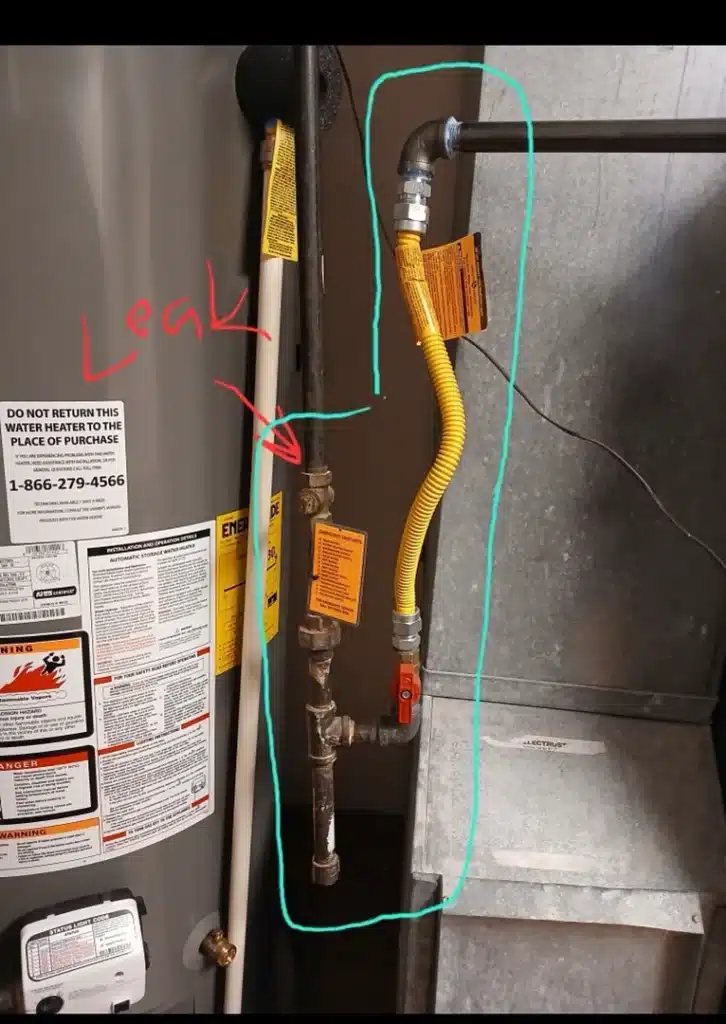
Gas leak - Westminster
Problem:Gas valve problem.
Found:Old and leaking gas valve.
Fixed:Replace old and leaking gas valve. Replace union on gas line.
Outcome:Tested and cleaned up
Cap Flex Gas Line - Westminster
Problem:Cap gas line problem.
Found:Old flex, valve and plugged.
Fixed:Pulled old flex and valve and plugged with 1/2 black plug and pipe sealant.
Outcome:Tested for leaks.
Gas Log Lighting Valve Installation - Westminster
Problem:Gas valve
Found:Old gas log lighter valve
Fixed:Replaced and install new old gas log lighter valve.
Outcome:Tested and working properly.
Westminster Natural Gas Infrastructure and Safety Data
Westminster's natural gas service, provided primarily by Xcel Energy, serves approximately 47,000 residential and commercial customers throughout the city. The distribution infrastructure includes miles of underground mains and service lines of varying ages and materials – some dating back to the city's early development phases and others installed during more recent expansion.
According to Colorado Public Utilities Commission data, the Denver metropolitan region – including Westminster – experiences hundreds of reported gas leaks annually. While most are minor and quickly repaired, the statistics underscore the ongoing need for vigilant detection and maintenance. Aging infrastructure, third-party excavation damage, and corrosion remain the leading causes of gas leaks in the region.
Local Infrastructure Considerations
Westminster's gas distribution system includes both modern polyethylene and older steel mains
Service line responsibility typically transfers from utility to homeowner at the meter
The city's 811 call-before-you-dig program handles thousands of locate requests annually – reflecting significant excavation activity that can damage gas lines
Colorado requires gas system pressure testing during real estate transactions when systems have been altered or concerns exist
Why This Matters for Westminster Homeowners
The combination of aging infrastructure, active construction and renovation throughout the city, and challenging soil conditions means Westminster properties face above-average risk factors for gas system problems. Regular professional detection services provide peace of mind and catch developing issues before they become dangerous situations. Properties that haven't had gas system inspections within the past several years – or those that have undergone renovations, appliance changes, or nearby excavation work – should consider professional detection services as a proactive safety measure.
Common signs of a gas leak include a faint sulfur smell, hissing sounds near gas appliances, and dead or dying vegetation around gas lines. If you notice any of these indicators, it's crucial to take immediate action and contact a professional for gas leak detection.
Gas leak detection involves using specialized equipment to identify escaping natural gas or propane. Technicians use calibrated electronic sensors and pressure testing to locate leaks that may not be detectable by smell alone, ensuring a thorough inspection of all connections and appliances.
While you can look for obvious signs of a gas leak, professional technicians have the training and tools to detect leaks that are not visible or easily identifiable. They can locate micro-leaks and provide documentation that may be necessary for insurance claims or real estate transactions.
You can find gas leak detection services throughout Westminster, including neighborhoods like Downtown Westminster, Bradburn, and Northridge Manor. Local companies, such as Cardom Plumbing & Heating, offer specialized services to ensure your home is safe from gas leaks.
It's recommended to have your gas lines inspected at least once a year, especially if your home is older or located in an area with challenging soil conditions. Regular inspections can help identify potential issues before they become serious safety hazards.
If you suspect a gas leak, evacuate the area immediately and avoid using any electrical devices or open flames. Once you are at a safe distance, contact a professional gas leak detection service to assess the situation and make any necessary repairs.
Yes, gas leaks can pose serious health risks, including headaches, dizziness, and respiratory issues due to exposure to natural gas. In severe cases, gas leaks can lead to explosions or fires, making it essential to address any suspected leaks promptly.