
Recent Posts
Categories
How to Choose the Right Gas Appliance for High-Altitude Homes in Westminster
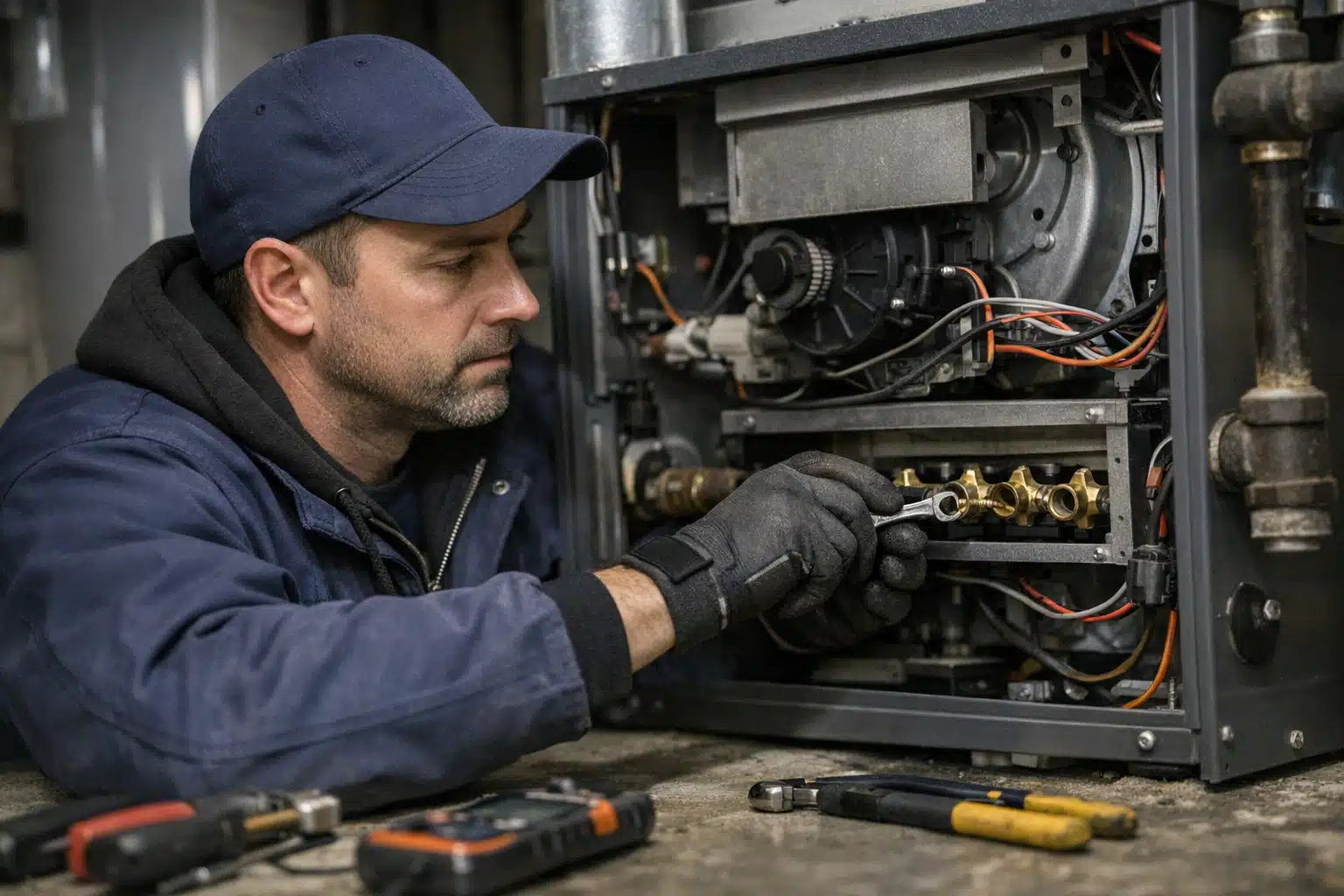
At 5,300 feet in Westminster, gas appliances need altitude adjustments to prevent inefficient combustion, carbon monoxide risks, and equipment failure. Cardom Plumbing & Heating explains how to select properly rated units and why local setup matters.
- Manufacturers require a 4% BTU reduction per 1,000 feet above sea level - an 80,000 BTU furnace performs closer to 64,000 BTU in Westminster after derating.
- Furnaces, tankless water heaters, boilers, and gas ranges all need altitude conversion or high-altitude ratings. Always check the rating plate covers 5,000 to 5,500 feet before buying.
- Proper sizing requires a Manual J load calculation rather than estimates. Oversized furnaces short-cycle and wear out faster while increasing gas bills.
When selecting a gas appliance for high-altitude locations like Westminster at 5,300 feet, look for units specifically rated for elevation or those that can be converted with high-altitude kits. Standard appliances may short-cycle, produce soot, or trigger safety limits due to thinner air affecting combustion. Always verify the manufacturer's altitude specifications and consider professional installation to adjust gas pressure and orifice sizes for proper performance.
At 5,300 feet, a furnace pulled straight off a shelf can short-cycle, soot up, or trip its safety limit within a week. Choosing a gas appliance for high altitude is the difference between steady heat and a mid-January no-heat call in Westminster.
This post covers what changes above 2,000 feet, which appliances need derating, and how to match a unit to your home. You will learn what to ask before you buy and how installation codes affect the final result.
Why Altitude Changes How a Gas Appliance for High Altitude Performs
Air gets thinner as elevation rises. Less oxygen reaches the burner, so a gas appliance rated for sea level burns fuel inefficiently in Westminster homes.
The result is incomplete combustion. That means wasted gas, higher carbon monoxide risk, and premature part failure.
The Rule Every Front Range Installer Follows
Manufacturers require input reductions above 2,000 feet. The standard drop is 4% of rated BTU input for every 1,000 feet above sea level.
Westminster sits around 5,300 feet. A furnace loses roughly 20% of its sea-level input capacity here.
An 80,000 BTU furnace performs closer to 64,000 BTU after derating. Sizing has to account for that gap before you buy.
Appliances That Need Altitude Adjustment in Westminster Homes
Most gas-fired equipment needs an altitude conversion or a high-altitude rating. The following units are the ones we adjust most in the Denver metro.
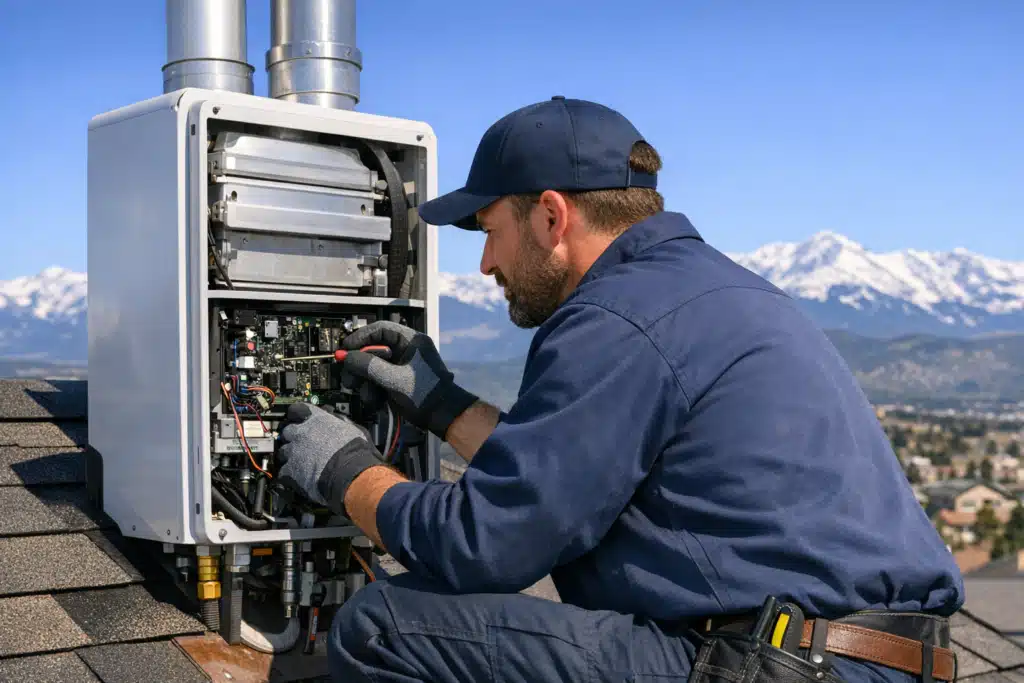
- Furnaces — Orifice changes and gas pressure tuning are standard above 4,500 feet.
- Tankless water heaters — Many require a control-board altitude setting or a specific model version.
- Tank water heaters — Some carry a high-altitude rating up to a set elevation, then need a conversion kit.
- Boilers — Sensitive to derating; wrong input causes lockouts on cold mornings.
- Gas ranges and cooktops — Burner orifices may need swapping for a clean flame.
- Fireplaces and log sets — High-altitude kits stop lazy yellow flames and soot buildup.
A unit labeled for a wide elevation range saves conversion work. Always match the rating plate to your address elevation.
How to Read a Rating Plate Before You Buy
Every gas appliance carries a metal data plate. Look for a line listing the certified elevation range.
- Find the input rating in BTU per hour.
- Check the elevation certification line, often near the model number.
- Confirm the range covers 5,000 to 5,500 feet for Westminster.
- Note whether a conversion kit is required or included.
If the plate stops at 2,000 feet, that unit needs a kit. No kit means it should not be installed here.
Sizing a Gas Appliance for High Altitude the Right Way
Oversizing is the most common mistake we correct on the Front Range. A too-large furnace cycles on and off, wearing out the igniter and blower.
Correct sizing starts with a Manual J load calculation. That measures heat loss based on square footage, insulation, and window count.
What Load Calculation Looks Like for a Westminster House
A 2,000 square foot Westminster home with average insulation needs roughly 60,000 to 70,000 BTU of delivered heat. After derating, that points to an 80,000 to 90,000 BTU sea-level furnace.
Skip the calculation and you risk buying too much furnace. That drives up your gas bill and shortens equipment life.
Efficiency Ratings and What They Mean at 5,300 Feet
Furnace efficiency is measured as AFUE. A 95% AFUE furnace converts 95% of gas into usable heat.
High-efficiency condensing furnaces work well at altitude when set up correctly. Their sealed combustion pulls outside air, which helps in thinner air.
- 80% AFUE — Lower upfront cost, higher long-term gas use.
- 90–96% AFUE — Higher cost, lower monthly bills, better cold-weather output.
- Tankless water heaters — Rated by UEF; look for altitude-verified models.
Xcel Energy rebates apply to qualifying high-efficiency units in Colorado. That offset shortens the payback period on a condensing furnace.
Venting and Combustion Air Rules That Apply Here
Thinner air affects how exhaust gases move. Improper venting causes backdrafting and carbon monoxide risk.
Colorado follows the International Fuel Gas Code with local amendments. Adams County and City of Westminster inspectors check vent sizing against the derated input.
Common Venting Problems We Find in Older Homes
- Undersized flue liners on 1970s furnaces paired with a new water heater.
- Shared vents that cannot handle a high-efficiency swap.
- Blocked combustion air openings in tight, remodeled basements.
- PVC intake pipes routed too close to the exhaust termination.
Each of these fails inspection and puts your household at risk. A pressure and combustion analysis catches them before winter.

 Posted on Google
Cost Expectations for High-Altitude Gas Appliances
Prices vary by model, efficiency, and needed venting work. The ranges below reflect installed Denver-metro pricing.
- Standard 80% furnace, installed: $4,000–$6,000
- High-efficiency 95%+ furnace, installed: $6,500–$10,000
- Tank gas water heater: $1,800–$3,000
- Tankless gas water heater: $3,500–$6,000
- Altitude conversion kit and tuning: $150–$400
Venting upgrades add cost on older Westminster homes. A combustion analysis after install verifies safe operation.
A Short Checklist Before You Choose
- Confirm the appliance is rated or convertible for 5,000+ feet.
- Request a Manual J load calculation, not a rule-of-thumb estimate.
- Ask about the derating adjustment for your specific model.
- Verify venting meets current Westminster and Adams County code.
- Check for Xcel Energy rebates on efficient equipment.
- Require a post-install combustion test with a printed readout.
Follow this list and your appliance runs clean and efficient. Skip a step and you invite short-cycling or a failed inspection.
Why Local Setup Matters More Than the Brand
Two identical furnaces perform differently based on who set them up. Correct gas pressure, orifice sizing, and venting decide the result at altitude.
Cardom Plumbing & Heating installs and adjusts gas equipment across Westminster, Arvada, Wheat Ridge, Broomfield, and Denver. We stock appliances rated for Front Range elevation and tune each one on site.
Conclusion
Choosing a gas appliance for high altitude comes down to correct rating, honest sizing, and code-compliant venting. Westminster homes need derated input and a verified combustion test to run safely all winter.
Ready to pick the right unit for your home? Call or text Cardom Plumbing & Heating at 720‑775‑8322, email tomd@cardomcolorado.com, or visit https://www.cardomcolorado.com.
Sources
- U.S. Department of Energy – Furnaces and Boilers
- International Code Council – International Fuel Gas Code
- U.S. Consumer Product Safety Commission – Carbon Monoxide Information Center
- Xcel Energy – Colorado Residential Rebates


