
Recent Posts
Categories
Evaluating the Cost of Repiping Older Homes in Denver
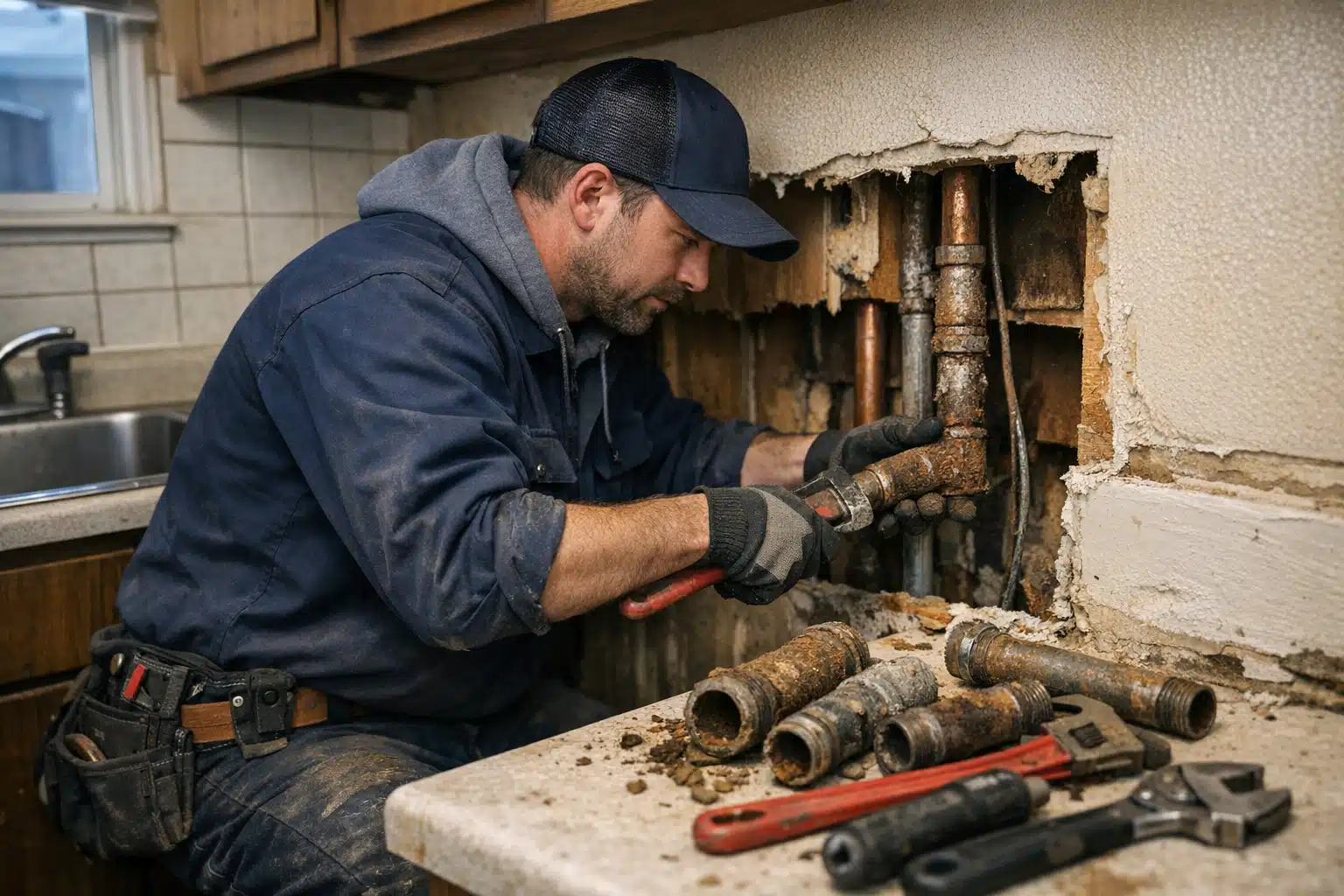
Repiping older Denver-area homes typically costs between $4,500 and $18,000, depending on home size, pipe material, and wall access. PEX is often preferred for its lower cost and freeze resistance, while copper offers durability for exposed runs.
- Galvanized steel pipes in pre-1970 homes corrode internally, and polybutylene pipes from the late 1970s to mid-1990s crack without warning - both common in Westminster, Broomfield, and Wheat Ridge areas.
- Warning signs include rusty water, low pressure across multiple fixtures, repeated pinhole leaks, and visible corrosion on exposed lines.
- Permits are required in Denver and surrounding cities, and homeowners should budget an extra $1,000 to $3,500 for drywall patching and paint after the work is complete.
Repiping an older home in Denver typically costs between $4,000 and $15,000, depending on the home's size, number of bathrooms, pipe material chosen, and accessibility of existing plumbing. Homes with galvanized steel or polybutylene pipes often require full replacement. Factors like wall access, permits, and labor rates in the Front Range area also influence the final price.
A burst galvanized pipe behind a kitchen wall ranks among the most expensive surprises an Arvada homeowner can face. Many houses across Denver and the Front Range still run on steel or polybutylene plumbing installed decades ago. Knowing the true repiping cost helps you plan before a small drip turns into a flooded basement.
This article breaks down what repiping an older Denver home actually costs, what drives the price, and how to tell when it makes sense. You get real numbers, local code details, and advice from plumbers who have opened these walls firsthand.
What Repiping Actually Means for Denver Homes
Repiping is the replacement of the water supply lines running inside your walls, floors, and ceilings. It swaps aging pipe material for new copper or PEX throughout the house.
A spot repair patches one leak. A full repipe removes the root cause, which matters for older homes with failing galvanized steel.
Why Older Denver Pipes Fail
Homes built before 1970 around Wheat Ridge and north Denver commonly used galvanized steel. That steel corrodes from the inside, narrowing the pipe and restricting flow.
Polybutylene, used from the late 1970s into the mid-1990s, cracks and fails without warning. Many Westminster and Broomfield homes from that era still carry it.
Denver’s hard water speeds up the damage. Mineral buildup scars pipe walls and shortens the lifespan of any aging system.
Repiping Cost Breakdown for Older Homes in Denver
The honest answer: most whole-house repipes in the Denver metro fall between $4,500 and $15,000. The spread is wide because no two older homes are built the same.
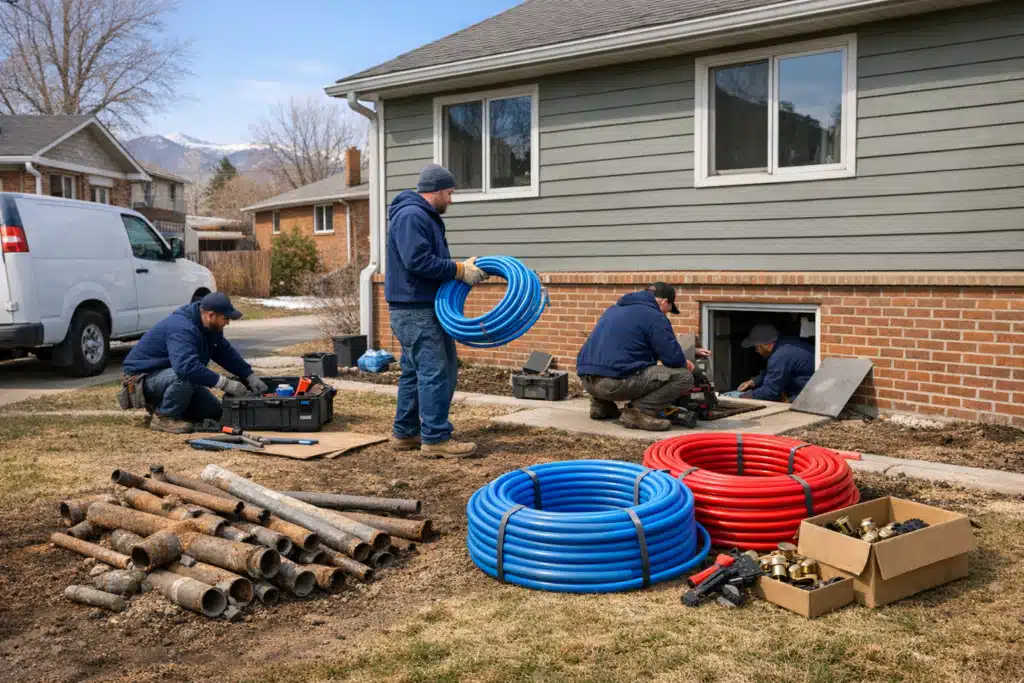
Here is how pricing usually sorts out by home size and material:
- Small home (under 1,200 sq ft, one bath): $4,500 – $7,000
- Mid-size home (1,500–2,000 sq ft, two baths): $7,000 – $11,000
- Larger home (2,500+ sq ft, three or more baths): $11,000 – $18,000
Material choice shifts the number too. PEX runs lower in both labor and material. Copper costs more but lasts longer in some applications.
- PEX repipe: roughly $0.40–$0.80 per linear foot in material, faster to install
- Copper repipe: roughly $2–$4 per linear foot in material, longer labor hours
What Drives the Final Price
Several things push an estimate up or down on an older Denver property. Each one changes how much wall and floor access a plumber needs.
- Number of fixtures and bathrooms — more sinks, tubs, and toilets mean more pipe runs.
- Foundation type — slab foundations cost more than crawl spaces or unfinished basements.
- Wall and finish access — plaster walls and finished basements add demolition and patch work.
- Number of stories — vertical runs between floors add labor.
- Permit and inspection fees — required across Denver, Arvada, and surrounding jurisdictions.
The Drywall and Patch Cost People Forget
Opening walls is only half the job. Restoring them is a separate line most homeowners overlook.
Budget an extra $1,000 to $3,500 for drywall patching, texture matching, and paint. Older plaster walls in historic Denver neighborhoods push that figure higher.
PEX vs. Copper for Arvada and Front Range Climates
Both materials work in Colorado. The right pick depends on your home and your budget.
Why PEX Fits Many Older Homes
PEX flexes, which lets plumbers snake it through existing wall cavities with less demolition. That cuts both labor and patch costs.
PEX also handles freeze stress better than rigid copper. For Arvada homes that see hard winters, that flexibility reduces burst risk when a line gets cold.
When Copper Still Makes Sense
Copper resists UV and works for exposed runs in garages or utility rooms. Some homeowners prefer it for long-term resale value.
The trade-off is cost and freeze sensitivity. Copper splits when water inside it freezes, a real concern on exterior walls in Broomfield and Westminster.
Signs Your Older Home Needs Repiping, Not Patching
One leak does not always mean a full repipe. A pattern of problems usually does.
Watch for warning signs common in older Front Range houses:
- Rusty or brown water from taps, a sign of galvanized corrosion
- Low water pressure across multiple fixtures at once
- Repeated pinhole leaks in the same stretch of pipe
- Visible corrosion or flaking on exposed basement lines
- Polybutylene gray or blue pipe identified anywhere in the home
If three or more of these show up, piecemeal repairs cost more over time than one repipe. We see this math play out in Wheat Ridge homes every season.
Denver Permits, Codes, and Inspections
Repiping requires a permit in Denver, Arvada, and nearby jurisdictions. Work must meet the plumbing code adopted by each city.
Inspectors check pipe support spacing, fittings, and pressure testing. A licensed plumber pulls the permit and schedules the inspection for you.
Skipping permits causes trouble at resale. Unpermitted plumbing work can stall a home sale or force costly rework.

 Posted on Google
Return on a Repiping Investment
A repipe is a large expense with real payback. For older Denver homes, the benefits go past avoiding one flood.
- Restored water pressure at every fixture
- Cleaner water without rust or metallic taste
- Lower insurance risk from water damage claims
- Stronger resale value with documented new plumbing
- Decades of reliable service from PEX or copper
A single burst galvanized line can cause $10,000 or more in water damage. A planned repipe removes that threat on your schedule, not the pipe’s.
Timing Your Repipe Around Denver Winters
Fall is the smart window for this work. Finishing before the first hard freeze protects against the burst risk that peaks in January.
Spring works too, after thaw but before summer schedules fill. Planning ahead avoids the emergency premium of a mid-winter failure.
How to Get an Accurate Repiping Cost Estimate
A trustworthy estimate starts with a walkthrough, not a phone quote. A plumber should inspect your pipe material, fixture count, and wall access in person.
Ask any contractor these questions before signing:
- What pipe material do you recommend and why?
- Does the quote include drywall patching and paint?
- Who pulls the permit and schedules inspection?
- What warranty covers the pipe and the labor?
- How many days will the water be shut off?
Clear answers separate a solid local plumber from a lowball bid that balloons later.
Conclusion
Repiping an older Denver home runs between $4,500 and $18,000, driven by size, material, and wall access. PEX keeps costs down and resists freeze damage, making it a strong fit for Arvada and Front Range winters. Acting before a galvanized or polybutylene line fails saves you from far larger water-damage bills.
Cardom Plumbing & Heating repipes older homes across Arvada, Denver, Wheat Ridge, Broomfield, and Westminster. For a straight answer on your repiping cost, call or text 720‑775‑8322, email tomd@cardomcolorado.com, or visit https://www.cardomcolorado.com.
Sources
- U.S. Environmental Protection Agency – Ground Water and Drinking Water
- City and County of Denver – Permits and Community Planning
- U.S. Consumer Product Safety Commission – Polybutylene Pipe Safety Information


