
Recent Posts
Categories
How to Retrofit Arvada Homes with Smart Water Leak Detectors
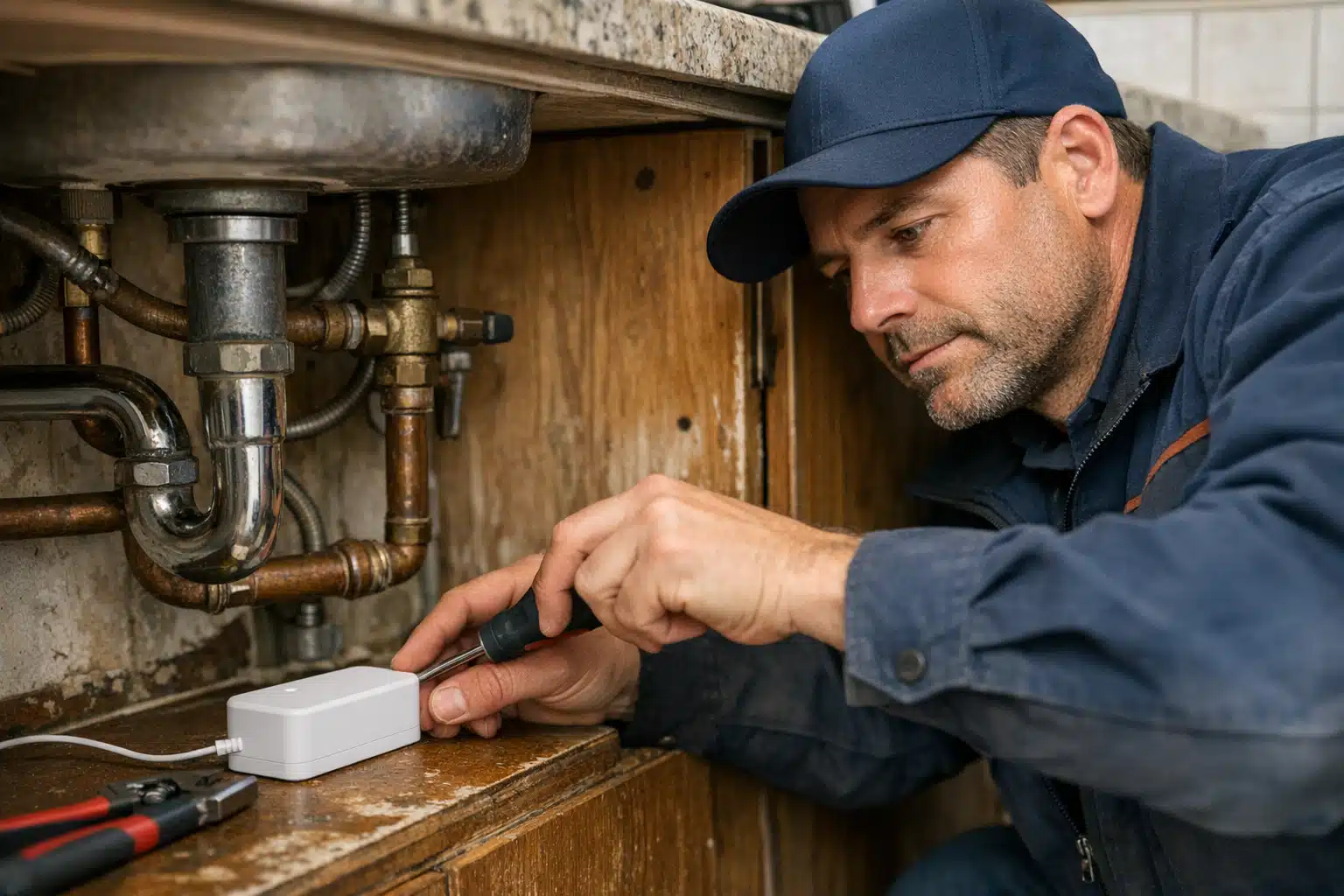
Cardom Plumbing & Heating explains how to retrofit older Arvada homes with smart water leak detectors, covering placement strategies, system types, costs, and installation steps to prevent costly water damage.
- Older Arvada homes built from the 1950s through 1980s often have aging galvanized or copper pipes prone to pinhole leaks and freeze damage during Front Range temperature swings.
- Point sensors cost $20 to $60 each and alert homeowners to moisture, while whole-home shutoff valves run $500 to $1,500 and automatically close when detecting leak patterns.
- Priority sensor locations include water heater bases, washing machine hookups, under sinks, toilet supply lines, and crawlspaces where hidden leaks pool.
Retrofitting an older home with smart water leak detectors is simpler than most homeowners expect. Start by identifying high-risk areas like water heaters, washing machines, and crawlspaces. Battery-powered wireless sensors work well in homes without smart wiring, connecting to Wi-Fi hubs that send alerts to your phone when moisture is detected.
A burst pipe in a 1970s Arvada ranch can dump 400 gallons of water into a crawlspace before anyone notices. Older homes here were built long before smart water leak detectors existed, which leaves many owners exposed to slow leaks and sudden floods. The good news: retrofitting an older house with modern leak sensors takes less work than most people expect.
This post explains how to add leak detection to aging plumbing, what it costs, and which spots in Arvada homes need protection first. You will also learn how our crews handle homes with galvanized pipes and tight mechanical rooms.
How Can Arvada Homeowners Prevent Costly Water Damage?
The fastest way to prevent water damage is to catch leaks early with automated shutoff and sensors. A smart leak system watches your plumbing around the clock and alerts your phone the moment it senses moisture. Some models close your main valve on their own.
Here is the short version of what works for Arvada homes:
- Install point sensors near water heaters, washing machines, and under sinks.
- Add a whole-home shutoff valve on the main supply line.
- Connect everything to Wi-Fi for phone alerts and remote control.
- Test the system each season, especially before winter.
Why Older Arvada Homes Need Smart Water Leak Detectors
Much of Arvada’s housing stock dates from the 1950s through the 1980s. Many of those homes still run galvanized steel or early copper supply lines. Both corrode and weaken with age, and pinhole leaks start small.
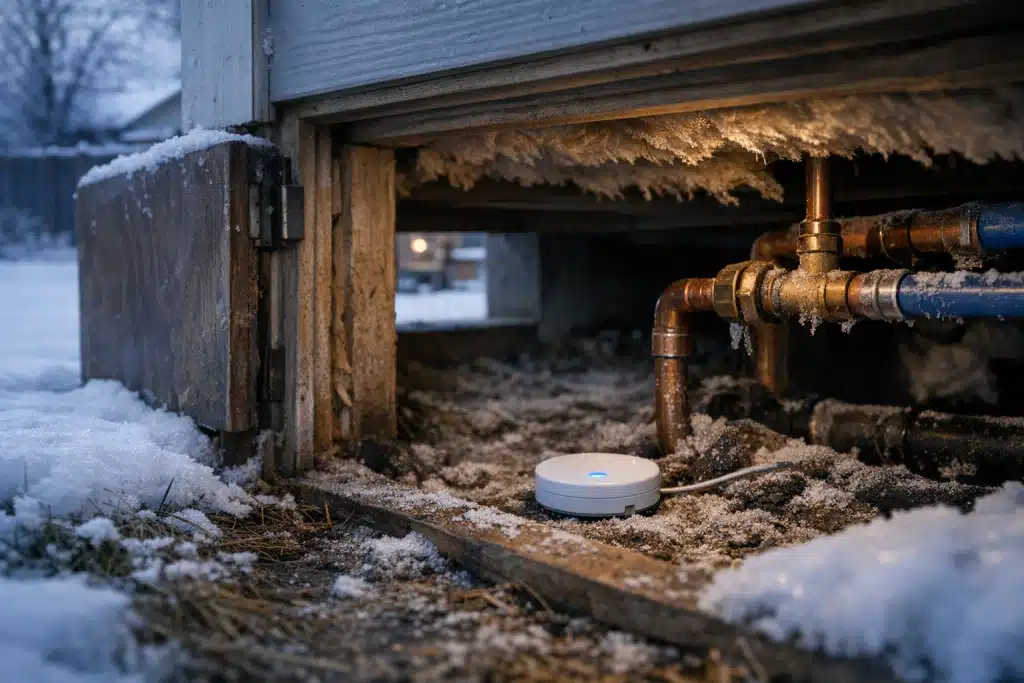
A slow leak behind a wall can rot framing for months before a stain appears. By then, repair costs climb into the thousands. Smart water leak detectors catch that first drip and warn you before the damage spreads.
Arvada’s Winter Freeze Risk
Front Range temperature swings put stress on exposed pipes. A warm afternoon followed by a 10-degree night can freeze and crack an unprotected line in a crawlspace or garage.
Leak sensors placed in these cold zones flag trouble the instant a frozen pipe thaws and begins leaking. For homes near the foothills in west Arvada, this early warning matters even more.
Hard Water Wear on Fixtures
Water across the Denver metro runs moderately hard. Mineral buildup wears on valves, supply hoses, and water heater tanks over years of use. A leak sensor under the heater catches tank failures before 50 gallons hit your floor.
Where to Place Leak Sensors in an Arvada Home
Placement decides whether a system saves you money or sits useless. Water follows gravity and pools at low points, so sensors belong where leaks start and where water collects.
Priority spots for leak sensors include:
- Water heater base — the most common source of major floods
- Washing machine hookups — burst hoses release water fast
- Under kitchen and bathroom sinks — slow supply-line drips
- Toilet supply lines — a frequent failure point in older homes
- Crawlspace and basement floors — where hidden leaks pool
- Dishwasher and refrigerator lines — easy to forget, costly to miss
In split-level Arvada homes, place a sensor at the lowest floor drain. Water from an upstairs leak travels down and settles there first.
Two Types of Smart Leak Systems
Retrofitting usually comes down to two approaches. Many homeowners use both together for full coverage.
Point Leak Sensors
These small battery units sit on the floor near appliances. When moisture touches the contacts, they sound an alarm and send a phone alert. They cost roughly $20 to $60 each and install in seconds.
Point sensors work for renters and owners who want a low-cost start. The drawback: they alert you but do not stop the water.
Whole-Home Shutoff Valves
A smart shutoff valve mounts on your main water line. It monitors flow and pressure, then closes automatically when it detects a leak pattern. You can also shut off water from your phone while away.
Installed units run from $500 to $1,500 depending on the model and your pipe layout. For an older Arvada home with aging pipes, this valve offers the strongest protection against a catastrophic break.
What Retrofitting Costs in the Arvada Area
Budget depends on how much coverage you want and your home’s plumbing condition. Here is a realistic range for local installs:
- Basic point-sensor setup (4–6 sensors): $150–$400 installed
- Smart shutoff valve on main line: $600–$1,800 installed
- Full system with valve plus sensors: $1,000–$2,500 installed
Homes with galvanized pipe may need a short section replaced where the valve mounts. We quote that work up front after inspecting your main line.
Compare those numbers to a single flood claim. Metro-area water damage repairs frequently top $5,000, and insurance deductibles add more. Prevention pays for itself fast.

 Posted on Google
Steps to Retrofit Your Arvada Home
Here is how our crews handle a typical retrofit on an older house:
- Inspect the main line to confirm pipe material and valve fit.
- Map leak-prone zones based on fixture age and home layout.
- Install the shutoff valve near the main entry point.
- Place point sensors at each priority location.
- Connect to your Wi-Fi and set up phone alerts.
- Run a live test to confirm sensors trip and the valve closes.
A standard retrofit takes two to four hours. Homes with cramped mechanical rooms or corroded pipe need extra time, which we flag during the quote.
Keeping Your System Working Year-Round
Smart devices need light upkeep to stay reliable. A dead sensor battery during a January freeze helps no one.
- Replace sensor batteries once a year, before winter.
- Test the main valve each fall to confirm it closes.
- Check app alerts after any home Wi-Fi change.
- Wipe dust off sensor contacts twice a year.
Set a phone reminder for October. That timing lines up with the first hard freezes along the Front Range.
Protect Your Arvada Home Today
Older Arvada homes carry real leak risk, and smart sensors with an automatic shutoff valve stop damage before it starts. Place sensors at your water heater, laundry, and low floors, then add a main-line valve for full coverage. A small investment now beats a five-figure flood repair later.
Cardom Plumbing & Heating installs and services smart leak systems across Arvada, Wheat Ridge, Westminster, Broomfield, and Denver. Call or text us at 720‑775‑8322, email tomd@cardomcolorado.com, or visit https://www.cardomcolorado.com to schedule your retrofit.
Sources
- Insurance Information Institute – Protect Your Home From Water Damage
- U.S. EPA WaterSense – Fix a Leak Week
- Ready.gov – Winter Weather and Frozen Pipe Safety


