
Recent Posts
Categories
Choosing the Right Dishwasher for Hard Water in Wheat Ridge
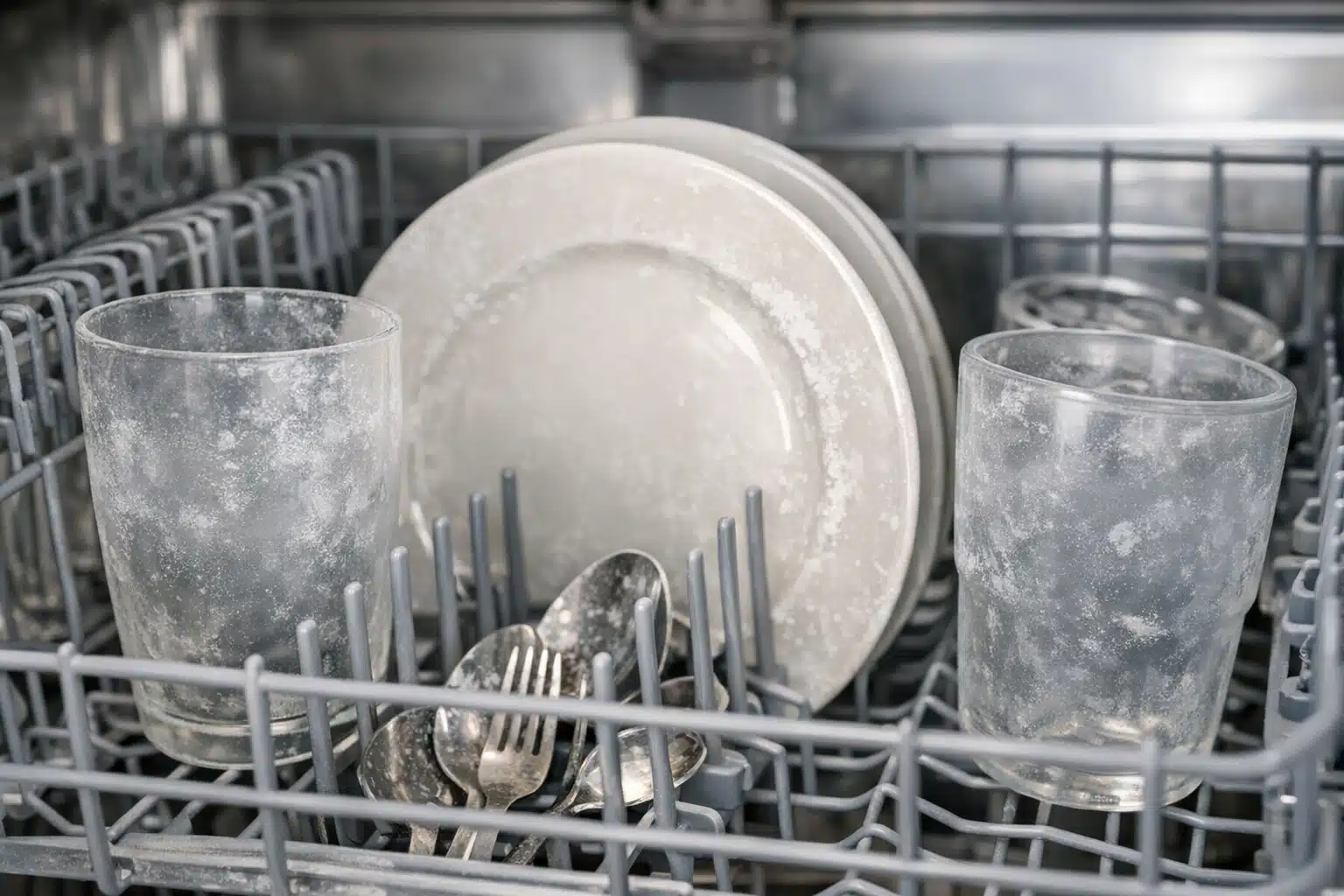
Wheat Ridge and nearby Front Range areas have hard water that damages dishwashers through mineral buildup on heating elements, spray arms, and filters. Choosing the right dishwasher with specific features helps protect your investment and extend appliance life.
- Hard water above 7 gpg causes scale buildup, clogged spray arms, cloudy glassware, and shorter appliance lifespans. The Denver metro area tests between 3 and 10 gpg depending on the source.
- We recommend dishwashers with built-in water softeners, stainless steel tubs, and strong filtration systems. Bosch, Miele, and Thermador models with salt ports offer the best protection against local water conditions.
- A whole-home water softener paired with a quality dishwasher provides the longest life and cleanest dishes. Monthly descaling and weekly filter cleaning help any unit last a decade or more.
When selecting a dishwasher for hard water areas, look for models with built-in water softeners or dedicated rinse aid dispensers that combat mineral deposits. Choose units with stainless steel interiors that resist scale buildup and feature adjustable wash cycles with higher temperatures. Regular maintenance settings and self-cleaning filters also help extend appliance life in hard water conditions.
Why Hard Water Ruins Dishwashers Faster in Wheat Ridge
Pull open a dishwasher in most Wheat Ridge kitchens and you spot the same thing: cloudy glasses and chalky white film on every dish. That is hard water at work, and it shortens appliance life.
Front Range water carries high levels of dissolved calcium and magnesium. Over time, these minerals coat heating elements, clog spray arms, and leave residue on racks.
Picking the right dishwasher for hard water protects your investment. The wrong model fails early, runs poorly, and costs more to repair.
How Hard Is the Water in Wheat Ridge and Nearby Areas?
Water hardness is measured in grains per gallon (gpg). Anything above 7 gpg counts as hard. Much of the Denver metro area tests between 3 and 10 gpg depending on the source.
Wheat Ridge and parts of Arvada draw from mountain snowmelt stored in reservoirs. This water picks up minerals from rock and soil before reaching your tap.
Here is what hardness does inside your appliance:
- Scale on heating elements forces longer run times and higher energy bills.
- Clogged spray arm holes weaken wash pressure and leave food stuck on plates.
- Cloudy etching on glassware becomes permanent after repeated cycles.
- Mineral crust on the sump and filter traps odors and bacteria.
Dishwasher Features That Fight Hard Water
Not every model handles mineral-heavy water. When we help homeowners pick a unit, we point them toward specific features that stand up to local conditions.
Built-In Water Softener
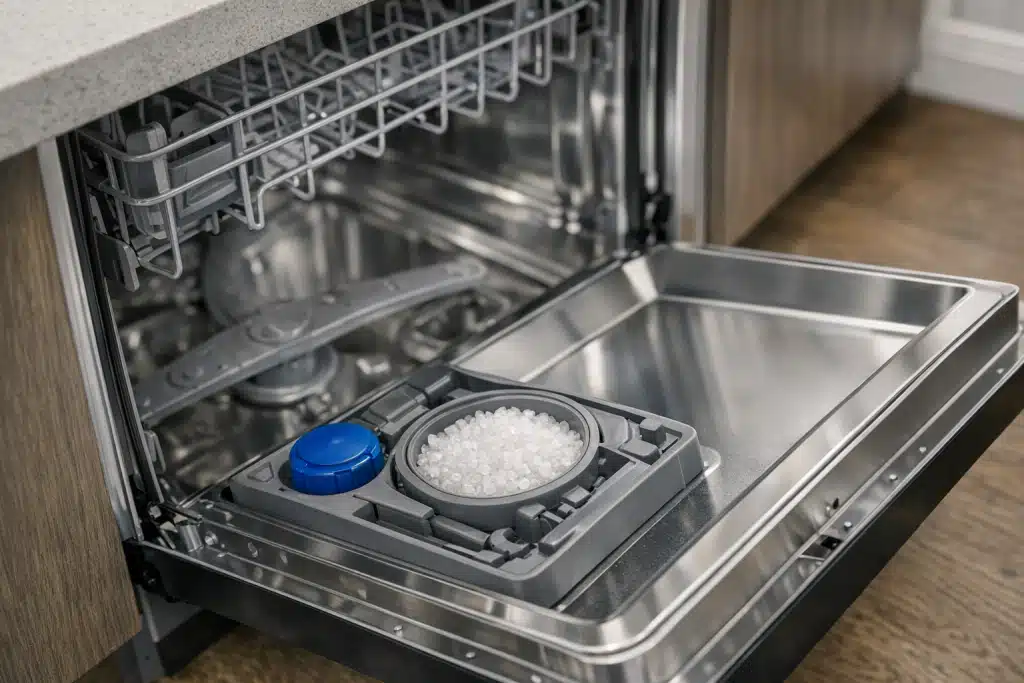
Some European-style dishwashers include an internal softener. You add dishwasher salt, and the unit treats incoming water before each wash.
Bosch, Miele, and Thermador make models with this feature. For Wheat Ridge kitchens, this is the single best defense against scale buildup.
Stainless Steel Tub
A stainless tub resists mineral staining better than plastic. It holds heat longer, which helps dishes dry without spotting.
Plastic tubs trap residue in textured surfaces. In hard water homes, they look dirty within months.
Adjustable Spray Pressure and Filtration
Look for a triple-filtration system you can remove and rinse. Models with stronger wash pressure push past minor scale before it builds up.
Self-cleaning filters sound convenient but grind food into fine bits. In hard water, those bits bond with minerals and redeposit on dishes.
Water Softening Rinse Aid Dispenser
Every hard water dishwasher needs an adjustable rinse aid setting. Crank it higher than the default. This prevents spotting during the final rinse.
Best Dishwasher Types for Hard Water Homes
Here is how common models rank for Wheat Ridge and Arvada water conditions:
- Bosch 800 Series or Benchmark — stainless tub, strong filtration, salt port on select models.
- Miele G7000 line — built-in softener, excellent spotting control, long lifespan.
- KitchenAid stainless tub models — durable, strong wash arms, widely serviceable locally.
- Thermador Star-Sapphire — internal water softener plus high heat drying.
- Whirlpool mid-tier stainless models — budget-friendly with decent mineral resistance.
Skip entry-level plastic-tub units under $400. They cost less upfront but fail fast in hard water.
What a Hard Water Dishwasher Costs in the Denver Metro
Price ranges we see across Arvada, Wheat Ridge, and Westminster installs:
- Budget stainless tub models: $500 to $750.
- Mid-tier with strong filtration: $800 to $1,200.
- Built-in softener models (Bosch, Thermador): $1,300 to $2,000.
- Miele premium line: $1,500 to $2,800.
- Standard installation and haul-away: $150 to $350.
A built-in softener model costs more now but saves on repairs and detergent. In hard water zones, that payback happens within a few years.
Should You Add a Whole-Home Water Softener Instead?
A whole-home softener treats every tap, not just the dishwasher. This protects your water heater, faucets, and washing machine too.
For many Wheat Ridge homeowners, this is the smarter long-term move. Soft water lets you buy a wider range of dishwashers without worry.
Signs your home would benefit from a softener:
- White crust on faucets and shower heads.
- Soap that never lathers right.
- Short water heater lifespan under 10 years.
- Repeated spotting on dishes despite rinse aid.
We size and install softeners matched to your home’s measured hardness. Pairing one with a stainless-tub dishwasher gives the best results.

 Posted on Google
Installation Tips for Hard Water Dishwashers
Correct install prevents early breakdowns. Here is what matters in local homes:
- Flush the supply line before connecting to clear sediment.
- Install a quarter-turn shutoff valve for easy future service.
- Set the rinse aid level high on day one.
- Fill the softener reservoir if the model has one.
- Run an empty hot cycle with vinegar monthly to clear scale.
Older Wheat Ridge homes sometimes have narrow cabinet openings. We verify the fit before ordering to avoid install-day surprises.
How to Keep Any Dishwasher Running in Hard Water
Even the best unit needs maintenance here. Follow this routine:
- Clean the filter weekly to remove mineral and food buildup.
- Run a descaling cycle monthly with citric acid or vinegar.
- Wipe the door gasket to stop crust from forming.
- Check spray arm holes and poke out clogs with a toothpick.
- Refill rinse aid and salt before they run empty.
Homeowners who skip these steps call us for repairs within two years. Those who follow them get a decade or more.
Common Dishwasher Problems We Fix in Wheat Ridge Homes
- Cloudy glassware from mineral etching and weak rinse aid.
- Weak wash pressure from scale-clogged spray arms.
- Standing water caused by mineral buildup in the drain.
- Burnt-out heating elements coated in hard scale.
- Foul odors from crusted filters and sumps.
Most of these trace straight back to untreated hard water. Choosing the right appliance from the start prevents them.
Final Thoughts
The right dishwasher for hard water in Wheat Ridge needs a stainless tub, strong filtration, and ideally a built-in softener. Pairing it with a whole-home water softener gives you the longest life and cleanest dishes.
Our team knows local water conditions and carries appliances built to handle them.
Ready to pick the right dishwasher or add a water softener? Call or text Cardom Plumbing & Heating at 720-775-8322, email tomd@cardomcolorado.com, or visit https://www.cardomcolorado.com to schedule service in Arvada, Wheat Ridge, and nearby Front Range communities.
Sources
- U.S. Geological Survey – Hardness of Water
- U.S. Environmental Protection Agency – WaterSense Program
- U.S. Department of Energy – Appliances and Electronics


