
Recent Posts
Categories
Comparative Analysis: Tankless vs. Conventional Boilers for Arvada Homes
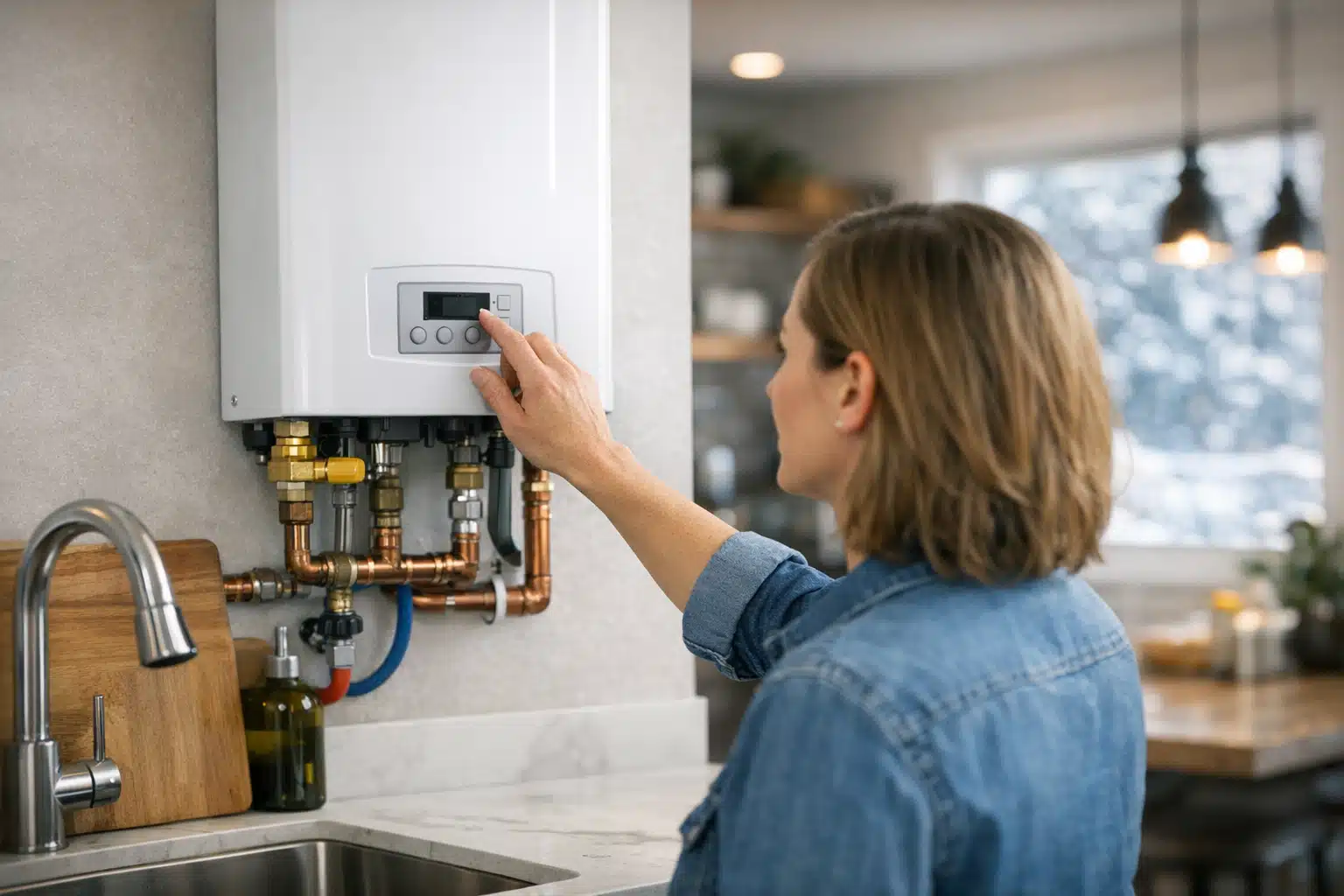
Cardom Plumbing & Heating compares tankless and conventional boilers for Arvada homes, explaining how each system performs in Front Range winters and which setup fits different household needs.
- Tankless boilers heat water on demand and work well for compact spaces with lower hot water needs, while conventional boilers with storage tanks handle radiant floor heat and high simultaneous demand better.
- Installed costs range from $6,000 to $11,000 for conventional gas boilers and $7,500 to $14,000 for tankless combi units, with tankless models cutting standby energy loss by 8 to 15 percent.
- Both systems require altitude adjustment at 5,300 feet and annual maintenance - especially descaling for tankless units due to hard Front Range water - to reach their full 15 to 20 year lifespan.
Tankless boilers heat water on demand without storing it, offering energy savings and compact sizing. Conventional boilers maintain a reservoir of heated water ready for use, providing consistent output during high-demand periods. Tankless units cost more upfront but reduce utility bills over time, while conventional systems have lower installation costs but occupy more space and run less efficiently.
When a boiler quits during a January cold snap in Arvada, the house drops to 50 degrees fast. That moment forces many homeowners to decide between tankless vs. conventional boilers without time to research. Making that call ahead of a failure saves money and stress.
This post breaks down how each system performs in our Front Range winters. You will learn real cost ranges, efficiency numbers, and which setup fits different homes.
At our shop, we install and repair both types across Arvada, Wheat Ridge, and Westminster. The right pick depends on your home size, fuel line, and how you use hot water.
Tankless vs. Conventional Boilers: The Short Answer
A tankless boiler heats water on demand with no storage tank. A conventional boiler heats and stores water in a tank until you need it.
For most Arvada homes with hydronic (hot water) heating, a conventional boiler handles both space heat and domestic hot water. Tankless units shine for homes that want endless hot water and limited floor space.
Here is the quick decision rule we give customers:
- Pick tankless if space is tight, your household size is small to medium, and you want lower standby energy loss.
- Pick conventional if you have radiant floor heat, baseboard radiators, or high simultaneous hot water demand.
How Each System Handles Arvada’s Climate
Arvada winters push heating systems hard. Overnight lows near 10 degrees mean your boiler runs for hours without rest.
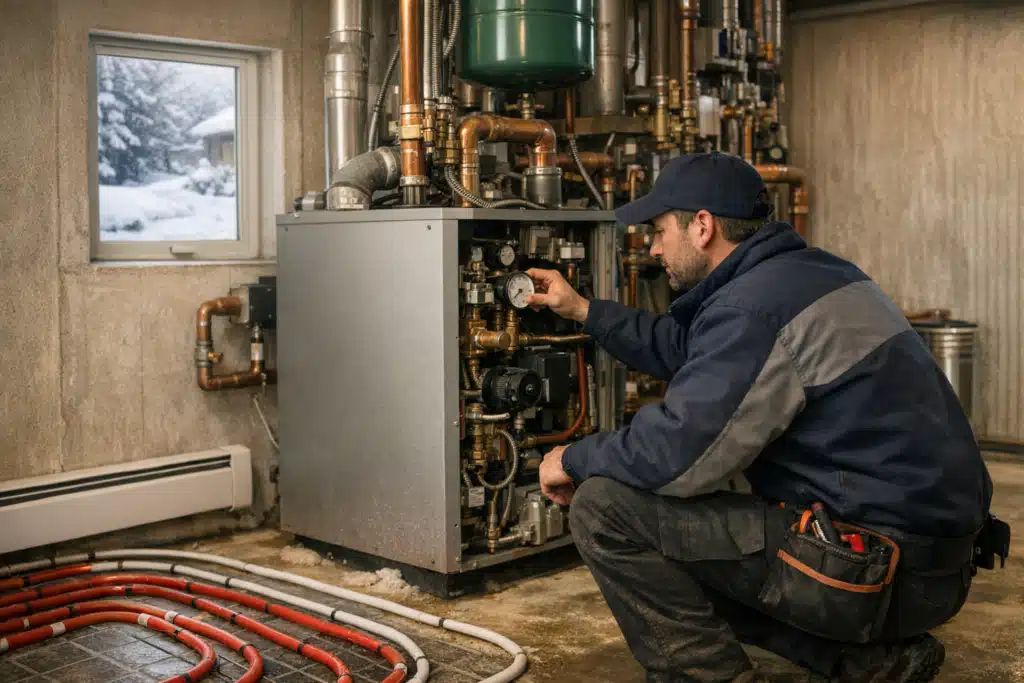
Cold Incoming Water in Winter
Our municipal water drops to around 40 degrees in deep winter. A tankless unit must raise that water to 120 degrees in one pass.
That large temperature jump limits flow rate. A tankless model rated for 6 gallons per minute in summer may only push 3.5 GPM in January. Two hot showers at once can strain an undersized unit.
A conventional boiler with a storage tank avoids this issue. The stored hot water buffers demand during the coldest mornings.
Elevation and Combustion
Arvada sits near 5,300 feet. Thinner air changes how gas appliances burn fuel.
High-altitude models need proper derating and adjustment. We set both tankless and conventional units for Front Range elevation during install. Skipping this step causes poor efficiency and early part failure.
Cost Comparison for Arvada Homes
Price matters most to the homeowners we meet. Below are realistic installed ranges for this area.
Upfront Installation Costs
- Conventional gas boiler: $6,000 to $11,000 installed
- Tankless (combi) boiler: $7,500 to $14,000 installed
- Gas line or venting upgrades: $500 to $2,500 extra
Tankless combi units run higher because they handle heat and hot water in one wall-mounted box. Many Arvada homes need a larger gas line to feed them.
Operating Costs Over Time
A modern condensing boiler reaches 90 to 95 percent efficiency. Older units from the 1990s ran closer to 70 percent.
Tankless units cut standby loss since no tank sits reheating water all day. For a typical Arvada household, that trims 8 to 15 percent off the hot water portion of your bill.
Lifespan and Repair
- Conventional boiler: 15 to 20 years with yearly service
- Tankless boiler: 20 years, but hard water shortens that fast
Our Front Range water carries minerals that scale heat exchangers. Tankless units need annual descaling to hit their full lifespan.
Efficiency Winner for Front Range Winters
Both systems can be efficient. The gap depends on how your home uses heat.
A tankless combi wins on hot water efficiency because it never reheats a stored tank. A conventional boiler wins on steady space heating during long cold stretches.
For a single-family home with radiant floors, we usually recommend a condensing conventional boiler. For a townhome or small ranch with modest hot water needs, tankless makes strong sense.
5 Signs Your Arvada Boiler Needs Replacement Soon
Waiting for total failure costs more than planned replacement. Watch for these warning signs:
- Rising gas bills with no change in habits
- Yellow or flickering burner flame instead of steady blue
- Banging or kettling noises from scale buildup
- Uneven heat between rooms or floors
- Age past 15 years with frequent repair calls
If two or more apply, start planning now. Scheduling before winter avoids emergency rates and cold nights.

 Posted on Google
Which System Fits Your Home?
We match the system to the house, not the other way around. A few real scenarios from our work in Arvada:
- 1970s ranch with baseboard heat: A condensing conventional boiler fits the existing piping with minimal change.
- Newer two-story with radiant floors: A high-output conventional boiler keeps up with large heating loads.
- Compact townhome near Olde Town: A wall-mounted tankless combi frees up closet space and cuts bills.
Proper sizing matters more than brand. An oversized boiler short-cycles and wears out early. We run a heat-loss calculation before every quote.
Maintenance Tips to Protect Your Investment
Both systems last longer with routine care. Our local recommendations:
- Schedule a yearly tune-up before heating season starts.
- Descale tankless units once a year for our hard water.
- Check boiler pressure monthly during winter.
- Flush conventional boiler sediment every couple of years.
- Replace anode rods where applicable to fight corrosion.
Skipping maintenance voids many manufacturer warranties. One missed descaling can clog a tankless heat exchanger within three years.
Final Takeaways
The choice between tankless vs. conventional boilers comes down to home size, heating type, and hot water demand. Conventional boilers suit radiant and high-demand homes, and tankless units fit compact spaces with lower draw. Both perform in Arvada’s cold if sized and adjusted for our altitude.
Ready to pick the right boiler for your home? Call or text Cardom Plumbing & Heating at 720‑775‑8322, email tomd@cardomcolorado.com, or visit https://www.cardomcolorado.com for honest advice and local service.
Sources
- U.S. Department of Energy – Tankless or Demand-Type Water Heaters
- U.S. Department of Energy – Furnaces and Boilers
- ENERGY STAR – Boilers


