
Recent Posts
Categories
Emergency Plumber Checklist: What Broomfield Residents Should Know
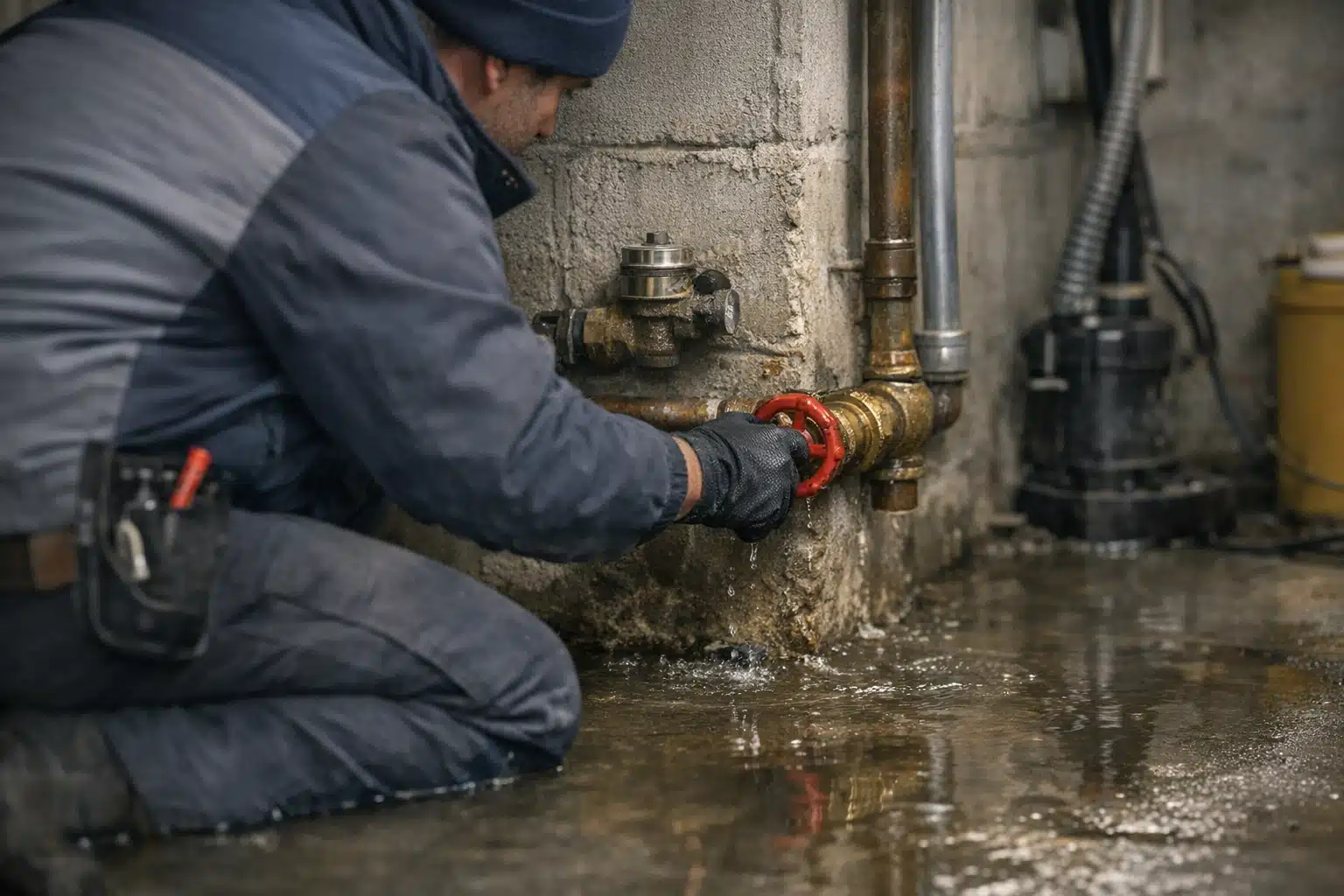
Broomfield residents can protect their homes during plumbing emergencies by following a simple checklist - shutting off water, cutting power, draining lines, containing water, documenting damage, and calling a plumber.
- Common emergencies in Broomfield include frozen pipes, water heater leaks, sewer backups, sump pump failures, and supply line breaks - all worsened by Front Range temperature swings and hard water.
- Prevention tips include disconnecting garden hoses before freezes, insulating exposed pipes, letting faucets drip on cold nights, and flushing water heaters yearly to clear sediment.
- Repair costs range from $200 to $800 for burst pipes and $1,200 to $3,000 for water heater replacement, with after-hours fees adding $100 to $250 above standard rates.
When a pipe bursts, the first five minutes are critical. Immediately shut off your main water valve to stop the flow, then turn off electricity in affected areas to prevent hazards. Document the damage with photos for insurance purposes, and contact a licensed emergency plumber right away. Having a prepared checklist can save thousands in water damage costs.
A pipe bursts at 2 a.m. on a January night, and water pools across your Broomfield basement floor. What you do in the next five minutes matters more than almost anything else. Having an emergency plumber checklist ready can save you thousands in water damage and stress.
Broomfield homes face plumbing pressures that catch many owners off guard. Cold snaps below zero, hard water buildup, and aging supply lines all raise the odds of trouble. Below you learn exactly what to do before help arrives, which emergencies happen most here, and what repairs tend to cost.
Your Emergency Plumber Checklist: First Steps Before Calling
An emergency plumber checklist is a short list of actions that limit damage while you wait for a plumber. Follow steps in order to protect your home and your wallet.
- Shut off the water. Find the main shutoff valve, usually near the water heater or where the line enters the home. Turn it clockwise until it stops.
- Cut the power. If water is near outlets, appliances, or your electrical panel, switch off the affected circuits.
- Drain the lines. Open the lowest faucet in the house to relieve pressure and clear trapped water.
- Contain the mess. Use towels, buckets, or a wet vacuum to slow spreading water.
- Document the damage. Snap photos for your insurance claim before cleanup begins.
- Call your plumber. Describe what happened, where, and what you already shut off.
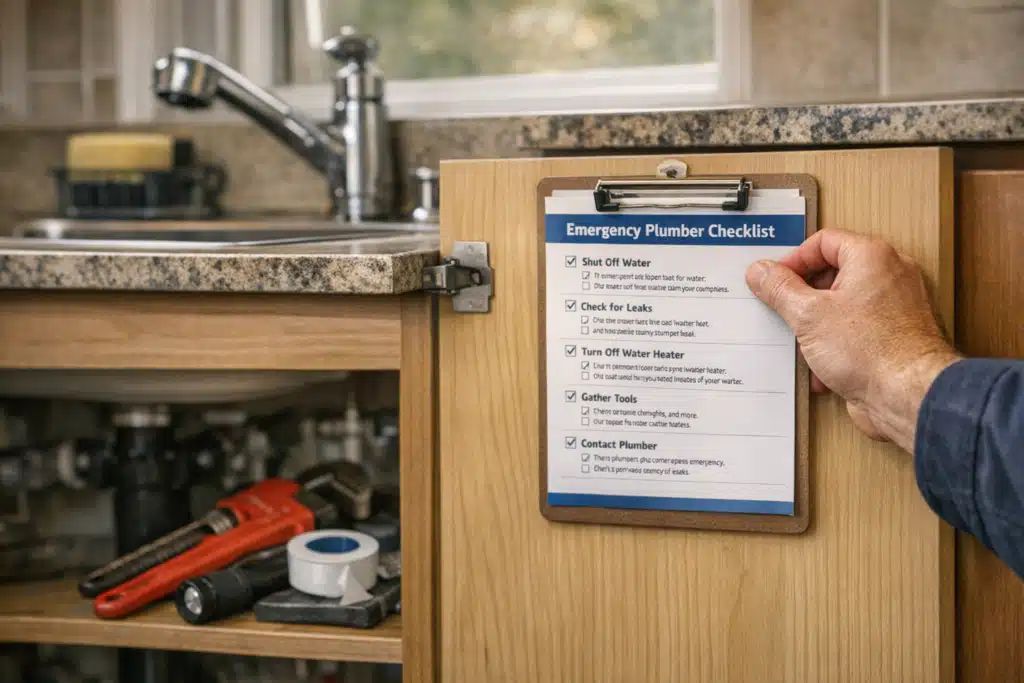
Keep this checklist printed inside a kitchen cabinet. During a real flood, memory fails and clear steps keep you calm.
Where to Find Your Main Shutoff in a Broomfield Home
Most Broomfield houses built after 1990 have the main shutoff in the basement, near the front foundation wall. Older homes and those on crawl spaces sometimes place it in a utility closet or garage.
Find and label your valve today, before an emergency. A stiff valve that hasn’t moved in years may need replacement, and a plumber can swap it during a routine visit.
5 Common Plumbing Emergencies in Broomfield Homes
Certain failures show up again and again across Broomfield neighborhoods. Knowing them helps you spot warning signs early.
- Frozen and burst pipes. Uninsulated lines in garages and exterior walls freeze when temperatures drop below 20°F. Pipes on north-facing walls fail most.
- Water heater leaks. Hard water shortens tank life to 8–10 years here. A rusted tank bottom can flood a utility room fast.
- Sewer line backups. Tree roots and older clay lines cause backups, common in homes near mature landscaping in Broomfield’s established areas.
- Sump pump failure. Spring snowmelt overwhelms basements when a pump quits. Test yours before the thaw.
- Fixture and supply line breaks. Toilet supply lines and washing machine hoses crack with age, often while nobody is home.
Why Broomfield Winters Hit Plumbing Hard
Front Range temperatures swing wildly in a single day. A sunny 50°F afternoon can drop to single digits overnight, stressing pipes with rapid contraction.
Homes with unheated basements or bonus rooms over garages face the highest freeze risk. Keep those spaces above 55°F during cold spells.
What Counts as a True Plumbing Emergency?
Not every leak needs a midnight call. Knowing the difference saves you emergency rate fees.
Call right away for:
- A burst pipe spraying water you cannot stop
- Sewage backing up into tubs or floor drains
- A water heater leaking heavily or making popping sounds
- No water at all in freezing weather, which signals a frozen line
- Gas smell near a water heater or boiler
These can wait until morning:
- A slow drip under a sink you can catch in a bucket
- One slow drain with no backup
- A running toilet you can shut off at the wall
Broomfield Plumbing Tips to Prevent Emergencies
Prevention costs far less than repair. A few habits keep small problems from becoming 2 a.m. disasters.
These Broomfield plumbing tips come from repairs our crews see across the Front Range every winter.
- Disconnect garden hoses before the first hard freeze. A connected hose traps water in the spigot and cracks the pipe behind your wall.
- Insulate exposed pipes in the garage, crawl space, and along exterior walls with foam sleeves.
- Let faucets drip on nights below 10°F to keep water moving.
- Flush your water heater once a year to clear hard water sediment.
- Replace rubber washing machine hoses with braided steel versions every five years.
- Test your sump pump by pouring a bucket of water into the pit.
How Broomfield’s Hard Water Shortens Fixture Life
Water along the Front Range carries heavy mineral content. Calcium and magnesium build up inside water heaters, faucets, and valves.
That buildup forces water heaters to work harder and fail sooner. A whole-home water softener can add years to your fixtures and cut repair calls.

What Emergency Plumbing Repairs Cost in the Broomfield Area
Prices vary by job and time of day. Use these ranges to set expectations before you call.
- Burst pipe repair: $200–$800, depending on location and access
- Water heater replacement: $1,200–$3,000 for a standard tank unit
- Sewer line clearing: $250–$600 for a basic auger service
- Sump pump replacement: $400–$900 installed
- Emergency after-hours fee: often $100–$250 above standard rates
A thorough plumber gives a written estimate before starting work. Ask for one, and never approve open-ended pricing during a crisis.
How to Vet an Emergency Plumber Fast
In a rush, many owners hire the first name they find. A few quick questions protect you.
- Are you licensed and insured in Colorado?
- Do you charge flat rates or hourly plus a trip fee?
- Can you provide a written estimate before work begins?
- Do you warranty the repair and parts?
A local plumber who knows Broomfield codes and permit rules finishes faster and passes inspection cleanly.
Keep an Emergency Plumber Checklist Where You Can Find It
Print your emergency plumber checklist and tape it beside the main shutoff valve. Add your plumber’s number so nobody scrambles during a flood.
Property managers should share the same steps with every tenant. A renter who knows how to shut off water prevents most catastrophic damage.
Conclusion
Fast action decides how much a plumbing emergency costs you. Shut off the water, cut the power, document the damage, and call a plumber who knows Broomfield homes. Yearly maintenance and simple winter prep stop most emergencies before they start.
When water starts where it shouldn’t, Cardom Plumbing & Heating answers fast for Broomfield, Arvada, Denver, Wheat Ridge, Westminster, and nearby Front Range homes. Call or text 720‑775‑8322, email tomd@cardomcolorado.com, or visit https://www.cardomcolorado.com for help now.
Sources
- American Red Cross – Preventing and Thawing Frozen Pipes
- U.S. EPA WaterSense – Water Heaters
- U.S. Geological Survey – Hardness of Water
- Ready.gov – Floods and Water Damage Preparedness