Boiler replacement in Wheat Ridge, CO involves removing old heating units and installing modern systems tailored to local conditions. Homeowners must recognize signs of boiler failure to ensure efficient heating and comfort.
Symptoms of a failing boiler include rising heating costs and uneven heat distribution. Professional assessment is crucial due to local elevation and water quality factors affecting boiler performance.
Older homes often have outdated systems that struggle with modern heating demands, leading to increased wear and tear.
Cardom Plumbing & Heating specializes in boiler replacement, offering tailored solutions and expert installation to meet the unique needs of Wheat Ridge residents.
What are the signs that indicate a boiler replacement is needed?
Signs that indicate a boiler replacement is needed include unusual noises from the unit, rising heating bills despite consistent thermostat settings, uneven heat distribution in the home, and frequent cycling on and off. These symptoms suggest that the boiler may be nearing the end of its operational life.
Boiler Replacement in Wheat Ridge, CO
That familiar rumble from your basement has grown louder. Your heating bills keep climbing despite the thermostat staying put. Maybe you've noticed uneven heat throughout your home, or your boiler has started cycling on and off more frequently than usual. These symptoms point toward a system reaching the end of its operational life – and Wheat Ridge homeowners face unique pressures that accelerate boiler wear.
Boiler replacement involves removing your existing heating unit and installing a modern, properly sized system designed to meet your home's specific demands. This process encompasses far more than simply swapping equipment. Professional replacement includes evaluating your current hydronic heating infrastructure, assessing pipe conditions, checking radiator compatibility, and configuring the new system to work efficiently with Wheat Ridge's elevation and water characteristics.
Why Professional Diagnosis Matters
A failing boiler rarely announces itself with a single dramatic failure. Instead, it sends subtle signals that require trained interpretation. Wheat Ridge sits at approximately 5,400 feet elevation, where reduced atmospheric pressure affects combustion efficiency and heat transfer rates. Local water carries mineral content from Rocky Mountain snowmelt that deposits scale inside heat exchangers over time. Professional diagnosis accounts for these regional factors when determining whether repair or replacement makes the most sense for your situation.
Proper BTU sizing calculations that account for Front Range elevation and climate
Assessment of existing radiators, baseboards, and piping for compatibility with modern high-efficiency units
Evaluation of venting requirements and combustion air supply specific to your home's construction
Water quality testing to determine appropriate treatment for protecting your new investment
Cardom Plumbing & Heating provides Boiler Replacement services in all neighborhoods of Wheat Ridge including Applewood Lane, Kipling Villiage, Outlook Clear Creek, The Ridge, and Vista Village.
Wheat Ridge's housing stock tells a story through its heating systems. Many homes here date from the 1950s through 1970s, when cast iron boilers and copper hydronic piping were standard installations. These systems have served residents well, but decades of thermal cycling, mineral accumulation, and component fatigue eventually take their toll.
The Front Range climate creates particular stress on heating equipment. Winter temperatures regularly drop below freezing from November through March, demanding consistent boiler operation during extended cold snaps. Rapid temperature swings – sometimes 40 degrees or more in a single day – force boilers through repeated startup and shutdown cycles that strain ignition components, expansion tanks, and circulator pumps. Summer thunderstorms and spring snowmelt can affect basement humidity levels, promoting corrosion on boiler jackets and electrical connections.
Local Factors Affecting Boiler Longevity
Elevation-related combustion changes: Boilers at 5,400 feet receive approximately 17% less oxygen per cubic foot of air, affecting flame characteristics and heat transfer efficiency in older atmospheric units
Hard water mineral content: Denver Water supplies Wheat Ridge with moderately hard water (averaging 50-100 ppm), which deposits calcium and magnesium scale inside heat exchangers
Aging infrastructure: Original copper and iron piping in mid-century homes may have developed pinhole leaks, sediment accumulation, or joint failures that stress boiler operation
Expansion tank deterioration: The pressurization demands at elevation accelerate bladder failure in expansion tanks, causing pressure fluctuations that trigger safety shutdowns
Retrofit complications: Many Wheat Ridge homes have undergone additions or modifications that altered heating zone requirements without corresponding boiler upgrades
Delayed maintenance patterns: Boilers often receive less attention than forced-air systems, allowing small problems to compound over years
Warning Signs Requiring Attention
Watch for these indicators that your boiler may need replacement rather than repair:
Heating costs increasing more than 15-20% year over year without rate changes
Visible rust, corrosion, or water staining around the boiler jacket
Frequent pressure drops requiring manual refilling of the system
Radiators or baseboards that no longer heat evenly despite bleeding and balancing
Strange noises including kettling, banging, or persistent rumbling during operation
Yellow or orange flame instead of consistent blue combustion
System age exceeding 20-25 years for standard efficiency or 15-20 years for high-efficiency condensing units
Boiler replacement requires methodical planning and precise execution. Cardom Plumbing & Heating approaches each project with a structured process designed to minimize disruption while maximizing system performance for Wheat Ridge conditions.
Our Replacement Process
Initial assessment and load calculation: We evaluate your existing system, measure heat loss throughout your home, and calculate proper BTU requirements using Manual J methodology adjusted for local elevation
System design and equipment selection: Based on assessment findings, we recommend appropriate boiler options – from standard efficiency cast iron units to high-efficiency condensing models – matched to your home's distribution system
Preparation and protection: Before work begins, we protect flooring, walls, and pathways with drop cloths and plastic sheeting to prevent damage during equipment removal and installation
Safe removal of existing equipment: We properly drain, disconnect, and remove your old boiler, handling refrigerant recovery and disposal according to EPA regulations
Infrastructure evaluation and updates: With the old unit removed, we inspect flue connections, gas lines, water supply piping, and electrical connections – addressing any deficiencies before new installation
New boiler installation: We position, level, and connect your new system with attention to proper clearances, venting angles, and code compliance
System integration and testing: After installation, we fill the system, purge air from all zones, verify proper combustion, and test safety controls
Customer orientation: We walk you through your new system's operation, maintenance requirements, and warranty documentation
Techniques and Methods
Combustion analysis using digital flue gas analyzers to verify optimal air-fuel ratios at elevation
Pressure testing of hydronic piping to identify any existing leaks before connecting new equipment
Water quality assessment to determine whether treatment systems are advisable
Zone valve and circulator testing to confirm proper flow through all heating circuits
Thermostat integration and programming for efficient operation patterns
Quality Control and Communication
Every installation undergoes a multi-point inspection before we consider the job complete. We document combustion efficiency readings, system pressures, and temperature differentials to establish baseline performance data. You receive copies of all permits, inspection approvals, and manufacturer warranty registrations.
Throughout the project, your assigned technician maintains direct communication about progress, any unexpected findings, and scheduling adjustments. We understand that being without heat – even temporarily – creates urgency, and we plan our work to restore your heating as quickly as proper installation allows.
Recent Work
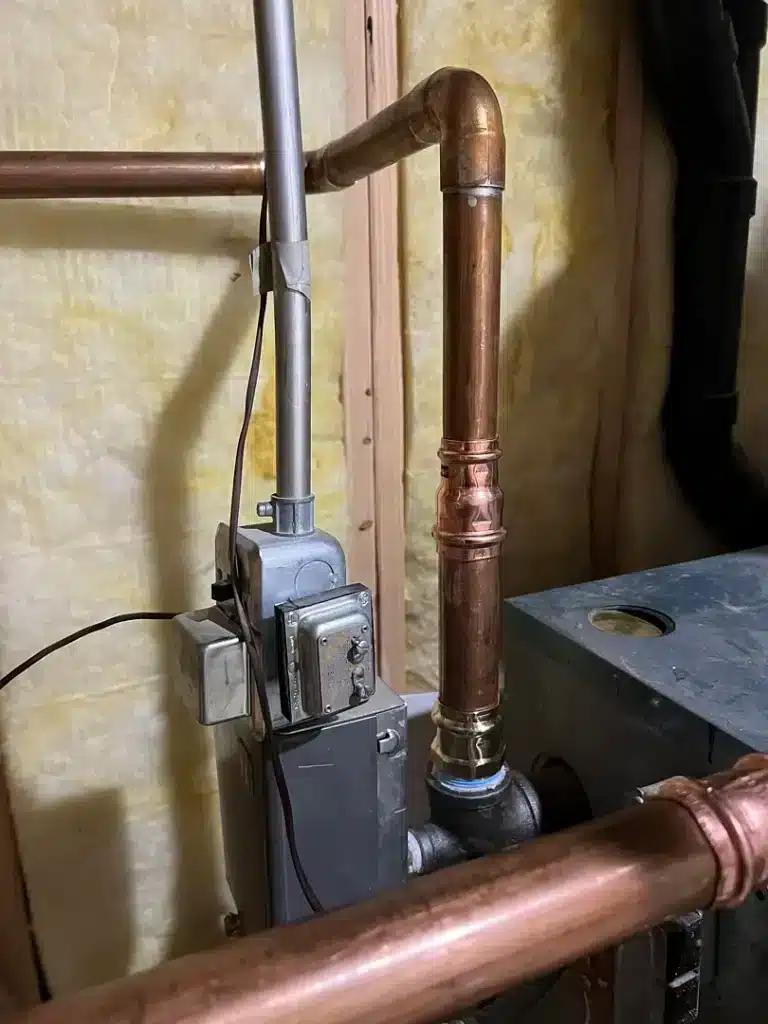
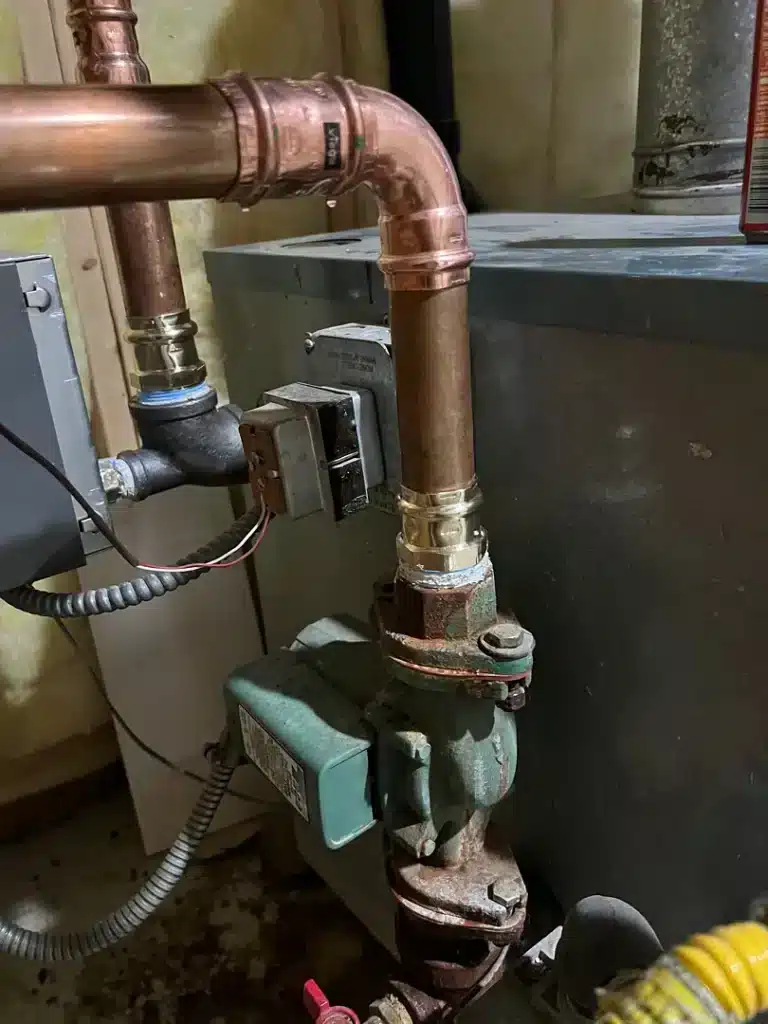
Repair Boiler Leaks - Wheat Ridge
Problem:Repair two boiler leaks on the supply and return mains at the boiler.
Found:Rotted pipes.
Fixed:Repipe the supply main with new copper and steel fittings. Reinstall the aquastate relay into the tee fittings. Repipe the return main with copper fittings. Turn on the water and fill the system. Purge air as much as possible from the boiler system before opening up all isolation valves.
Outcome:Start up the boiler and test.
Boiler Repairs and Upgrade - Wheat Ridge
Problem:Numerous small boiler repairs and upgrade.
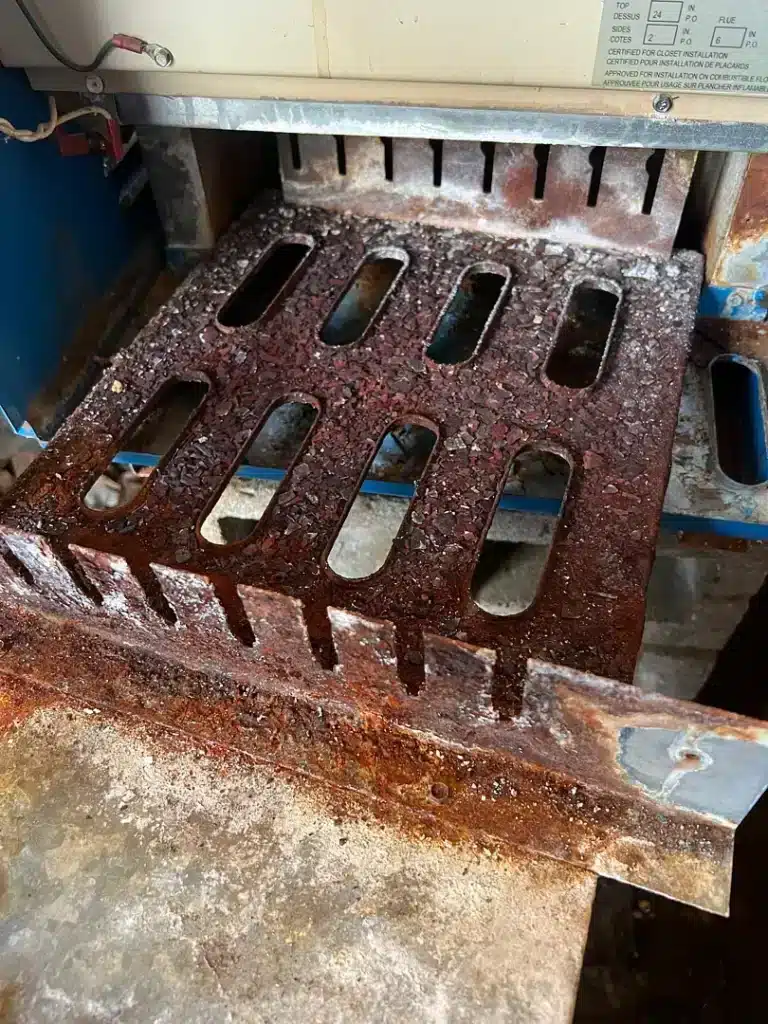
Found:Boiler was very dirty and rusty at the burners and need a thorough cleaning.
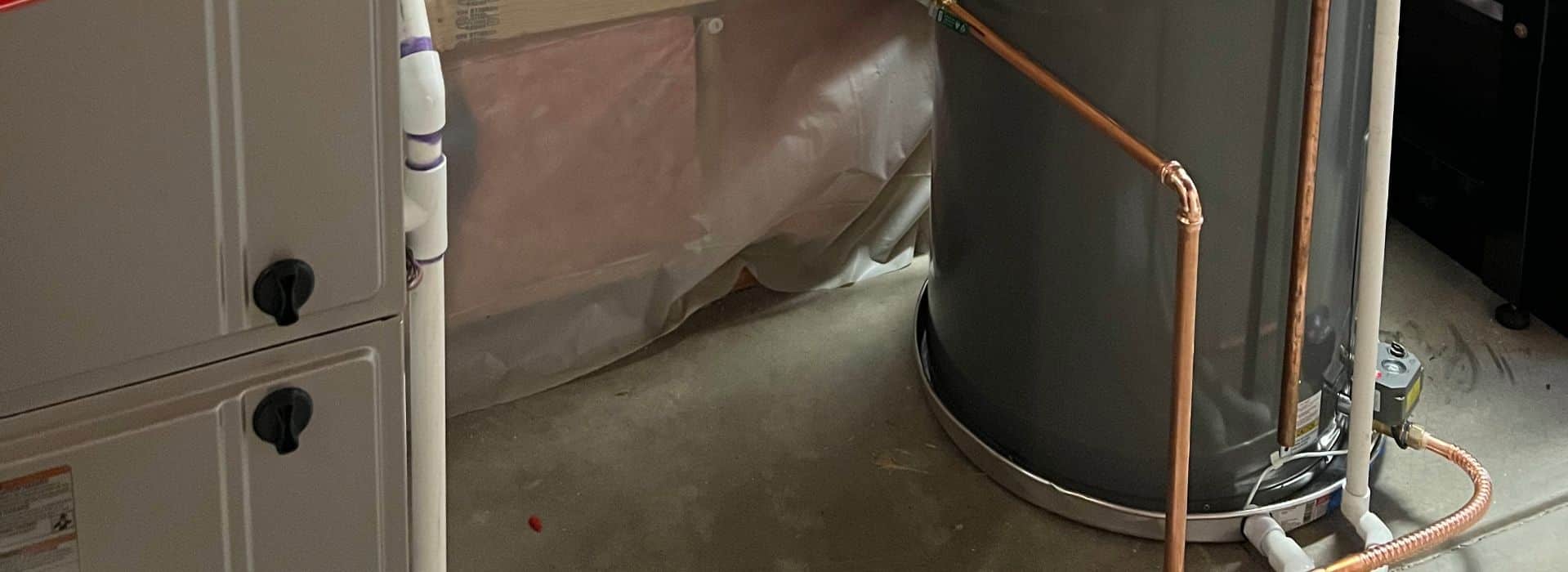
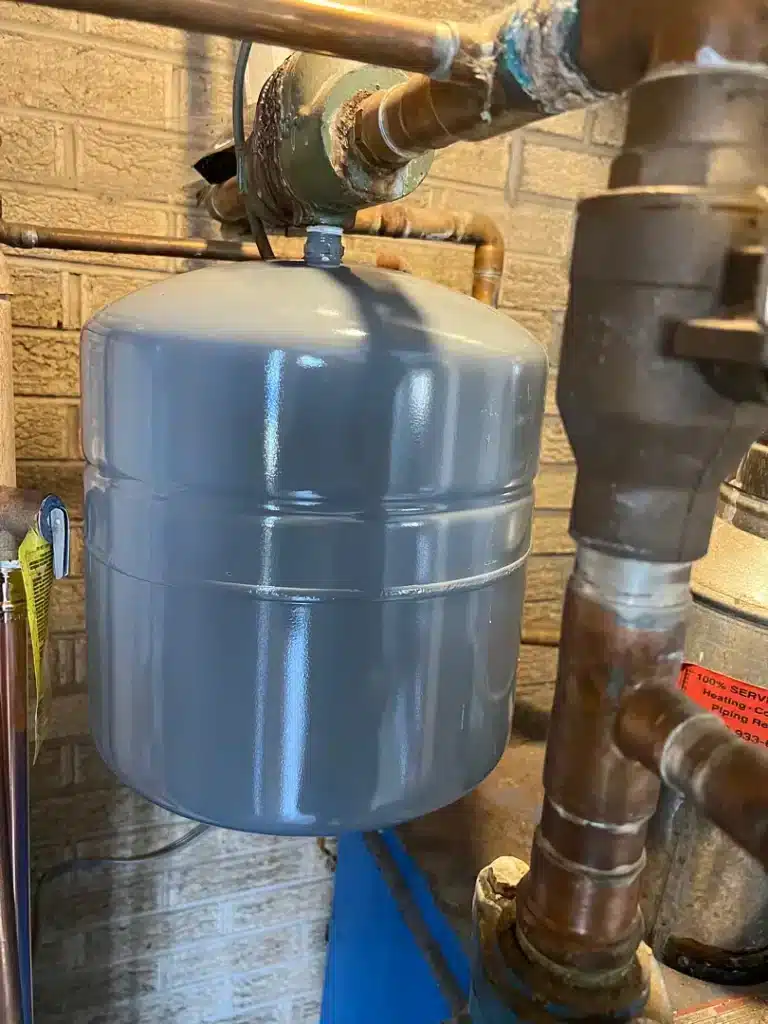
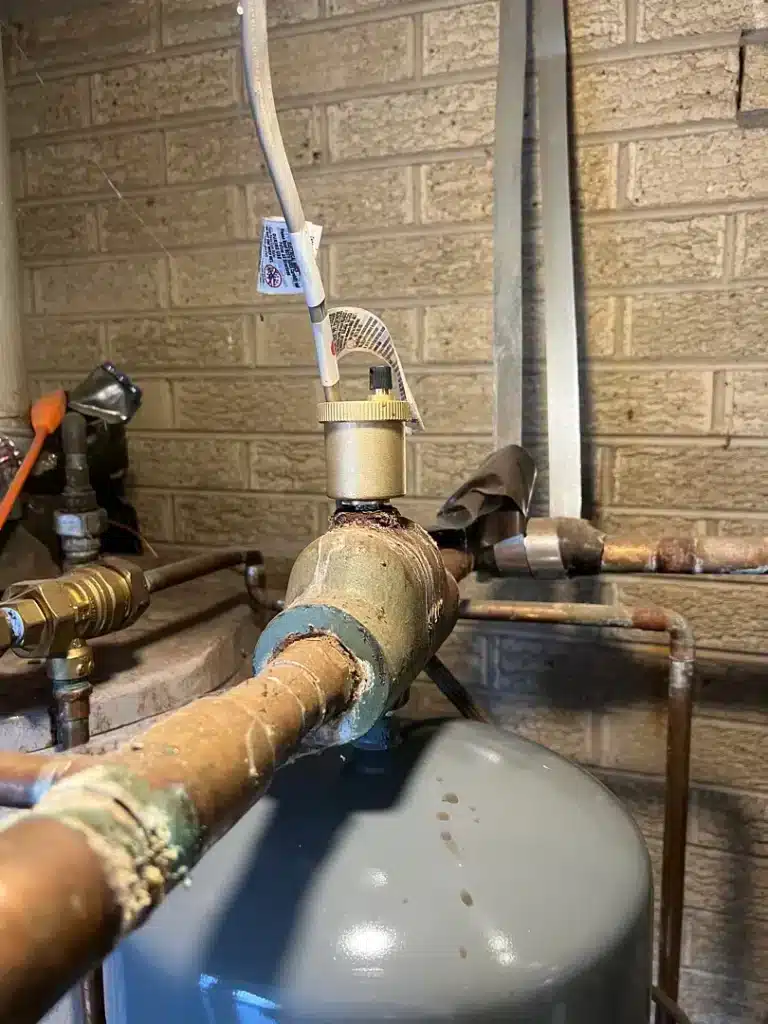
Fixed:Clean boiler, remove and replace , air vent, relief valve and expansion tank. Also pipe water heater relief to floor.
Outcome:Fill boiler back up and test, no issues found.
Why Choose Cardom Plumbing & Heating
Boiler work demands specialized expertise that differs significantly from standard HVAC or plumbing services. Cardom Plumbing & Heating maintains technicians with specific hydronic heating certifications, including manufacturer training on major boiler brands and continuing education on high-efficiency condensing technology. Our team holds current Colorado plumbing and mechanical licenses – not just certifications – for all work performed in Wheat Ridge homes.
Local Knowledge and Presence
We've worked throughout Jefferson County for years, developing intimate familiarity with Wheat Ridge's housing patterns and common heating configurations. This local experience means faster diagnosis, more accurate recommendations, and installation approaches refined through hundreds of similar projects in neighboring homes.
Direct relationships with local supply houses for rapid parts and equipment availability
Familiarity with Wheat Ridge building department requirements and inspection processes
Understanding of common issues in specific neighborhoods and housing developments
Established presence allowing rapid response when heating emergencies arise
Service Approach and Guarantees
We answer calls directly – no phone trees or call centers routing you to distant dispatchers. When heating problems occur during Colorado winters, response time matters. Cardom Plumbing & Heating prioritizes boiler failures and heating emergencies, understanding that a cold house creates genuine hardship for families.
Our workmanship carries meaningful guarantees backed by our continued local presence. We stand behind installations with follow-up service, addressing any concerns that arise after your new system begins operation. Modern diagnostic equipment – including thermal imaging cameras and digital combustion analyzers – allows us to verify performance objectively rather than relying on guesswork.
Wheat Ridge developed primarily during the post-World War II suburban expansion, with significant building activity occurring between 1950 and 1975. This construction era produced predominantly single-story ranch homes and split-level designs, many featuring full or partial basements where boiler systems were originally installed. Understanding your home's vintage helps predict the heating challenges you may face.
Construction Era Implications
1950s-1960s construction: Often features original cast iron sectional boilers with standing pilot ignition, gravity-fed or early circulator systems, and copper or steel distribution piping now approaching 60-70 years of service
1970s construction: May include early steel fire-tube boilers, often with electronic ignition but lower efficiency ratings by modern standards
1980s-1990s updates: Some homes received replacement boilers during this period that are now themselves reaching end-of-life
Recent renovations: Additions or basement finishing projects may have altered heating loads without corresponding system modifications
Basement and Mechanical Room Considerations
Wheat Ridge basements vary considerably in their suitability for modern boiler installation. Older homes often have limited headroom, narrow stairways, and small mechanical areas that complicate equipment removal and replacement. Combustion air requirements for new boilers may necessitate ventilation modifications in tightly sealed basement spaces.
Homes with finished basements present additional considerations. Accessing existing piping, relocating equipment, or routing new venting may require temporary disruption to finished spaces. We evaluate these factors during initial assessment to provide accurate scope and timeline expectations.
Distribution System Compatibility
Cast iron radiators from original construction typically work well with modern boilers but may require flow balancing
Baseboard convectors installed during 1960s-1970s updates may have accumulated sediment affecting heat output
Radiant floor heating zones – common in additions – often require different water temperatures than radiator zones
Original zone valves and circulators frequently need replacement alongside the boiler itself
Wheat Ridge's environmental context directly influences boiler selection, installation methods, and long-term system performance. From water chemistry to soil conditions to climate patterns, local factors shape every aspect of hydronic heating system design.
Water Quality Characteristics
Denver Water serves Wheat Ridge through a system drawing primarily from mountain snowmelt collected in reservoirs along the Front Range. This supply produces moderately hard water with mineral content that affects boiler operation over time.
Hardness levels typically range from 50-100 parts per million, sufficient to deposit scale inside heat exchangers
pH levels remain slightly alkaline, which can accelerate corrosion of certain metals when combined with dissolved oxygen
Seasonal variations in source water may affect mineral content, with spring runoff periods showing different characteristics than late-summer supply
High-efficiency condensing boilers require particular attention to water treatment, as their lower operating temperatures can accelerate certain corrosion mechanisms
Climate Impacts on Heating Systems
The Front Range climate creates distinctive demands on boiler systems. Wheat Ridge experiences approximately 5,500 heating degree days annually – a measure of cumulative heating demand that drives equipment sizing and efficiency calculations.
Winter low temperatures regularly reach single digits, with occasional drops below zero requiring sustained maximum boiler output
Rapid temperature swings stress expansion tanks, pressure relief valves, and automatic fill systems
Low humidity during winter months can affect combustion characteristics and indoor comfort
Spring freeze-thaw cycles may affect outdoor components including condensate drains on high-efficiency units
Soil and Foundation Considerations
Wheat Ridge sits on expansive clay soils common throughout the Denver metropolitan area. These soils swell when wet and shrink during dry periods, creating foundation movement that can stress piping connections. Homes with hydronic heating piping routed through or beneath slabs may experience joint failures or pinhole leaks related to soil movement over decades of service.
Underground water tables and drainage patterns also affect basement moisture levels, which in turn influence corrosion rates on boiler components and piping. Proper drainage around foundations helps protect heating equipment from humidity-related deterioration.
Wheat Ridge Heating Infrastructure and Energy Data
Wheat Ridge's heating infrastructure reflects its development history and the evolution of residential energy systems along the Front Range. Understanding local energy patterns and infrastructure characteristics helps homeowners make informed decisions about boiler replacement investments.
Natural Gas Infrastructure
Xcel Energy provides natural gas service throughout Wheat Ridge, maintaining distribution infrastructure that supports the community's substantial reliance on gas-fired heating. The majority of Wheat Ridge homes – estimated at over 80% – use natural gas as their primary heating fuel, making boiler and furnace systems the dominant heating approach.
Gas service pressure and quality remain consistent throughout Wheat Ridge, supporting reliable boiler operation
Older neighborhoods may have original gas service lines that should be evaluated during boiler replacement projects
Modern high-efficiency boilers achieve AFUE ratings of 90-98%, compared to 60-80% for equipment installed before 1990
Xcel Energy occasionally offers rebate programs for high-efficiency heating equipment upgrades
Energy Consumption Patterns
Colorado homes consume approximately 30% more energy for heating than the national average, reflecting the extended heating season and temperature extremes. For Wheat Ridge specifically, residential heating accounts for the largest share of household energy expenditure during winter months – typically November through March.
Replacing an aging boiler with a modern high-efficiency unit can reduce heating fuel consumption by 20-35%, depending on the efficiency rating of the existing equipment. For a typical Wheat Ridge home, this translates to meaningful annual savings that accumulate over the 20-25 year lifespan of quality boiler equipment. The combination of energy savings, improved comfort, and reduced repair frequency makes boiler replacement a sound investment for homes with aging heating systems.
Average Wheat Ridge home heating costs range from $800-1,500 annually depending on home size and system efficiency
Homes with boilers manufactured before 1990 typically operate at 65-75% efficiency or lower
Modern condensing boilers achieve 95%+ efficiency by recovering heat from exhaust gases
Proper sizing prevents short-cycling, which wastes fuel and accelerates component wear
Common signs include unusual noises from the boiler, rising heating bills, uneven heat distribution in your home, and frequent cycling on and off. If your boiler is over 15 years old and showing these symptoms, it may be time to consider a replacement.
The replacement process typically takes one to two days, depending on the complexity of the installation and any necessary modifications to your existing heating system. A professional will assess your home to provide a more accurate timeline.
When selecting a new boiler, consider the size of your home, your heating needs, energy efficiency ratings, and compatibility with your existing heating infrastructure. It's also important to evaluate local water quality and elevation factors that can impact boiler performance.
The cost of boiler replacement can vary widely based on the type of boiler, installation complexity, and any additional modifications needed. On average, homeowners can expect to pay between $3,000 and $7,000 for a complete replacement.
Yes, a permit is usually required for boiler replacement in Wheat Ridge. This ensures that the installation meets local building codes and safety standards. Your contractor can help you navigate the permitting process.
Regular maintenance is key to extending the life of your new boiler. Schedule annual inspections, keep the area around the boiler clear, and monitor for any unusual noises or performance issues. Additionally, consider water quality testing to prevent scale buildup.
Upgrading to a high-efficiency boiler can significantly reduce your energy bills and improve your home's comfort. These modern systems are designed to use less fuel while providing the same or better heating output, and they often come with advanced features for better control and efficiency.