
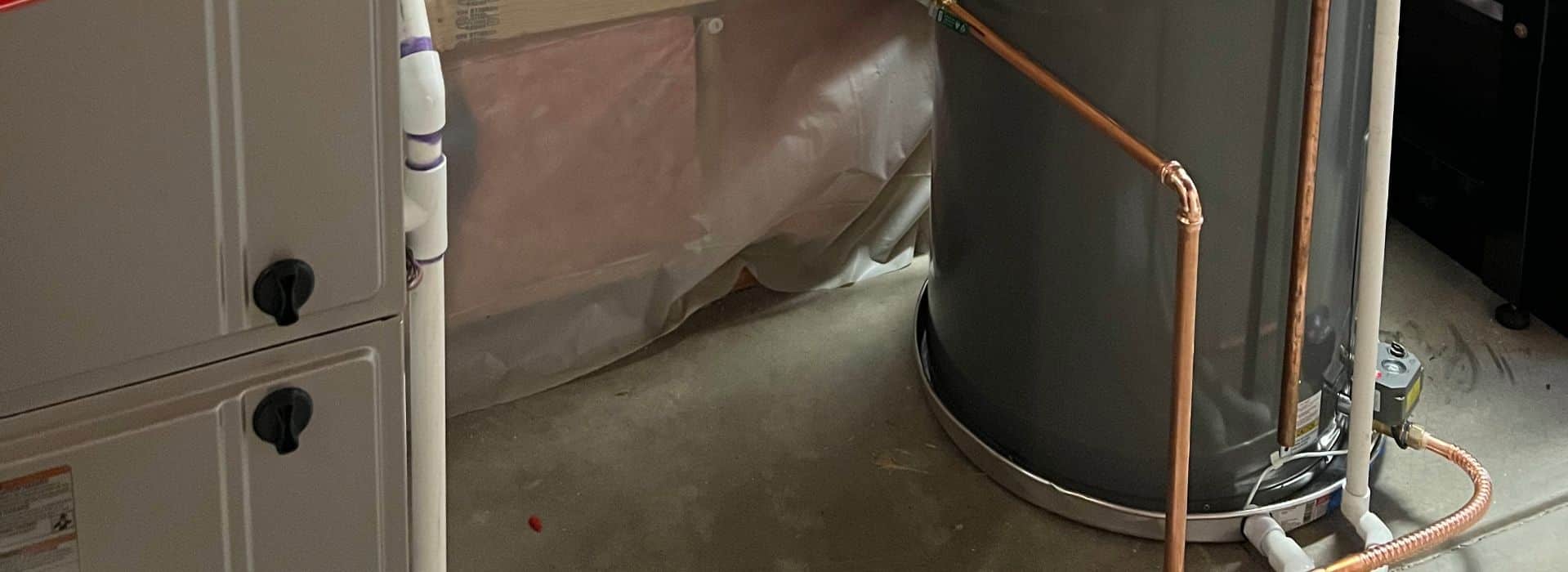
Boiler replacement in Superior, CO is essential for maintaining efficient heating in homes facing cold winters and rising energy bills. The process involves careful evaluation and installation of modern systems tailored to specific heating demands.
- Struggling boiler systems can lead to cold spots and increased heating costs. Professional evaluation is necessary to identify the root cause of issues.
- Modern boilers offer improved energy efficiency and safety, ensuring consistent heating throughout the home.
- Cardom Plumbing & Heating provides specialized knowledge and local expertise to address unique challenges in Superior's climate and housing stock.
Signs that indicate a boiler replacement is needed include unusual noises coming from the unit, rising heating bills, and the presence of cold spots in rooms that were previously warm. These issues suggest that the boiler is struggling to operate efficiently, which can lead to more serious problems in colder climates.
Boiler Replacement in Superior, CO
That rumbling noise from your basement isn't getting any quieter. Your heating bills have climbed steadily over the past few winters, and you've noticed cold spots in rooms that used to stay comfortable. These are the telltale signs that your boiler system is struggling – and in Superior's demanding climate, a failing boiler isn't just an inconvenience. It's a household emergency waiting to happen.
Boiler replacement involves removing your existing hydronic heating system and installing a modern, properly sized unit that meets your home's specific heating demands. This process encompasses far more than simply swapping out equipment – it requires careful evaluation of your existing piping infrastructure, radiator or baseboard compatibility, venting requirements, and fuel supply connections.
Professional diagnosis matters because boiler systems are complex networks of interdependent components. What appears to be a failing boiler might actually stem from circulation pump issues, expansion tank problems, or sediment buildup in your distribution piping. Conversely, what seems like a minor repair could indicate that your system has reached the end of its safe operational life. Superior's unique combination of high altitude, hard water conditions, and temperature extremes creates specific stresses on boiler systems that require local expertise to properly evaluate.
- Improved energy efficiency – modern condensing boilers achieve 90-98% efficiency compared to 60-80% in older units
- Enhanced safety through updated controls, venting, and fuel management systems
- Consistent, reliable heating throughout your home without cold spots or temperature fluctuations
- Reduced maintenance demands and fewer emergency repair calls during peak heating season
How Cardom Plumbing & Heating Can Help
Our boiler replacement process begins with understanding your specific situation – not just the equipment, but how you use your home and what comfort expectations you have. We've developed a systematic approach that addresses Superior's unique challenges while minimizing disruption to your household.
Our Replacement Process
- Comprehensive system evaluation – We inspect your existing boiler, distribution piping, radiators or baseboards, expansion tank, circulation pumps, and venting system to understand the complete picture
- Heat load calculation – Using Manual J methodology adjusted for Superior's altitude and climate, we determine the precise heating capacity your home requires
- Equipment selection consultation – We present appropriate options based on your efficiency goals, budget, and compatibility with existing infrastructure
- Preparation and scheduling – We coordinate equipment delivery, permit acquisition, and installation timing to minimize your time without heat
- Professional installation – Our technicians remove the old unit, prepare connections, install the new boiler, and integrate it with your existing distribution system
- System commissioning – We adjust combustion settings for altitude, balance water flow, set controls, and verify safe operation throughout your home
- Owner orientation – We walk you through your new system's operation, maintenance requirements, and warranty coverage
Diagnostic Methods and Techniques
Before recommending replacement, we perform thorough testing to confirm that replacement – rather than repair – is the appropriate solution:
- Combustion analysis to measure efficiency and safety of exhaust gases
- Pressure testing of the sealed system to identify hidden leaks
- Water quality sampling to assess mineral content and corrosion potential
- Infrared scanning to detect heat distribution problems and insulation failures
- Carbon monoxide testing throughout the heating system and living spaces
Quality Assurance
Every installation includes multiple verification steps before we consider the job complete. We pressure test all new connections, verify proper venting draft, confirm thermostat communication, and run the system through multiple heating cycles while monitoring performance. You receive documentation of all testing results and equipment specifications for your records.
Why Choose Cardom Plumbing & Heating
Boiler systems require specialized knowledge that many general plumbing or HVAC contractors simply don't possess. Cardom Plumbing & Heating maintains specific certifications in hydronic heating systems, including manufacturer training on the equipment lines we install. Our technicians understand the nuances of radiant heat, baseboard systems, and combination heating configurations – and we know how Superior's conditions affect each type.
We've served the Superior community long enough to understand its housing stock, from the established neighborhoods with original heating systems to newer construction with modern infrastructure. This familiarity means faster diagnostics, better equipment recommendations, and installation approaches tailored to the specific challenges your home presents.
What Sets Us Apart
- Local response capability – When your boiler fails in January, you need help quickly. Our proximity to Superior means faster arrival times during heating emergencies
- Altitude expertise – Every boiler we install is properly configured for high-altitude combustion, maximizing efficiency and equipment lifespan
- Complete system perspective – As a full-service plumbing and heating company, we understand how your boiler interacts with your home's water supply, drainage, and gas systems
- Follow-up commitment – We check in after installation to verify performance and address any questions about your new system's operation
- Transparent communication – You'll understand what we're recommending, why we're recommending it, and what alternatives exist before any work begins
Our diagnostic equipment includes combustion analyzers calibrated for altitude conditions, thermal imaging cameras for identifying hidden problems, and digital pressure testing systems that provide precise measurements. These tools allow us to give you accurate information rather than guesswork about your system's condition and replacement needs.
Housing Characteristics & Boiler Replacement Considerations
Superior's housing stock reflects several distinct development periods, each presenting unique boiler replacement considerations. Understanding your home's construction era helps predict what challenges – and opportunities – a replacement project may involve.
Original Superior and Rock Creek Neighborhoods
Homes built during Superior's earlier development phases – particularly those constructed before 1990 – often feature original boiler systems that have exceeded their expected service life. These properties may have:
- Cast iron boilers with standing pilot lights and minimal efficiency ratings
- Copper or steel distribution piping with decades of mineral accumulation
- Oversized equipment based on older calculation methods that waste energy
- Venting configurations that may not meet current code requirements
- Asbestos-containing insulation on older piping that requires professional handling
1990s-2000s Construction
Homes from this era typically feature improved but still aging boiler technology. Many are approaching or have reached the 20-25 year mark where replacement becomes more economical than continued repairs. Common characteristics include:
- Mid-efficiency atmospheric boilers in the 80-85% efficiency range
- Electronic ignition systems that eliminate standing pilots but may have aging control boards
- PEX or copper distribution systems generally in good condition for reuse
- Adequate venting infrastructure that may accommodate modern equipment
Recent Development Areas
Newer Superior neighborhoods – including portions of Downtown Superior and recent developments – feature modern construction with high-efficiency heating systems. While these homes are less likely to need immediate replacement, homeowners should be aware that even newer boilers require proper maintenance and eventual replacement planning, typically in the 15-20 year timeframe.
Basement configurations vary significantly across Superior's housing stock. Finished basements require careful planning for equipment access during replacement. Homes with mechanical rooms present different challenges than those with boilers in utility closets or crawl spaces. We evaluate access requirements during our initial assessment to prevent surprises during installation.
Environmental Conditions & Boiler Replacement Implications
Superior's environmental conditions create specific demands on boiler systems that directly influence equipment selection, installation methods, and long-term performance expectations.
Water Quality Characteristics
The municipal water supply serving Superior originates from surface water sources and undergoes treatment at regional facilities. Despite treatment, the water retains mineral content – particularly calcium and magnesium compounds – that affects closed-loop heating systems over time. Key water quality considerations include:
- Moderate to high hardness levels that accelerate scale formation in heat exchangers
- Dissolved oxygen content that promotes corrosion in ferrous metal components
- pH levels that may require water treatment for optimal boiler chemistry
- Seasonal variation in source water quality affecting system chemistry
Modern boiler installations in Superior benefit from water treatment integration – including chemical inhibitors, filtration, and in some cases water softening – to protect equipment investment and maintain efficiency.
Climate Impact on System Design
Superior's semi-arid climate with cold winters creates specific heating demands:
- Extended heating season – Reliable operation required from early fall through late spring, with occasional summer heating needs at higher elevations
- Rapid temperature drops – Systems must respond quickly to sudden cold fronts common along the Front Range
- Low humidity effects – Dry conditions accelerate gasket and seal deterioration in boiler components
- Solar gain variability – Strong afternoon sun can create rapid heating demand changes that modulating boilers handle more effectively than single-stage units
Soil and Foundation Considerations
Superior's clay-heavy soils experience significant expansion and contraction with moisture changes. This ground movement can stress underground gas lines and affect boiler venting terminations. During replacement projects, we inspect gas supply piping and venting connections for movement-related damage that may have developed over time. Homes on hillside lots – common in parts of Superior – may have additional considerations for combustion air supply and exhaust termination locations.
Superior Climate Data and Heating Demand Analysis
Understanding Superior's specific climate patterns helps homeowners appreciate why boiler system reliability matters so much in this community – and why proper equipment sizing and installation are critical investments rather than optional upgrades.
Superior experiences approximately 5,800 to 6,200 heating degree days annually, placing it firmly in a cold climate zone that demands robust heating infrastructure. For comparison, this heating load exceeds most of the continental United States outside mountain and northern regions. The practical implication is that Superior homes require heating systems designed for extended operation under demanding conditions.
Temperature Extremes and System Stress
- Winter low temperatures regularly reach -10°F to -20°F during cold snaps
- January average low temperatures hover around 17°F, requiring consistent heating output
- Daily temperature swings of 30-40°F are common, creating thermal cycling stress
- The heating season typically spans 8-9 months, from September through May
- Chinook wind events can cause rapid temperature increases followed by equally rapid drops
These conditions mean that boiler failures during winter months create genuine emergency situations. Pipes can freeze within hours during extreme cold, potentially causing thousands of dollars in water damage. This reality underscores the importance of proactive replacement before equipment failure – addressing aging systems during fall rather than waiting for a mid-winter breakdown when demand for heating services peaks and equipment availability may be limited.
Altitude Effects on Equipment Performance
At Superior's elevation, atmospheric pressure is approximately 17% lower than at sea level. This reduced pressure decreases oxygen availability for combustion, requiring specific boiler adjustments:
- Gas input rates must be derated – typically 4% per 1,000 feet above sea level
- Combustion air requirements change, affecting venting system sizing
- Ignition timing and flame characteristics require altitude-specific calibration
- Some boiler models are not rated for high-altitude installation and should be avoided
Cardom Plumbing & Heating specifies only equipment rated for Superior's altitude and performs proper high-altitude commissioning on every installation. This attention to altitude-specific requirements protects your investment and ensures your new boiler delivers its rated efficiency and lifespan in our unique environment.
Common Boiler Issues in Superior, CO
Superior sits at approximately 5,400 feet elevation along the Front Range, creating atmospheric conditions that directly affect boiler combustion and efficiency. The reduced oxygen content at altitude means boilers must be properly adjusted for high-altitude operation – a specification that many systems installed by non-local contractors fail to meet. Improperly tuned boilers work harder, consume more fuel, and experience accelerated wear on critical components.
The municipal water supply in Superior contains dissolved minerals that accumulate inside boiler heat exchangers over time. This scale buildup acts as insulation, forcing your system to work harder to transfer heat to your water. In severe cases, mineral deposits can cause localized overheating that cracks heat exchangers – a failure that typically requires complete boiler replacement rather than repair.
Seasonal Stress Factors
Superior experiences dramatic temperature swings, with winter nights regularly dropping below zero while afternoon temperatures can climb into the 40s or 50s. This cycling creates repeated thermal expansion and contraction stress on boiler components, gaskets, and connections. Spring and fall bring additional challenges as systems cycle on and off more frequently than during sustained cold periods.
- Altitude-related combustion issues – incomplete fuel burning, sooting, and reduced heat output
- Hard water scale accumulation – reduced efficiency and premature heat exchanger failure
- Freeze-thaw cycling damage – stress on expansion tanks, pressure relief valves, and piping connections
- Dry climate effects – accelerated corrosion on cast iron components and gasket deterioration
- Power fluctuation sensitivity – control board damage from electrical irregularities during mountain storms
- Extended heating season demands – Superior's climate requires reliable heating from September through May
Warning Signs Requiring Attention
Watch for these indicators that your boiler system may need replacement rather than repair:
- Visible rust, corrosion, or water staining around the boiler cabinet or connections
- Frequent pilot light outages or ignition failures
- Heating bills increasing more than 15-20% year over year without rate changes
- Uneven heating between rooms or floors that wasn't present in previous years
- Age exceeding 15-20 years, especially for units not designed for high-altitude operation
- Repair costs approaching 50% of replacement value


