
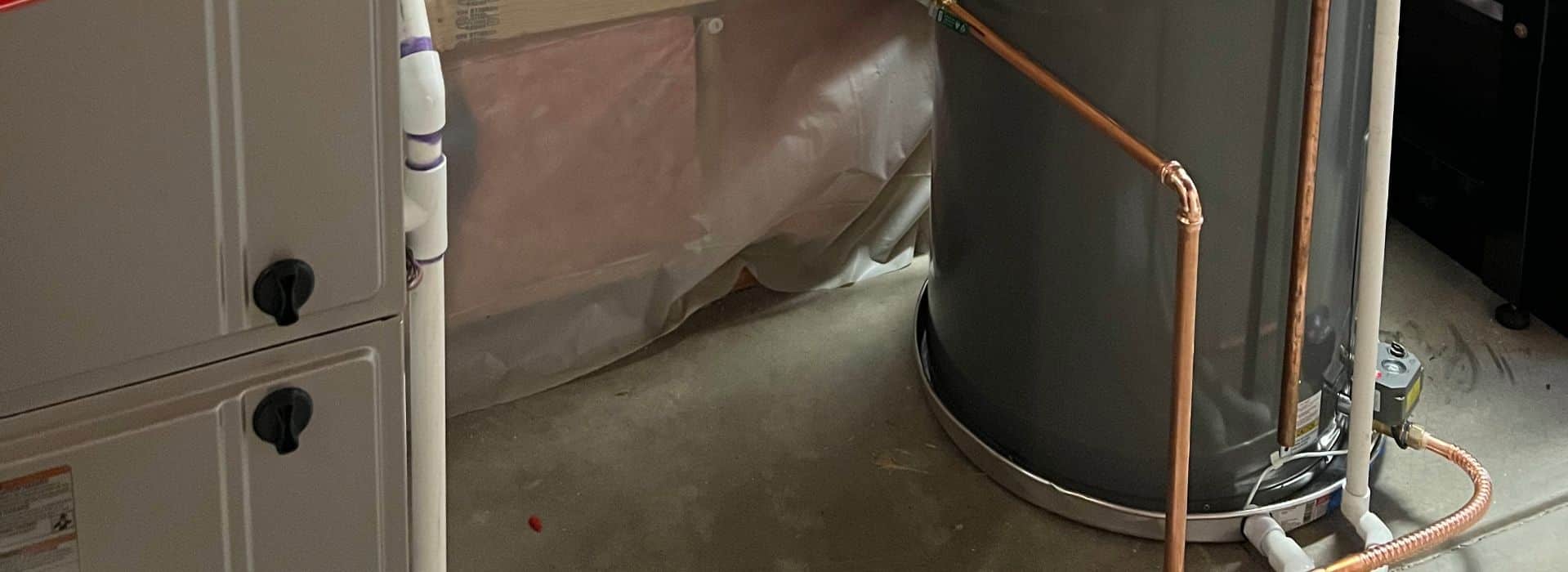
Boiler replacement in Edgewater, CO is essential for maintaining home comfort and efficiency. The process involves careful evaluation and installation of modern systems tailored to local conditions and specific heating needs.
- Older boilers often operate at much lower efficiency than modern units, leading to higher utility bills.
- Local environmental factors, such as altitude and water quality, significantly impact boiler performance and longevity.
- Professional assessment is crucial to ensure compatibility of new systems with existing infrastructure and to maximize investment.
Boiler replacement in Edgewater, CO is crucial for maintaining your home's comfort, safety, and energy efficiency. An aging boiler can lead to increased utility bills and inconsistent heating. Replacing it ensures reliable performance and can significantly enhance the overall efficiency of your heating system for years to come.
Boiler Replacement in Edgewater, CO
That rumbling sound from your basement. The radiators that take forever to warm up. The utility bills that keep climbing month after month. If your boiler has been showing its age, you're facing a decision that affects your home's comfort, safety, and efficiency for the next two decades.
Boiler replacement involves removing your existing heating unit and installing a modern, properly sized system that matches your home's specific heating demands. This process goes beyond a simple swap – it requires careful assessment of your current piping infrastructure, venting requirements, fuel connections, and heat distribution network throughout your property.
Why Professional Assessment Matters
A boiler that's incorrectly sized or improperly installed creates problems that compound over time. Edgewater homes face unique challenges that demand local expertise:
- Altitude considerations at 5,200+ feet affect combustion efficiency and system calibration
- Temperature swings from mild afternoons to freezing nights stress heating components
- Older housing stock in established neighborhoods often has original piping that requires evaluation
- Hard water conditions from Denver-area municipal sources can impact heat exchanger longevity
Professional diagnosis identifies whether your existing distribution system – radiators, baseboard units, or radiant flooring – can work efficiently with modern boiler technology, or whether modifications will maximize your investment.
Common Boiler Issues in Edgewater, CO
Cardom Plumbing & Heating provides Boiler Replacement services in all neighborhoods of Edgewater including Terra Village.
Edgewater's position along the western edge of Denver exposes homes to Front Range weather patterns that test heating systems differently than other metro areas. Cold air drainage from the mountains can drop temperatures rapidly in evening hours, forcing boilers to cycle frequently during shoulder seasons.
Many Edgewater properties were built during the mid-20th century housing boom, meaning original boiler installations are now 40-60 years old. Cast iron boilers from this era were built to last, but even the most durable equipment eventually reaches the end of its safe, efficient operating life.
Local Factors Driving Replacement Needs
- Infrastructure age: Pre-1970s homes often have boilers operating at 60-70% efficiency compared to modern units achieving 95%+
- Mineral buildup: Denver Water's supply contains calcium and magnesium that accumulates in heat exchangers over decades
- Altitude stress: Standard sea-level calibrations cause incomplete combustion, reducing efficiency and increasing carbon monoxide risks
- Pipe compatibility: Older steel and iron distribution piping may have internal corrosion affecting water flow and heat transfer
- Venting deterioration: Original clay tile or metal chimney liners degrade, creating potential backdraft hazards
- Zoning changes: Home additions or basement conversions may have outpaced original boiler capacity
Warning Signs Your Boiler Needs Replacement
Watch for these indicators that repair costs no longer make financial sense:
- Boiler age exceeding 15-20 years with increasing repair frequency
- Uneven heating throughout your home despite system adjustments
- Yellow or orange burner flames instead of steady blue
- Rust-colored water when bleeding radiators
- Visible corrosion on the boiler jacket or connections
- Rising fuel consumption without corresponding comfort improvement
- Unusual sounds – banging, whistling, or gurgling – during operation
How Cardom Plumbing & Heating Can Help
Boiler replacement requires systematic planning and precise execution. Our process addresses every component affecting your new system's performance and longevity.
Our Replacement Process
- Initial system evaluation: We inspect your current boiler, distribution network, fuel supply, venting, and thermostat controls to understand the complete picture
- Heat load calculation: Using Manual J methodology adapted for Colorado altitude, we determine the exact BTU output your home requires
- Equipment selection: We present boiler options matching your heating needs, efficiency goals, and budget considerations
- Infrastructure assessment: We evaluate whether existing piping, venting, and electrical connections meet current code requirements
- Preparation and protection: Work areas are protected, and we coordinate fuel shutoffs and any necessary permits
- Old system removal: Your existing boiler is disconnected, drained, and removed for proper disposal or recycling
- New installation: The replacement boiler is positioned, connected to fuel, water, electrical, and venting systems
- System commissioning: We calibrate combustion settings for altitude, test all safety controls, and balance water flow
- Final inspection and walkthrough: You receive complete operation training and documentation
Methods and Techniques
- Combustion analysis using digital flue gas analyzers to optimize efficiency at elevation
- Pressure testing of all water connections to verify leak-free operation
- Carbon monoxide detection throughout the installation process
- Flow rate verification at each zone or radiator circuit
- Thermostat integration testing for proper cycling behavior
Communication Throughout the Project
You'll know what's happening at each phase. Before work begins, we provide a detailed scope document outlining equipment specifications, timeline phases, and any preparation you'll need to complete. During installation, our technicians explain what they're doing and why – no surprises, no confusion.
Why Choose Cardom Plumbing & Heating
Boiler replacement isn't a commodity service where the lowest bid wins. The quality of your installation determines whether you'll enjoy reliable, efficient heating for decades – or face ongoing problems that erode your investment.
Technical Qualifications
Our technicians hold current certifications in hydronic heating systems, gas fitting, and high-efficiency boiler installation. We maintain ongoing training relationships with major boiler manufacturers – this means we install equipment according to factory specifications, protecting your warranty coverage.
- Licensed master plumbers with hydronic heating specialization
- EPA-certified for refrigerant handling on combination systems
- Manufacturer-authorized installation credentials
- Continuing education on evolving boiler technology and code requirements
Local Knowledge That Matters
We've worked in Edgewater homes for years. We understand the quirks of mid-century construction – the way floor joists run, where original piping was typically routed, how basement layouts affect equipment placement. This familiarity translates to faster, cleaner installations with fewer surprises.
Service Commitments
- Same-day response for emergency heating failures during cold weather
- Detailed written proposals before any work begins
- Post-installation follow-up to verify system performance
- Direct access to technicians who performed your installation for any questions
We stand behind our work because we live and work in this community. Our reputation depends on every installation performing exactly as promised.
Housing Characteristics & Boiler Replacement Considerations
Edgewater's compact 0.6-square-mile footprint contains a distinctive housing mix that directly influences boiler replacement decisions. Understanding your home's construction era helps predict the challenges and opportunities you'll encounter.
Housing Stock by Era
- Pre-1950 bungalows and cottages: Often feature original gravity-fed or early forced hot water systems with oversized cast iron radiators – these homes benefit from modern modulating boilers that work efficiently with existing high-mass heat emitters
- 1950s-1970s ranch homes: Typically have baseboard convectors and original atmospheric boilers – replacement offers significant efficiency gains but may require venting modifications
- Recent infill construction: Newer homes built on redeveloped lots often have radiant floor heating or high-efficiency systems already – replacement focuses on technology upgrades
Basement and Mechanical Room Configurations
Edgewater's older homes frequently have smaller, compartmentalized basements rather than open layouts. This affects equipment selection – compact wall-hung boilers may be necessary where floor space is limited. Access routes for removing old equipment and bringing in new units require advance planning.
Piping Infrastructure Considerations
- Original black iron piping remains common and generally compatible with modern boilers
- Some homes have copper distribution lines added during previous renovations
- Galvanized steel sections may require replacement due to internal corrosion
- Expansion tank condition and sizing must be evaluated for modern system pressures
Homes that have undergone additions or basement finishing may have heating zones added without proper load calculations – replacement provides an opportunity to rebalance the entire system.
Environmental Conditions & Boiler Replacement Implications
Edgewater's environmental factors create specific demands on heating equipment that influence both equipment selection and installation methods.
Water Quality Characteristics
Denver Water supplies Edgewater through a system drawing from mountain reservoirs. While treatment produces safe drinking water, mineral content affects closed-loop heating systems over time:
- Moderate hardness levels (averaging 50-100 ppm) contribute to scale accumulation in heat exchangers
- pH levels typically range 7.0-8.0, generally compatible with copper and iron piping
- Chlorine residuals can accelerate rubber component degradation in older systems
New boiler installations benefit from proper system flushing and water treatment to protect modern heat exchangers, which have tighter tolerances than older cast iron units.
Climate Impacts on Heating Systems
- Temperature extremes: Edgewater experiences winter lows below zero and occasional mid-winter warm spells – modulating boilers handle these swings more efficiently than single-stage units
- Dry air: Low humidity accelerates evaporation from expansion tanks and can stress seals and gaskets
- Altitude effects: Reduced oxygen density at 5,200 feet requires specific burner orifice sizing and combustion air adjustments
- Freeze risk: Exterior venting and condensate lines require freeze protection measures
Soil and Foundation Factors
Edgewater sits on clay-heavy soils typical of the Denver basin. Seasonal expansion and contraction can stress underground gas lines and contribute to foundation settling that affects boiler venting alignment. Proper installation accounts for these conditions with flexible connections and regular inspection points.
Energy Costs and Heating Fuel Data in Edgewater
Understanding local energy economics helps Edgewater homeowners make informed boiler replacement decisions. Natural gas remains the dominant heating fuel in the Denver metro area, with Xcel Energy serving as the primary utility provider for Edgewater residents.
Natural Gas Pricing Trends
Colorado natural gas rates have experienced volatility in recent years, influenced by regional supply dynamics and seasonal demand spikes. Key data points affecting replacement decisions:
- Average residential natural gas costs in the Denver metro area range from $0.80-$1.20 per therm depending on season and market conditions
- Winter heating bills for older, inefficient boilers in typical Edgewater homes can exceed $200-300 monthly during cold stretches
- High-efficiency condensing boilers (95%+ AFUE) can reduce fuel consumption by 25-35% compared to 60-70% efficient legacy equipment
- Xcel Energy offers rebate programs for qualifying high-efficiency heating equipment installations
Return on Investment Considerations
For an Edgewater home currently using an aging 65% efficient boiler, upgrading to a 95% efficient condensing unit typically produces annual fuel savings of $400-800 depending on home size and heating habits. This means equipment costs can often be recovered within 8-12 years through reduced utility bills alone – not accounting for avoided repair costs on failing equipment.
Local utility rebates, federal energy tax credits, and manufacturer promotions can further improve payback timelines. Cardom Plumbing & Heating helps identify all available incentives applicable to your specific installation.


