Gas leaks pose serious safety risks in Boulder, CO, requiring immediate professional detection and resolution. Our systematic approach ensures thorough inspection and identification of leaks, safeguarding homes and businesses in this unique environment.
Gas leaks can be detected through various methods, including electronic scanning and pressure testing. Our technicians are trained to handle the specific challenges posed by Boulder’s climate and infrastructure.
We provide a detailed evaluation of gas systems, documenting findings for future reference and insurance purposes. Our services prioritize safety and transparency in pricing.
Emergency response is available for urgent gas leak situations, ensuring same-day service when necessary. Our commitment to quality guarantees accurate detection and effective repairs.
What is gas leak detection?
Gas leak detection is the process of identifying the presence of gas leaks in residential or commercial properties. It involves monitoring for signs such as unusual smells, sounds, or changes in gas pressure. Effective detection is crucial for ensuring safety and preventing potential hazards associated with gas leaks.
Gas Leak Detection in Boulder, CO
That faint sulfur smell near your furnace or the unexplained hissing sound behind your stove demands immediate attention. Gas leaks represent one of the most serious safety concerns in any home or business – and in Boulder's unique mountain environment, the risks multiply. Whether you're heating your historic Mapleton Hill bungalow through a frigid January night or running a commercial kitchen on Pearl Street, reliable gas leak detection protects everything you've built.
Professional gas leak detection involves systematic inspection of your entire gas distribution system, from the meter connection through every appliance hookup. Our technicians use electronic combustible gas detectors, pressure testing equipment, and visual inspection protocols to identify leaks that range from obvious emergencies to slow seeps that accumulate over time. This isn't a service where DIY approaches make sense – the stakes are simply too high.
Why Professional Detection Matters in Boulder
Boulder's combination of aging infrastructure, dramatic temperature swings, and high-altitude conditions creates specific vulnerabilities in gas systems. Connections that held tight for decades can fail when expansion and contraction cycles stress fittings repeatedly.
Electronic detection equipment identifies gas concentrations as low as 50 parts per million – far below what human senses can perceive
Pressure decay testing reveals micro-leaks in underground lines and concealed piping that visual inspection cannot find
Systematic inspection covers every connection point, valve, regulator, and appliance hookup in your system
Documentation provides baseline data for insurance purposes and future maintenance planning
Cardom Plumbing & Heating provides Gas Leak Detection services in all neighborhoods of Boulder including Arapahoe Ridge, Dakota Ridge, East Aurora, Frazier Meadows, Goss-Grove, Holiday, Keewaydin, Martin Acres, Meadow Glen, Park East, Promontory North, Table Mesa, The Hill, The Promontory, Washington Village, and Wonderland Hills.
Boulder sits at 5,430 feet elevation where atmospheric pressure runs roughly 17% lower than sea level. This affects how gas appliances burn and how fittings seal. Combined with temperature variations that can swing 40 degrees in a single day, your gas system experiences stress that coastal or lowland installations never face.
The city's housing stock spans more than a century. Victorian-era homes in Whittier and University Hill may still have original gas lines with threaded iron connections that corrode from the inside out. Mid-century ranches in Martin Acres often feature copper flex connectors that fatigue over time. Even newer construction in Gunbarrel or North Boulder can develop issues when installation shortcuts meet Colorado's demanding climate.
Seasonal and Environmental Factors
Winter heating season puts maximum demand on gas systems precisely when leaks become most dangerous – windows stay closed, and gas accumulation risks increase. Spring brings rapid freeze-thaw cycles that shift soil and stress buried lines.
Temperature cycling – Daily temperature swings cause metal fittings to expand and contract, loosening connections over time
Soil movement – Boulder's clay-heavy soils expand when wet and contract when dry, putting lateral pressure on underground gas lines
Altitude effects – Lower atmospheric pressure changes combustion characteristics and can mask some leak symptoms
Aging infrastructure – Many Boulder neighborhoods have gas mains installed in the 1950s through 1970s approaching end of service life
Seismic activity – Minor tremors along the Front Range can stress rigid pipe connections
Rodent damage – Field mice and voles seeking warmth can gnaw through flexible gas connectors in crawl spaces
Warning Signs to Watch For
Some gas leak indicators are obvious. Others require attention to subtle changes in your home environment.
Sulfur or rotten egg odor near appliances, meters, or along gas line routes
Hissing or whistling sounds from gas connections
Dead vegetation in a line pattern across your yard
Bubbling in standing water near buried gas lines
Higher than expected gas bills without increased usage
Pilot lights that repeatedly extinguish
Yellow or orange flames instead of blue on burners
How Cardom Plumbing & Heating Detects and Resolves Gas Leaks
Our gas leak detection process follows a systematic protocol developed specifically for Boulder's conditions. We don't rely on a single method – we layer multiple detection techniques to ensure nothing gets missed.
Our Detection Process
Initial safety assessment – Upon arrival, we evaluate immediate risk levels and ensure occupant safety before proceeding with detailed inspection
Electronic scanning – We use calibrated combustible gas detectors to survey all accessible gas lines, connections, and appliances
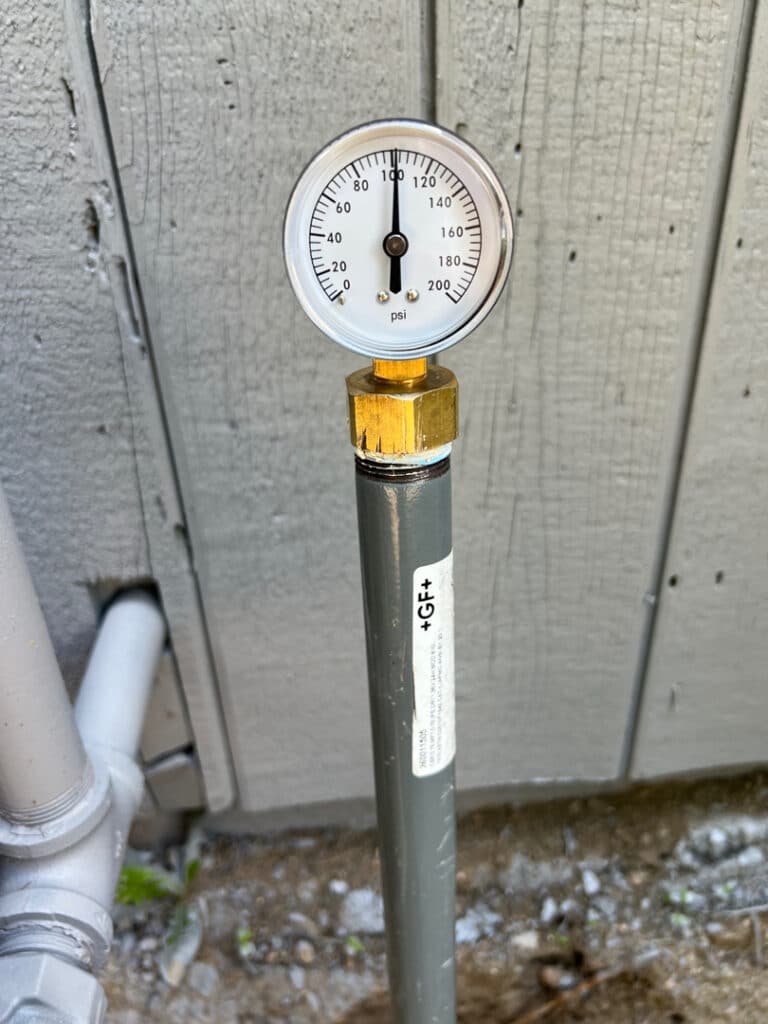
Pressure testing – We isolate your gas system and apply test pressure to identify leaks through pressure decay measurement
Visual inspection – We examine all visible connections, looking for corrosion, damage, improper fittings, or installation defects
Appliance evaluation – We check each gas appliance for proper connection, combustion quality, and ventilation
Documentation – We record all findings with photographs and measurements for your records
Repair or recommendation – We address immediate hazards and provide detailed recommendations for any additional work needed
Detection Methods and Equipment
Modern gas leak detection goes far beyond the soap bubble test your grandfather might have used. Our technicians deploy professional-grade equipment calibrated for accuracy.
Electronic combustible gas detectors – Semiconductor sensors that respond to methane and propane at concentrations far below explosive limits
Manometer pressure testing – Precision gauges that detect pressure drops as small as 0.1 inches of water column
Infrared cameras – Thermal imaging that can reveal gas dispersion patterns in certain conditions
Ultrasonic detectors – Equipment that identifies the high-frequency sound of gas escaping through small openings
Bubble solution testing – Traditional method for confirming and pinpointing leaks identified by electronic means
Communication and Follow-Up
We explain our findings in plain language, not technical jargon. You'll understand exactly what we found, what it means for your safety, and what options you have for addressing any issues. For significant repairs, we provide written estimates before proceeding.
Why Choose Cardom Plumbing & Heating
Gas work demands credentials. Our technicians hold current Colorado gas fitter licenses and maintain certifications in combustible gas detection equipment operation. We carry full liability coverage and workers' compensation – protections that matter when the work involves explosive hazards. Every Cardom technician completes ongoing training in detection technology and safety protocols.
We've served Boulder County for years, building deep familiarity with local housing types, common installation practices, and the specific challenges our climate creates. When we arrive at a 1920s Chautauqua cottage or a 2020 zero-energy home in Holiday, we understand what we're likely to find and where problems typically develop.
Our Service Commitments
Emergency response – Gas leak calls receive priority scheduling, with same-day service available for urgent situations
Transparent pricing – You'll know costs before we begin any repair work
Quality guarantee – We stand behind our detection accuracy and repair workmanship
Proper permitting – We pull required permits and schedule inspections for all code-required work
Documentation – Complete records of all testing, findings, and repairs for your files
Our diagnostic approach combines proven technology with experienced judgment. Electronic detectors tell us where to look – but interpreting what we find requires understanding how gas systems behave in Boulder's specific conditions. That combination of tools and knowledge sets professional detection apart from basic inspection.
Recent Work
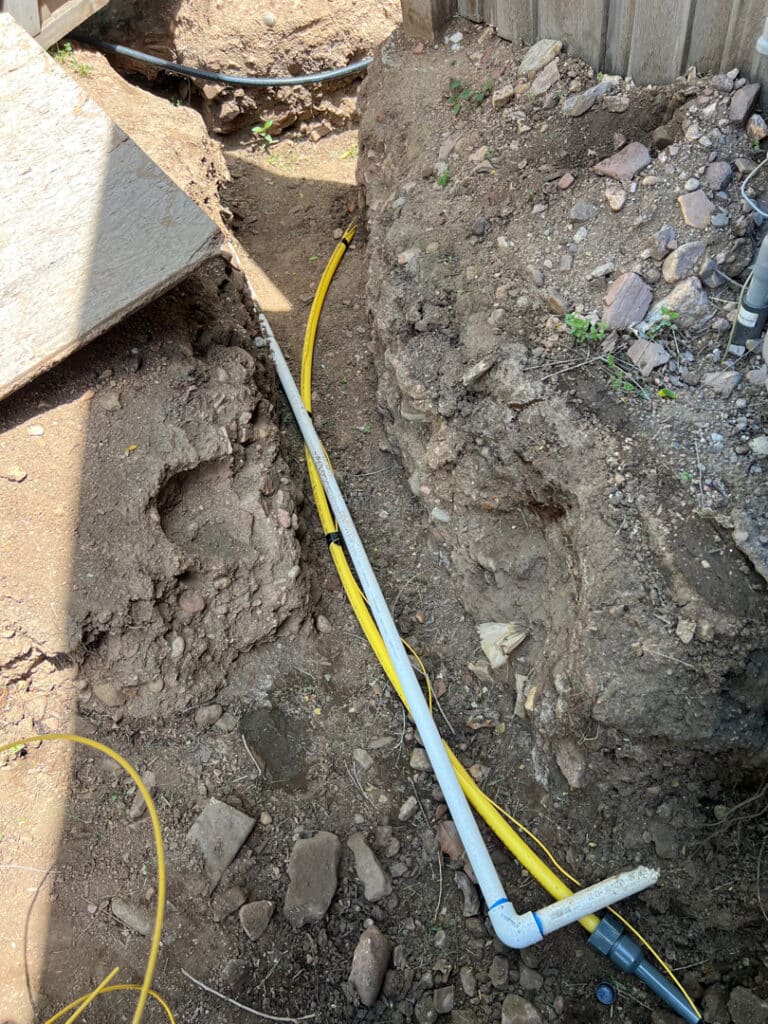
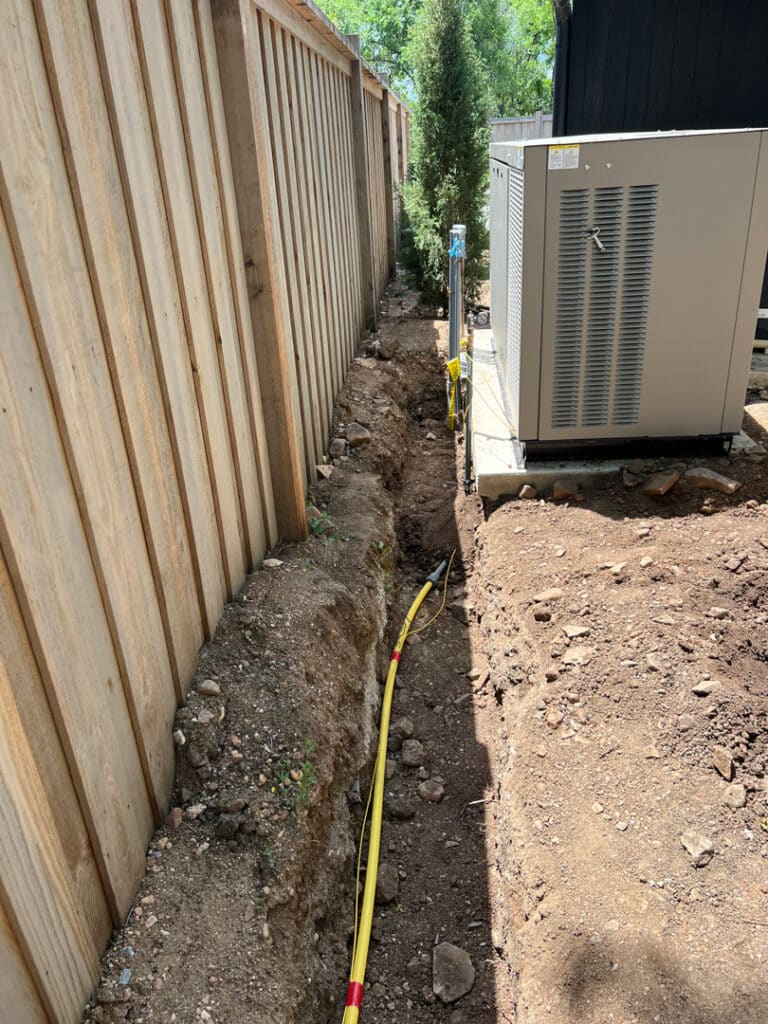
Run Gas Line to New Generator - Boulder
Problem:Deposit on gas piping to generator
Found:Start digging areas homeowner came out and said it needs to be backfilled before I put my pipe in
Fixed:While here he asked that I move gas line going to pool heater so it doesn’t hit generator door, cut and moved with 1 90
Housing Characteristics & Gas Leak Detection Considerations
Boulder's housing stock reflects more than 150 years of development, and each era brought different gas piping materials, installation methods, and code requirements. Understanding your home's vintage helps predict where gas system vulnerabilities are most likely to develop.
Historic Properties (Pre-1940)
Older homes in neighborhoods like Mapleton Hill, Whittier, and University Hill often feature original threaded black iron gas piping. These systems have proven remarkably durable, but corrosion eventually affects every metal pipe.
Threaded connections can loosen as pipe walls thin from internal corrosion
Original gas valves may not seal completely when closed
Multiple modifications over decades create complex systems with potential weak points
Crawl space access may be limited, making inspection challenging
Mid-Century Construction (1940-1980)
Post-war homes in Table Mesa, Martin Acres, and Baseline area typically used a mix of black iron and early flexible connectors. Many of these homes have undergone appliance upgrades that added connections to original piping.
Flexible connectors from this era may be approaching or past recommended service life
Additions and remodels sometimes extended gas lines without proper permits or inspection
Basement conversions may have enclosed gas lines behind finished walls
Modern Construction (1980-Present)
Newer homes in Gunbarrel, North Boulder, and recent developments typically feature corrugated stainless steel tubing (CSST) or modern black iron with improved fittings. While these systems generally perform well, they're not immune to problems.
CSST requires proper bonding and grounding to prevent lightning-related damage
Settling in newer construction can stress rigid connections
Builder-grade appliance connectors may need replacement as they age
Environmental Conditions & Gas Leak Detection Implications
Boulder's environmental conditions create specific challenges for gas system integrity. From soil composition to climate patterns, local factors influence how and where leaks develop.
Soil and Underground Conditions
Boulder County soils range from expansive clays in lower elevations to rocky substrates near the foothills. Clay soils expand significantly when saturated and shrink during dry periods, creating lateral pressure on buried gas lines.
Seasonal soil movement can stress underground gas service lines
Rocky soils in foothill areas may damage pipe coatings during installation or settlement
High water tables in some areas accelerate external corrosion on metal pipes
Tree roots can displace or damage buried gas lines over time
Climate Impacts on Gas Systems
Boulder's semi-arid climate with cold winters and significant temperature swings creates ongoing stress on gas system components. The combination of heating season demands and thermal cycling affects system integrity.
Winter conditions – Frozen ground can shift, stressing service line connections; heating demand maximizes system pressure
Spring thaw – Rapid freeze-thaw cycles cause maximum soil movement and pipe stress
Summer heat – Exposed pipes and regulators experience thermal expansion; UV exposure degrades some connector materials
Fall preparation – Ideal time for preventive inspection before heating season begins
Altitude and Atmospheric Effects
At Boulder's elevation, atmospheric pressure averages about 12.2 PSI compared to 14.7 PSI at sea level. This affects combustion characteristics and can influence how gas systems behave. Appliances must be properly adjusted for altitude, and some leak symptoms may present differently than at lower elevations.
Natural Gas Infrastructure and Safety Statistics in Boulder
Xcel Energy serves as Boulder's primary natural gas provider, maintaining an extensive network of distribution mains and service lines throughout the city. The company's infrastructure in Boulder includes a mix of vintage cast iron and steel mains in older neighborhoods, with modern polyethylene piping in newer developments. According to Xcel's distribution integrity management program, the utility has been systematically replacing aging infrastructure, but significant portions of the system date to the mid-20th century.
Colorado's Public Utilities Commission tracks gas safety incidents statewide, and the data reveals patterns relevant to Boulder residents. Excavation damage represents the leading cause of gas line incidents across Colorado, making call-before-you-dig protocols essential for any ground disturbance work. The state averages several hundred reported gas leaks annually, with a significant percentage traced to corrosion in aging infrastructure and improper appliance connections.
Local Safety Considerations
Boulder's 811 call-before-you-dig program receives thousands of locate requests annually – a reminder of how much underground infrastructure exists
The Boulder Fire Department responds to multiple gas-related calls each month, ranging from odor investigations to confirmed leaks
Xcel Energy's emergency response time in Boulder averages under 30 minutes for reported gas emergencies
Colorado law requires landlords to maintain gas appliances and connections in safe working condition
These statistics underscore why professional gas leak detection matters for Boulder properties. With aging infrastructure, active construction and renovation throughout the city, and climate conditions that stress gas systems, regular inspection provides essential protection. Cardom Plumbing & Heating's detection services help Boulder property owners identify problems before they become emergencies – protecting families, tenants, and investments throughout our community.
Common signs of a gas leak include a faint sulfur smell, hissing sounds near gas appliances, and dead or dying vegetation around gas lines. If you notice any of these symptoms, it’s crucial to act quickly and contact a professional for gas leak detection.
Professional gas leak detection involves a thorough inspection of your entire gas distribution system, using electronic combustible gas detectors and pressure testing equipment. Technicians check every connection point, valve, and appliance hookup to identify any leaks, even those that are not immediately visible.
Hiring a professional for gas leak detection is essential because the risks associated with gas leaks are significant. Professionals have the right tools and expertise to detect even small leaks that might go unnoticed, ensuring your safety and the integrity of your gas system.
You can find gas leak detection services throughout Boulder, including neighborhoods like Mapleton Hill, Pearl Street, and more. Many local plumbing and heating companies offer specialized gas leak detection services to address the unique challenges of the area.
It’s recommended to have your gas system inspected at least once a year, especially in areas like Boulder where temperature fluctuations can stress gas fittings. Regular inspections help catch potential issues before they become serious problems.
If you suspect a gas leak, evacuate the area immediately and avoid using any electrical devices, including phones. Once you are at a safe distance, call your gas company or a professional gas leak detection service to report the issue and get assistance.
Ignoring a gas leak can lead to serious safety hazards, including explosions, fires, and health issues from gas exposure. It’s crucial to address any signs of a leak promptly to protect yourself, your family, and your property.