Gas leak detection in Highlands Ranch is essential for safeguarding homes and families from potential hazards. The process involves thorough inspections and advanced technology to identify leaks and ensure safety.
Residents should be aware of signs like sulfur smells or hissing sounds that indicate gas leaks. Regular inspections are crucial due to unique local challenges such as altitude and soil conditions.
Our detection methods include electronic equipment and pressure testing to find even the smallest leaks. We provide detailed documentation for insurance and future reference.
Cardom Plumbing & Heating prioritizes rapid response and 24/7 availability for gas leak concerns. Our technicians are certified and knowledgeable about local gas system issues.
What is gas leak detection?
Gas leak detection is the process of identifying and locating leaks in gas lines to prevent potential hazards. It involves using specialized equipment and techniques to detect the presence of gas, ensuring the safety of your home and family by addressing leaks promptly.
Gas Leak Detection in Highlands Ranch, CO
That faint sulfur smell near your furnace. A hissing sound from behind the stove. An unexplained spike in your gas bill. These moments demand immediate attention – and professional expertise. Gas leak detection protects your family, your property, and your peace of mind in ways few other plumbing and heating services can match.
Gas leak detection involves systematic inspection and testing of all gas-carrying components within your home's plumbing and heating infrastructure. This includes gas supply lines, connections to appliances like furnaces and water heaters, meter assemblies, and underground service lines. Professional detection goes far beyond simply sniffing for mercaptan – the additive that gives natural gas its distinctive rotten-egg odor.
Why Professional Detection Matters
Highlands Ranch homes face unique gas system challenges. The community's elevation of approximately 5,900 feet affects combustion efficiency and appliance calibration. Rapid temperature swings – sometimes 40 degrees or more in a single day – stress pipe joints and fittings repeatedly throughout the year. Many homes built during the development boom of the 1980s and 1990s now have gas systems approaching or exceeding 30 years of service.
Electronic detection equipment identifies leaks too small for human senses to perceive
Pressure testing reveals compromised fittings before they become dangerous
Professional assessment covers hidden areas – crawl spaces, wall cavities, and underground lines
Documentation provides records for insurance purposes and future reference
Highlands Ranch sits atop the Denver Basin, where clay-heavy soils expand and contract dramatically with moisture changes. This soil movement affects underground gas lines, creating stress points at connections and along pipe runs. Homes in neighborhoods like Northridge, Southridge, and Highlands Ranch Town Center experience these ground shifts seasonally.
The semi-arid climate brings its own complications. Winter temperatures regularly drop below freezing, while summer afternoons push past 90 degrees. This thermal cycling fatigues metal fittings and can cause flexible gas connectors to develop micro-fractures over time. Homes with gas fireplaces – common throughout Highlands Ranch – see additional wear on seasonal connections that sit dormant for months.
Local Factors Contributing to Gas Leak Risks
Soil composition – Expansive clay soils shift with moisture levels, stressing buried gas lines and foundation penetrations
Altitude effects – Lower atmospheric pressure at elevation changes combustion dynamics and can mask small leaks
Housing age – Many homes built between 1981 and 2000 now have aging gas infrastructure requiring inspection
Temperature extremes – Daily and seasonal temperature swings cause repeated expansion and contraction of gas fittings
Construction quality variations – Rapid development periods sometimes resulted in rushed installations
Seismic activity – Minor tremors along the Front Range can disturb underground connections
Warning Signs Requiring Immediate Attention
Highlands Ranch residents should remain alert to these indicators of potential gas leaks:
Sulfur or rotten-egg odor near gas appliances or in specific rooms
Hissing or whistling sounds near gas lines or meters
Dead vegetation in otherwise healthy landscaping – particularly in linear patterns
Unexplained increases in gas utility bills
Physical symptoms like headaches, dizziness, or nausea when home
Our gas leak detection process combines advanced technology with methodical inspection protocols developed specifically for Front Range conditions. We approach every call with the understanding that gas leaks represent genuine safety concerns requiring thorough, professional response.
Our Detection Process
Initial safety assessment – We evaluate immediate risks upon arrival and ensure occupant safety before proceeding with detailed inspection
Visual inspection – Examination of all accessible gas lines, connections, appliances, and the gas meter for obvious damage or deterioration
Electronic detection sweep – Combustible gas detectors scan all gas-carrying components, identifying leaks as small as 5 parts per million
Pressure testing – Isolation and pressurization of gas line segments to identify leaks not detectable through other methods
Connection verification – Individual testing of each appliance connection, shut-off valve, and union fitting
Underground line assessment – When indicated, specialized equipment locates buried line issues without excavation
Documentation and reporting – Complete written findings with photographs and recommendations
Detection Methods and Equipment
Combustible gas analyzers with digital readouts for precise measurements
Ultrasonic leak detectors for identifying pressurized gas escaping through small openings
Manometer pressure testing for system integrity verification
Infrared cameras for identifying temperature anomalies around gas appliances
Soap solution testing for visual confirmation of suspected leak locations
Communication Throughout the Process
We explain findings in plain language as we work. You'll understand what we're testing, why we're testing it, and what results mean for your home's safety. If repairs become necessary, we discuss options before proceeding – including temporary safety measures if immediate repair isn't possible.
Why Choose Cardom Plumbing & Heating
Gas work demands specific expertise and credentials. Our technicians hold gas fitting certifications recognized by Colorado regulatory authorities and maintain current training on detection equipment and safety protocols. We carry appropriate licensing and insurance for gas system work – a requirement some general plumbers cannot meet.
Highlands Ranch isn't just a service area for us. We understand the specific challenges of homes in Backcountry, Falcon Hills, and every neighborhood throughout the community. This local knowledge translates into faster, more accurate diagnostics. We know which builders used which materials, which eras of construction present which challenges, and how local conditions affect gas system integrity.
What Sets Us Apart
Rapid response – Gas leak concerns receive priority scheduling given their safety implications
24/7 availability – Emergency gas situations don't wait for business hours
Coordination with utilities – We work directly with Xcel Energy when utility involvement becomes necessary
Follow-up verification – After repairs, we retest to confirm complete resolution
Preventive recommendations – We identify potential future concerns during every inspection
Our diagnostic equipment represents current industry standards – not outdated technology that misses small leaks. We invest in training and tools because gas safety demands precision. When we clear a system, you can trust that assessment.
Housing Characteristics & Gas Leak Detection Considerations
Highlands Ranch developed primarily between 1981 and the early 2000s, with continued construction in areas like Backcountry and Sterling Ranch more recently. This development timeline creates distinct gas system profiles across different neighborhoods.
Construction Era Implications
1981-1990 homes – Often feature black iron gas piping throughout, with threaded connections now approaching 40 years of age. These systems frequently show corrosion at fittings and may have outdated flexible connectors at appliances.
1991-2000 homes – Mixed piping materials including corrugated stainless steel tubing (CSST) in some installations. Early CSST installations may lack proper bonding now required by code.
2001-2010 homes – Generally feature improved CSST with better fitting designs, though connections still warrant periodic inspection.
2011-present homes – Current code compliance including proper CSST bonding, though new construction can still have installation defects.
Common Housing Types and Gas Considerations
Single-family detached homes dominate Highlands Ranch, typically featuring gas furnaces, gas water heaters, and often gas ranges or cooktops. Many homes include gas fireplaces – sometimes multiple units. Each gas appliance represents connection points requiring inspection.
Townhomes and attached dwellings present additional considerations. Shared walls may contain gas lines serving multiple units. Detecting leak origins in these structures sometimes requires coordination between neighboring properties. Homeowner associations may have specific requirements regarding gas work and documentation.
Basement installations common in older sections – requiring inspection of floor penetrations and concealed piping
Outdoor gas features increasingly popular – grills, fire pits, and pool heaters add connection points
Radiant floor heating systems in some homes – extensive buried tubing networks
Garage heater installations – often DIY additions requiring professional verification
Recent Work
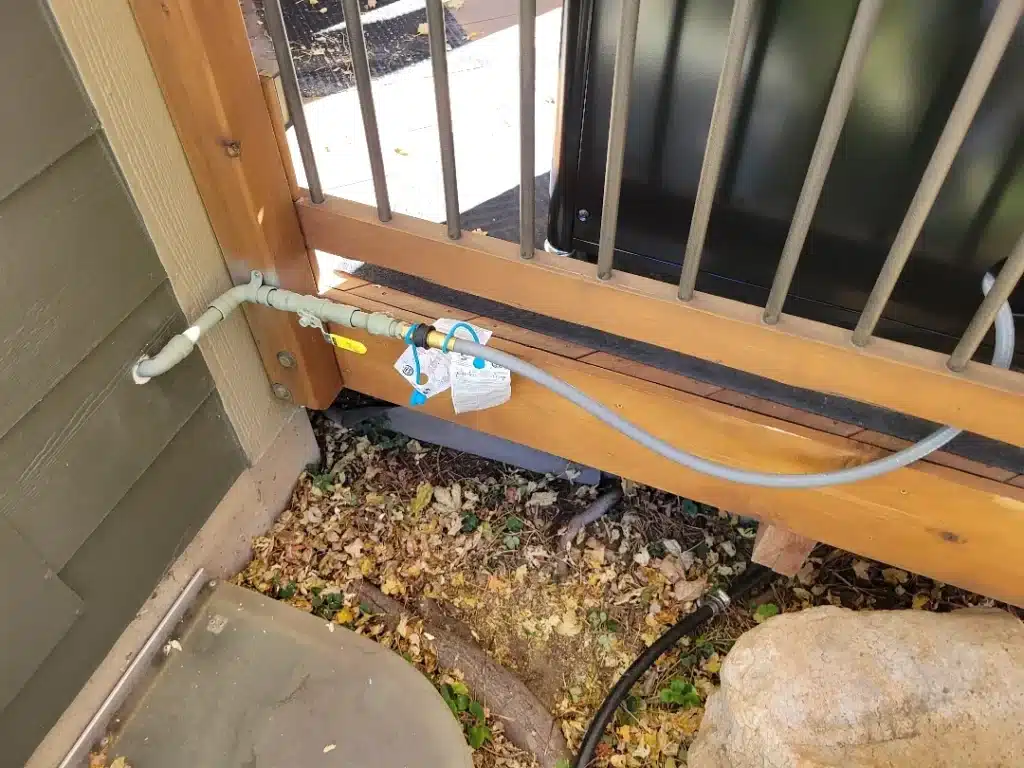
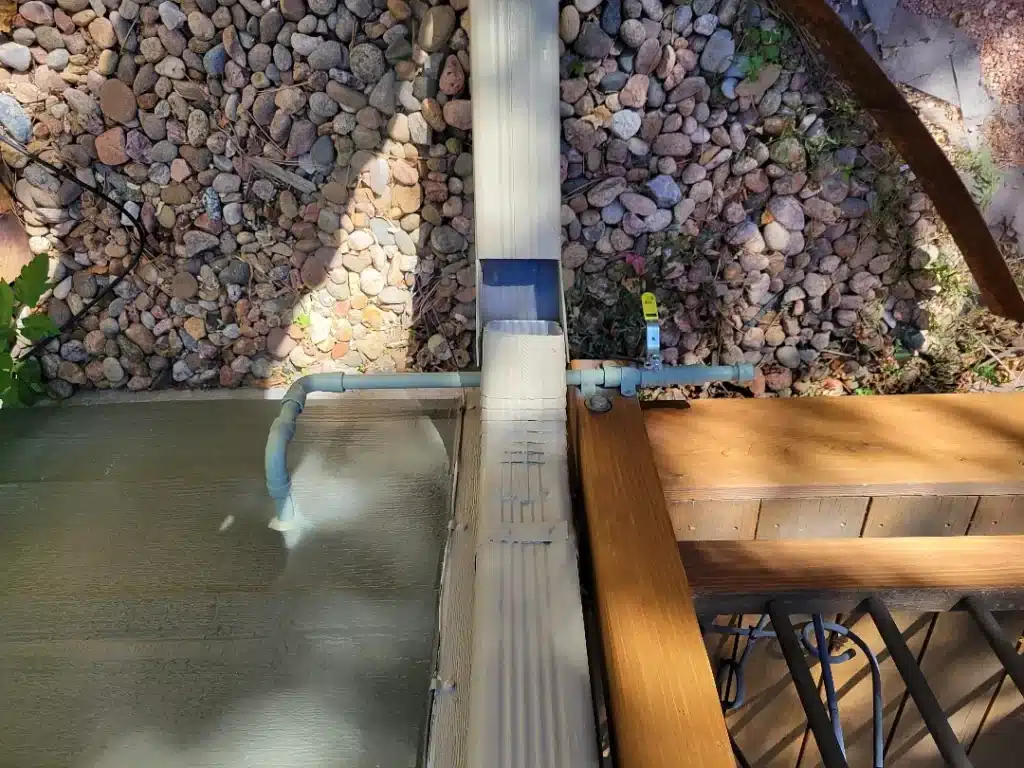
Gas Piping to Both BBQ Locations - Highlands Ranch
Problem:Gas piping to two locations on the back deck
Found:Layout for gas piping to two gas termination on the back deck.
Fixed:Cut in tee fitting on the main line from the gas meter *1 1/4"). Run 3/4" CSST to the area of the first termination. Install 3/4" X 1/2" X 1/2" CSST tee fitting. Run 1/2" CSST to the termination area where the next termination is located. Drill outside and run 1/2" black pipe and fittings behind the deck railing for the new gas lines. Install gas valves on both lines. Plug the unused line. Tie in the quick-connect fitting to the second termination behind the new BBQ grill.
Outcome:Turn on gas and test all joint for leaks. Paint all exposed steel pipe with Rustoleum paint.. Jobsite cleanup.
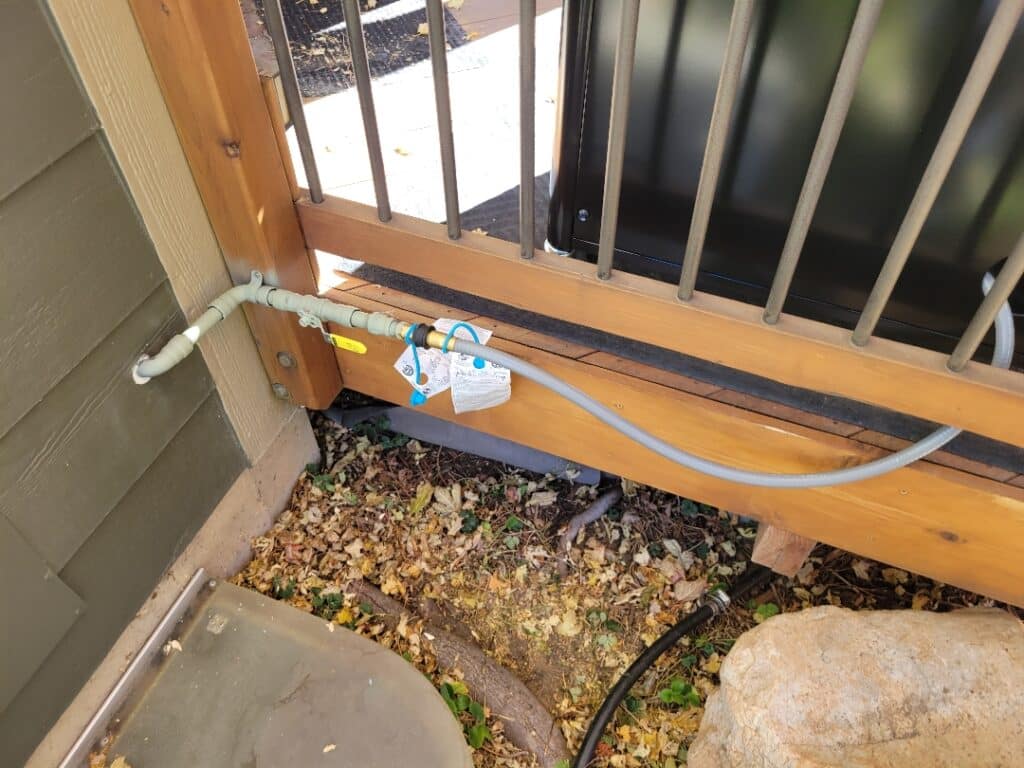
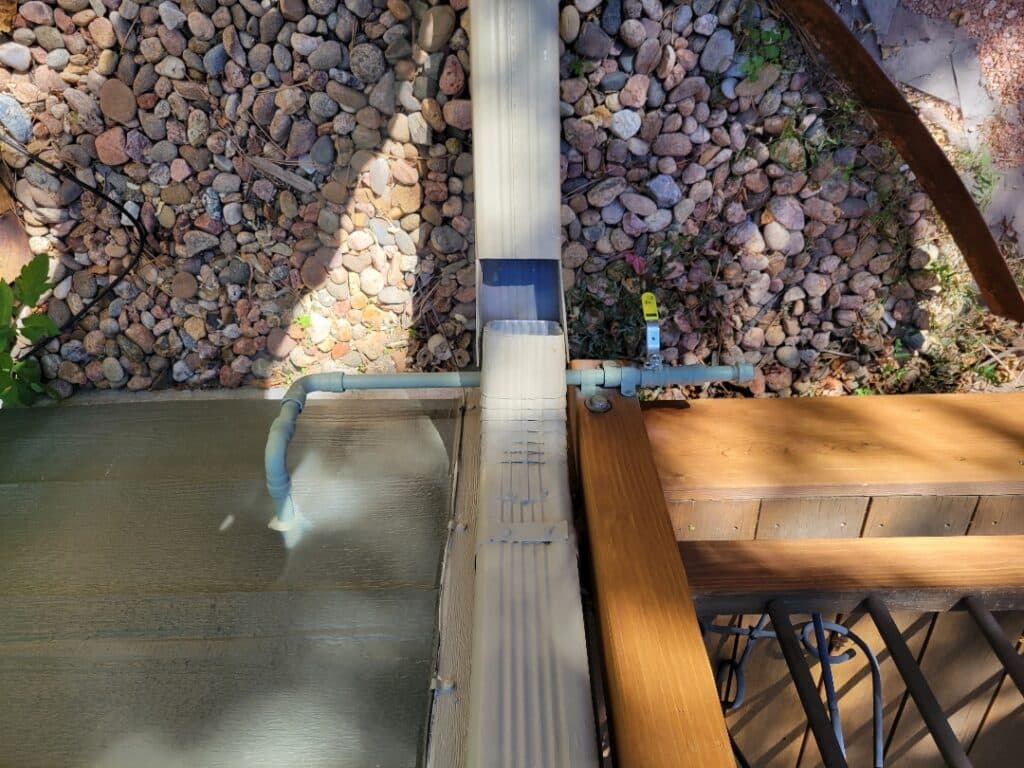
Gas Piping to Both BBQ Locations - Highlands Ranch
Problem:Gas piping to two locations on the back deck
Found:Layout for gas piping to two gas termination on the back deck.
Fixed:Cut in tee fitting on the main line from the gas meter *1 1/4"). Run 3/4" CSST to the area of the first termination. Install 3/4" X 1/2" X 1/2" CSST tee fitting. Run 1/2" CSST to the termination area where the next termination is located. Drill outside and run 1/2" black pipe and fittings behind the deck railing for the new gas lines. Install gas valves on both lines. Plug the unused line. Tie in the quick-connect fitting to the second termination behind the new BBQ grill.
Outcome:Turn on gas and test all joint for leaks. Paint all exposed steel pipe with Rust oleum paint.
Environmental Conditions & Gas Leak Detection Implications
The Highlands Ranch environment creates specific challenges for gas system integrity that differ from lower-elevation or more temperate regions. Understanding these factors helps explain why regular professional inspection matters here.
Climate Impacts on Gas Systems
Winter temperatures in Highlands Ranch regularly drop into single digits, with occasional stretches below zero. Summer highs exceed 95 degrees. This temperature range – potentially 100 degrees or more between seasonal extremes – causes significant expansion and contraction in metal gas piping and fittings. Over years, this cycling can loosen threaded connections and stress welded joints.
Freeze-thaw cycles affect soil moisture and ground movement around buried lines
Low humidity accelerates corrosion on exposed metal components
UV exposure degrades flexible connectors and gaskets on exterior installations
Wind-driven debris can damage exposed meter assemblies and regulators
Soil and Ground Conditions
Douglas County soils contain significant clay content, classified as moderately to highly expansive. These soils swell when wet and shrink when dry, creating ground movement that stresses underground gas lines. The pattern of wet springs followed by dry summers produces annual cycles of soil expansion and contraction.
Foundation movement related to soil conditions can affect gas line penetrations through basement walls and floors. Even minor settling creates stress at rigid pipe connections. Homes on sloped lots – common throughout Highlands Ranch – may experience differential movement affecting gas line routing.
Water Quality and Corrosion Factors
While water quality doesn't directly affect gas lines, the overall mineral content and pH of local water can indicate soil chemistry affecting buried metallic piping. Highlands Ranch receives water from multiple sources including Denver Water and local wells, with varying mineral profiles. Soil conditions that affect water pipes often similarly impact underground gas infrastructure.
Natural Gas Infrastructure and Safety Data in Highlands Ranch
Xcel Energy serves as the primary natural gas provider throughout Highlands Ranch and Douglas County. Understanding the local gas infrastructure provides context for detection and safety considerations affecting residential customers.
Local Gas System Statistics
Xcel Energy maintains over 23,000 miles of natural gas distribution lines across Colorado
The company responds to approximately 50,000 gas odor calls annually statewide
Douglas County ranks among the highest-growth areas for new gas service connections
Average residential gas usage in Highlands Ranch peaks during January and February heating season
Colorado law requires utility notification before excavation – the 811 "Call Before You Dig" system. This applies to homeowners planning landscaping projects, fence installation, or other ground-disturbing activities. Unmarked gas lines represent a significant hazard during excavation, and professional detection can identify private service line locations not covered by utility marking.
Safety Response and Detection Relevance
South Metro Fire Rescue serves Highlands Ranch and responds to gas-related emergency calls. Their protocols include evacuation, ventilation, and coordination with Xcel Energy for meter shutoffs. However, many gas concerns don't rise to emergency levels – small leaks, suspected problems, or preventive inspections fall outside emergency response scope.
Professional detection bridges the gap between emergency response and routine maintenance. Cardom Plumbing & Heating provides the thorough inspection and testing that identifies problems before they become emergencies – and the repair capabilities to resolve issues promptly when found. This proactive approach protects Highlands Ranch families while reducing demands on emergency services.
Non-emergency gas concerns should receive professional evaluation rather than emergency response
Annual inspection recommended for homes with gas systems over 20 years old
Post-earthquake inspection advisable following any felt seismic activity
Real estate transactions increasingly include gas system inspection as due diligence
Common signs of a gas leak include a faint sulfur smell, hissing sounds near gas appliances, and an unexplained increase in your gas bill. You may also notice dead vegetation around gas lines or a feeling of dizziness or nausea in your home.
Professional gas leak detection involves systematic inspection and testing of gas supply lines, appliance connections, and underground service lines. Technicians use electronic detection equipment to identify leaks that are too small for the human nose to sense.
Gas leak detection is crucial for protecting your family and property from potential hazards. Even small leaks can lead to dangerous situations, including explosions or carbon monoxide poisoning, so timely detection and repair are essential.
If you suspect a gas leak, evacuate your home immediately and avoid using any electrical devices, including phones. Once you are at a safe distance, call your gas provider or a professional gas leak detection service for assistance.
It is recommended to have your gas lines inspected at least once a year, especially if your home is older or has experienced significant temperature changes. Regular inspections can help identify potential issues before they become serious problems.
While you can check for obvious signs like smell or sound, professional detection is advised for thorough inspection. Technicians have specialized equipment that can detect small leaks and assess hidden areas that may not be accessible to homeowners.
In Highlands Ranch, factors such as expansive clay soils, high altitude, and the age of homes can increase the risk of gas leaks. Soil movement can stress underground lines, while older systems may be more prone to wear and tear.