Gas leak detection in Lafayette, CO is essential due to the area's unique housing and soil conditions. Professionals use advanced technology to identify leaks in both historic and modern homes, ensuring safety and compliance with local regulations.
Signs of a gas leak include sulfur smells, hissing sounds, and rising utility bills. Immediate professional attention is crucial for safety.
Lafayette's varied housing stock requires specialized knowledge of different gas systems and potential leak sources.
Our detection process combines systematic inspections with advanced technology to accurately locate and assess gas leaks.
What are the signs of a gas leak in Lafayette, CO?
Signs of a gas leak in Lafayette, CO include a faint sulfur smell, a hissing sound behind walls, and an unexplained increase in utility bills. These indicators suggest a potential gas leak, which requires prompt attention from professionals equipped to handle both modern and older gas systems.
Gas Leak Detection in Lafayette, CO
That faint sulfur smell near your water heater. A hissing sound behind the wall. An unexplained spike in your utility bill. These subtle signs can indicate a gas leak – a situation that demands immediate professional attention. In Lafayette's mix of historic homes and newer developments, gas leak detection requires specialized equipment and trained technicians who understand both modern gas systems and older infrastructure.
Gas leak detection involves systematically locating and identifying escaping natural gas or propane within your home's fuel delivery system. This includes gas lines running to furnaces, water heaters, stoves, dryers, and outdoor appliances. Professional detection goes far beyond simply sniffing for mercaptan – the additive that gives natural gas its distinctive rotten-egg odor – using electronic sensors, pressure testing, and visual inspection of connections and piping.
Why Professional Detection Matters
Lafayette sits at over 5,200 feet elevation, where atmospheric pressure differences affect gas combustion and system performance. The region's clay-heavy soils shift seasonally, potentially stressing underground gas lines. Homes built during Lafayette's growth periods – from 1970s ranch-style houses to early 2000s subdivisions – feature different gas piping materials and installation standards that require varied diagnostic approaches.
Electronic detection equipment identifies gas concentrations as low as 1 part per million – far below human detection thresholds
Pressure decay testing reveals leaks in buried or concealed piping invisible to visual inspection
Professional assessment distinguishes between active leaks and residual odors from previous minor releases
Certified technicians understand local building codes and Xcel Energy requirements for repairs and reconnection
Cardom Plumbing & Heating provides Gas Leak Detection services in all neighborhoods of Lafayette including Anna's Farm, Autumn Meadows, Blue Heron Estates, Cross Ridge, Greenlee Park, Indian Peaks, Nyland Cohousing Community, South Pointe, Spring Creek, Steel Ranch Subdivision, The Boulder, The Ranch, Trails at Coal Creek, Waneka Landing, Waneka Pointe, and Water's Edge.
Lafayette's position along the Front Range creates specific challenges for gas system integrity. The area experiences dramatic temperature swings – sometimes 40 degrees or more within a single day – that cause metal gas piping to expand and contract repeatedly. Over years, this thermal cycling weakens threaded connections and can crack older rigid piping at stress points.
The region's bentonite clay soils present another challenge. These soils swell significantly when wet and shrink during dry periods, creating ground movement that shifts foundations and stresses gas lines entering homes. Properties in older Lafayette neighborhoods near downtown often have original gas service lines that have endured decades of this soil movement. Newer developments toward Erie and Louisville may have more modern polyethylene service lines, but interior piping varies widely based on builder practices.
Seasonal Considerations
Winter heating season places maximum demand on gas systems precisely when leaks become most dangerous. Homes sealed tight against cold trap any escaping gas indoors, allowing concentrations to build. Spring snowmelt saturates soils and can shift buried lines. Summer construction projects near gas mains occasionally damage service connections. Fall furnace startups after months of dormancy often reveal leaks that developed unnoticed during warmer months.
Temperature fluctuation stress – Daily and seasonal temperature swings weaken connections over time
Expansive clay soils – Ground movement shifts gas lines and creates stress fractures
Aging infrastructure – Many Lafayette homes feature 30-50 year old gas piping approaching end of service life
High-altitude combustion – Appliances work harder at elevation, increasing wear on gas valves and connections
Seismic activity – Minor earthquakes along Front Range faults can loosen fittings
Rodent damage – Field mice and voles sometimes gnaw flexible gas connectors in crawlspaces
Warning Signs Requiring Immediate Attention
Sulfur or rotten egg odor anywhere in your home – even if faint or intermittent
Hissing or whistling sounds near gas appliances or along pipe runs
Dead vegetation in a line pattern over buried gas piping
Unexplained increases in gas bills without usage changes
Pilot lights that repeatedly extinguish
Visible corrosion, damage, or moisture on gas piping
Recent Work
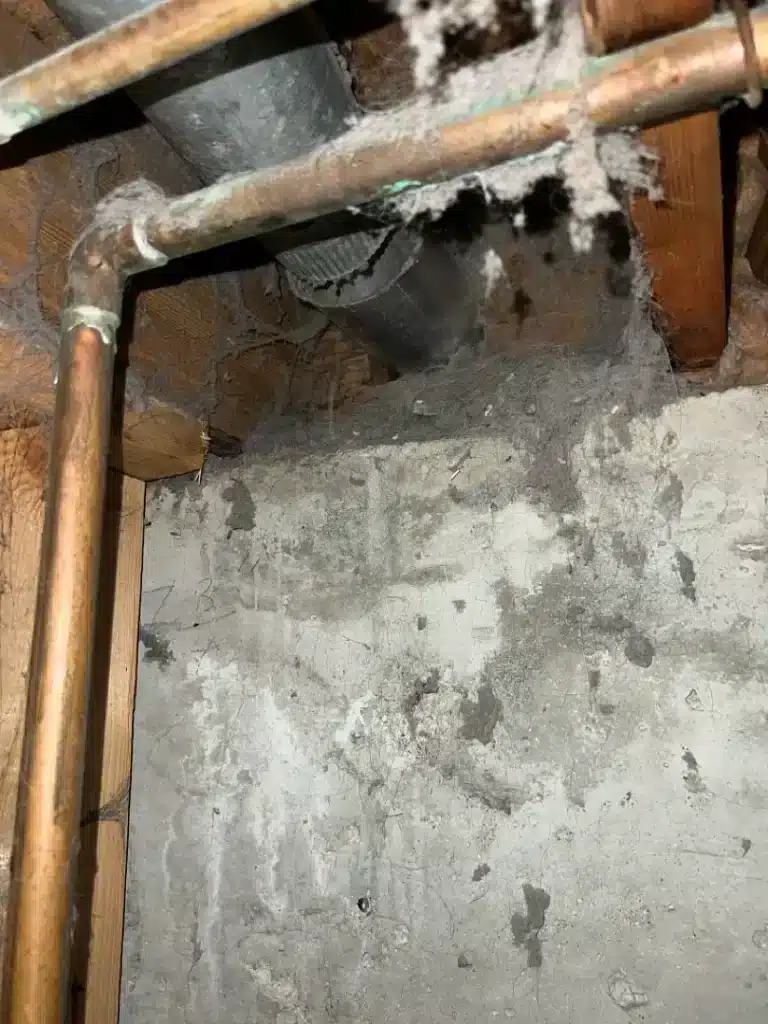
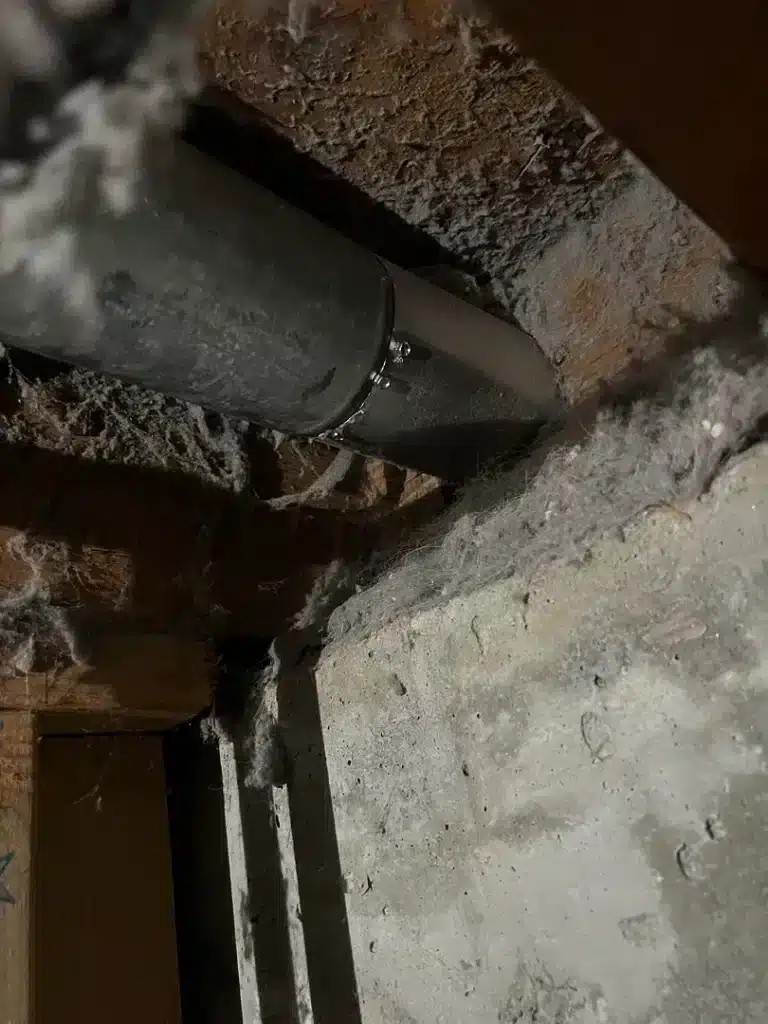
Gas smell - Lafayette
Problem:Gas leak in house
Found:We found it separated about 4 inches
Fixed:We re attached this and secured with zip screws, their is a lot of lint all over crawlspace. We took apart the vent line from the dryer and into the crawlspace to remove any remain lint in the line
Our gas leak detection process combines systematic inspection with advanced diagnostic technology. We approach each situation understanding that gas leaks range from minor connection seepage to serious safety hazards – and accurate identification determines the appropriate response.
Our Detection Process
Initial safety assessment – Upon arrival, we evaluate gas concentration levels throughout your home using portable combustible gas detectors, determining whether immediate evacuation or ventilation is necessary
System documentation – We map your gas piping layout, identifying all appliances, shutoff valves, and connection points to create a complete picture of your system
Electronic scanning – Using semiconductor and catalytic bead sensors, we trace all accessible gas lines checking for elevated readings that indicate leak locations
Pressure decay testing – For concealed piping, we isolate system sections and monitor pressure over time – any drop indicates gas escaping somewhere in that segment
Pinpoint location – Once a leaking section is identified, we use increasingly precise methods to locate the exact failure point
Documentation and reporting – We provide detailed findings including leak location, severity assessment, and recommended repairs
Detection Methods and Equipment
Combustible gas indicators – Digital meters that detect natural gas and propane at concentrations well below dangerous levels
Ultrasonic leak detectors – Equipment that identifies the high-frequency sound of gas escaping under pressure, even through walls
Bubble testing – Application of leak detection solution to connections, where escaping gas creates visible bubbles
Manometer pressure testing – Precise measurement of system pressure to identify even small leaks through pressure loss
Infrared cameras – Thermal imaging that can reveal temperature differentials caused by gas expansion at leak points
Communication Throughout the Process
We explain what we're doing and why at each step. If we detect dangerous gas levels, we'll coordinate with Xcel Energy for emergency shutoff. For minor leaks, we'll discuss repair options and help you understand urgency levels. Our technicians document findings with photos and measurements, giving you clear information for insurance claims or repair decisions.
Why Choose Cardom Plumbing & Heating
Gas leak detection requires technicians who combine proper certification with genuine local experience. Our team holds current gas fitting licenses and maintains ongoing training on detection equipment and safety protocols. We've worked in Lafayette homes ranging from 1960s-era houses with original black iron piping to brand-new construction with modern CSST flexible lines – each presenting different leak patterns and repair considerations.
Local Knowledge That Matters
We understand Lafayette's specific building stock and common gas system configurations. We know which neighborhoods tend to have galvanized versus copper versus CSST piping. We're familiar with local soil conditions that affect buried service lines. This familiarity means faster, more accurate diagnosis – we often recognize leak patterns we've seen before in similar Lafayette properties.
Licensed and insured gas technicians with current certifications
Advanced electronic detection equipment calibrated for natural gas and propane
24/7 emergency response for suspected gas leaks – we understand these situations don't wait
Direct coordination with Xcel Energy when utility involvement is necessary
Detailed written reports for your records and any insurance requirements
Follow-up verification testing after repairs to confirm complete resolution
Our Service Commitment
Gas leaks create anxiety – you're worried about safety, potential damage, and repair costs. We respond to suspected gas leaks as priority calls, arriving prepared with full detection equipment. Our technicians take time to explain findings clearly, distinguishing between situations requiring immediate repair and those allowing more flexibility. We provide honest assessments and straightforward recommendations.
Housing Characteristics & Gas Leak Detection Considerations
Lafayette's housing stock reflects distinct development phases, each with characteristic gas system installations. Understanding these patterns helps identify likely leak locations and appropriate detection strategies for different property types.
Historic and Mid-Century Properties
Homes in Old Town Lafayette and surrounding areas often date from the 1920s through 1960s. These properties typically feature black iron gas piping with threaded connections – durable but susceptible to corrosion and joint failure after decades of service. Many have experienced multiple modifications as gas appliances were added, replaced, or relocated, creating complex piping layouts with numerous connection points.
Threaded black iron connections may loosen over time from vibration and thermal cycling
Original pipe threads may have degraded, allowing seepage at joints
Older gas valves may not seal completely when closed
Multiple generations of modifications create complex, sometimes poorly documented systems
1970s-1990s Development
Lafayette's significant growth during these decades produced neighborhoods with relatively standardized gas installations. Most homes feature copper or black iron interior piping with traditional rigid connections. Flexible appliance connectors became common during this period – some older flex connectors are now considered obsolete and prone to failure.
Contemporary Construction
Newer Lafayette developments – particularly those built after 2000 – commonly use corrugated stainless steel tubing for interior gas distribution. CSST offers installation advantages but requires proper bonding to prevent lightning-related damage. Homes in these areas may also have more gas appliances overall, including outdoor grills, fire pits, and pool heaters, creating more potential leak points.
CSST systems require verification of proper electrical bonding
Multiple outdoor gas appliances increase system complexity
Tankless water heaters and high-efficiency furnaces have different connection requirements
Modern manifold systems concentrate connections in accessible locations
Environmental Conditions & Gas Leak Detection Implications
Lafayette's environmental characteristics directly influence gas system integrity and detection requirements. From soil composition to climate patterns, local conditions create specific challenges for maintaining safe gas installations.
Soil and Ground Conditions
The Boulder County area features predominantly clay soils with significant expansion and contraction characteristics. During wet periods, these soils swell and push against foundations and buried utilities. Dry conditions cause shrinkage and settlement. This cyclical movement stresses gas service lines where they enter buildings and can shift interior piping in crawlspaces built on poorly compacted fill.
Expansive soils create ongoing stress on rigid gas piping
Foundation movement can pull or push on gas service entrance connections
Crawlspace settling may stress piping supported by floor joists
Underground line movement may not cause immediate leaks but creates weakened joints
Climate Impacts on Gas Systems
Lafayette experiences temperature extremes that challenge gas system integrity. Winter lows below zero degrees Fahrenheit contract metal piping, while summer temperatures exceeding 90 degrees cause expansion. These thermal cycles stress connections repeatedly over years. The region's low humidity accelerates corrosion on exterior and crawlspace piping. High winds can damage exterior gas meters and connections.
Altitude Considerations
At over 5,200 feet elevation, atmospheric pressure is roughly 17% lower than at sea level. Gas appliances must be properly adjusted for altitude to maintain correct air-fuel ratios. Improperly adjusted appliances may produce incomplete combustion, affecting pilot light stability and potentially masking gas odors with combustion byproducts. Pressure regulators and gas valves also behave differently at altitude, requiring technicians familiar with high-elevation systems.
Lower atmospheric pressure affects gas flow rates and combustion
Appliances require altitude-specific orifices and adjustments
Pressure testing must account for elevation effects on readings
Natural Gas Infrastructure and Safety Data in Lafayette
Lafayette falls within Xcel Energy's natural gas service territory, which delivers natural gas to approximately 1.5 million Colorado customers. The company's distribution system in Boulder County includes a network of transmission lines, distribution mains, and individual service lines – infrastructure that varies significantly in age across different Lafayette neighborhoods. According to Xcel Energy's annual reports, the utility responds to thousands of gas odor calls annually across its Colorado service area, with a significant percentage resulting in confirmed leaks requiring repair.
Regional Safety Statistics
Colorado's Public Utilities Commission tracks gas-related incidents statewide. Data shows that residential gas leaks most commonly occur at appliance connections, service entrance piping, and interior distribution lines rather than utility mains. Older homes with original gas installations show higher incident rates than newer construction with modern materials and installation standards.
Appliance connector failures account for a substantial percentage of residential gas leaks
Properties with gas installations over 30 years old show elevated leak occurrence rates
Winter months see increased gas leak reports due to heating system stress and frozen ground movement
Homes with multiple gas appliances have proportionally more potential leak points requiring inspection
Local Response Considerations
Lafayette Fire Department and Mountain View Fire Rescue respond to gas leak emergencies in the area, coordinating with Xcel Energy for utility shutoffs when necessary. Response times vary based on call volume and perceived severity. For non-emergency situations – suspected minor leaks without immediate danger – professional detection and repair by a licensed contractor often resolves issues faster than waiting for utility response. This is particularly true during high-demand periods when utility crews prioritize emergency calls.
Proactive leak detection becomes increasingly valuable as Lafayette's housing stock ages. Many homes are now reaching the 30-50 year threshold where original gas piping components approach end of expected service life. Regular inspection and early detection prevents minor seepage from becoming dangerous situations – and often identifies issues before they trigger utility shutoffs or emergency responses.
Common signs of a gas leak include a faint sulfur smell, hissing sounds near gas lines, and an unexplained increase in your utility bill. If you notice any of these symptoms, it's important to take immediate action.
Professional gas leak detection involves using specialized equipment to locate and identify escaping gas within your home’s fuel delivery system. Technicians utilize electronic sensors, pressure testing, and visual inspections to find leaks that may not be detectable by smell alone.
Hiring a professional ensures that the detection process is thorough and accurate. Certified technicians have the training and equipment to identify gas concentrations as low as 1 part per million, which is below human detection thresholds, and can assess the integrity of your gas systems.
You can find gas leak detection services in Lafayette by searching online or contacting local plumbing and heating companies. Many businesses, like Cardom Plumbing & Heating, offer specialized services throughout various neighborhoods in Lafayette.
If you suspect a gas leak, evacuate the area immediately and avoid using any electrical devices or open flames. Once you are at a safe distance, call a professional gas leak detection service to assess the situation.
It is recommended to have your gas lines inspected at least once a year, especially if you live in an area with older infrastructure or extreme weather conditions. Regular inspections can help identify potential issues before they become serious problems.
Ignoring a gas leak can lead to serious safety hazards, including explosions or carbon monoxide poisoning. It can also result in costly damage to your home and increased utility bills. Prompt detection and repair are essential to ensure safety.