

Cardom Plumbing & Heating offers specialized gas plumbing services in Boulder, CO, addressing the unique challenges posed by the area's elevation and climate. Their expertise ensures safe and compliant gas line installations and repairs for various home types.
- They provide a comprehensive range of gas plumbing services, including leak detection and system evaluations. Their technicians are specifically trained for gas work, ensuring safety and compliance with local codes.
- Boulder's diverse housing stock presents unique gas system challenges, from historic cast iron lines to modern flexible systems.
- The company prioritizes customer communication, explaining each step of the service process and providing thorough documentation for all work performed.
A gas plumber in Boulder, CO, specializes in diagnosing and repairing gas line issues, such as leaks or malfunctioning appliances. They address problems indicated by unusual smells, pilot lights that won't stay lit, or improper flame colors, ensuring safety and compliance with local regulations in the mountainous environment.
Gas Plumber Services in Boulder, CO
That faint sulfur smell near your water heater. A pilot light that refuses to stay lit. Burners on your gas range producing yellow flames instead of blue. These subtle signals often indicate gas line issues that demand immediate professional attention – and in Boulder's mountain environment, the stakes are higher than most homeowners realize.
Gas plumbing encompasses the complete network of pipes, fittings, valves, and connections that deliver natural gas throughout your home. This specialized work involves installing new gas lines for appliances, repairing leaks in existing systems, connecting furnaces and water heaters, and maintaining the integrity of your entire gas distribution network. Unlike water plumbing, gas work leaves zero margin for error – a single improper connection can create explosive hazards or carbon monoxide poisoning risks.
Why Professional Gas Plumbing Diagnosis Matters
Boulder's unique conditions create specific challenges for gas systems. Homes at 5,430 feet elevation experience different combustion dynamics than sea-level properties, affecting how gas appliances burn fuel and vent exhaust. Temperature swings from summer highs to winter lows exceeding 100 degrees cause metal pipes to expand and contract repeatedly, stressing joints and connections over time.
- Proper combustion adjustment for high-altitude operation prevents carbon monoxide buildup
- Professional leak detection identifies problems invisible to homeowners before they become dangerous
- Code-compliant installations protect your family and satisfy insurance requirements
- Licensed gas work maintains your home's resale value and passes inspection scrutiny
Common Gas Plumbing Issues in Boulder, CO
Cardom Plumbing & Heating provides Gas Plumber services in all neighborhoods of Boulder including Arapahoe Ridge, Dakota Ridge, East Aurora, Frazier Meadows, Goss-Grove, Holiday, Keewaydin, Martin Acres, Meadow Glen, Park East, Promontory North, Table Mesa, The Hill, The Promontory, Washington Village, and Wonderland Hills.
Boulder's housing stock spans over a century of construction methods and gas system technologies. Homes in Mapleton Hill and Whittier neighborhoods often contain original cast iron or black steel gas lines from the early 1900s – systems that have weathered decades of freeze-thaw cycles and ground movement. Meanwhile, newer developments in Gunbarrel and North Boulder feature modern flexible gas lines that face their own set of challenges in our harsh climate.
The Front Range's dramatic temperature fluctuations create thermal stress that other regions simply don't experience. When overnight temperatures plummet 40 degrees or more, metal gas pipes contract significantly. As afternoon sun warms exterior walls, those same pipes expand. This constant movement gradually loosens threaded connections and fatigues pipe walls, creating potential leak points that worsen over time.
Seasonal Considerations for Boulder Gas Systems
Fall represents the critical preparation window for gas heating systems. Furnaces sitting dormant for months may develop pilot light issues, thermocouple failures, or gas valve problems that only become apparent when you need heat most. Winter places maximum demand on gas infrastructure precisely when repair access becomes most difficult.
- Elevation effects: Gas appliances require specific orifice sizing and air-fuel mixture adjustments for proper combustion at Boulder's altitude
- Ground movement: Expansive clay soils common throughout Boulder shift seasonally, stressing underground gas lines and foundation penetrations
- Aging infrastructure: Many Boulder neighborhoods have gas mains and service lines installed 50+ years ago approaching end of service life
- Wildlife interference: Rodents seeking warmth sometimes damage flexible gas connectors in crawl spaces and attics
- Freeze damage: Exterior gas meters and regulators can malfunction when ice accumulates during winter storms
- Corrosion patterns: Boulder's soil chemistry accelerates corrosion on buried metallic gas lines in certain areas
Warning Signs Requiring Immediate Attention
Never ignore these indicators of potential gas system problems:
- Rotten egg or sulfur odor anywhere in your home
- Hissing or whistling sounds near gas appliances or lines
- Dead vegetation patches above buried gas lines
- Pilot lights that repeatedly extinguish
- Yellow or orange flames instead of steady blue
- Unexplained increases in gas utility bills
- Soot accumulation around gas appliance vents
How Cardom Plumbing & Heating Can Help
Our gas plumbing process prioritizes safety at every stage while delivering lasting solutions tailored to Boulder's specific conditions. We've refined our approach through years of working exclusively in this community, understanding exactly how local factors affect gas system performance and longevity.
Our Gas Service Process
- Safety assessment: We begin every gas service call with combustible gas detection throughout accessible areas, checking for active leaks before any work proceeds
- System evaluation: Complete inspection of visible gas lines, connections, valves, and appliances to identify current problems and potential concerns
- Pressure testing: Isolation and pressurization of gas piping sections to locate leaks that visual inspection cannot detect
- Repair planning: Detailed explanation of findings and recommended solutions, including options when multiple approaches exist
- Code-compliant work: All repairs and installations performed to current Colorado fuel gas codes with proper materials and techniques
- Leak verification: Post-work pressure testing and electronic leak detection confirming system integrity
- Appliance verification: Testing all connected appliances for proper operation, combustion, and venting
- Documentation: Complete records provided for your files and any required permit inspections
Specialized Techniques We Employ
- Electronic combustible gas detectors capable of identifying leaks at parts-per-million concentrations
- Pressure decay testing to locate leaks in inaccessible pipe sections
- Combustion analysis equipment measuring carbon monoxide, oxygen levels, and flue gas temperatures
- Pipe camera inspection for internal corrosion assessment without excavation
- Altitude-specific appliance adjustment using manufacturer specifications for 5,000+ foot elevations
Communication Throughout Your Service
Gas work can feel intimidating, so we explain each step as we proceed. You'll understand what we're testing, why certain repairs are necessary, and how to recognize potential issues in the future. We photograph problem areas and show you exactly what we've found before recommending any work.
Why Choose Cardom Plumbing & Heating
Gas plumbing demands credentials that go beyond general plumbing licensure. Our technicians hold specific gas fitting certifications and complete ongoing training on current codes, materials, and safety protocols. We maintain the specialized insurance coverage that gas work requires – protecting both your property and our team during every service call.
Working exclusively in Boulder County means we've encountered virtually every gas system configuration found in local homes. From historic Chautauqua cottages with original gas lighting converted to modern service, to contemporary passive solar homes with supplemental gas heating, our experience spans Boulder's entire architectural range. We know which neighborhoods have problematic soil conditions, which eras of construction used particular pipe materials, and which appliance brands perform best at our elevation.
What Sets Our Gas Service Apart
- Response priority: Gas concerns receive same-day response given their safety implications
- Complete service range: From minor connection repairs to whole-house repiping, we handle every gas plumbing need
- Permit coordination: We manage required permits and schedule inspections, ensuring your work passes official review
- Utility coordination: Direct communication with Xcel Energy when service disconnection or reconnection is needed
- Follow-up verification: Post-repair check-ins confirm your system continues performing properly
Our investment in diagnostic technology means faster, more accurate problem identification. Electronic leak detection finds issues that soap bubble testing misses. Combustion analyzers verify your appliances operate safely and efficiently after any gas work. These tools cost significantly more than basic equipment – but they deliver the precision that gas work demands.
Recent Work
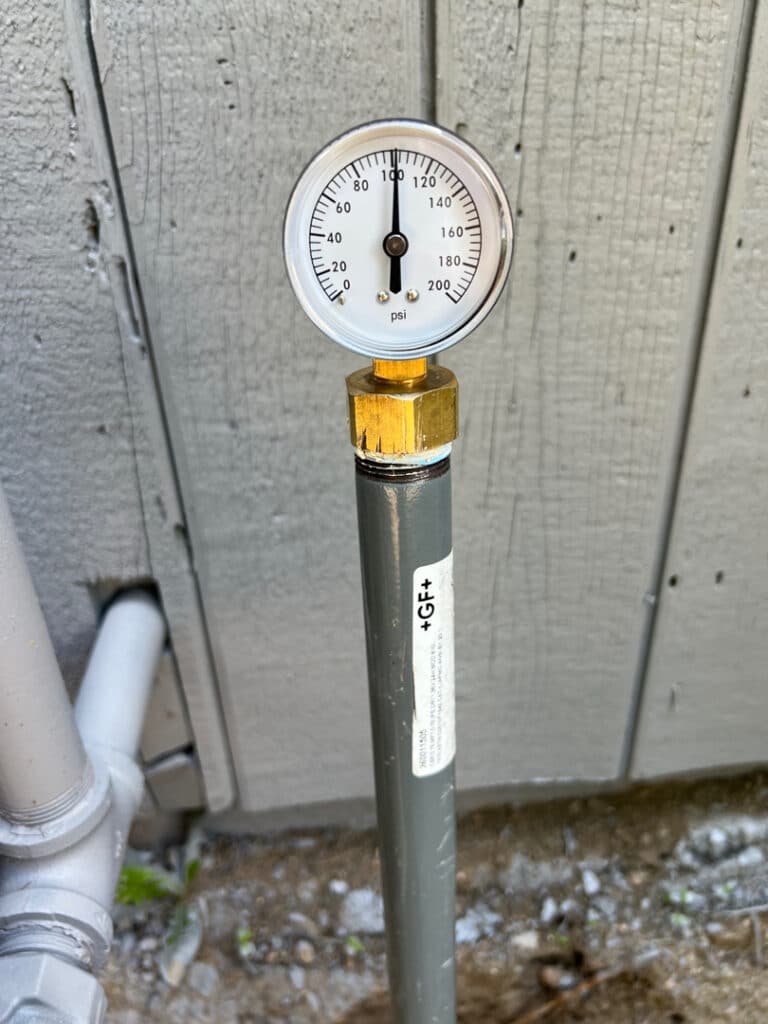
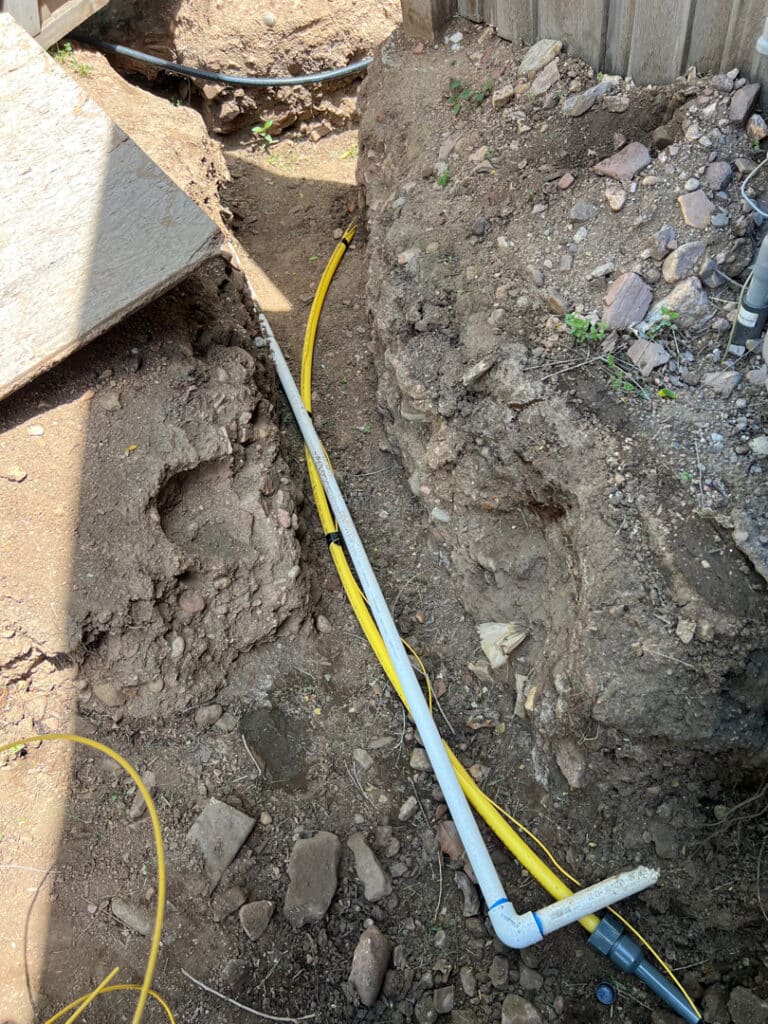
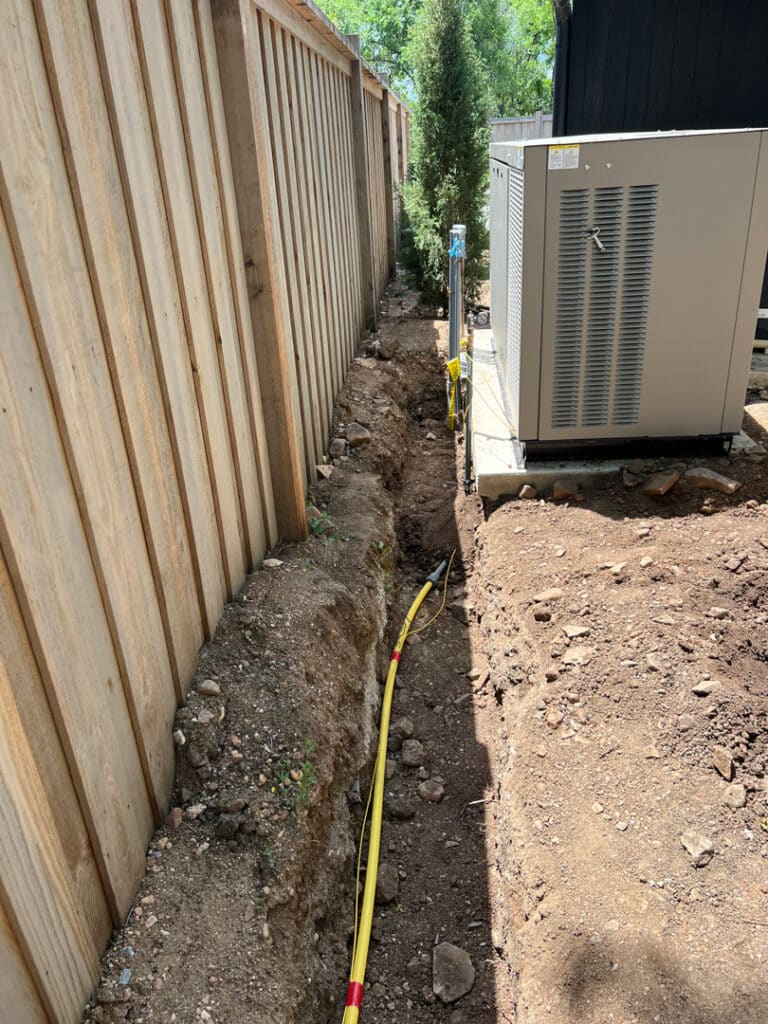
Run Gas Line to New Generator - Boulder
- Problem: Deposit on gas piping to generator
- Found: Start digging areas homeowner came out and said it needs to be backfilled before I put my pipe in
- Fixed: While here he asked that I move gas line going to pool heater so it doesn’t hit generator door, cut and moved with 1 90
- Outcome: Tested
Housing Characteristics & Gas Plumber Considerations
Boulder's residential landscape reflects over 150 years of development, each era bringing distinct gas system approaches that affect modern service needs. Understanding your home's vintage helps anticipate the gas plumbing challenges you're likely to encounter.
Historic Properties (Pre-1950)
Homes in University Hill, Mapleton Hill, and downtown Boulder often contain original gas infrastructure that has been modified multiple times over decades. Common characteristics include:
- Cast iron or black steel main lines with threaded connections prone to corrosion
- Abandoned gas lighting lines that may still be pressurized
- Multiple generations of additions each with different pipe materials
- Non-standard fitting sizes requiring specialty components
- Limited access due to finished walls concealing original pipe runs
Mid-Century Construction (1950-1980)
Ranch homes and split-levels throughout Table Mesa, Martin Acres, and South Boulder typically feature black steel gas systems that have served reliably but now approach service life limits. These properties often have:
- Galvanized steel connectors that codes no longer permit for gas service
- Undersized lines inadequate for modern high-efficiency appliances
- Crawl space routing subject to moisture damage and pest intrusion
- Original gas valves that may not seal properly after decades of use
Modern Construction (1990-Present)
Newer developments in Gunbarrel, North Boulder, and recent infill projects use corrugated stainless steel tubing (CSST) and modern manifold systems. While more flexible and faster to install, these systems require:
- Proper bonding to electrical grounding systems to prevent lightning damage
- Protection from physical damage in accessible locations
- Specific fitting types that differ from traditional pipe connections
- Regular inspection of flexible appliance connectors for deterioration
Environmental Conditions & Gas Plumber Implications
Boulder's environmental factors create distinctive challenges for gas systems that technicians from other regions may not fully appreciate. From soil chemistry to atmospheric pressure, local conditions influence every aspect of gas plumbing performance.
Altitude and Combustion Dynamics
At 5,430 feet elevation, atmospheric pressure measures roughly 17% lower than sea level. This reduced pressure directly affects gas appliance operation:
- Burner orifices must be upsized to deliver proper gas volume at reduced pressure
- Air-fuel mixtures require adjustment to achieve complete combustion
- Venting systems must accommodate different flue gas characteristics
- Appliances rated only for low-altitude use may operate unsafely or inefficiently
Soil Conditions and Underground Lines
Boulder's geology includes significant deposits of expansive clay soils, particularly in areas east of Broadway and throughout Gunbarrel. These soils absorb moisture and swell during wet periods, then shrink and crack during drought. This seasonal movement stresses buried gas lines and can:
- Shear pipe joints at connection points
- Create voids around pipes that allow water infiltration
- Shift foundation penetrations where gas lines enter homes
- Accelerate corrosion through repeated wet-dry cycles
Climate Extremes and System Stress
Boulder experiences temperature swings that challenge any mechanical system. Winter inversions can trap cold air against the foothills for days, while chinook winds may raise temperatures 40 degrees in hours. These rapid changes cause:
- Thermal expansion and contraction stressing pipe joints
- Condensation formation inside gas lines during rapid warming
- Ice accumulation on exterior regulators and meters
- Demand spikes that reveal marginal system capacity
Water quality in Boulder – sourced primarily from Boulder Creek and Barker Reservoir – doesn't directly affect gas systems, but the same minerals that create scale in water heaters can indicate corrosive soil conditions that impact buried gas lines in your area.
Natural Gas Infrastructure and Safety Statistics in Boulder
Xcel Energy operates the natural gas distribution network serving Boulder, with infrastructure spanning multiple decades of installation. According to Colorado Public Utilities Commission data, the Front Range region – including Boulder County – has seen increased investment in pipeline replacement programs as aging infrastructure reaches end of service life. Cast iron and bare steel mains installed before 1970 remain in service in some older Boulder neighborhoods, though replacement programs have prioritized these higher-risk segments.
The Colorado Oil and Gas Conservation Commission and Pipeline and Hazardous Materials Safety Administration track gas-related incidents statewide. Colorado averages approximately 20-30 significant gas distribution incidents annually, with excavation damage representing the leading cause of pipeline failures. Boulder's active construction environment – with frequent utility work, landscaping projects, and home additions – creates ongoing risk for accidental line strikes.
Local Gas Safety Factors
- Boulder's 811 call-before-you-dig program receives thousands of locate requests annually, reflecting high excavation activity
- Xcel Energy reports responding to several thousand gas odor calls across their Colorado service territory each year
- Carbon monoxide incidents increase during heating season, with Boulder Fire-Rescue responding to detector activations regularly during winter months
- High-altitude combustion issues contribute to elevated CO risks when appliances lack proper altitude adjustment
These statistics underscore why professional gas plumbing matters in Boulder. Proper installation, regular inspection, and prompt repair of gas systems protect both individual households and the broader community. Licensed gas plumbers understand local code requirements, maintain relationships with utility providers, and possess the training to work safely on systems where mistakes carry serious consequences.


