

Cardom Plumbing & Heating offers specialized gas plumbing services in Lafayette, CO, addressing the unique challenges posed by the area's altitude and climate. Their qualified technicians handle installation, repair, and maintenance of gas systems, ensuring safety and compliance with local regulations.
- They provide services such as gas line installation, leak detection, and appliance hookups.
- The company prioritizes safety with thorough assessments and pressure testing for all gas work.
- Their expertise includes understanding local infrastructure and environmental factors affecting gas systems.
A gas plumber is a professional who specializes in the installation, maintenance, and repair of gas lines in both residential and commercial properties. They ensure that gas appliances operate safely and efficiently, addressing issues like gas leaks, faulty pilot lights, and improper burner flames to prevent hazards.
Gas Plumber Services in Lafayette, CO
That faint sulfur smell near your water heater. The pilot light that won't stay lit. Burners that produce yellow flames instead of steady blue. These are the moments when you need a qualified gas plumber – someone who understands the serious responsibility of working with natural gas lines in residential and commercial settings.
Gas plumbing encompasses the installation, repair, and maintenance of all gas-carrying pipes and connections throughout your property. This specialized work includes gas line installation for new appliances, leak detection and repair, appliance hookups, pressure testing, and emergency shutoff valve maintenance. Unlike standard plumbing work, gas plumbing demands additional licensing, specialized equipment, and rigorous safety protocols.
Lafayette's unique characteristics create specific demands on gas systems. At 5,280 feet elevation, combustion behaves differently – appliances require proper altitude adjustments for safe, efficient operation. The area's dramatic temperature swings – from summer highs near 95°F to winter lows well below zero – stress gas lines and connections through repeated expansion and contraction cycles.
- Professional leak detection using electronic sensors and pressure testing equipment
- Proper sizing calculations for gas lines serving multiple appliances
- Code-compliant installation meeting Colorado fuel gas regulations
- Altitude-specific adjustments for burners and combustion systems
Common Gas Plumbing Issues in Lafayette, CO
Cardom Plumbing & Heating provides Gas Plumber services in all neighborhoods of Lafayette including Anna's Farm, Autumn Meadows, Blue Heron Estates, Cross Ridge, Greenlee Park, Indian Peaks, Nyland Cohousing Community, South Pointe, Spring Creek, Steel Ranch Subdivision, The Boulder, The Ranch, Trails at Coal Creek, Waneka Landing, Waneka Pointe, and Water's Edge.
Lafayette homes face gas system challenges that differ from properties at lower elevations or in milder climates. The combination of altitude, temperature extremes, and local infrastructure age creates conditions that demand attention from homeowners and property managers.
Many Lafayette neighborhoods developed during the 1970s through 1990s, meaning gas lines in these homes are now 30 to 50 years old. Galvanized steel pipes from this era become increasingly susceptible to internal corrosion and joint deterioration. Newer developments often use corrugated stainless steel tubing (CSST), which requires proper bonding to protect against lightning-induced damage – a real concern given Colorado's frequent afternoon thunderstorms during summer months.
Local Factors Affecting Gas Systems
- Soil movement from expansive clay causes underground gas line stress and potential separation at joints
- Freeze-thaw cycles create ground heaving that shifts pipe positions over time
- High altitude reduces oxygen density, requiring appliance recalibration for proper combustion
- Temperature swings of 40+ degrees in a single day stress pipe connections and seals
- Older infrastructure in established neighborhoods may not meet current code requirements
- Wildlife activity – particularly prairie dogs – can compromise underground line integrity
Seasonal timing matters for gas system maintenance. Fall represents the ideal window for furnace and boiler inspections before heating season demands begin. Spring offers opportunities to assess any damage from winter ground movement. Watch for these warning signs throughout the year:
- Rotten egg odor anywhere in your home or near outdoor meters
- Hissing or whistling sounds near gas appliances or lines
- Dead vegetation patches above buried gas lines
- Yellow or orange flames instead of steady blue on burners
- Pilot lights that repeatedly extinguish
- Higher-than-normal gas bills without increased usage
Recent Work
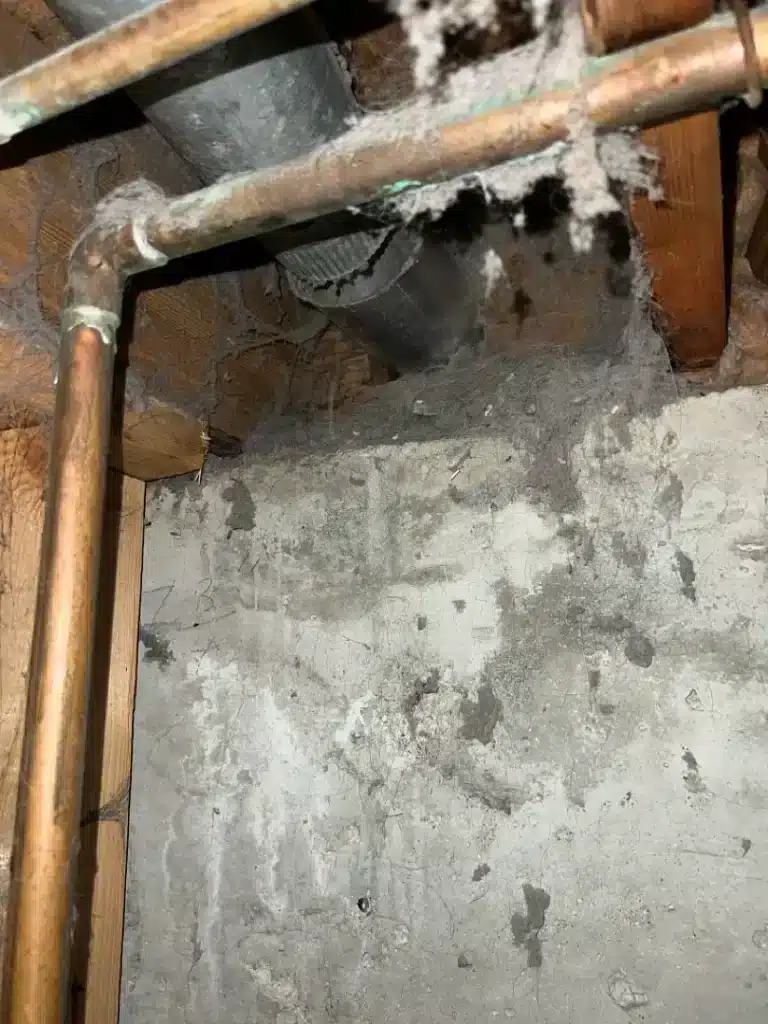
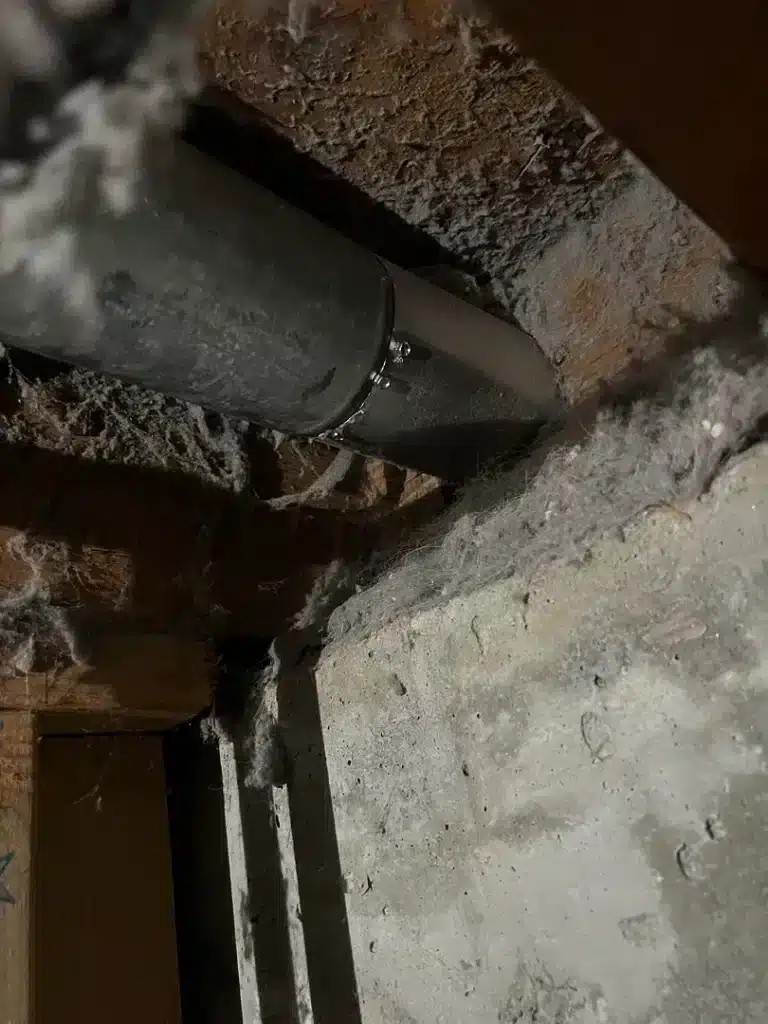
Gas smell - Lafayette
- Problem: Gas leak in house
- Found: We found it separated about 4 inches
- Fixed: We re attached this and secured with zip screws, their is a lot of lint all over crawlspace. We took apart the vent line from the dryer and into the crawlspace to remove any remain lint in the line
- Outcome: It is cleared
How Cardom Plumbing & Heating Can Help
Our gas plumbing process prioritizes safety at every stage while delivering lasting solutions for Lafayette properties. Here's how we approach gas system work from initial contact through project completion.
Our Gas Service Process
- Initial Assessment: We gather information about your concern, appliance types, home age, and any symptoms you've noticed – this helps us arrive prepared with appropriate equipment
- Safety Evaluation: Upon arrival, we check for immediate hazards using combustible gas detectors before beginning detailed diagnostic work
- System Inspection: We examine visible gas lines, connections, appliance hookups, and shutoff valves while testing for pressure consistency throughout the system
- Diagnostic Testing: Using electronic leak detectors and pressure gauges, we identify any compromised sections or failing components
- Solution Planning: We explain findings clearly, discuss repair or replacement options, and outline the work scope before proceeding
- Repair or Installation: Our technicians complete the work using code-compliant materials and techniques appropriate for Colorado conditions
- Pressure Testing: Every gas line repair undergoes pressure testing to verify system integrity before returning to service
- Final Inspection: We recheck all connections, test appliance operation, and verify proper combustion characteristics
Techniques and Equipment
- Electronic combustible gas analyzers capable of detecting minute leak concentrations
- Manometer pressure testing for line integrity verification
- Combustion analyzers measuring carbon monoxide levels and combustion efficiency
- Pipe threading and flaring tools for secure mechanical connections
- Proper thread sealants rated for natural gas and propane applications
Communication remains constant throughout your project. We explain what we find, why it matters, and what options exist for addressing the issue. No gas work begins without your clear understanding and approval.
Why Choose Cardom Plumbing & Heating
Gas work demands credentials that go beyond standard plumbing licensure. Our technicians hold Colorado gas fitting certifications and maintain ongoing training in fuel gas code updates, combustion safety, and leak detection technology. This specialized expertise matters when your family's safety depends on proper installation and repair work.
Lafayette isn't just where we work – it's where we've built relationships with homeowners, property managers, and local businesses over years of service. We understand the specific challenges properties face here:
- Familiarity with common gas system configurations in Lafayette's various neighborhoods and housing developments
- Relationships with local code officials and inspection requirements
- Knowledge of utility company protocols for meter work and service connections
- Understanding of altitude-specific requirements for gas appliance installation
When gas emergencies occur, response time matters. Our service area focus means we can reach Lafayette properties quickly, and our stocked vehicles carry common repair components to minimize return trips. We maintain availability for urgent gas situations because we recognize that suspected leaks and failed heating systems can't wait for standard scheduling.
Every gas project includes thorough documentation and testing verification. We stand behind our work with follow-up support – if questions arise after we leave, a phone call connects you with someone who knows your system and can provide guidance.
Housing Characteristics & Gas Plumber Considerations
Lafayette's housing stock reflects several distinct development periods, each presenting unique gas system characteristics. Understanding your home's era helps anticipate potential issues and maintenance needs.
Historic and Mid-Century Properties
The Old Town Lafayette area contains homes dating from the late 1800s through the 1950s. These properties often feature:
- Original black iron gas piping that may show thread corrosion at joints
- Converted coal or wood systems with retrofitted gas connections
- Smaller gas line sizing that struggles to supply modern high-BTU appliances
- Basement mechanical rooms with limited ventilation for combustion air
1970s Through 1990s Construction
Subdivisions developed during this period – including portions of Indian Peaks and surrounding areas – typically used galvanized steel gas piping. These systems now range from 25 to 50 years old, approaching or exceeding expected service life. Common concerns include:
- Internal pipe scaling that restricts gas flow to appliances
- Threaded joint deterioration from repeated thermal cycling
- Outdated flexible connectors that don't meet current safety standards
- Sediment traps and drip legs that require periodic cleaning
Recent Construction
Newer Lafayette developments often incorporate CSST flexible gas piping. While this material offers installation advantages, it requires proper electrical bonding to protect against lightning damage – a requirement sometimes overlooked during original construction. Homes built after 2000 should have bonding verified as part of any gas system inspection.
Environmental Conditions & Gas Plumber Implications
Lafayette's environmental conditions directly impact gas system performance and longevity. These factors inform how we approach installation, repair, and maintenance throughout the service area.
Water Quality and Appliance Connections
While gas lines don't carry water, Lafayette's moderately hard water affects gas appliances that heat water. Water heater installations require proper gas line sizing and connection techniques, while tankless units demand specific gas pressure and BTU delivery. Hard water scale buildup can mask early signs of heat exchanger problems in gas water heaters.
Soil Conditions and Underground Lines
Lafayette sits on expansive clay soils that swell when wet and shrink during dry periods. This seasonal movement creates stress on buried gas lines:
- Pipe joints can separate as soil shifts around them
- Protective coatings on buried steel pipe may crack from soil pressure
- Service line connections at the meter and building entry points experience concentrated stress
- Older polyethylene service lines may develop brittleness from UV exposure at above-ground sections
Climate Impacts on Gas Systems
Colorado's Front Range climate creates demanding conditions for gas infrastructure. Winter temperatures regularly drop below zero, while summer highs exceed 90°F. This 100+ degree annual temperature range causes:
- Metal expansion and contraction that loosens threaded connections over time
- Increased heating demand during cold snaps that tests system capacity
- Condensation issues in venting systems during temperature transitions
- Pilot light reliability problems during high wind events common to the area
Afternoon thunderstorms from May through September bring lightning strikes that can damage CSST gas piping if bonding isn't properly installed. These storms also cause power outages that affect electronically ignited gas appliances, requiring system resets and pilot relighting.
Natural Gas Infrastructure and Safety Data in Lafayette
Lafayette receives natural gas service primarily through Xcel Energy, which maintains distribution infrastructure throughout the community. Understanding local gas infrastructure helps homeowners make informed decisions about system maintenance and upgrades.
Colorado experiences approximately 200 reportable gas incidents annually according to Pipeline and Hazardous Materials Safety Administration data, with the majority involving distribution lines and service connections rather than transmission pipelines. Boulder County – which includes Lafayette – maintains active gas safety inspection programs through local building departments.
Local Gas Safety Considerations
- Xcel Energy's 811 call-before-you-dig program prevents excavation damage to buried gas lines – a leading cause of residential gas incidents
- Lafayette building codes require permits for gas line installation and modifications, with inspection by certified officials
- Colorado's 2021 adoption of updated International Fuel Gas Code establishes current standards for all gas work
- The Boulder County Regional Fire Training Facility provides first responder training for gas emergencies in the area
Homes in Lafayette benefit from relatively modern distribution infrastructure compared to older Front Range communities. However, individual property gas systems – from the meter to appliances – remain the homeowner's responsibility. Regular professional inspection catches developing problems before they become safety hazards or emergency situations. The combination of altitude-adjusted appliances, properly sized gas lines, and code-compliant connections creates reliable, safe gas systems for Lafayette properties.


