

Cardom Plumbing & Heating offers specialized gas plumber services in Highlands Ranch, CO, focusing on the installation, repair, and maintenance of gas-powered systems. Their expertise is crucial for ensuring safety and efficiency in homes, particularly given the unique challenges posed by the area's altitude and climate.
- They provide thorough assessments and diagnostics to identify gas system issues accurately. Their technicians are certified and trained to handle the specific requirements of high-altitude installations. Cardom Plumbing & Heating emphasizes safety, conducting rigorous testing and documentation for all services.
- Gas Plumber Services in Highlands Ranch, CO That faint smell of rotten eggs near your water heater or the pilot light that won’t stay lit – these moments demand immediate attention from a qualified gas plumber.
- Gas line work sits at the intersection of plumbing expertise and safety-critical infrastructure, requiring specialized training that goes far beyond standard pipe fitting.
A gas plumber specializes in the installation, maintenance, and repair of gas lines and appliances. They ensure that gas systems operate safely and efficiently, addressing issues like gas leaks or malfunctioning pilot lights. Their expertise is crucial for preventing hazards associated with gas usage in homes and businesses.
Gas Plumber Services in Highlands Ranch, CO
That faint smell of rotten eggs near your water heater or the pilot light that won't stay lit – these moments demand immediate attention from a qualified gas plumber. Gas line work sits at the intersection of plumbing expertise and safety-critical infrastructure, requiring specialized training that goes far beyond standard pipe fitting.
Gas plumber services encompass the installation, repair, inspection, and maintenance of all gas-powered systems in your home. This includes water heaters, furnaces, boilers, gas ranges, fireplaces, outdoor grills, and the network of pipes connecting them to your main supply. In Highlands Ranch, where winter temperatures regularly plunge below freezing and heating systems work overtime, reliable gas service becomes a household necessity rather than a luxury.
Professional gas plumbing diagnosis matters because the stakes are exceptionally high. A minor leak or improper connection can lead to carbon monoxide poisoning, explosions, or house fires. Highlands Ranch homes face unique challenges that make expert assessment even more valuable:
- High altitude affects gas combustion efficiency and appliance calibration
- Dramatic temperature swings stress pipe connections and fittings
- Many homes built in the 1990s and 2000s are reaching the age where original gas lines need inspection
- Xcel Energy's natural gas infrastructure requires technicians familiar with local codes and connection standards
Common Gas Plumbing Issues in Highlands Ranch, CO
Highlands Ranch sits at approximately 5,800 feet elevation, creating atmospheric conditions that directly impact how gas appliances perform. The lower oxygen content at altitude means gas burners must be specially calibrated – a furnace or water heater installed without proper altitude adjustment will burn inefficiently, waste fuel, and potentially produce dangerous carbon monoxide levels.
The community's housing stock presents another consideration. Most Highlands Ranch homes were constructed between 1981 and 2010, placing many properties in that 15 to 40-year window where original gas lines, connectors, and appliances begin showing wear. Flexible gas connectors installed before 2000 are particularly prone to corrosion and cracking, especially in homes with crawl spaces exposed to temperature extremes.
Local Factors Affecting Gas Systems
- Freeze-thaw cycling – Repeated temperature swings cause metal expansion and contraction, loosening threaded connections over time
- Dry climate – Low humidity accelerates corrosion on exposed fittings and can dry out gaskets and seals
- Soil movement – Expansive clay soils common in Douglas County shift seasonally, potentially stressing underground gas lines
- High heating demand – Furnaces and boilers run extensively from October through April, accelerating component wear
- Construction era materials – Homes from certain decades may have brass fittings prone to dezincification or older flexible connectors with known failure patterns
- Altitude combustion requirements – Appliances need specific orifice sizing and air-fuel mixture adjustments for proper operation above 5,000 feet
Warning signs that indicate you need a gas plumber include the smell of sulfur or rotten eggs near any gas appliance, yellow or orange flames instead of blue, soot buildup around burners, pilot lights that repeatedly extinguish, hissing sounds near gas lines, and unexplained increases in your gas bill. Dead vegetation in a line above buried gas pipes can also signal an underground leak.
How Cardom Plumbing & Heating Can Help
Our gas plumbing process follows a systematic approach designed to identify problems accurately and resolve them safely. Every service call begins with thorough assessment before any repair work starts.
Our Step-by-Step Gas Service Process
- Initial consultation and safety check – We discuss your concerns, review appliance history, and perform immediate leak detection using electronic gas sniffers and pressure testing equipment
- Comprehensive system inspection – Our technicians examine all visible gas lines, connections, valves, and appliances for signs of wear, corrosion, or improper installation
- Diagnostic testing – We measure gas pressure at multiple points, check combustion efficiency, and verify proper venting to identify performance issues
- Detailed findings review – Before any work begins, we explain what we found, what needs attention, and the options available to address each concern
- Repair or installation work – Licensed technicians complete all gas work according to Colorado mechanical codes and manufacturer specifications
- Post-work testing and verification – Every connection undergoes pressure testing and leak detection before we consider the job complete
- Documentation and recommendations – We provide records of work performed and guidance on maintaining your gas system going forward
Methods and Techniques We Employ
- Electronic combustible gas detectors capable of sensing leaks at parts-per-million concentrations
- Manometer pressure testing to verify line integrity and proper operating pressure
- Combustion analysis equipment measuring oxygen, carbon monoxide, and efficiency levels
- Pipe threading and flaring tools for creating secure, code-compliant connections
- Carbon monoxide monitoring throughout enclosed spaces during service
Communication remains central to our approach. You'll know what we're doing, why we're doing it, and what to expect at each phase. Gas work can feel intimidating – our job includes making the process understandable and keeping you informed throughout.
Why Choose Cardom Plumbing & Heating
Gas plumbing demands credentials that go beyond basic plumbing licensure. Our technicians hold Colorado gas fitter certifications and maintain ongoing training on high-altitude installation requirements specific to the Front Range. We understand the combustion dynamics that change when you're working nearly a mile above sea level – knowledge that directly affects whether your appliances operate safely and efficiently.
Serving the Highlands Ranch community means we know the housing stock intimately. We've worked in the two-story homes of Eastridge, the custom builds in BackCountry, and the established neighborhoods near Town Center. This familiarity translates to faster diagnostics – we often recognize issues based on construction era and builder patterns before we even begin formal testing.
What Sets Us Apart
- Rapid response capability – Gas leaks and heating failures don't wait for convenient scheduling; we prioritize urgent calls and maintain availability for emergencies
- Thorough documentation – Every gas service includes detailed records useful for home sales, insurance purposes, and future reference
- Code compliance focus – We work closely with Douglas County building requirements and can coordinate inspections when permits are required
- Follow-up accountability – Our work includes verification testing, and we stand behind repairs with clear quality commitments
We approach gas plumbing with the seriousness it deserves. There's no cutting corners when safety is involved – every connection gets tested, every appliance gets verified, and every customer gets honest answers about their system's condition.
Recent Work
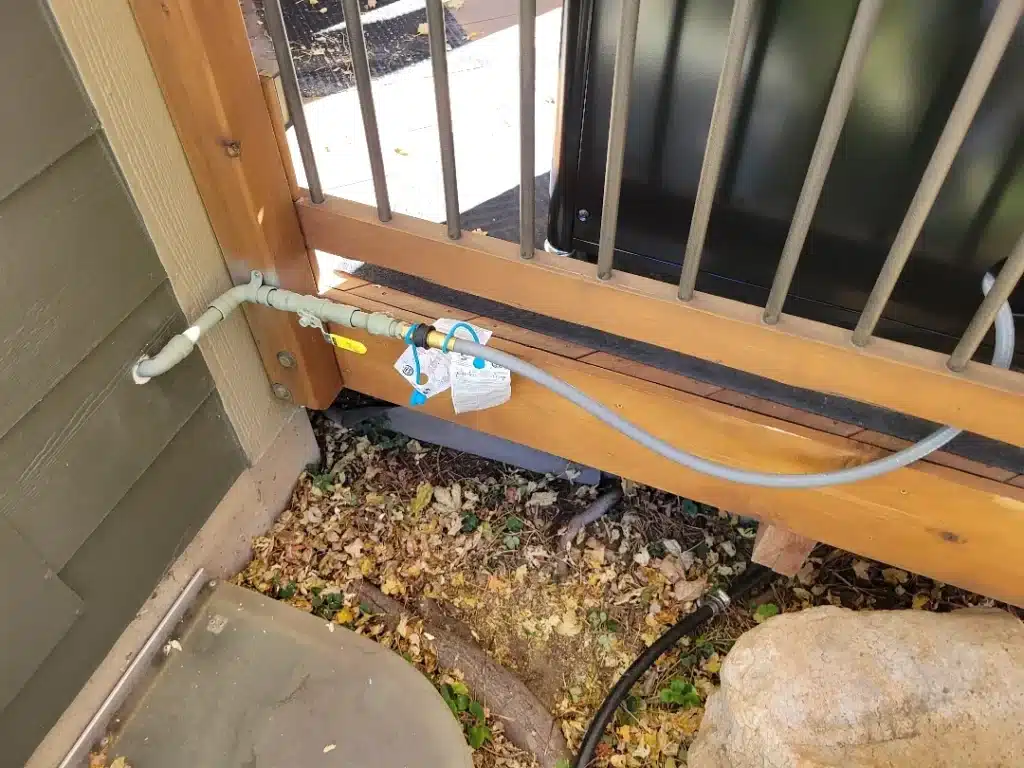
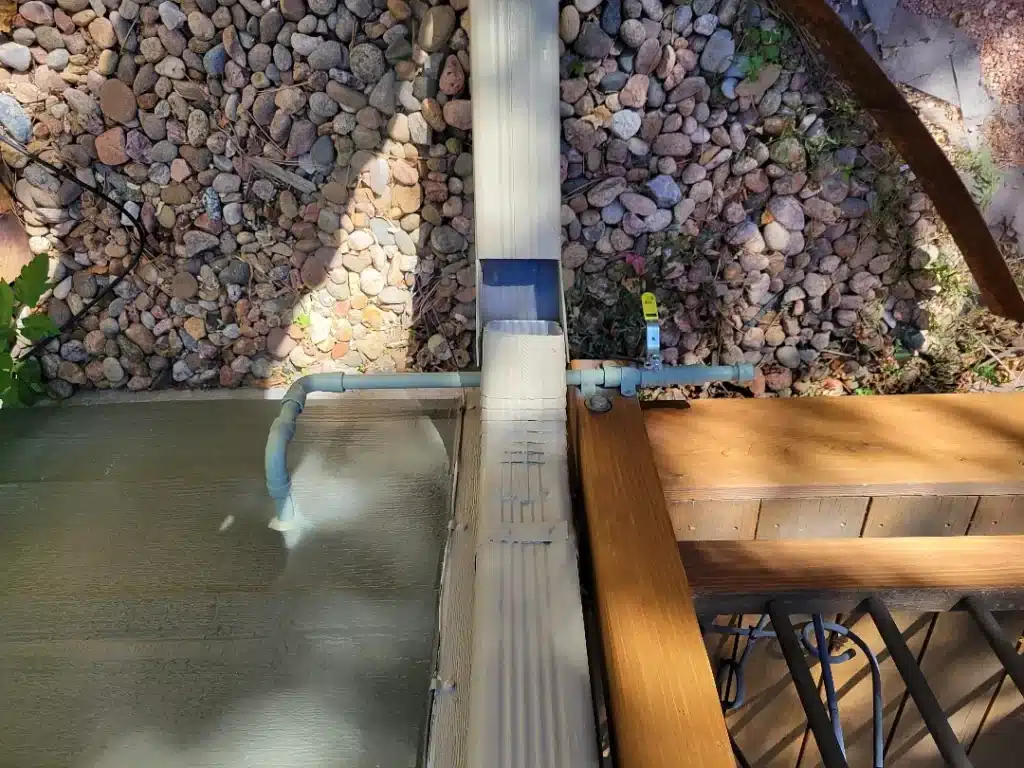
Gas Piping to Both BBQ Locations - Highlands Ranch
- Problem: Gas piping to two locations on the back deck
- Found: Layout for gas piping to two gas termination on the back deck.
- Fixed: Cut in tee fitting on the main line from the gas meter *1 1/4"). Run 3/4" CSST to the area of the first termination. Install 3/4" X 1/2" X 1/2" CSST tee fitting. Run 1/2" CSST to the termination area where the next termination is located. Drill outside and run 1/2" black pipe and fittings behind the deck railing for the new gas lines. Install gas valves on both lines. Plug the unused line. Tie in the quick-connect fitting to the second termination behind the new BBQ grill.
- Outcome: Turn on gas and test all joint for leaks. Paint all exposed steel pipe with Rustoleum paint.. Jobsite cleanup.
Gas Piping to Both BBQ Locations - Highlands Ranch
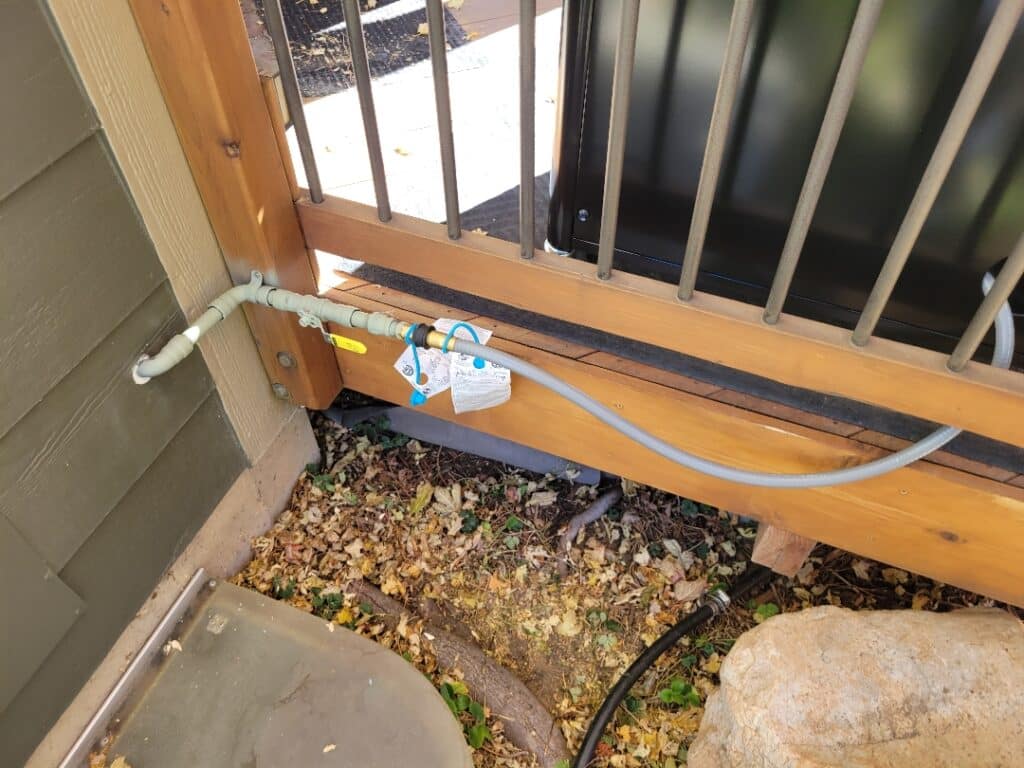
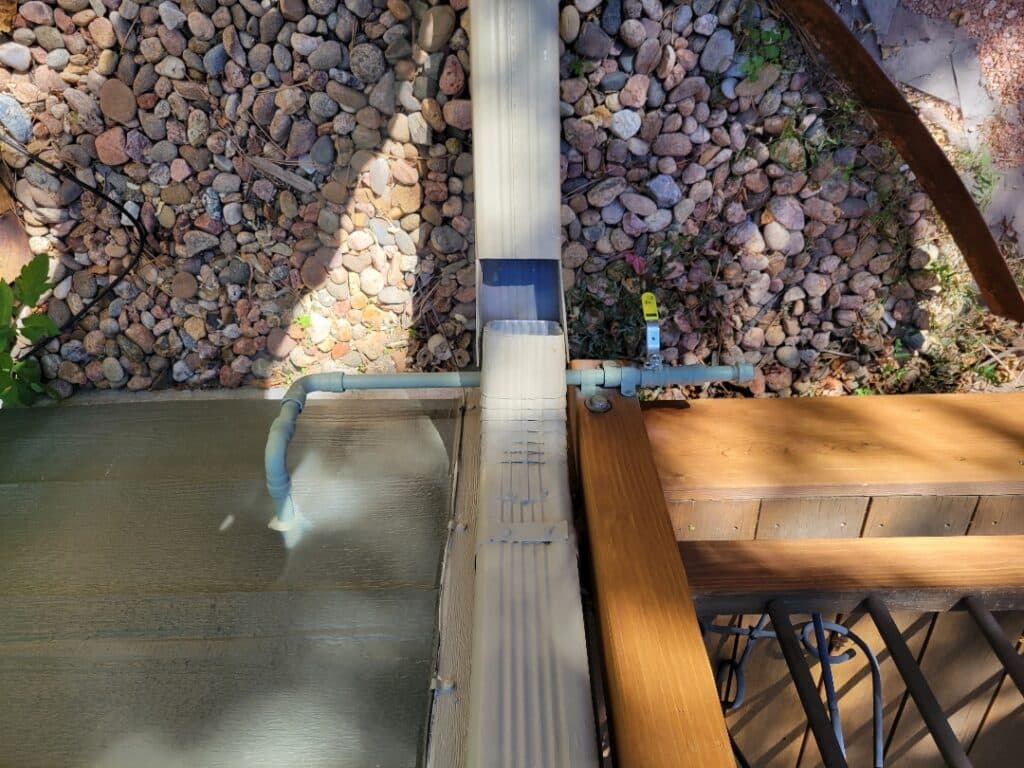
- Problem: Gas piping to two locations on the back deck
- Found: Layout for gas piping to two gas termination on the back deck.
- Fixed: Cut in tee fitting on the main line from the gas meter *1 1/4"). Run 3/4" CSST to the area of the first termination. Install 3/4" X 1/2" X 1/2" CSST tee fitting. Run 1/2" CSST to the termination area where the next termination is located. Drill outside and run 1/2" black pipe and fittings behind the deck railing for the new gas lines. Install gas valves on both lines. Plug the unused line. Tie in the quick-connect fitting to the second termination behind the new BBQ grill.
- Outcome: Turn on gas and test all joint for leaks. Paint all exposed steel pipe with Rust oleum paint.
Housing Characteristics & Gas Plumber Considerations
Highlands Ranch developed primarily between the early 1980s and late 2000s, with construction peaking during the 1990s housing boom. This timeline places the majority of homes in a specific age bracket where original gas infrastructure components are reaching their service life limits. Understanding what's in your walls and crawl spaces helps predict potential issues.
Construction Era Patterns
- 1981-1990 homes – Often feature galvanized steel gas lines and older-style brass fittings; flexible connectors from this era should be inspected or replaced
- 1991-2000 homes – Typically have black iron pipe with improved connection standards; original water heaters and furnaces are well past typical replacement age
- 2001-2010 homes – More likely to have CSST (corrugated stainless steel tubing) installations requiring proper bonding and grounding verification
- 2010-present homes – Generally feature modern materials and installation practices, though altitude calibration should still be verified
Highlands Ranch homes range from compact townhomes to expansive custom residences, each presenting different gas system complexities. Multi-story homes require careful attention to vertical pipe runs and proper support. Homes with finished basements may have gas lines concealed behind drywall, making leak detection more challenging. Properties with outdoor kitchens, fire pits, or pool heaters have extended gas networks that need regular inspection.
Builder-Specific Considerations
Several major builders developed large portions of Highlands Ranch, often using consistent subcontractors and materials across entire neighborhoods. Richmond American, Shea Homes, and Toll Brothers each had preferred installation methods during their active construction periods here. When we service a home, recognizing these patterns helps us anticipate where to look for common issues and what materials we're likely to encounter.
Basement configurations also vary significantly. Walk-out basements common in the hilly western portions of Highlands Ranch create different heating demands than slab-on-grade construction. Homes with multiple heating zones may have complex gas manifold systems requiring specialized knowledge to service properly.
Environmental Conditions & Gas Plumber Implications
The semi-arid climate of Highlands Ranch creates environmental stresses that directly affect gas system longevity and performance. Annual precipitation averages only 15-17 inches, with humidity levels frequently dropping below 20% during winter months. This persistent dryness accelerates the degradation of rubber gaskets, thread sealants, and flexible connector materials.
Climate Impacts on Gas Systems
- Temperature extremes – Highlands Ranch experiences temperature swings exceeding 50 degrees in a single day during spring and fall; this thermal cycling stresses pipe joints and fittings
- Extended heating season – Furnaces and boilers typically operate from late September through early May, accumulating far more run-time than systems in milder climates
- Dry air effects – Low humidity causes accelerated aging of seals and gaskets; components may need replacement sooner than manufacturer estimates suggest
- UV exposure – Outdoor gas equipment faces intense high-altitude sunlight that degrades plastic components and protective coatings faster than at lower elevations
Soil and Underground Considerations
Douglas County soils contain significant clay content with moderate to high expansion potential. These soils swell when wet and shrink when dry, creating seasonal ground movement that can stress buried gas lines and foundation penetrations. Homes in areas with particularly expansive soils may experience more frequent issues with underground gas service lines.
Water quality in Highlands Ranch comes from Denver Water and the Centennial Water and Sanitation District. While water quality doesn't directly affect gas systems, the mineral content does impact water heaters – the gas-fired appliances most commonly serviced in residential settings. Hard water accelerates sediment buildup in tank water heaters, reducing efficiency and shortening lifespan. Tankless water heaters require periodic descaling to maintain proper gas burner function.
Altitude-Specific Combustion Factors
At 5,800 feet, atmospheric pressure is roughly 17% lower than at sea level. Gas appliances must compensate for reduced oxygen availability through smaller orifices and adjusted air-fuel mixtures. Improperly calibrated appliances burn rich, producing excess carbon monoxide and wasting fuel. Every gas appliance installation or replacement in Highlands Ranch should include altitude verification – a step sometimes overlooked by technicians unfamiliar with mountain region requirements.
Natural Gas Infrastructure and Safety Data in Highlands Ranch
Xcel Energy provides natural gas service throughout Highlands Ranch, operating an extensive network of transmission and distribution pipelines across Douglas County. According to Colorado Public Utilities Commission records, the Front Range region has seen consistent investment in pipeline replacement and safety upgrades over the past decade, though aging infrastructure remains a concern in established communities.
Local Gas Safety Statistics and Trends
- Colorado reports approximately 2,500-3,000 gas leak incidents annually statewide, with the majority occurring in residential settings
- Douglas County Fire Department responds to dozens of gas-related calls each year, ranging from odor investigations to confirmed leaks
- The National Fire Protection Association identifies heating equipment as the second leading cause of home fires nationally – proper gas system maintenance directly reduces this risk
- Carbon monoxide incidents spike during the first cold snap of each heating season when furnaces fire up after months of dormancy
Highlands Ranch Metro District and South Metro Fire Rescue maintain active public education programs about gas safety, reflecting the community's awareness of these risks. The prevalence of natural gas heating throughout the community – estimated at over 90% of homes – makes qualified gas plumber services a genuine necessity rather than a specialized niche.
How This Data Impacts Gas Plumber Services
The combination of high natural gas utilization, aging housing stock, and extreme climate conditions creates sustained demand for professional gas plumbing services in Highlands Ranch. Seasonal patterns are predictable – fall brings a surge in furnace inspections and repairs, while spring sees increased water heater replacements as homeowners address issues discovered during heavy winter use.
Xcel Energy's call-before-you-dig requirements and gas line location services affect any project involving excavation near gas infrastructure. Professional gas plumbers coordinate with utility locating services and understand the protocols for working near marked lines. This coordination becomes especially relevant for homeowners adding outdoor gas features or making landscape modifications that might impact buried services.


