

Boiler repair in Northglenn, CO is essential for maintaining reliable heating during harsh winters. The company addresses various issues, from minor failures to complex malfunctions, ensuring safety and comfort for local residents.
- They diagnose pressure irregularities and repair heat exchangers to restore heating efficiency. They understand local conditions that affect boiler performance, such as high altitude and hard water. Their team provides 24/7 emergency response and detailed documentation of all repairs.
- Boiler Repair in Northglenn, CO That unsettling sound coming from your basement – the banging, the hissing, or worse, complete silence when you need heat most – signals something’s wrong with your boiler system.
- Northglenn residents depend on reliable heating through our harsh Colorado winters, and when your boiler falters, the urgency is real.
Boiler repair involves diagnosing and fixing issues within a boiler system to restore its functionality and efficiency. This can include addressing minor component failures or more complex malfunctions that affect heating performance. Timely repairs are essential for maintaining comfort and safety in homes, especially during cold winters.
Boiler Repair in Northglenn, CO
That unsettling sound coming from your basement – the banging, the hissing, or worse, complete silence when you need heat most – signals something's wrong with your boiler system. Northglenn residents depend on reliable heating through our harsh Colorado winters, and when your boiler falters, the urgency is real. Boiler repair addresses everything from minor component failures to complex system malfunctions that threaten your home's comfort and safety.
Professional boiler repair involves diagnosing pressure irregularities, addressing circulation pump failures, repairing heat exchangers, replacing faulty thermostats, and restoring proper combustion efficiency. These interconnected systems require trained eyes to identify root causes rather than just symptoms. Northglenn's unique combination of high altitude, hard water, and dramatic temperature swings creates specific stress patterns on boiler components that general repair approaches often miss.
- Restored heating efficiency – reducing energy waste and monthly utility costs
- Extended equipment lifespan – preventing premature system replacement
- Safety assurance – eliminating carbon monoxide risks and pressure hazards
- Consistent comfort – maintaining even heat distribution throughout your home
Common Boiler Issues in Northglenn, CO
Cardom Plumbing & Heating provides Boiler Repair services in all neighborhoods of Northglenn including Arden Karl's Farm, Fox Run, Heritage at Stone Mountain, Red Hawk Ranch, Regatta, Reserve at Northglenn, and Village at North Hills.
Northglenn sits at approximately 5,400 feet elevation, where atmospheric pressure differences affect boiler operation in ways many technicians from lower elevations don't anticipate. The reduced oxygen density at altitude impacts combustion efficiency, requiring specific burner adjustments that standard calibrations overlook. When boilers aren't tuned for our elevation, they work harder, wear faster, and fail sooner.
Our municipal water supply carries mineral content that accumulates inside boiler systems over time. This scale buildup restricts water flow through heat exchangers, creates hot spots that stress metal components, and reduces overall heating capacity. Homes in older Northglenn neighborhoods – particularly those built during the city's rapid growth in the 1960s and 1970s – often have original plumbing that compounds these mineral deposit issues.
Local Factors Affecting Boiler Performance
- High altitude combustion challenges – burners require altitude-specific air-to-fuel ratios for proper flame characteristics
- Hard water mineral deposits – calcium and magnesium accumulation inside heat exchangers and pipes
- Extreme temperature fluctuations – winter nights dropping well below zero stress expansion joints and seals
- Aging infrastructure – many Northglenn homes feature original heating systems approaching 50 years old
- Freeze-thaw cycling – repeated temperature swings cause metal fatigue in outdoor-exposed components
- Low humidity conditions – dry air accelerates gasket deterioration and seal failures
Warning Signs Requiring Immediate Attention
Northglenn homeowners should monitor their boiler systems for these indicators:
- Kettling sounds – rumbling or banging noises indicating scale buildup or circulation problems
- Pressure gauge fluctuations – readings outside the normal 12-15 PSI range
- Pilot light issues – yellow flames instead of blue, or frequent extinguishing
- Radiator cold spots – uneven heating suggesting circulation pump or valve failures
- Visible leaks – water pooling around the boiler base or pipe connections
- Unusual odors – sulfur or metallic smells indicating combustion or component problems
Recent Work
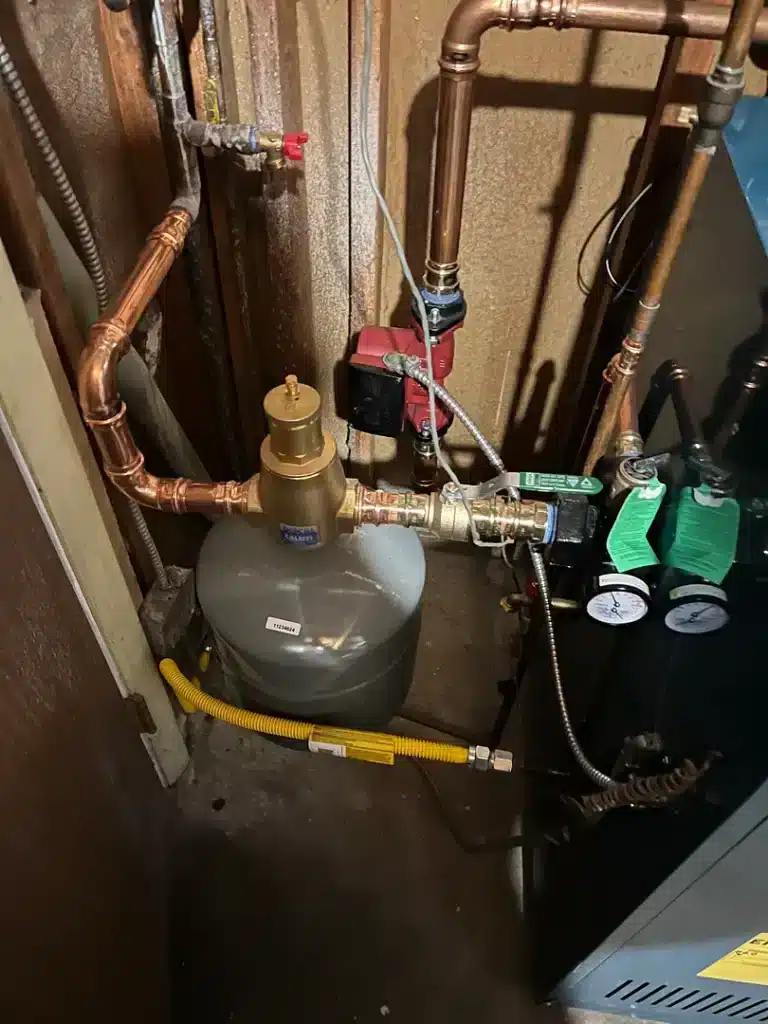
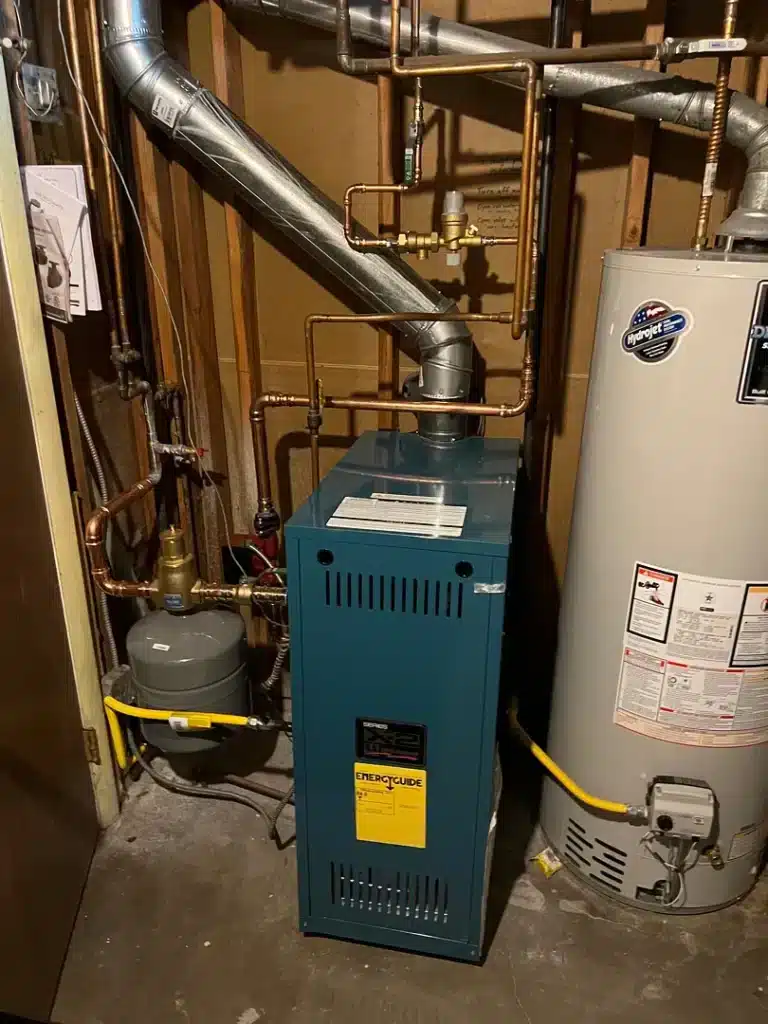
Replace boiler - Northglenn
- Problem: Replace boiler with new
- Found: Removed old boiler drain
- Fixed: Pipe in new circ pump. New fill valve. Pipe in isolation ball valves to boiler. Installed new air scoop and expansion tank. New gas valve and flex line added. Removed old boiler drain and installed new. Piped relief to 6 above finished floor.
- Outcome: Filled boiler with water and turned on tested operation, boiler works great no issues found .
How Cardom Plumbing & Heating Can Help
Our approach to boiler repair begins with understanding exactly what's happening in your system before recommending any repairs. We've developed diagnostic protocols specifically for the challenges Northglenn boilers face.
Our Boiler Repair Process
- Initial Assessment – We listen to your description of symptoms, review your boiler's maintenance history, and note the system's age and type
- Visual Inspection – Examining the boiler exterior, checking for corrosion, leaks, proper venting, and overall condition
- Combustion Analysis – Testing flue gases to evaluate burner efficiency and identify altitude-related calibration needs
- Pressure System Evaluation – Checking expansion tanks, pressure relief valves, and overall system pressure integrity
- Circulation Testing – Verifying pump operation, zone valve function, and water flow through the distribution system
- Component Diagnosis – Isolating the specific failed or failing parts causing your symptoms
- Repair Execution – Completing necessary repairs using appropriate replacement components
- System Testing – Running the boiler through complete heating cycles to verify proper operation
Diagnostic Techniques We Employ
- Digital combustion analyzers calibrated for high-altitude readings
- Thermal imaging to identify heat distribution problems and insulation failures
- Pressure decay testing to locate hidden leaks
- Water quality testing to assess mineral content affecting your specific system
- Electrical testing of controls, thermostats, and safety switches
Throughout the repair process, we explain what we're finding and why specific repairs matter. You'll understand the connection between symptoms and causes before any work begins.
Why Choose Cardom Plumbing & Heating
Boiler systems demand specialized knowledge that general HVAC technicians often lack. Our team includes technicians with specific boiler certifications and ongoing training in hydronic heating systems. We maintain relationships with major boiler manufacturers – giving us access to technical support and genuine replacement parts that generic suppliers can't provide.
Serving the Northglenn community means we understand local conditions intimately. We've repaired boilers in nearly every neighborhood – from the original homes near E.B. Rains Jr. Memorial Park to newer developments along I-25. This local experience translates into faster, more accurate diagnoses because we recognize patterns specific to our area's housing stock and water conditions.
What Sets Us Apart
- Licensed master plumbers with hydronic heating specialization
- 24/7 emergency response for heating failures during cold weather
- Fully stocked service vehicles – most common repairs completed in a single visit
- Written estimates before work begins – no surprise charges
- Follow-up contact after repairs to verify continued proper operation
- Detailed documentation of all work performed for your records
When your boiler fails on a January night with temperatures plummeting, response time matters. We prioritize Northglenn service calls because we live and work in this community. Your emergency is our emergency.
Housing Characteristics & Boiler Repair Considerations
Northglenn's development history directly impacts the boiler systems we encounter. The city incorporated in 1969, but residential construction began in the early 1960s. This timeline means a substantial portion of local housing stock features original heating equipment now approaching 50-60 years of service.
Housing Era Breakdown
- 1960s-1970s Construction – Cast iron boilers, often oversized by modern standards, with standing pilot lights and minimal controls
- 1980s-1990s Homes – Transitional systems mixing older technology with early electronic ignition and basic thermostatic controls
- 2000s-Present – High-efficiency condensing boilers, modulating burners, and integrated smart controls
Ranch-style homes dominate Northglenn's older neighborhoods. These single-story layouts typically feature basement-mounted boilers with relatively simple distribution systems. Split-level and bi-level homes – also common here – present more complex zoning challenges that affect how boiler problems manifest.
Common Housing-Related Boiler Issues
- Original copper piping showing pinhole leaks from decades of hard water exposure
- Undersized expansion tanks that were adequate for original systems but struggle with modern high-efficiency replacements
- Basement moisture issues affecting boiler components and venting systems
- Outdated venting configurations that don't meet current safety codes
- Asbestos insulation on older boiler pipes requiring careful handling during repairs
Newer developments in Northglenn – particularly those near the Orchard Town Center area – feature modern construction with high-efficiency heating systems. These units present different repair challenges centered on electronic controls, condensate management, and manufacturer-specific components.
Environmental Conditions & Boiler Repair Implications
Northglenn's semi-arid climate creates a demanding environment for boiler systems. Annual precipitation averages only about 15 inches – leaving relative humidity levels frequently below 30%. This persistent dryness accelerates the deterioration of rubber gaskets, O-rings, and seals throughout boiler systems.
Water Quality Characteristics
The city receives water primarily from the South Platte River system through Denver Water and Thornton utilities. Local water quality reports indicate:
- Moderate to high hardness levels – typically 120-180 parts per million
- Chloramine treatment for disinfection – which can affect certain boiler components differently than chlorine
- Seasonal variation in mineral content as source water blends change
- pH levels generally neutral but occasionally trending slightly alkaline
These water characteristics mean Northglenn boilers accumulate scale faster than systems in soft-water areas. Heat exchangers lose efficiency, circulation becomes restricted, and components fail prematurely without regular maintenance and water treatment.
Climate Impact on Boiler Systems
- Winter temperature extremes – Nighttime lows regularly dropping below 0°F create maximum demand periods when failures are most likely
- Rapid temperature swings – Chinook winds can raise temperatures 40+ degrees in hours, causing thermal stress on metal components
- Low humidity – Dry conditions cause gasket shrinkage and cracking
- Clay soil movement – Expansive soils around foundations can stress pipe connections and supports
The freeze-thaw cycling common during Northglenn winters particularly affects boiler systems with any outdoor-exposed components. Condensate lines, outdoor reset sensors, and intake/exhaust venting all experience repeated stress from temperature fluctuations.
Northglenn Winter Heating Demand & Emergency Service Patterns
Northglenn experiences approximately 5,800 heating degree days annually – a measurement indicating the cumulative demand placed on heating systems throughout the year. This figure exceeds the national average and reflects our extended heating season that typically runs from mid-September through early May. During peak winter months, boiler systems in Northglenn operate nearly continuously, accelerating wear on components and increasing the likelihood of failures.
Historical weather data for the Denver metropolitan area shows that boiler emergency calls spike dramatically during specific weather events. Cold snaps dropping temperatures below -10°F generate call volumes three to four times normal levels. These patterns inform how we staff and prepare for Northglenn's heating emergencies.
Local Heating Statistics
- Average January low temperature: 16°F – with frequent dips into single digits
- Record low temperature: -25°F – testing the limits of any heating system
- Typical heating season length: 230+ days annually
- Natural gas remains the dominant heating fuel – serving over 85% of Northglenn homes
- Average home heating costs run 15-20% higher than national averages due to extended season and altitude factors
These conditions make boiler reliability a genuine safety concern – not merely a comfort issue. When temperatures drop rapidly, homes without functioning heat can reach dangerous interior temperatures within hours. Our emergency response protocols prioritize Northglenn calls during extreme weather events, and we maintain relationships with local suppliers to access parts even during high-demand periods when standard channels become strained.


