Gas leaks in Denver pose significant risks due to the city's unique environmental conditions and aging infrastructure. Prompt professional repair is essential to ensure safety and compliance with local regulations.
Gas leaks can occur in hidden areas, making professional detection crucial. They can lead to serious hazards like carbon monoxide buildup and explosions.
Denver's climate and soil conditions exacerbate gas line deterioration, requiring specialized knowledge for effective repairs.
Our technicians are licensed and experienced, ensuring quick and accurate diagnostics to minimize disruption to your home.
What is a gas leak and why is it a concern in Denver?
A gas leak is the escape of natural gas from pipes or appliances, often indicated by a faint sulfur smell. In Denver, gas leaks are particularly concerning due to aging infrastructure, high altitude, and extreme temperature fluctuations, which can compromise residential gas systems and pose serious safety risks.
Gas Leak Repair in Denver, CO
That faint sulfur smell near your furnace or water heater demands immediate attention. Gas leaks represent one of the most serious plumbing and heating emergencies homeowners face – and Denver's unique combination of aging infrastructure, high altitude conditions, and extreme temperature swings creates specific vulnerabilities in residential gas systems.
Gas leak repair involves identifying the source of natural gas escaping from pipes, fittings, appliances, or connectors within your home's heating and hot water systems. Professional diagnosis matters because gas leaks often occur in concealed locations – behind walls, beneath floors, or at underground service line connections where visual inspection alone cannot detect them.
Rapid electronic detection pinpoints leak locations without unnecessary excavation or wall damage
Proper repair prevents carbon monoxide buildup and explosion risks in enclosed spaces
Licensed gas work protects your homeowner's insurance coverage and property value
Code-compliant repairs satisfy Xcel Energy requirements for service restoration
Denver's mile-high elevation affects gas combustion efficiency and appliance calibration, while our 50-degree daily temperature swings stress pipe joints and flexible connectors. Homes built before 1980 often contain original galvanized gas lines now approaching or exceeding their service life. Understanding these local factors helps explain why professional gas leak detection and repair requires Denver-specific expertise.
Denver's Front Range location creates a perfect storm of conditions that accelerate gas line deterioration. The semi-arid climate produces soil that expands and contracts dramatically with moisture changes, placing stress on underground gas service lines and creating movement at connection points throughout your home.
Temperature extremes compound these challenges. Winter nights dropping below zero followed by sunny 40-degree afternoons cause metal fittings to expand and contract repeatedly. Over years, this thermal cycling loosens threaded connections and fatigues flexible gas connectors – particularly at water heaters, furnaces, and gas ranges.
Local Factors Contributing to Gas Leak Risks
Clay-heavy soil composition in many Denver neighborhoods shifts seasonally, stressing buried lines
Pre-1970s homes often contain black iron piping with corroded threads at union fittings
High altitude requires specific appliance orifice sizing – improper modifications create leak points
Freeze-thaw cycles crack concrete slabs, allowing soil movement to affect sub-slab gas lines
Older flexible connectors (pre-1990) may contain brass fittings susceptible to stress cracking
Foundation settling common in Denver's bentonite soils pulls on rigid gas piping
Warning Signs Requiring Immediate Attention
Recognizing gas leak symptoms early prevents dangerous accumulation. Watch for these indicators:
Rotten egg or sulfur odor near gas appliances, meter, or along basement walls
Hissing or whistling sounds from gas lines, fittings, or appliance connections
Dead vegetation patches in your yard above buried gas lines
Pilot lights that repeatedly extinguish or burn with orange instead of blue flames
Unexplained increases in your Xcel Energy gas bills
Physical symptoms like headaches, dizziness, or nausea when home
Seasonal timing matters significantly. Late fall heating system startups often reveal leaks that developed during summer dormancy. Spring thaw periods stress underground lines as frozen soil shifts. Scheduling professional inspections before these high-risk seasons catches problems before they become emergencies.
Recent Work
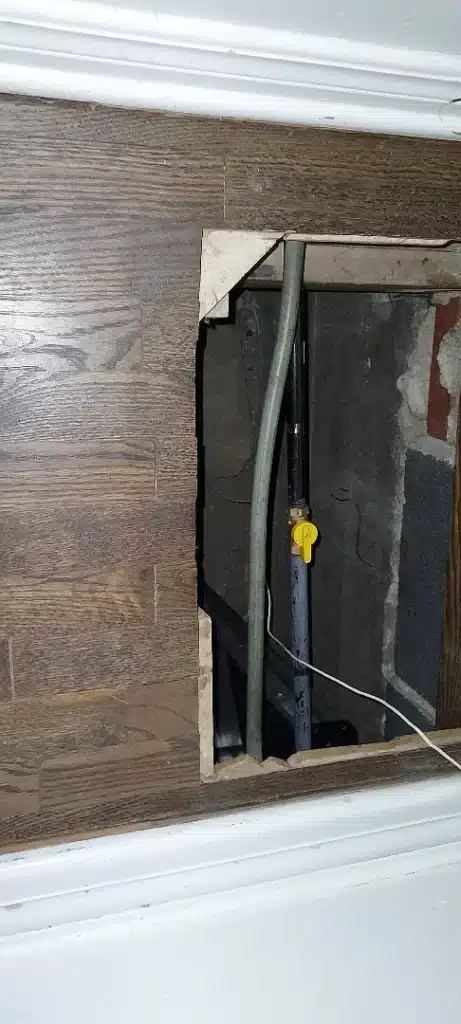
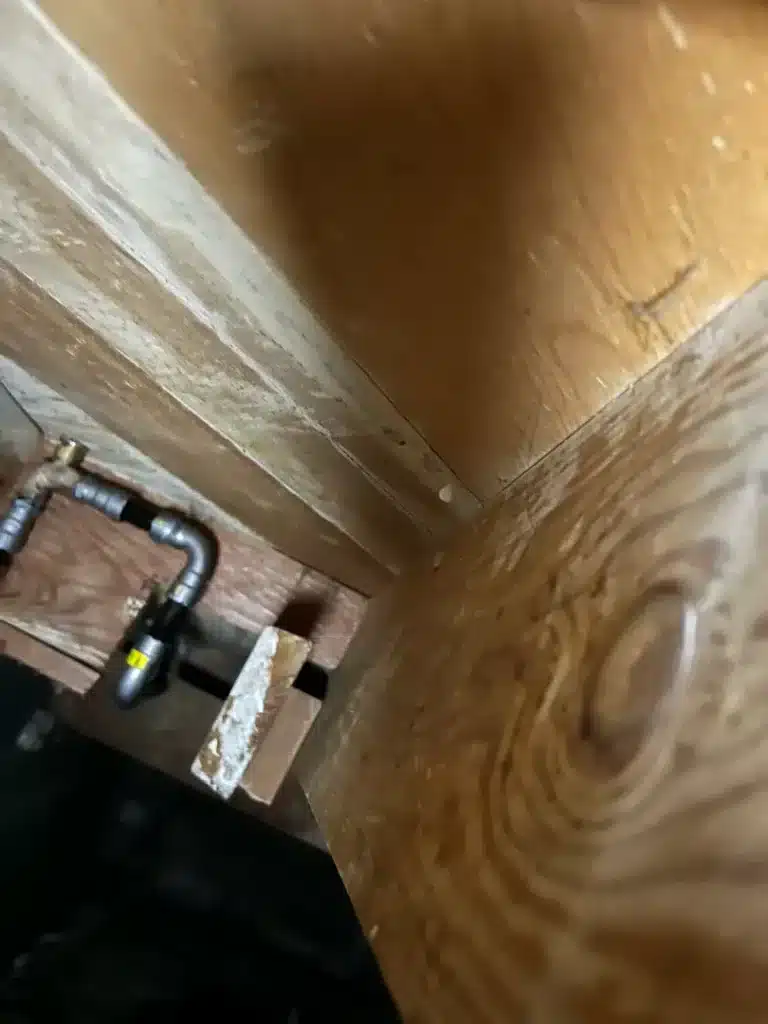
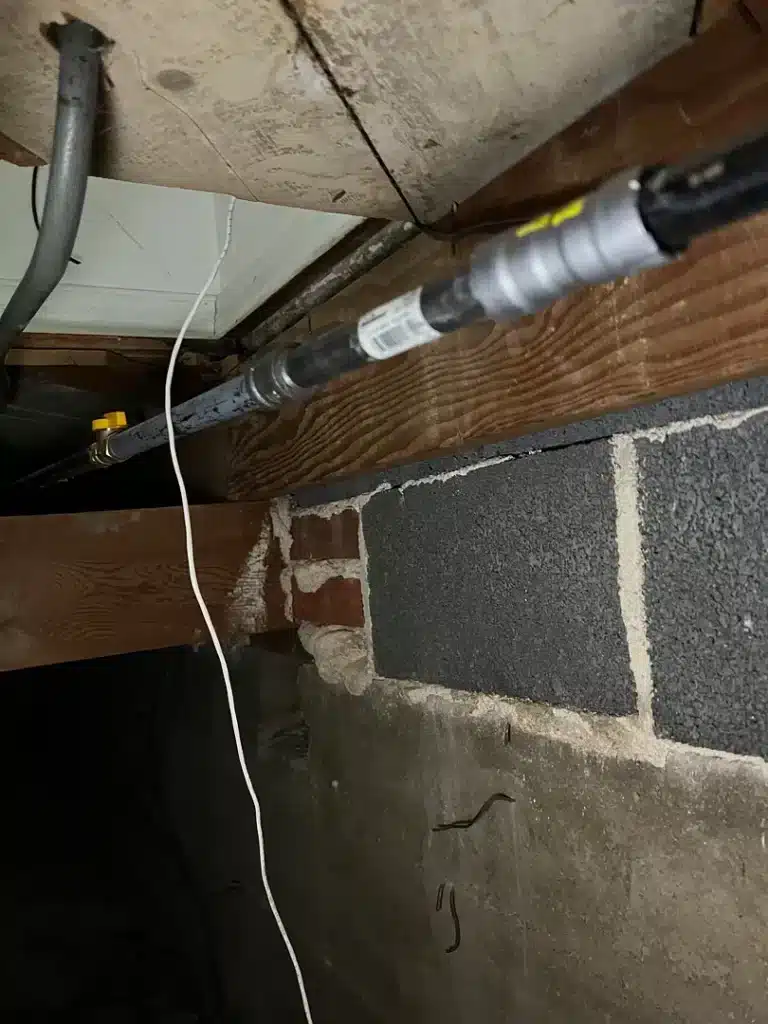
Replace Log Lighter Valve to Install - Denver
Problem:Log lighter valve.
Found:Old log lighter valve.
Fixed:Removed many coupling and te black union fitting on the gas supply to the fireplace. Tie in new log lighter valve. Order black flange for hte log ligher valve but it will be a few weeks before it arrives.
Our gas leak repair process follows a systematic approach designed to locate leaks accurately, repair them safely, and restore your gas service with documented compliance.
Our Detection and Repair Process
Safety Assessment – Upon arrival, we evaluate immediate hazards, ensure adequate ventilation, and determine whether evacuation or utility shutoff is necessary
System Isolation – We shut off gas supply at the meter and systematically isolate sections of your gas piping to narrow the leak location
Electronic Detection – Using combustible gas detectors and ultrasonic leak sensors, we trace the exact leak source without destructive exploration
Pressure Testing – We perform calibrated pressure decay tests on isolated line sections to confirm leak locations and identify any secondary leaks
Repair Execution – Depending on leak type, we replace failed fittings, install new line sections, or upgrade deteriorated flexible connectors
System Verification – Post-repair pressure testing confirms leak elimination before any gas restoration
Appliance Relight and Safety Check – We relight all pilots, verify proper combustion, and test safety controls on each gas appliance
Documentation – You receive written documentation of repairs performed, pressure test results, and any recommendations for preventive upgrades
Detection Methods and Equipment
Combustible gas analyzers detecting concentrations as low as 1 part per million
Ultrasonic detectors identifying leak sounds inaudible to human ears
Bubble solution testing for visual confirmation at accessible fittings
Manometer pressure testing with calibrated gauges meeting utility specifications
Infrared cameras for tracing gas migration paths through building materials
Quality Control Standards
Every gas leak repair undergoes dual verification. The technician performing repairs conducts initial pressure testing, followed by independent verification before gas restoration. We maintain pressure test documentation meeting Xcel Energy requirements for service reconnection when utility shutoff has occurred.
Communication throughout the process keeps you informed. We explain findings in plain language, discuss repair options with cost implications, and provide realistic timelines for completion. Emergency situations receive priority scheduling with technicians dispatched within the hour when safety risks exist.
Why Choose Cardom Plumbing & Heating
Gas work requires specific licensing beyond standard plumbing credentials. Our technicians hold Colorado gas installer certifications and maintain current training on detection equipment, repair techniques, and evolving code requirements. We carry the insurance coverage gas work demands – protecting you from liability if something goes wrong.
Local experience translates to faster, more accurate diagnostics. We know which Denver neighborhoods have problematic soil conditions, which eras of construction used specific pipe materials, and which appliance brands commonly develop connection failures. This knowledge base eliminates guesswork and reduces the time your family spends without heat or hot water.
What Sets Us Apart
24/7 emergency response for gas leak situations – no answering services or callbacks
Direct coordination with Xcel Energy when utility involvement is required
Stocked service vehicles carrying common repair fittings, connectors, and pipe materials
Written warranties on all gas line repairs and component replacements
Follow-up inspection options for older systems requiring monitoring
Transparent pricing discussed before work begins – no surprises
We treat gas leaks with the urgency they deserve. When you call reporting gas odors, we prioritize your situation appropriately. Our technicians arrive equipped to complete most repairs in a single visit, minimizing disruption to your household and eliminating extended periods without heating or hot water service.
Housing Characteristics & Gas Leak Repair Considerations
Denver's housing stock spans over a century of construction practices, each era bringing distinct gas piping materials and installation methods. Understanding your home's vintage helps predict where leak vulnerabilities exist.
Pre-1950 Construction
Homes in Capitol Hill, Park Hill, and Congress Park often contain original black iron gas piping with threaded connections. These systems have served well but now exceed 70 years of service. Common issues include:
Thread corrosion at union fittings where dissimilar metals contact
Internal scale buildup restricting gas flow to appliances
Inadequate support allowing pipe movement and joint stress
Non-code modifications made during decades of appliance changes
1950s-1970s Construction
Post-war expansion brought rapid development in neighborhoods like Virginia Village, Harvey Park, and Montbello. Construction speed sometimes compromised installation quality. Galvanized steel gas lines from this era frequently show:
Corrosion at soil contact points where lines enter foundations
Undersized piping for modern high-efficiency appliances
Flexible connectors now exceeding recommended service life
1980s-Present Construction
Newer Denver homes in Green Valley Ranch, Stapleton, and Central Park typically feature corrugated stainless steel tubing (CSST) systems. While durable, these systems require proper bonding and grounding – often missing in original installations. Homes built during Denver's 1990s and 2000s boom sometimes received rushed inspections, leaving installation defects undetected until leaks develop.
Multi-unit buildings present additional complexity. Condominiums and townhomes may share gas risers, requiring coordination with HOAs and neighboring units during repairs. Denver's growing inventory of converted warehouse lofts often contains gas piping routed through unconventional paths, complicating leak detection.
Environmental Conditions & Gas Leak Repair Implications
Denver's environmental conditions directly influence gas system integrity and leak development patterns. Understanding these factors helps explain why certain repairs become necessary and how to prevent future problems.
Soil Composition and Underground Lines
Much of Denver sits atop expansive clay soils – particularly the bentonite formations prevalent in western and southern neighborhoods. These soils swell when wet and shrink dramatically during dry periods, creating ground movement that stresses buried gas service lines. The effect is most pronounced in:
Lakewood and Wheat Ridge areas with heavy clay content
Sloped lots in neighborhoods like Berkeley and Highlands
Properties with mature trees whose root systems disturb soil
Homes with inadequate drainage allowing soil saturation cycles
Climate Impacts on Gas Systems
Denver's 300 days of sunshine create significant thermal cycling. Exposed gas piping in attics and crawl spaces experiences temperature swings exceeding 80 degrees seasonally. This repeated expansion and contraction fatigues metal fittings and accelerates seal deterioration. Winter presents additional challenges:
Frozen condensate in gas lines serving high-efficiency furnaces
Ice formation at meter regulators affecting gas pressure
Increased system demand revealing marginal leaks previously undetected
Pilot outages from downdrafts during chinook wind events
Altitude Considerations
At 5,280 feet, atmospheric pressure is roughly 17% lower than sea level. Gas appliances require altitude-compensated orifices for proper combustion. Improperly converted appliances – common in homes with equipment relocated from lower elevations – burn inefficiently and may produce elevated carbon monoxide levels. Gas pressure settings also require altitude adjustment, affecting leak detection pressure test parameters.
Denver's low humidity accelerates corrosion differently than coastal environments. While external rust develops slowly, internal pipe corrosion from moisture in natural gas progresses steadily. Older systems without proper drip legs accumulate corrosive condensate at low points, eventually perforating pipe walls from within.
Natural Gas Infrastructure and Usage Statistics in Denver
Denver's natural gas infrastructure serves approximately 1.5 million Xcel Energy customers across the metropolitan area, with residential gas usage concentrated heavily in heating applications. The average Denver household consumes roughly 700 therms annually – significantly higher than the national average due to heating demands during Colorado's cold season extending from October through April.
The region's gas distribution network includes thousands of miles of transmission and service lines, with portions dating to the mid-20th century. Xcel Energy's ongoing pipeline replacement program prioritizes aging infrastructure, but many residential service lines and interior piping systems remain original to their construction era. Key statistics affecting gas leak repair needs include:
Over 40% of Denver homes were built before 1970, predating modern gas piping standards
The Colorado Public Utilities Commission reports approximately 2,500 gas leak incidents annually statewide requiring utility response
Residential gas leaks account for roughly 15% of all reported natural gas emergencies in the Denver metro area
Winter months (December through February) see 60% higher gas leak reports than summer periods
Interior gas leaks – those occurring past the meter – remain homeowner responsibility for detection and repair
Denver's continued population growth intensifies demand on aging infrastructure. Neighborhoods experiencing rapid redevelopment often require gas service upgrades, revealing deteriorated lines during construction. The city's push toward energy efficiency has increased installation of gas-fired tankless water heaters and high-efficiency furnaces – appliances requiring precise gas pressure and clean supply lines to operate safely. These trends underscore the ongoing need for professional gas leak detection and repair services throughout the Denver metropolitan area.
If you smell gas, evacuate the area immediately and avoid using any electrical devices or open flames. Once you are at a safe distance, call your gas company or a licensed professional to report the leak. Do not re-enter the building until it has been deemed safe.
Common signs of a gas leak include a faint sulfur smell, hissing sounds near gas lines, and dead or dying vegetation around your property. Additionally, you may experience symptoms like headaches, dizziness, or nausea if you are exposed to gas.
Gas leaks in Denver can be caused by several factors, including aging infrastructure, temperature fluctuations, and soil movement. Homes built before 1980 may have outdated gas lines that are more prone to corrosion and deterioration.
Repairing a gas leak typically involves locating the source of the leak using specialized detection equipment. Once identified, a licensed technician will replace or repair the faulty pipes, fittings, or appliances to ensure safety and compliance with local codes.
Many homeowners insurance policies cover gas leak repairs, but coverage can vary. It's advisable to check your specific policy or consult with your insurance agent to confirm what is included.
The duration of a gas leak repair can vary based on the severity and location of the leak. Simple repairs might take a few hours, while more complex issues could require a full day or more. A professional can provide a more accurate estimate after assessing the situation.
Hiring a professional for gas leak repairs is crucial for safety and compliance. Professionals have the training and tools to accurately diagnose and fix leaks, preventing potential hazards like carbon monoxide buildup or explosions. Additionally, licensed work protects your homeowner’s insurance and property value.