
Recent Posts
Categories
Choosing the Perfect Bathtub for Arvada’s Hard Water
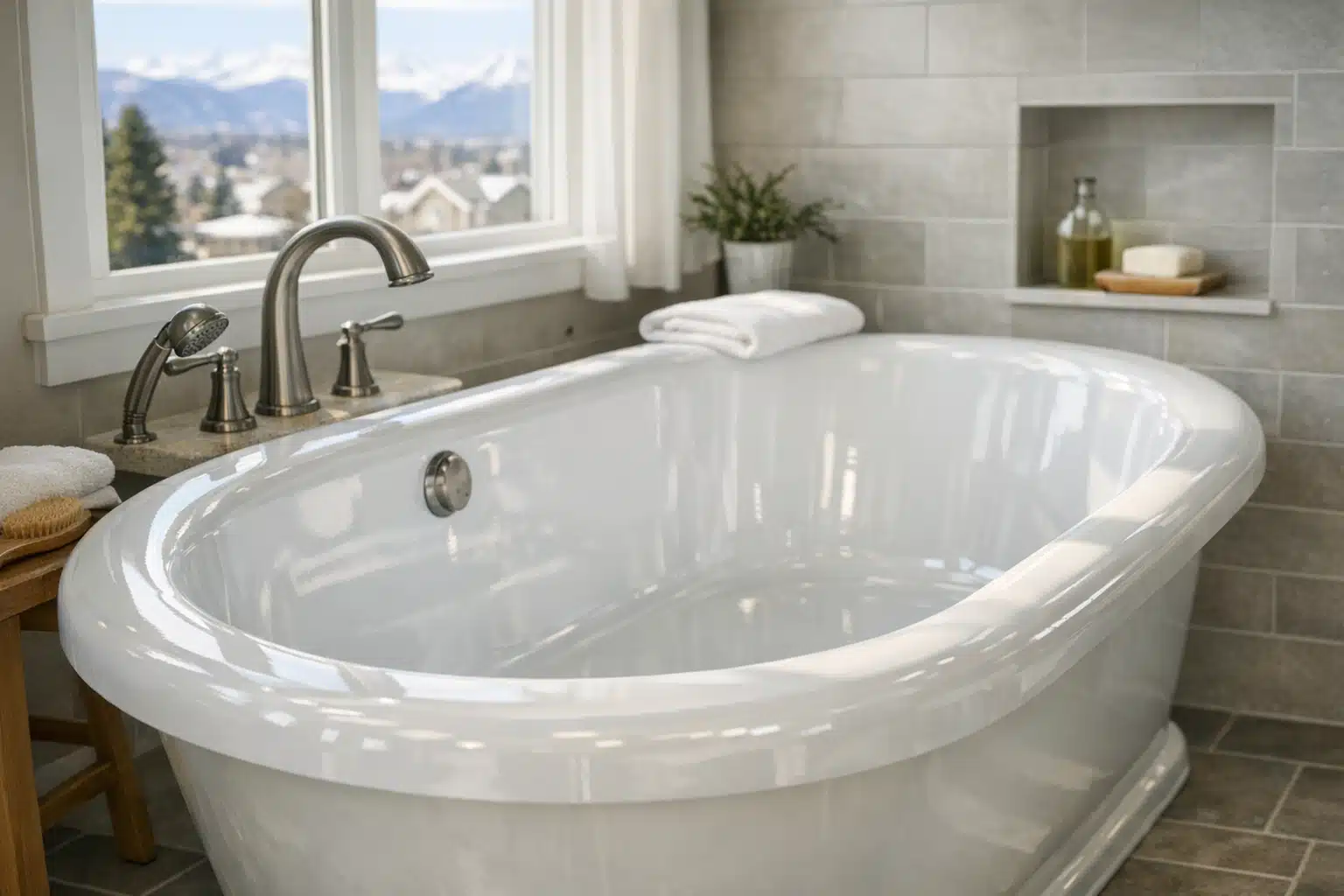
Arvada's hard water measures 8 to 15 grains per gallon, leaving mineral deposits that damage bathtubs quickly. Choosing the right tub material and pairing it with water treatment helps protect your investment.
- Porcelain-enameled cast iron, acrylic, and solid surface tubs resist hard water best due to their nonporous, glossy finishes. Avoid natural stone, low-grade fiberglass, and textured surfaces that trap scale.
- Water softeners swap calcium and magnesium for sodium ions, stopping scale before it forms. Signs you need treatment include rapid scale buildup, soap film, and crusty fixtures.
- Proper installation with correct drain slope and sealed fittings prevents standing water that accelerates mineral deposits. Weekly cleaning with mild acid and drying after use extends tub life.
For hard water areas like Arvada, acrylic and enameled cast iron bathtubs perform best. Acrylic resists mineral buildup and cleans easily with mild solutions, while quality enameled cast iron offers a non-porous surface that prevents calcium deposits from bonding. Avoid fiberglass and low-grade porcelain, as these materials stain quickly and degrade faster when exposed to high mineral content water.
Water in Arvada runs hard, measuring between 8 and 15 grains per gallon across many neighborhoods. That mineral load leaves chalky rings, dulls finishes, and shortens the life of a new tub fast. If you’re picking a bathtub hard water can’t destroy, material choice matters more than looks.
This post covers which tub materials hold up against Arvada’s calcium and magnesium, how to spot early damage, and what installation details protect your investment. You will also learn which upgrades pair well with a new tub in high-mineral areas.
Why Arvada’s Hard Water Damages Bathtubs
Hard water carries dissolved calcium and magnesium. When water evaporates on a tub surface, those minerals stay behind as scale.
Over months, scale bonds to porous or textured finishes. On the Front Range, this happens faster than in soft-water regions like the Pacific Northwest.
What Mineral Buildup Looks Like in Local Homes
We see the same signs in Wheat Ridge, Westminster, and Arvada bathrooms:
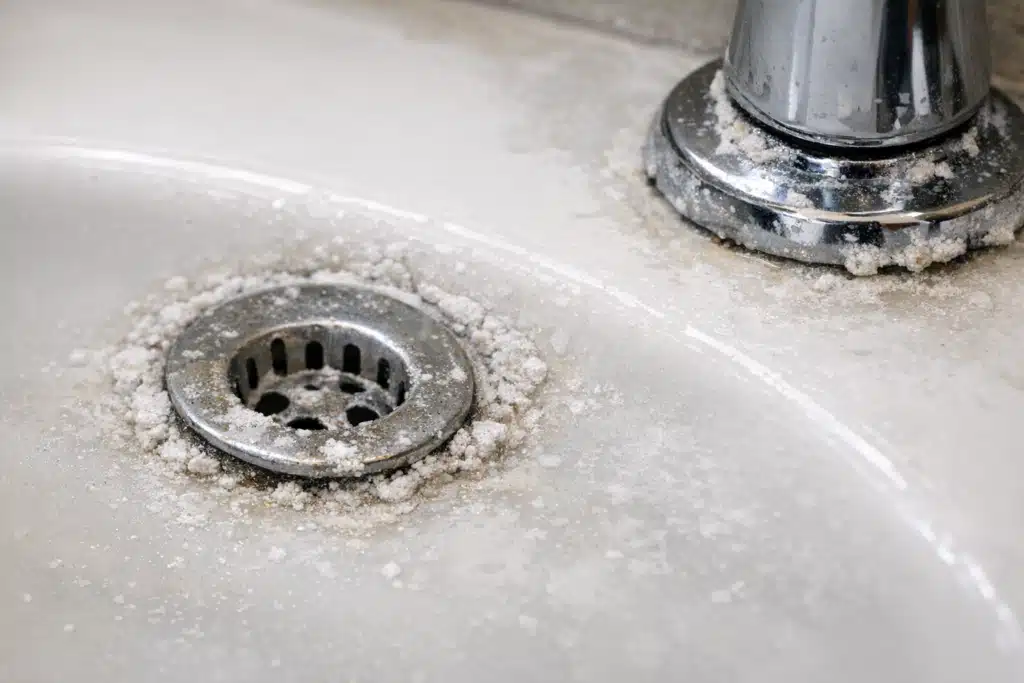
- White or gray crust around the drain and faucet base
- Rough patches that trap soap and grime
- Rust-colored streaks where iron rides along with the minerals
- Dull, cloudy spots that no cleaner removes fully
Once scale etches into a soft finish, it stays. That is why the material you pick at the start decides how your tub ages.
Best Bathtub Materials for Hard Water Areas
Some tub materials shrug off minerals. Others stain within a year of Arvada use.
Porcelain-Enameled Cast Iron
Cast iron with a fused porcelain surface handles hard water better than most. The glass-like enamel gives scale little to grip.
These tubs are heavy, sometimes 300 to 500 pounds. Floor framing on older Arvada homes may need reinforcement before install.
- Resists staining and etching from calcium deposits
- Wipes clean with a soft cloth and mild acid cleaner
- Lasts decades with basic care
Solid Surface and Acrylic
Acrylic is nonporous, which limits how deep scale can set. It wipes down easily and resists the rust streaks iron leaves behind.
Solid surface tubs, made from resin and mineral composites, sand smooth if scale ever etches them. That repairability suits high-mineral homes.
Materials That Struggle in Arvada
Skip these if you want low maintenance:
- Untreated natural stone — porous and quick to stain
- Low-grade fiberglass gel coat — thin finish that clouds within a year
- Textured or matte surfaces — grooves trap scale you can’t scrub out
Choosing a Bathtub Hard Water Won’t Ruin
A bathtub hard water can’t easily damage shares three traits: a nonporous surface, a smooth finish, and easy-clean chemistry. Match those to your home and budget.
Decision Factors for Arvada Homeowners
- Finish type — glossy and nonporous beats textured every time
- Weight vs. framing — confirm floor support for cast iron
- Repairability — acrylic and solid surface can be refinished
- Water treatment — a softener protects any tub you choose
- Faucet finish — chrome and brushed nickel hide spots better
Rough Cost Expectations
Prices vary by size and install work, but local ranges help you plan:
- Acrylic drop-in or alcove: $400–$1,200 for the tub
- Porcelain cast iron: $600–$2,000 for the tub
- Solid surface freestanding: $1,500–$5,000 for the tub
- Installation labor: $500–$2,500 depending on plumbing changes
Cast iron installs cost more when framing needs reinforcement. We flag that during the estimate, not after demolition.
Pairing Your Tub With Water Treatment
Even the toughest tub does better behind a water softener. Softened water stops scale before it forms on any surface.
Why a Softener Extends Tub Life
A softener swaps calcium and magnesium for sodium ions. That single change removes the minerals that etch finishes and clog fixtures.
Arvada homes with softeners keep tubs, faucets, and water heaters cleaner for years longer. The upgrade pays back in fewer repairs and replacements.
Signs Your Home Needs Treatment Before a New Tub
- Scale rebuilds on faucets days after cleaning
- Soap won’t lather and leaves a film
- Water heater cycles more or runs out fast
- Existing fixtures show green or white crust
If two or more apply, treat the water first. A new tub lasts far longer when the water feeding it is fixed.

From start to finish, their professionalism was top-notch. They provided clear, detailed, and ethical estimates, ensuring there were no surprises along the way.
The team was punctual and completed the job on time, maintaining a high standard of quality throughout. I highly recommend Cardom for any plumbing needs!
 Posted on Google
Installation Details That Protect Your Investment
The right tub fails early if installed poorly. Local plumbing habits matter in hard-water zones.
What Careful Arvada Plumbing Adds
Correct Arvada plumbing for a new tub includes proper drain slope and sealed overflow fittings. Standing water and slow drainage let scale build faster.
We set tubs level, seal seams against mineral-laden splash, and pressure-check supply lines. Small steps prevent the streaks and leaks that plague rushed jobs.
Maintenance That Keeps Any Tub Clean
- Wipe the tub dry after use to stop scale from setting
- Clean weekly with a mild acid like diluted vinegar
- Skip abrasive pads that scratch finishes and invite buildup
- Descale fixtures monthly to keep spray even
These routines take minutes. In hard-water areas, they add years to a tub’s finish.
Cardom’s Approach for Hard-Water Homes
We install tubs matched to Arvada’s mineral levels, not generic picks. That means steering clients toward nonporous, easy-clean surfaces that hold up.
Our team also fits water softeners alongside tub installs when the water calls for it. One visit, one plan, fewer callbacks down the road.
Final Takeaways
Pick a nonporous, glossy tub like acrylic, solid surface, or porcelain cast iron to resist Arvada’s hard water. Pair it with a softener and simple weekly cleaning for the longest life. Correct installation seals out the mineral damage that ruins rushed jobs.
Ready to pick a tub built for Arvada’s water? Call or text Cardom Plumbing & Heating at 720‑775‑8322, email tomd@cardomcolorado.com, or visit https://www.cardomcolorado.com.


