
Recent Posts
Categories
Choosing the Right Bathtub for Broomfield’s Water Conditions
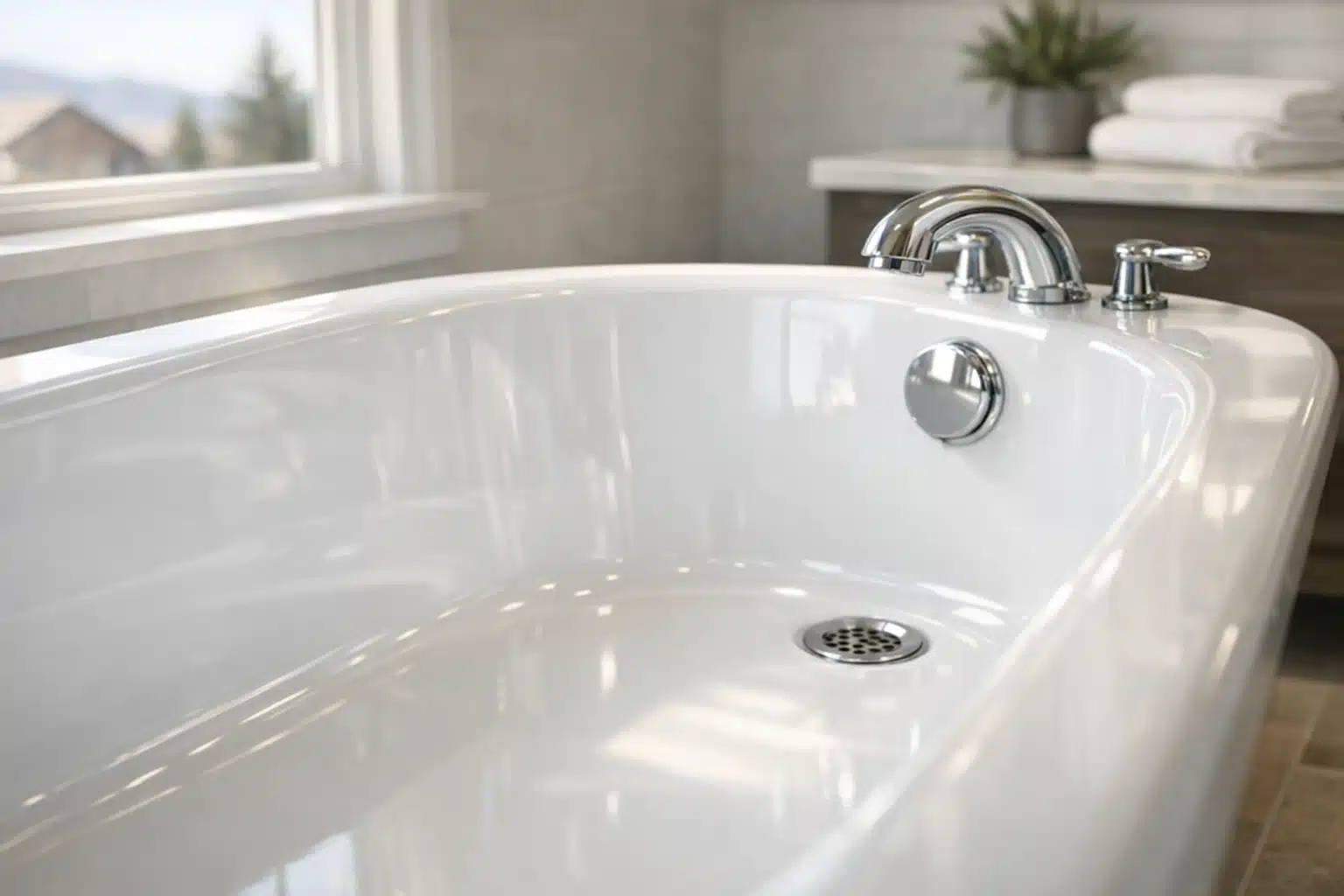
Broomfield has hard water that causes mineral scaling, soap scum, and staining on bathtubs. Matching tub material to local water conditions reduces cleaning and extends the fixture's lifespan.
- Cast iron with porcelain enamel offers the best scale resistance and durability for hard water areas. Porcelain-enameled steel is a close second at a lower price point.
- Fiberglass tubs cost less upfront but stain and dull quickly in mineral-heavy water. Acrylic works well with regular cleaning.
- Installing a whole-home water softener expands material options and protects tubs, water heaters, and fixtures from calcium and magnesium buildup.
For hard water areas like Broomfield, acrylic and porcelain-enameled steel bathtubs work best because their smooth, non-porous surfaces resist mineral buildup and make cleaning easier. Fiberglass tubs should be avoided since their textured surfaces trap calcium deposits. Choosing the right material helps reduce those stubborn chalky white rings that hard water leaves behind.
Hard water leaves chalky white rings around your tub, and no amount of scrubbing keeps them away for long. Broomfield sits in one of the harder water zones along the Front Range. That reality should shape your bathtub selection before you ever pick a color or shape.
This post explains which tub materials hold up against Broomfield water conditions. You will learn what mineral content does to different finishes, which tubs stain fastest, and how to protect your investment.
Why Broomfield Water Conditions Matter for Bathtub Selection
Water hardness measures dissolved calcium and magnesium. Broomfield draws from sources that leave water on the harder end of the scale.
Hard water reacts differently with each tub material. A finish that looks flawless in a showroom may show spots within weeks in a local bathroom.
What Hard Water Does to Tub Surfaces
- Mineral scaling: White crust builds along the waterline and around drains.
- Soap scum bonding: Minerals react with soap to form sticky films that cling to porous surfaces.
- Etching on soft finishes: Repeated exposure dulls certain acrylics and cultured marble.
- Staining: Iron and manganese traces can leave brown or orange marks over time.
Homeowners in Westminster and Broomfield call us about these exact problems. The tub itself is fine. The material just was not matched to the water.
Best Bathtub Materials for Hard Water Areas Near Denver
Material choice decides how much cleaning you face each week. Here is how common tub types perform against local mineral content.
Porcelain-Enameled Steel
Steel coated in baked-on porcelain resists mineral bonding. The glass-like surface gives scale nothing to grip.
- Pros: Smooth, stain-resistant, wipes clean fast.
- Cons: Chips if a heavy object drops on it. Chips then rust in hard water.
- Price range: Roughly $200 to $600 for the tub.
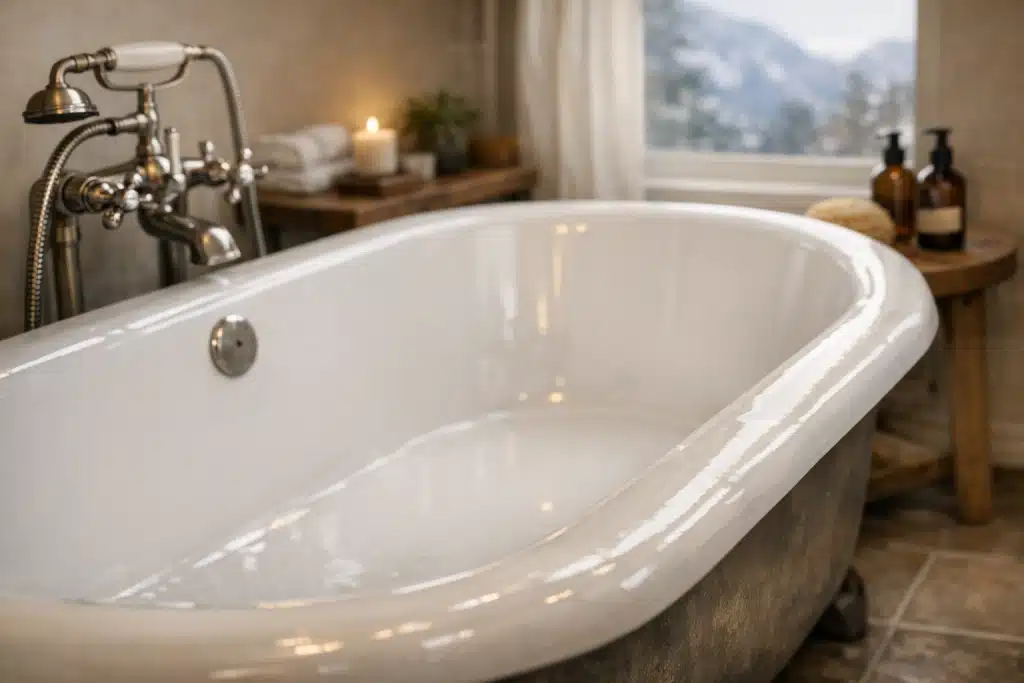
Cast Iron with Porcelain Enamel
This is the workhorse for hard-water homes. The thick enamel shrugs off scale and holds heat during long Colorado winters.
- Pros: Extremely durable finish, resists etching, lasts decades.
- Cons: Very heavy. Older Arvada homes may need floor reinforcement.
- Price range: Roughly $500 to $2,000.
Acrylic
Acrylic stays popular for its light weight and warm feel. It handles hard water better than fiberglass but still needs regular wiping.
- Pros: Affordable, lightweight, retains heat decently.
- Cons: Softer surface scratches, and scratches trap mineral deposits.
- Price range: Roughly $300 to $1,200.
Fiberglass (FRP)
Fiberglass costs the least and shows it. The gel coat is porous and grabs mineral scale fast.
- Pros: Cheapest upfront, light enough for upper-floor installs.
- Cons: Stains and dulls quickly in hard water. Shortest lifespan.
- Price range: Roughly $200 to $800.
Cultured Marble and Solid Surface
Solid surface tubs look high-end but react poorly to mineral-heavy water. Acidic cleaners used to fight scale can etch the finish.
- Pros: Attractive, color runs all the way through.
- Cons: Etches from both minerals and harsh cleaners. Needs gentle care.
- Price range: Roughly $800 to $3,000.
Ranking Tub Materials for Broomfield Homes
Based on what we see in Broomfield and Westminster bathrooms, here is the order we recommend for hard water.
- Cast iron with porcelain enamel — best scale resistance and longevity.
- Porcelain-enameled steel — nearly as resistant at a lower cost.
- Acrylic — solid middle choice if you clean regularly.
- Cultured marble — fine with soft cleaners and a water softener.
- Fiberglass — budget pick, but expect faster staining.
How a Water Softener Changes Your Bathtub Selection
A whole-home water softener removes the calcium and magnesium causing most tub problems. With one installed, your material choices open up.
Softened water lets you pick acrylic or cultured marble without constant scale fights. The softener protects the tub, your water heater, and your fixtures at the same time.
Many Broomfield clients pair a new tub install with a softener. The combined cost saves money against years of replacing stained fixtures.
Signs Your Home Needs Softening Before a New Tub
- White buildup returns within days of cleaning.
- Soap never fully rinses off skin or surfaces.
- Shower glass spots over almost immediately.
- Your water heater makes popping or crackling sounds.
Drain and Fixture Choices That Match Hard Water
The tub is only part of the picture. Hard water attacks faucets and drains too.
Pick solid brass fixtures with a durable finish like brushed nickel. Chrome shows water spots fastest in mineral-heavy areas.
For drains, oversized assemblies handle the soap-and-mineral sludge that clogs standard drains in hard-water homes. We install these on most Broomfield jobs to cut future clog calls.

 Posted on Google
Common Tub Problems We See in Broomfield Bathrooms
- Permanent waterline rings on fiberglass tubs under three years old.
- Rust spots spreading from small chips in enameled steel.
- Etched, cloudy patches on cultured marble from acidic cleaners.
- Slow drains clogged by mineral-bonded soap scum.
- Pitted faucet finishes from constant hard-water contact.
Most of these trace back to a mismatch between material and water. The right bathtub selection from the start prevents each one.
Cleaning Tips That Protect Your Tub in Hard Water
Even the toughest tub lasts longer with simple habits. These work against Front Range mineral content.
- Wipe the tub dry after use to stop spot formation.
- Use a vinegar-water mix on enameled and steel surfaces, not on cultured marble.
- Skip abrasive pads on acrylic to avoid scratches that trap minerals.
- Clean the drain monthly to prevent soap-scale buildup.
What a Tub Replacement Costs Near Arvada
Budgeting helps you plan the full project, not just the tub. Here is a rough breakdown for the Arvada and Broomfield area.
- Tub unit: $200 to $3,000 depending on material.
- Removal and disposal: $150 to $500, more for heavy cast iron.
- Plumbing and install labor: $500 to $1,500.
- Water softener (optional): $1,000 to $2,500 installed.
Older homes sometimes need valve or drain updates to meet current code. We flag those costs upfront before any work begins.
Final Thoughts on Choosing a Tub for Broomfield Water
Match your tub material to local mineral content, and you cut cleaning and replacement headaches for years. Cast iron and enameled steel win for hard water, with a softener widening your other choices. Smart bathtub selection starts with the water, not the showroom floor.
Need help picking a tub built for Broomfield water conditions? Call or text Cardom Plumbing & Heating at 720‑775‑8322, email tomd@cardomcolorado.com, or visit https://www.cardomcolorado.com to schedule your fixture consultation in Arvada, Broomfield, or nearby Front Range towns.
Sources
- U.S. Geological Survey – Hardness of Water
- U.S. Environmental Protection Agency – Secondary Drinking Water Standards
- U.S. Department of Energy – Water Heating


