
Recent Posts
Categories
Preparing Your Home’s Gas Lines for Winter in Arvada
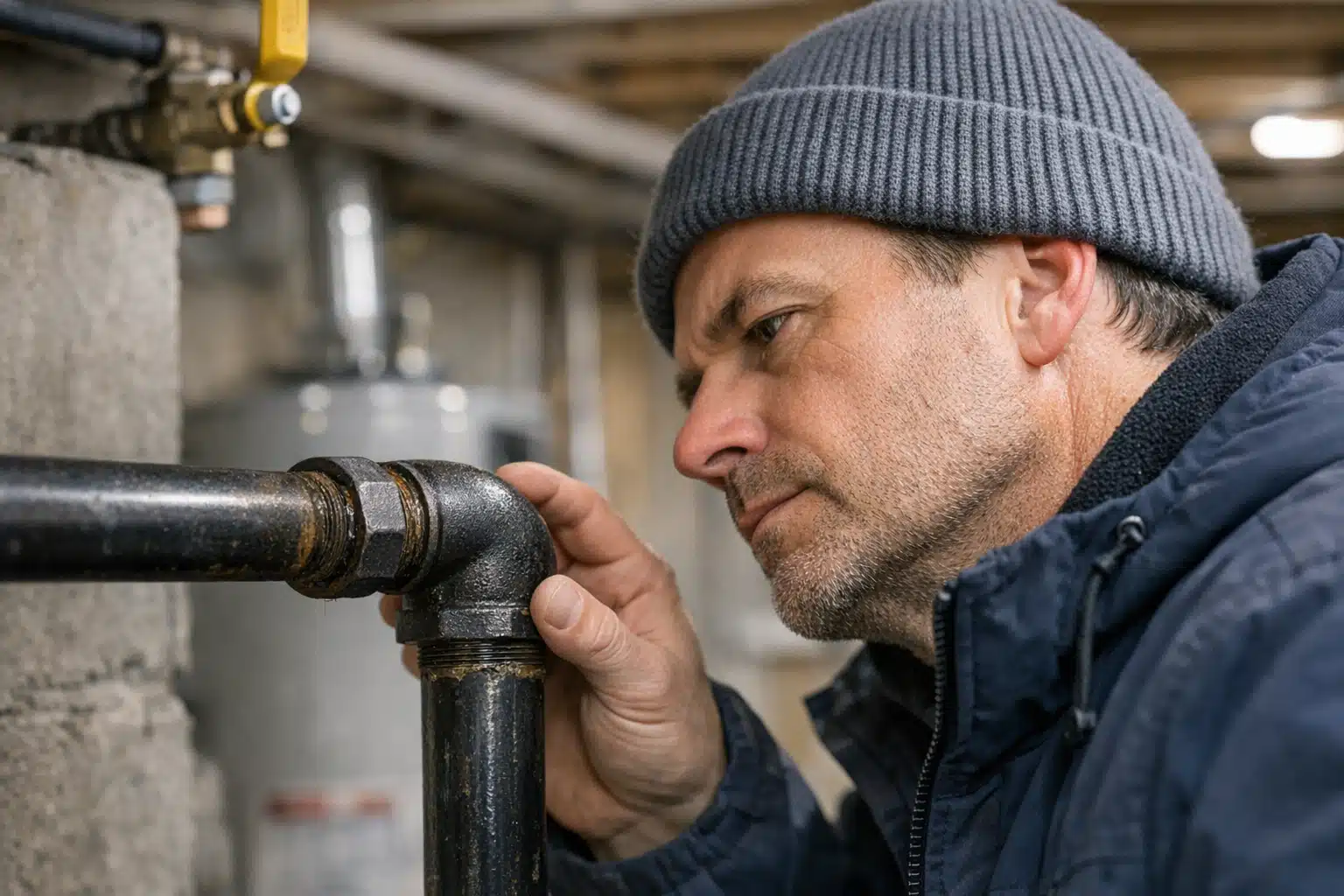
Gas line winter preparation is especially important in Arvada due to freeze-thaw cycles and Chinook winds that stress connections and cause leaks. Homeowners should inspect visible piping, test joints with soapy water, and schedule professional inspections before the first hard freeze.
- Arvada's rapid temperature swings - sometimes 40 degrees in hours - loosen threaded joints and stress metal piping more than steady cold climates. Homes built in the 1960s and 1970s often have aging black iron pipe prone to corrosion.
- Warning signs include sulfur smells, hissing sounds, dead grass above buried lines, higher gas bills, and visible corrosion. A soapy water test on joints reveals slow leaks when bubbles form.
- Book inspections in September or October before emergency call rushes. Keep exterior meters clear of snow and ice, and hire licensed plumbers for any repairs since Colorado requires permits for most gas line work.
Preparing gas lines for winter in Arvada requires attention to the area's extreme freeze-thaw cycles and sudden temperature swings. Homeowners should inspect exposed piping and connections for wear, check for leaks before cold weather arrives, and protect vulnerable sections from rapid temperature changes that can stress fittings. Professional inspection is recommended before heating season begins.
When temperatures drop below zero along the Front Range, a neglected gas line can leave your family without heat on the coldest night of the year. Gas line winter preparation matters more in Arvada than in milder climates because our freeze-thaw swings stress connections and exposed piping. Homeowners here face sudden 40-degree temperature drops that soft-climate advice never accounts for.
This post walks you step by step through protecting your gas lines before winter sets in. You will learn what to inspect, how to spot early warning signs, and when to call a licensed plumber.
Why Gas Line Winter Preparation Is Different in Arvada
Arvada sits at roughly 5,300 feet, where cold air settles fast and stays. Our winters bring rapid freeze-thaw cycles that expand and contract metal piping.
That repeated movement loosens threaded joints over time. A connection that sealed fine in October can develop a slow leak by January.
Snow load and frozen ground add pressure on buried lines running to detached garages, fire pits, and pool heaters. Older Arvada homes built in the 1960s and 1970s frequently have aging black iron pipe that corrodes at the threads.
The Chinook Wind Problem
Arvada gets sudden warm Chinook winds that spike temperatures 30 to 50 degrees in hours. Pipes contract hard during the cold, then expand quickly when the warm wind arrives.
This back-and-forth stress is harder on fittings than steady cold. It is one reason local gas line failures cluster around January and February.
How to Prepare Your Gas Lines for Winter: Step by Step
Follow this order to catch problems before the first hard freeze. Most steps take under an hour for a careful homeowner.
- Smell and listen first. Walk your basement, utility room, and furnace area. A rotten-egg odor or faint hissing means you leave immediately and call for help.
- Inspect visible piping. Check black iron and flexible connectors for rust, corrosion, or green-white buildup at joints.
- Test connections with soapy water. Brush dish soap mixed with water onto joints. Growing bubbles reveal a leak.
- Check your furnace and water heater lines. Confirm the shutoff valves move freely and the flex connectors show no kinks.
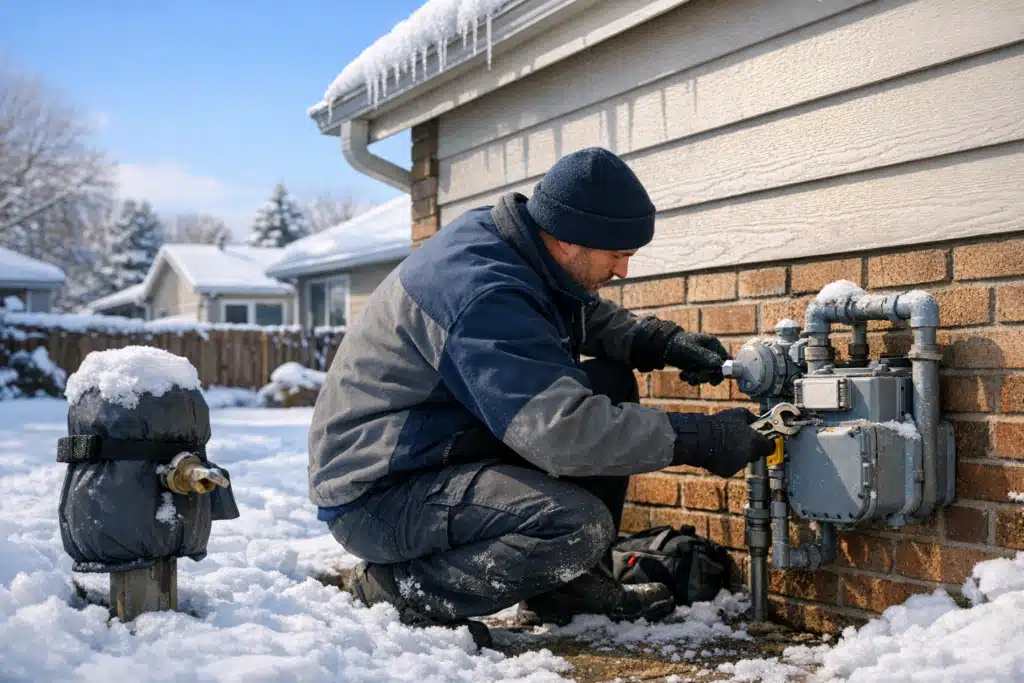
- Clear snow and debris from exterior meters. Keep the Xcel gas meter and regulator free of ice buildup.
- Protect exposed outdoor lines. Insulate runs to detached garages, grills, and pool heaters.
- Schedule a professional inspection. A licensed plumber pressure-tests the system and finds hidden issues.
What a Soapy Water Test Actually Looks Like
Mix one part dish soap with four parts water in a spray bottle. Coat each threaded joint and connector fully.
Watch for 30 seconds. Small bubbles that keep forming mean gas is escaping, even if you smell nothing.
This simple check catches the slow leaks that freeze-thaw stress creates in Arvada homes every winter.
Signs Your Gas Line Needs Attention Before Winter
Catching these early prevents a mid-storm emergency. Watch for the following:
- A sulfur or rotten-egg smell near appliances or the meter
- Hissing or whistling sounds along pipe runs
- Dead or discolored grass above a buried line to a detached structure
- Higher gas bills without a change in usage
- A furnace or water heater that struggles to stay lit
- Visible corrosion at threaded joints or valves
Any one of these warrants a call. A combination means you act the same day.
5 Common Gas Line Problems in Arvada Winters
Local homes see the same issues repeat each cold season. Knowing them helps you spot trouble early.
- Loosened threaded joints from freeze-thaw and Chinook temperature swings
- Corroded black iron pipe in homes built before 1980
- Frozen regulators when snow and ice pack around the exterior meter
- Cracked flex connectors on furnaces and water heaters stressed by cold
- Damaged buried lines to fire pits and pool heaters from ground frost heave
Why Detached Garage Lines Fail First
Many Arvada properties run gas to heated detached garages and workshops. These buried lines sit shallow and feel every freeze cycle.
Frost heave shifts the soil and strains the pipe where it enters the structure. We find more leaks at these entry points than anywhere else outdoors.
Protecting Your Exterior Gas Meter
Your Xcel Energy meter and regulator need clear space all winter. Ice and heavy snow can block the regulator vent.
A blocked vent causes pressure problems that shut down your heat. Keep the meter area clear with these habits:
- Shovel snow away from the meter after every storm
- Never pile shoveled snow against the regulator
- Remove icicles forming above the meter from your roofline
- Avoid hitting the meter with a snowblower chute
- Keep bushes and shrubs trimmed back year-round
Do not pour hot water on a frozen meter. Call your utility or a licensed plumber instead.

 Posted on Google
What Gas Line Inspection and Repair Costs in the Arvada Area
Pricing varies with the home and the problem. Here is a realistic range for local work:
- Basic safety inspection and leak test: $100 to $250
- Single flex connector replacement: $150 to $350
- Joint or valve repair: $200 to $500
- Section of black iron pipe replacement: $500 to $1,500
- Full line run to a detached structure: $1,500 and up
An inspection before winter costs far less than an emergency call during a storm. It also keeps your family safe from carbon monoxide risk.
When Repair Beats Replacement
A single corroded fitting on otherwise sound pipe is a quick repair. Widespread corrosion across old black iron points to full replacement.
A licensed plumber tells you which applies after a pressure test. Guessing with gas is never worth the risk.
Gas Line Safety Rules for Arvada Homeowners
Gas work carries real danger. Follow these rules without exception:
- Never repair a gas line yourself beyond a visual check and soapy water test
- Leave the building first if you smell gas, then call from outside
- Do not flip light switches or use anything that sparks during a suspected leak
- Keep a working CO detector on every level of your home
- Hire only licensed plumbers for any gas line repair or installation
Colorado requires permits and inspections for most gas line work. A licensed plumber handles the permit so your repair meets code.
When to Schedule Your Winter Gas Line Check
Book your inspection in September or October. That timing beats the first hard freeze and the rush of emergency calls.
Pairing a gas line check with furnace service saves a second visit. Both systems depend on each other to keep your home warm.
If you waited and the cold already arrived, do not skip the check. Early-season leaks only grow worse as temperatures fall.
Keep Your Home Safe and Warm This Winter
Gas line winter preparation protects your family from leaks, heat loss, and carbon monoxide during Arvada’s hardest freezes. A short inspection now catches the joint and connector failures our freeze-thaw cycles cause every year.
The team at Cardom Plumbing & Heating serves Arvada, Denver, Wheat Ridge, Broomfield, Westminster, and nearby Front Range communities. Call or text us at 720‑775‑8322, email tomd@cardomcolorado.com, or visit https://www.cardomcolorado.com to book your winter gas line inspection.
Sources
- U.S. Consumer Product Safety Commission – Carbon Monoxide Questions and Answers
- Xcel Energy – Natural Gas Safety
- Occupational Safety and Health Administration – Carbon Monoxide


