
Recent Posts
Categories
The Importance of Regular Dishwasher Maintenance in High Mineral Areas
In hard water areas like Arvada and the Front Range, monthly dishwasher cleaning and descaling every one to two months prevents mineral buildup that damages appliances. Cardom Plumbing & Heating explains warning signs, DIY maintenance steps, and when professional help makes sense.
- Front Range water tests at 7 to 10 grains per gallon, causing calcium deposits on spray arms, heating elements, and seals that lead to cloudy dishes and longer cycles.
- Monthly vinegar cycles and regular spray arm cleaning can prevent costly repairs like heating element replacement at $150 to $300 or drain pump fixes at $200 to $400.
- A whole-home water softener at $1,500 to $3,500 installed protects all appliances and often pays for itself through reduced detergent use and fewer repairs.
Regular dishwasher maintenance in high mineral areas prevents hard water buildup from damaging your appliance. Mineral-heavy water leaves chalky deposits on dishes and internal components, reducing cleaning performance and shortening the machine's lifespan. Consistent upkeep removes scale accumulation, protects spray arms and heating elements, and helps avoid costly repairs while keeping dishes spotless.
Your dishwasher runs a full cycle, but the glasses come out cloudy and gritty. Across Arvada and the Front Range, that chalky film points to one culprit: mineral-heavy water quietly wearing down your machine. Good dishwasher maintenance keeps hard water from turning a reliable appliance into an expensive repair.
This article covers how often to service a dishwasher in high mineral areas, the warning signs local homeowners miss, and step-by-step cleaning you can do yourself. You will also find cost ranges and the point where calling a plumber makes sense.
How Often Should You Service a Dishwasher in Hard Water Areas?
In hard water regions like Arvada and Denver, clean your dishwasher monthly and run a descaling cycle every 1 to 2 months. Deep service, including inspecting valves and seals, fits best on a yearly schedule.
Soft-water households can stretch those intervals. Front Range water carries more dissolved calcium and magnesium, which means mineral buildup happens faster here.
Why Arvada and Denver Water Speeds Up Buildup
Water hardness in the Denver metro area ranges from moderate to hard, measured in grains per gallon. Jefferson County homes frequently test in the 7 to 10 grains range, which qualifies as hard.
Every heated dishwasher cycle leaves calcium deposits behind. Over months, that scale coats the spray arms, heating element, and inner walls. A dishwasher in Westminster can collect visible scale in under a year without regular cleaning.
Signs Your Dishwasher Needs Maintenance Now
Hard water damage builds slowly, then shows up all at once. Watch for these warning signs in your kitchen:
- Cloudy or spotted glassware after every wash
- White crust around spray arm holes or the door seal
- Dishes that still feel gritty when the cycle ends
- Standing water in the bottom after draining
- Longer cycle times or water that no longer heats fully
- A musty or sour smell inside the tub
One or two signs mean a cleaning is overdue. Several at once suggests a clogged spray arm or a scaled heating element.
The Clogged Spray Arm Problem in Broomfield Kitchens
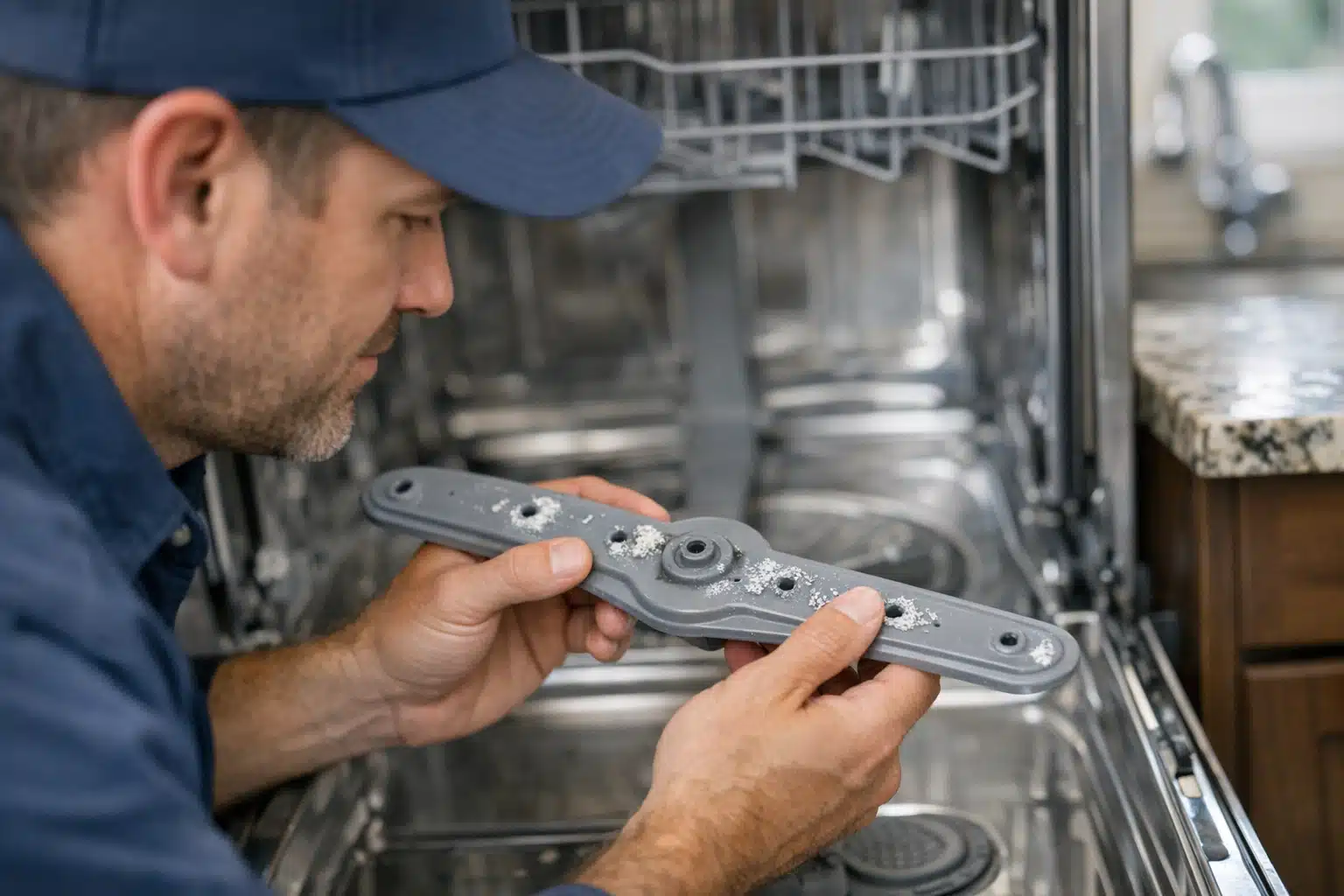
Spray arm holes are the first casualty of hard water. Mineral flakes break loose from the water heater and lodge in the tiny jets.
When half the holes clog, water pressure drops and dishes come out dirty on the top rack. We have pulled spray arms from Broomfield homes with a third of the nozzles sealed shut by scale.
Step-by-Step Dishwasher Maintenance for Mineral-Rich Water
You can handle routine cleaning without tools. Follow these steps monthly for best results in high mineral areas:
- Clear the filter. Remove the bottom rack and twist out the cylindrical filter. Rinse under hot water and scrub with an old toothbrush.
- Check the spray arms. Unclip them and poke each hole with a toothpick to clear mineral debris.
- Wipe the door seal. Scale and grime collect in the rubber gasket folds. Clean with a vinegar-dampened cloth.
- Run a vinegar cycle. Place a cup of white vinegar upright on the top rack. Run a hot cycle with no dishes.
- Add baking soda. Sprinkle a cup across the tub floor and run a short hot cycle to deodorize and polish.
White vinegar dissolves calcium scale that film removers cannot touch. Avoid bleach if your tub is stainless steel.
What to Skip
Do not pour vinegar and baking soda together into the tub. The reaction fizzles out fast and leaves a salty residue. Run them in separate cycles for real cleaning power.
Protecting the Heating Element From Scale
The exposed heating element at the tub bottom suffers most from hard water. Scale acts as insulation, forcing the element to work harder to heat water.
A scaled element raises energy use and shortens its lifespan. When it fails, dishes stop drying and water stays lukewarm.
Monthly vinegar cycles keep the element clear. If white buildup already coats it, a longer soak with a dishwasher-safe descaler helps before damage sets in.
Rinse Aid Is Not Optional Here
In soft water, rinse aid is a convenience. In Arvada’s hard water, it is close to mandatory.
Rinse aid breaks the surface tension so water sheets off dishes instead of drying into mineral spots. Keep the dispenser filled, and refill it every two to three weeks.
Common Dishwasher Issues in Arvada Homes
Hard water causes a predictable set of failures. Here are the ones we repair most across the Front Range:
- Blocked drain lines from mineral-grease sludge
- Stuck water inlet valves scaled open or shut
- Failed heating elements coated in calcium
- Leaking door gaskets stiffened by scale deposits
- Pump clogs from loose mineral flakes and debris
Routine cleaning prevents most of these. The rest come down to aging parts that minerals wear out early.
When Hard Water Points to a Bigger Problem
If several appliances show scale at once, the issue is your whole home’s water. A water softener protects the dishwasher, water heater, and fixtures together.
Softened water cuts detergent use and extends appliance life. Many Westminster and Wheat Ridge homeowners recover the softener cost in appliance savings over a few years.

 Posted on Google
Dishwasher Repair and Maintenance Cost Expectations
Knowing typical price ranges helps you decide between a fix and a replacement. Figures below reflect common Front Range rates:
- DIY descaling supplies: $5 to $15 per cleaning
- Spray arm replacement: $50 to $150 installed
- Heating element replacement: $150 to $300
- Water inlet valve repair: $150 to $250
- Drain pump replacement: $200 to $400
- Whole-home water softener: $1,500 to $3,500 installed
When repairs near half the cost of a new unit, replacement makes more sense. A dishwasher older than 10 years rarely justifies a major part swap.
The Math on Prevention
A monthly vinegar cycle costs a few dollars a year. That small habit can push off a $300 heating element failure by years.
For property managers across Arvada, scheduled cleaning across multiple units cuts emergency calls. Fewer failed dishwashers mean fewer tenant complaints and less water damage.
Seasonal Maintenance Tips for the Front Range
Colorado seasons affect your dishwasher more than you might expect. Adjust your routine with the calendar:
- Winter: Cold incoming water makes the heating element work harder. Clear scale before heavy holiday use.
- Spring: Run a full descale after winter and check the door seal for stiffness.
- Summer: Higher water use means more frequent filter cleaning.
- Fall: Inspect hoses and valves before the next cold stretch arrives.
If you leave a Front Range home empty in winter, run one empty hot cycle before you go. Standing water left in a scaled pump can cause odors and corrosion.
When to Call a Plumber in Arvada
Some problems need a trained hand. Call for help when you notice:
- Water pooling under the unit or on the floor
- A dishwasher that will not drain after cleaning the filter
- Burning smells or tripped breakers during a cycle
- Repeated clogs even after regular maintenance
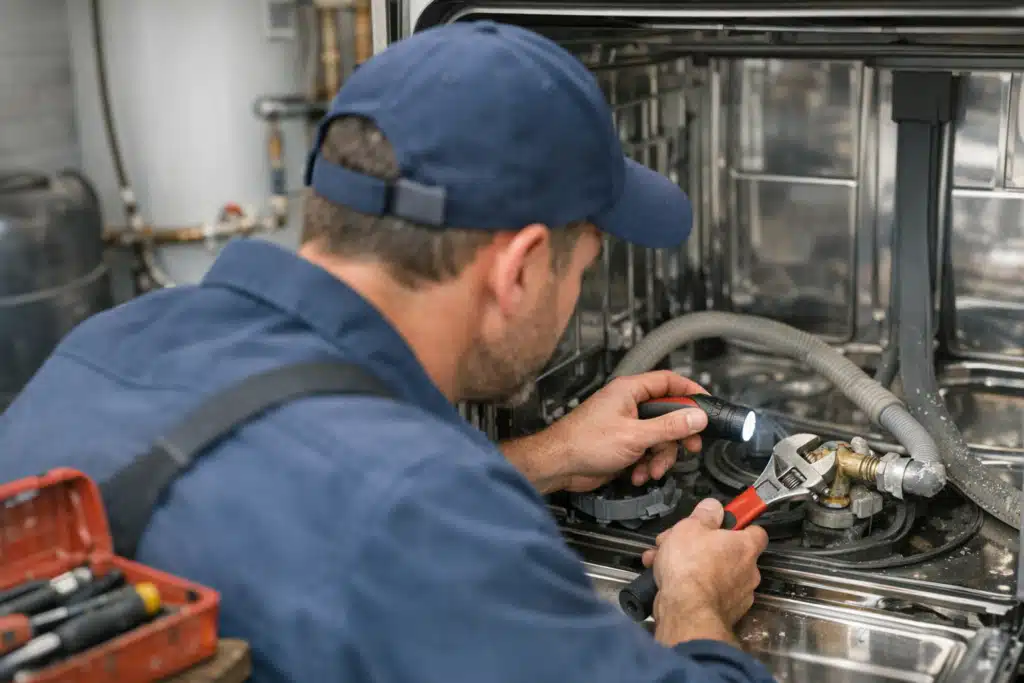
Cardom Plumbing & Heating has repaired dishwashers and installed water softeners across Arvada, Denver, Wheat Ridge, Broomfield, and Westminster. Local knowledge of Front Range water means we spot hard water damage fast.
Final Takeaways
Clean your dishwasher monthly and descale every one to two months to beat hard water buildup. Keep rinse aid filled, clear the spray arms, and watch for cloudy glasses as an early signal. A water softener protects every appliance in high mineral areas at once.
Need help with a stubborn clog, a failed heating element, or a water softener install? Call or text Cardom Plumbing & Heating at 720‑775‑8322, email tomd@cardomcolorado.com, or visit https://www.cardomcolorado.com for service across Arvada and the Front Range.
Sources
- U.S. Geological Survey – Hardness of Water
- U.S. Environmental Protection Agency – WaterSense Saving Water
- U.S. Department of Energy – Appliances and Electronics Energy Saver


