
Recent Posts
Categories
How to Handle Sump Pump Backups During Colorado’s Flash Floods
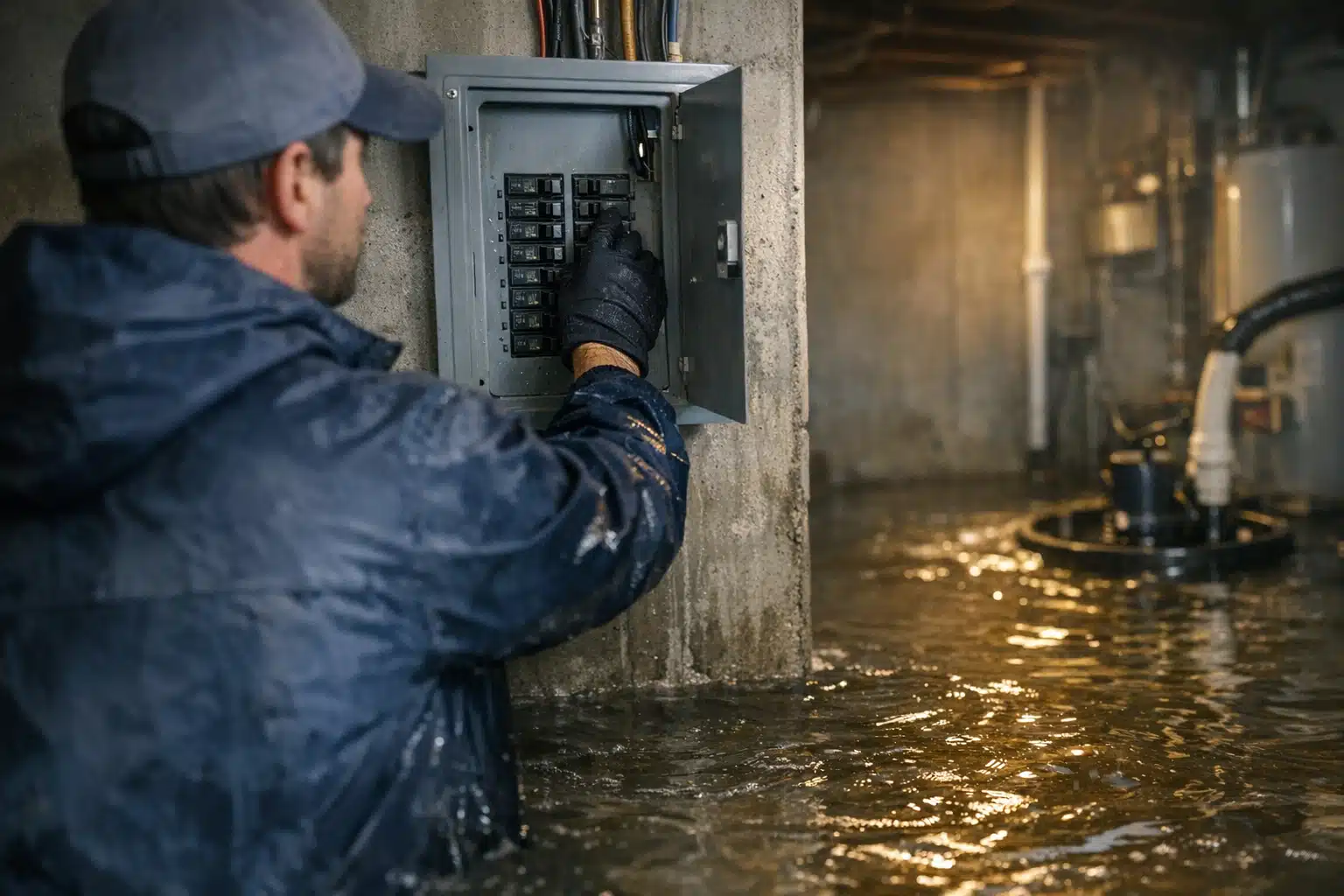
This guide from Cardom Plumbing & Heating explains how to handle sump pump failures during Colorado flash floods and offers prevention tips for Front Range homeowners.
- When a sump pump fails during flooding, cut power immediately, check for tripped outlets or stuck float switches, and use a wet/dry vac while troubleshooting. Battery backup systems provide protection during power outages.
- Common failure causes include power outages from lightning, overwhelmed pump capacity, stuck float switches, clogged discharge lines, and old motor burnout. Colorado's clay soil and monsoon patterns increase basement flooding risks.
- Prevention includes installing battery backup systems, testing pumps each spring, clearing discharge lines, and upgrading to 1/2 HP cast-iron models. Replacement costs range from $400 to $3,500 compared to $5,000 to $15,000 for flood cleanup.
When flash floods strike, first check if your sump pump has power and clear any debris from the intake. Install a battery backup system to keep the pump running during outages. Consider adding a secondary pump for extra capacity. If flooding occurs despite these measures, turn off electricity to the basement and contact a water damage professional immediately to prevent costly structural damage.
A June thunderstorm can dump two inches of rain on Arvada in under an hour. When that water hits saturated soil, basements flood fast. A sump pump backup during one of these storms turns a rainy afternoon into thousands of dollars in damage.
This post covers what to do the moment your sump pump fails during a Colorado storm. You will learn emergency steps, prevention tips, and repair cost ranges for Front Range homes.
What to Do If Your Sump Pump Fails During a Flood
Act fast when water starts rising in your basement. Follow these steps in order:
- Cut the power. Shut off electricity to the basement at the breaker before stepping into standing water.
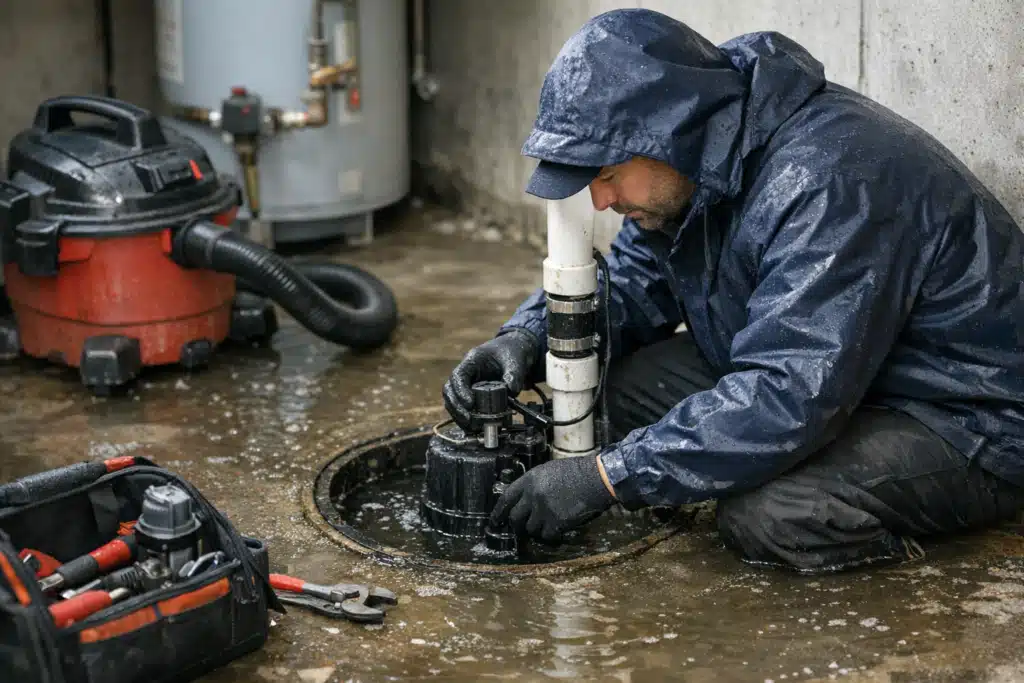
- Check the pump. Look for a tripped GFCI outlet or a stuck float switch first.
- Reset the float. A float jammed against the pit wall stops the pump from running.
- Bail or vacuum. Use a wet/dry vac or buckets to slow the rise while you troubleshoot.
- Deploy backup power. Switch to a battery backup pump if your primary unit died.
- Move valuables up. Lift furniture, boxes, and electronics off the floor.
- Call a plumber. If water keeps rising, get emergency help right away.
A sump pump backup during heavy rain rarely gives warning. Speed matters more than anything else in the first ten minutes.
Why Sump Pumps Fail During Colorado Storms
Front Range storms overwhelm pumps in ways summer drizzle never does. Knowing the cause helps you fix it faster.
- Power outages: Lightning knocks out power right when you need the pump most.
- Overwhelmed capacity: A cheap 1/3 HP pump cannot keep up with flash floods.
- Stuck float switch: Debris or a tilted float stops the motor from starting.
- Frozen or clogged discharge line: Ice or mud blocks water from leaving the pit.
- Old pump burnout: Motors past seven years give out under heavy load.
Why Arvada and Denver Homes Face Sump Pump Backup Risks
Colorado’s clay-heavy soil drains slowly. Water pools around foundations instead of soaking away. That pressure pushes moisture into basements and crawl spaces.
Our summer monsoon pattern makes things worse. July and August bring sudden downpours that dump a month of rain in one afternoon. Flash floods along the Front Range hit low-lying neighborhoods near Clear Creek and Ralston Creek hardest.
Neighborhoods Most Prone to Basement Flooding
Some Arvada and Denver areas see repeat flooding almost every storm season. Older homes near creek beds carry the highest risk.
- Homes near Ralston Creek in central Arvada
- Basements in older Wheat Ridge neighborhoods with original 1960s drainage
- Low-lying Westminster lots below street grade
- Finished basements in Broomfield subdivisions built on flat clay pads
How to Prevent a Sump Pump Backup Before the Next Storm
Prevention costs far less than water damage cleanup. Do this before monsoon season arrives.
Install a Battery Backup System
A battery backup pump runs when the power goes out. During a lightning storm, this is your best defense. Most systems give three to eight hours of runtime on a full charge.
For homes near creeks, a water-powered backup pump adds another layer. It runs off your home’s water pressure with no battery to drain.
Test Your Pump Every Spring
Pour a five-gallon bucket of water into the pit. Watch the float rise and the pump kick on. If it hesitates or hums without pumping, replace it before June.
Clear the Discharge Line
Walk the discharge pipe to where it exits your yard. Remove mulch, leaves, and dirt from the opening. In fall, check for ice that blocks flow during early storms.
Upgrade an Undersized Pump
Many Arvada homes came with builder-grade 1/3 HP pumps. For finished basements or high-water-table lots, step up to a 1/2 HP cast-iron model. It moves more water and lasts longer under heavy storm loads.
Sump Pump Repair and Replacement Cost in the Denver Area
Prices vary by pump type and how much labor the job takes. Here are realistic ranges for Front Range homes:
- Basic pump replacement: $400 to $750
- Cast-iron 1/2 HP upgrade: $600 to $1,100
- Battery backup system install: $800 to $1,600
- Water-powered backup install: $900 to $1,800
- New sump pit and full system: $1,500 to $3,500
- Emergency storm call-out: higher rate for after-hours flood response
Compare that to flood cleanup. A single flooded finished basement runs $5,000 to $15,000 in repairs and mold remediation.

If you want reliable, timely, and professional service, look no further. Highly recommend!
 Posted on Google
After the Flood: Cleaning Up Safely
Once the water stops rising, protect your health and your home. Standing water carries sewage bacteria and hides electrical hazards.
- Wait for power confirmation. Keep electricity off until the panel is dry and safe.
- Remove water fast. Pump out standing water within 24 hours to limit mold.
- Dry the space. Run fans and a dehumidifier for several days straight.
- Toss soaked porous items. Carpet padding and drywall below the waterline hold bacteria.
- Document damage. Photograph everything for your insurance claim.
Mold takes hold within 48 hours in a wet Colorado basement. Fast drying saves you thousands in remediation.
When to Call an Arvada Plumber for Sump Pump Help
Some fixes are within reach for handy homeowners. Others need a licensed hand. Call for help when:
- Water keeps rising despite a working pump
- Your pump runs constantly but the pit stays full
- You smell burning from the motor
- The discharge line freezes every winter
- You want a backup system installed before storm season
Our team knows Arvada’s soil, drainage codes, and storm patterns. We size pumps for the water table on your street, not a generic estimate.
Conclusion
A sump pump backup during a Colorado storm demands quick action: cut power, switch to backup, and remove water fast. Prevent the next failure with a battery backup, spring testing, and a clear discharge line. Sizing your pump for Front Range clay soil and monsoon rains keeps your basement dry when flash floods hit.
Need a sump pump inspected, upgraded, or replaced before the next storm? Call or text Cardom Plumbing & Heating at 720‑775‑8322, email tomd@cardomcolorado.com, or visit https://www.cardomcolorado.com for fast service across Arvada, Denver, and nearby Front Range communities.
Sources
- National Weather Service – Flood Safety
- Ready.gov – Floods Preparedness
- U.S. EPA – Mold Cleanup in Your Home
- Colorado Division of Water Resources


