
Recent Posts
Categories
Understanding the Role of Expansion Tanks in Arvada’s Plumbing Systems
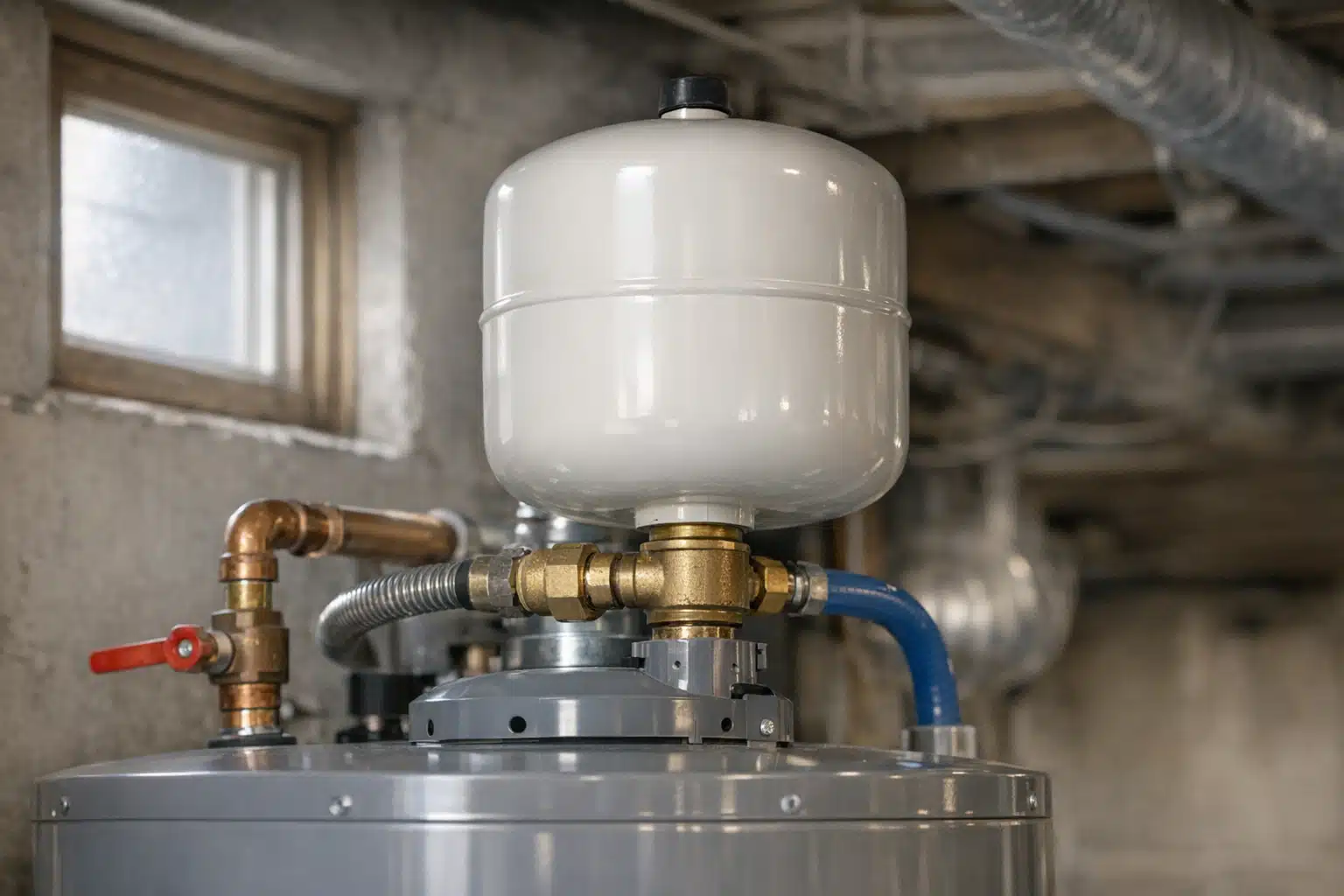
Expansion tanks absorb excess water pressure in Arvada homes with closed plumbing systems, protecting water heaters, pipes, and fixtures from damage caused by temperature-driven pressure spikes.
- Water expands when heated, and closed systems with backflow preventers trap that pressure. Expansion tanks use a rubber bladder and air cushion to absorb the overflow and keep pressure steady.
- Arvada's wide temperature swings cause frequent water heater cycles and more pressure spikes. Cold winter groundwater and frozen pipe risks make working expansion tanks especially important in this area.
- Signs of failure include dripping relief valves, banging pipes, and a tank that sounds solid when tapped. Replacement costs range from $250 to $500 total and should happen every 5 to 10 years.
An expansion tank manages water pressure in your plumbing system by absorbing the excess pressure created when water heats up and expands. Without this tank, the increased pressure can cause your water heater to groan, trigger relief valve drips, or create banging sounds in your walls. The tank acts as a safety buffer that protects your pipes and water heater from pressure-related damage.
A water heater that groans, drips from its relief valve, or bangs inside the wall points to one hidden culprit: pressure. In Arvada homes, expansion tanks quietly manage that pressure every day, and most homeowners never think about them until something breaks.
This post explains what an expansion tank does, why Arvada’s climate makes it matter more, and how to spot a failing one. You will learn sizing basics, repair costs, and when to call a plumber.
What an Expansion Tank Does in Your Plumbing System
An expansion tank is a small steel tank that absorbs extra water volume when your water heater heats up. Water expands as it warms, and that expanded volume needs somewhere to go.
Without a place to expand, pressure climbs fast inside a closed plumbing system. The tank has a rubber bladder and an air cushion that flexes to take on the overflow.
When the water cools, the bladder pushes the water back into the system. This keeps household pressure steady instead of spiking every heating cycle.
Why Closed Systems Are Common in Arvada
Many Arvada homes have a backflow preventer or a pressure-reducing valve on the main line. Both create a “closed” system, meaning water cannot flow back into the city main.
In a closed system, expanded water has no escape route. That is why local plumbing code requires an expansion tank on most water heater installs in the area.
If your home had a valve added during a remodel or meter upgrade, you may need a tank you never had before. This catches many Arvada homeowners off guard.
How Arvada’s Climate Puts Extra Stress on Your Pipes
Arvada sits along the Front Range, where temperatures swing wildly between day and night. A 40-degree drop after sunset is normal in fall and spring.
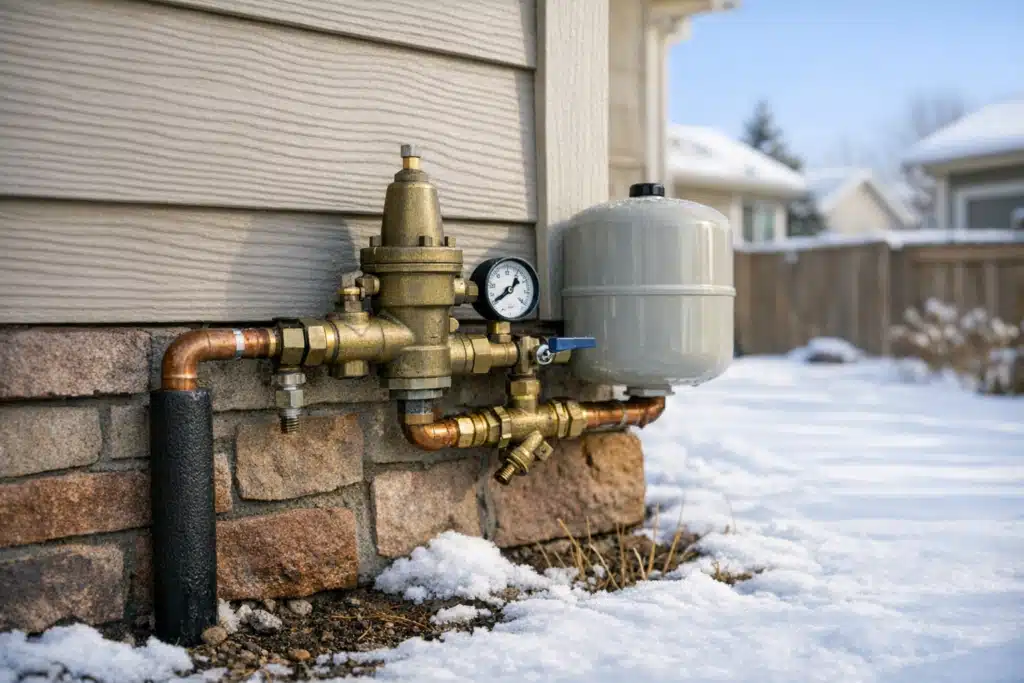
Those swings force your water heater to cycle more frequently to keep water hot. More cycles mean more expansion events and more pressure spikes each day.
Cold groundwater in winter also makes your heater work harder. Water entering your tank at 40 degrees needs far more heating than summer water at 60 degrees.
Winter Pressure Spikes and Frozen Line Risk
When a pipe partially freezes, it restricts flow and traps pressure between the ice and a closed valve. A working expansion tank gives that trapped water somewhere to go.
A failed tank in January can turn a minor freeze into a burst pipe. We see this pattern in older Arvada neighborhoods with unheated crawl spaces.
Signs Your Expansion Tank Is Failing
Expansion tanks last about 5 to 10 years before the internal bladder wears out. A waterlogged tank stops doing its job and pushes pressure back into your system.
Watch for these warning signs in your home:
- Dripping relief valve on the water heater, often mistaken for a leak
- Banging or hammering pipes when a faucet shuts off
- Fluctuating water pressure at showers and sinks
- Running toilets caused by pressure forcing water past the flapper
- A tank that feels full of water when you tap the top and bottom
Here is a quick field test. Tap the top of the tank, then the bottom.
The top should sound hollow, and the bottom should sound solid with water. If both sound solid, the bladder has likely failed.
The Schrader Valve Check
Every expansion tank has an air valve on top, like a bicycle tire valve. Press the pin with the water heater off and the system depressurized.
Air should hiss out. If water sprays instead, the bladder is ruptured and the tank needs replacement.
Proper Sizing and Pressure Settings
A tank that is too small cannot absorb enough expanded water. A tank set to the wrong air pressure fails the same way, even if the size is right.
The air charge inside the tank must match your home’s static water pressure. For most Arvada homes, that reading falls between 50 and 70 PSI.
Steps to Match Tank Pressure to Your Home
- Attach a pressure gauge to an outdoor spigot or laundry faucet.
- Read the static pressure with all fixtures off.
- Set the empty expansion tank’s air charge to match that number.
- Install the tank on the cold water line above the water heater.
Skipping the pressure match is the most common install mistake we correct. A brand-new tank set to factory 40 PSI on a 65 PSI system will fail early.
Expansion Tank Replacement Costs in the Arvada Area
Cost depends on tank size, access, and whether other valves need attention. Below is a realistic range for local homes.
- Standard residential tank (2 gallon): $40 to $90 for the part
- Larger tank for high-demand homes: $90 to $200 for the part
- Labor for a straightforward swap: $150 to $350
- Full replacement with new fittings: $250 to $500 total
If a plumber finds a bad pressure-reducing valve during the visit, expect added cost. Fixing both at once prevents a repeat call weeks later.
When Replacement Beats Repair
Expansion tanks are sealed units and cannot be rebuilt. Once the bladder fails, replacement is the only fix.
The good news is that a swap takes under an hour in most homes. It costs far less than the water damage a burst line can cause.

 Posted on Google
How Expansion Tanks Protect the Rest of Your Home
Steady pressure protects more than your water heater. Every fixture, valve, and joint in the house benefits from a tank that works.
Pressure spikes shorten the life of these components:
- Faucet cartridges and shower valves
- Toilet fill valves and flappers
- Dishwasher and washing machine inlet valves
- Water heater tank seams and welds
- Soldered and threaded pipe joints
A $60 tank quietly guards thousands of dollars in appliances and fixtures. That trade-off is why we check tanks on every water heater service in Arvada plumbing calls.
The Link to Warranty Coverage
Many water heater manufacturers void warranties when pressure runs too high. A missing or failed expansion tank is a common reason claims get denied.
Installing the correct tank keeps your warranty intact. It also keeps your relief valve from cycling itself to failure.
When to Call a Plumber
Some checks are safe for a homeowner, like tapping the tank or reading a gauge. Replacement involves draining, soldering or threading, and pressure setting.
Call a plumber if you notice any of the following:
- The relief valve drips or releases after every heating cycle
- Water pressure reads above 80 PSI on your gauge
- Pipes bang loudly when appliances shut off
- The tank feels heavy or water sprays from the air valve
- You added a backflow valve but have no expansion tank
Pressure above 80 PSI violates local code and stresses every fixture. That reading alone warrants a same-week inspection.
Conclusion
Expansion tanks absorb the pressure that Arvada’s temperature swings create, protecting your water heater, pipes, and fixtures. Watch for dripping relief valves, banging pipes, and a heavy tank, and replace the unit every 5 to 10 years. Matching the air charge to your home’s pressure makes the difference between a tank that lasts and one that fails early.
Noticing pressure trouble or missing an expansion tank on your system? Contact Cardom Plumbing & Heating in Arvada at 720‑775‑8322 by phone or text, or email tomd@cardomcolorado.com to schedule an inspection.
Sources
- U.S. Environmental Protection Agency – WaterSense Program
- International Code Council – International Plumbing Code
- U.S. Department of Energy – Water Heating


