
Recent Posts
Categories
Choosing the Right Shower System for Arvada’s Water Pressure
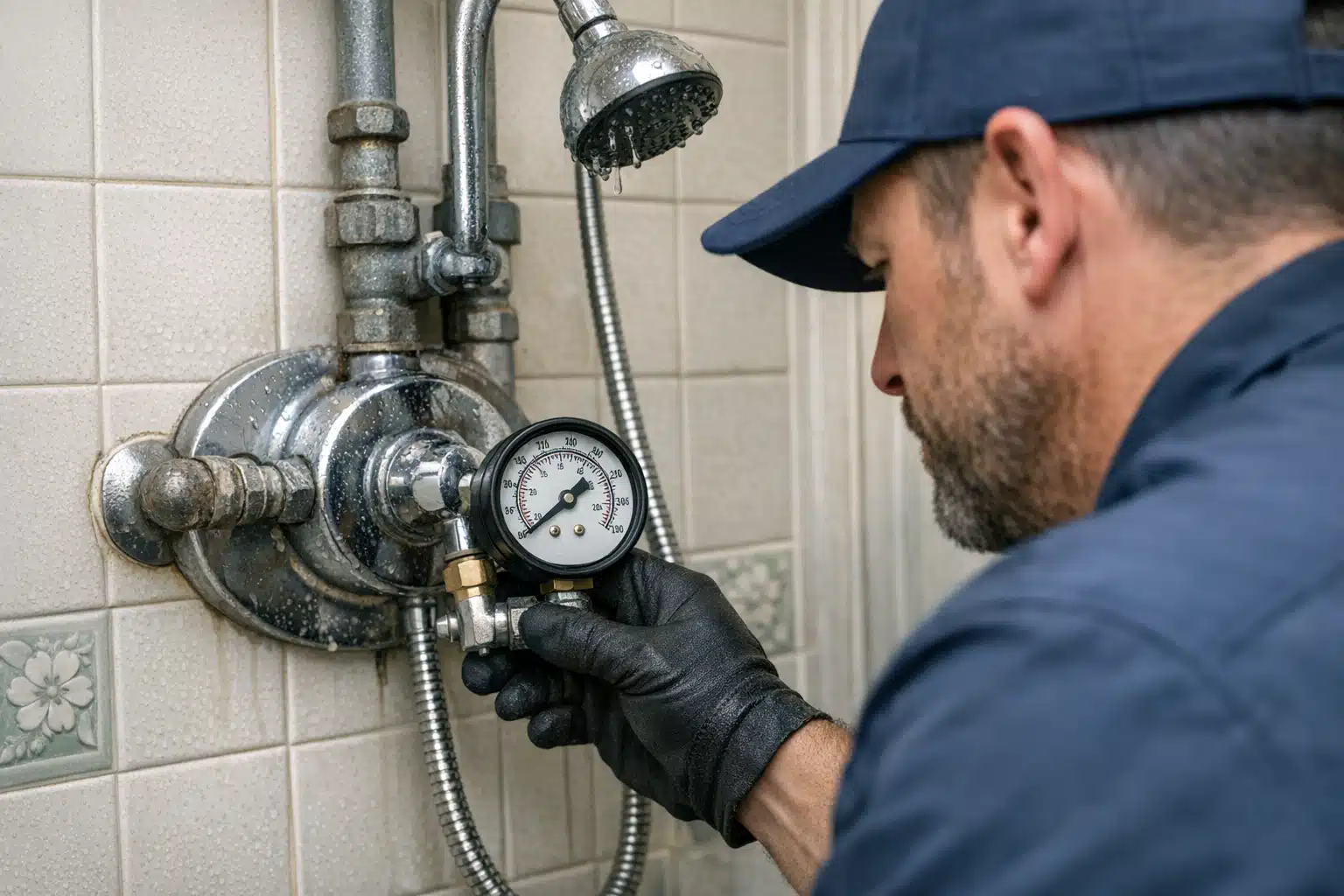
Arvada homes experience varying water pressure based on elevation and pipe conditions, making it important to match shower fixtures to your actual PSI reading for the best performance.
- Water pressure in Arvada ranges by neighborhood and elevation, with most homes functioning best between 45 and 60 PSI. Old galvanized pipes, hard water scale, and pressure-reducing valves set too low are common causes of weak flow.
- Low-pressure homes below 45 PSI benefit from pressure-compensating showerheads and single-head setups, while higher-pressure homes can support rain heads and body sprays. Homes above 80 PSI need a reducing valve to meet code.
- Front Range hard water causes mineral buildup that clogs fixtures over time. Cardom Plumbing tests PSI at the valve and recommends hardware rated for your actual pressure before every install.
Selecting the right shower system depends on matching your fixtures to your home's water pressure. If you experience weak water flow, the issue often stems from a mismatch between your shower system and available pressure. Test your home's pressure first, then choose low-pressure shower heads for weaker systems or standard fixtures if pressure is adequate. A plumber can help identify the best option for your specific situation.
Step into an Arvada shower and get a weak trickle instead of a strong rinse, and you know the frustration firsthand. The problem is not always your fixtures. It often comes down to how your shower system matches the water pressure in your home.
Homes across Arvada, Wheat Ridge, and Westminster see pressure that swings by neighborhood and elevation. Picking the wrong hardware turns a good remodel into a daily annoyance.
Below is a plain-spoken breakdown of how to choose fixtures that work with the pressure you have, not against it.
Why Arvada Water Pressure Varies So Much
Water pressure is the force pushing water from your pipes, measured in pounds per square inch (PSI). Most homes function best between 45 and 60 PSI.
Arvada’s pressure shifts based on where you live and how high you sit relative to the water supply. Homes in higher-elevation areas near the foothills sometimes read lower at the fixture.
Common Reasons Arvada Homeowners See Low Pressure
- Old galvanized pipes in homes built before the 1970s narrow from mineral buildup.
- Hard water scale from the Front Range clogs showerheads and cartridges.
- Pressure-reducing valves set too low after a past repair.
- Multiple fixtures running at once on a single supply line.
Before buying any new hardware, have your PSI tested at the shower valve. A simple gauge reading tells us what your fixtures must work with.
Match Your Shower System to Your Home’s Pressure
A shower system includes the valve, showerhead, handles, and any body sprays or rain heads. Each part has a rated flow that assumes a certain pressure.
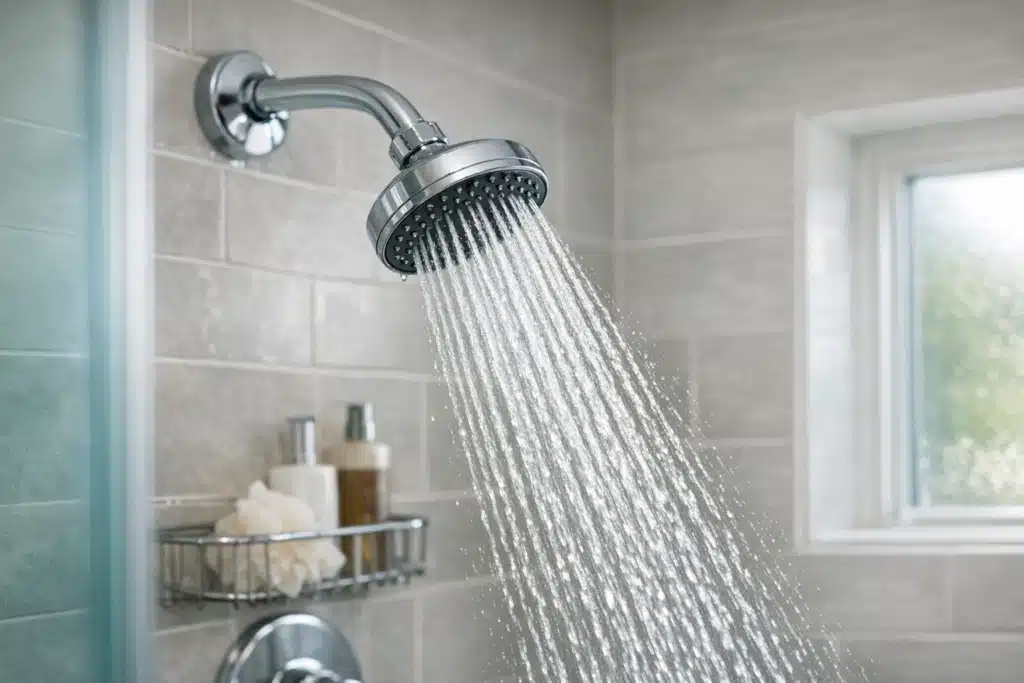
Install a high-flow rain head on a 40 PSI line, and you get a disappointing drizzle. Match the hardware to the reading, and the same water feels far stronger.
Best Fit for Lower-Pressure Arvada Homes
Homes reading below 45 PSI do better with fixtures built for that range. Look for these traits:
- Pressure-compensating showerheads that maintain force at lower flow.
- Single showerhead setups rather than multiple body sprays.
- Aerating heads that mix air into water for a fuller feel.
- Thermostatic valves that hold temperature without draining pressure.
Best Fit for Higher-Pressure Homes
Newer builds in parts of Broomfield and Westminster sometimes run above 60 PSI. High pressure lets you add features but risks pipe strain.
- Rain heads and body sprays work here without weak output.
- A pressure-reducing valve protects fixtures if readings top 70 PSI.
- Multi-function shower panels perform as designed.
Homes above 80 PSI violate plumbing code and need a reducing valve. We check this on every install.
Shower System Types and How They Handle Pressure
Not every style suits every home. Here is how the main types behave in real Arvada bathrooms.
Standard Wall-Mounted Showerheads
The most forgiving choice for low pressure. A single fixed or handheld head keeps flow concentrated and strong.
Rain Shower Heads
Large overhead panels rely on gravity and volume. On a low-pressure line, they feel like a light sprinkle. Pair them only with 50 PSI or higher.
Body Spray and Multi-Head Systems
Running several outlets at once splits your available pressure. A home at 45 PSI cannot feed six sprays evenly. Reserve these for homes with strong, verified flow.
Thermostatic and Digital Systems
These hold steady temperature and pressure even when a toilet flushes elsewhere. A smart pick for busy Arvada households with one bathroom under heavy use.
How Hard Water Affects Your Shower System
Front Range water carries calcium and magnesium that leave scale inside fixtures. Over months, that buildup narrows spray holes and drops your pressure.
A shower that felt strong last year may weaken from mineral clogging, not a supply problem. Signs of scale include:
- White crust around showerhead nozzles.
- Water spraying in odd directions.
- Slower flow after a year or two of use.
Fixtures with silicone spray nozzles shed scale with a quick rub. A whole-home water conditioner cuts buildup across every fixture at once.
What a New Shower System Costs in Arvada
Prices depend on the hardware and whether we open walls. Here is a general breakdown for local installs.
- Basic head and valve swap: $250 to $600 in labor and parts.
- Mid-range thermostatic system: $700 to $1,500 installed.
- Full multi-head or panel system: $1,800 to $4,000 with wall work.
- Pressure-reducing valve add-on: $300 to $550.
Homes needing pipe upgrades for better flow cost more. We give a firm quote after testing your pressure and checking your supply lines.

 Posted on Google
Steps We Take on Every Arvada Shower Install
- Test your PSI at the shower valve with a gauge.
- Check your supply pipe size and material for restrictions.
- Recommend hardware rated for your actual pressure.
- Install and set valves, verifying temperature and flow.
- Confirm final output so the shower feels right before we leave.
This order stops the most common mistake: buying beautiful hardware that underperforms on your line.
Signs Your Current Shower System Needs Replacing
- Weak flow that cleaning the head does not fix.
- Temperature that swings when another faucet runs.
- Leaks behind the wall or at the valve.
- A valve older than 15 years with worn cartridges.
- Corroded fittings on aging galvanized lines.
Any of these point to hardware that no longer fits your home’s plumbing. Replacing the valve during a remodel saves a second wall opening later.
Why Local Fit Matters
A shower system that works great in a Denver high-rise may flop in an older Arvada ranch. Elevation, pipe age, and hard water all shape what performs here.
Cardom Plumbing & Heating installs fixtures matched to your street and your home, not a generic showroom setup. We carry hardware for both low and high-pressure Arvada properties.
Get the Right Shower System for Your Arvada Home
Match your fixtures to your verified water pressure, guard against hard water scale, and pick hardware rated for your actual PSI. Doing this in the right order gives you a strong, steady shower that lasts.
Ready for an upgrade that works with your home’s pressure? Call or text Cardom Plumbing & Heating at 720‑775‑8322, email tomd@cardomcolorado.com, or visit https://www.cardomcolorado.com to book service in Arvada and nearby Front Range communities.
Sources
- U.S. EPA WaterSense – Showerheads
- USGS Water Science School – Hardness of Water
- International Code Council – Uniform Plumbing Code


