

Boiler repair in Lakewood, CO involves diagnosing and fixing issues in hydronic heating systems that use water or steam. The unique local conditions, such as high altitude and water quality, can impact boiler performance and require specialized knowledge for effective repairs.
- Homeowners may experience symptoms like cold radiators or unusual sounds, indicating a need for professional assessment. Proper diagnosis is essential due to the complex nature of boiler systems and local environmental factors. Cardom Plumbing & Heating offers specialized expertise and transparent communication throughout the repair process.
- Boiler Repair Services in Lakewood, CO That rumbling sound from your basement at 6 AM.
- The radiators that stay cold while your thermostat climbs.
Common signs that a boiler needs repair include unusual noises like rumbling, radiators that remain cold despite a rising thermostat, and water pooling beneath the boiler unit. These issues signal that the heating system is malfunctioning and requires professional attention to ensure safe and efficient operation.
Boiler Repair Services in Lakewood, CO
That rumbling sound from your basement at 6 AM. The radiators that stay cold while your thermostat climbs. Water pooling beneath your boiler unit. These aren't just inconveniences – they're your heating system telling you something has gone wrong.
Boiler repair encompasses the diagnosis, troubleshooting, and restoration of hydronic heating systems that use heated water or steam to warm your home. Unlike forced-air furnaces, boilers rely on a complex interplay of burners, heat exchangers, circulation pumps, expansion tanks, and distribution piping. When any component fails, your entire heating system can shut down or operate dangerously.
Professional diagnosis matters because boiler systems involve gas combustion, water pressure, and electrical controls working together. A symptom like inconsistent heating could stem from a failing circulator pump, air trapped in the lines, a malfunctioning zone valve, or sediment buildup in the heat exchanger. Lakewood's elevation – sitting at approximately 5,500 feet – affects combustion efficiency and requires proper burner calibration that differs from sea-level settings.
- Accurate identification of the root cause – not just the visible symptom
- Safe handling of gas connections, pilot assemblies, and pressure relief systems
- Proper calibration for Lakewood's high-altitude conditions
- Prevention of carbon monoxide risks through thorough combustion analysis
Common Boiler Issues in Lakewood, CO
Lakewood homeowners face a unique combination of factors that stress boiler systems year-round. The Front Range climate delivers temperature swings that can span 40 degrees in a single day, forcing your boiler to cycle repeatedly between standby and full operation. This thermal cycling accelerates wear on ignition systems, expansion tanks, and circulator pumps.
Water quality in the Denver metro area contains moderate mineral content that accumulates inside boiler heat exchangers over time. This scale buildup acts as insulation between the burner flame and the water, reducing efficiency and causing the heat exchanger to overheat. Many Lakewood homes built during the 1950s through 1980s have original cast iron radiators connected to replacement boilers – a combination that sometimes creates compatibility issues with modern equipment.
Local Factors Affecting Boiler Performance
- Altitude-related combustion issues – Reduced oxygen density at 5,500 feet requires specific air-fuel ratio adjustments
- Hard water mineral deposits – Denver Water's supply leaves scale that restricts flow and heat transfer
- Freeze-thaw foundation movement – Soil expansion can stress boiler piping connections
- Aging infrastructure – Many homes have 30+ year old boiler systems nearing end of service life
- Rapid temperature fluctuations – Chinook winds create sudden heating demand changes
- Dry winter air – Low humidity affects system pressure and can accelerate corrosion
Warning Signs Requiring Immediate Attention
Your boiler communicates problems through specific symptoms. Recognizing these early prevents small repairs from becoming emergency replacements.
- Pressure gauge readings outside the normal 12-15 PSI range
- Kettling sounds – rumbling or banging from the boiler tank
- Yellow or orange pilot flame instead of steady blue
- Water leaking from the pressure relief valve or tank seams
- Radiators heating unevenly or remaining cold in certain zones
- Frequent pilot light outages or ignition failures
- Unusual odors – especially rotten egg smell indicating gas leaks
How Cardom Plumbing & Heating Approaches Boiler Repair
Effective boiler repair follows a systematic process that identifies the actual problem – not just the obvious symptom. Our technicians arrive equipped with combustion analyzers, pressure testing equipment, and diagnostic tools specific to hydronic heating systems.
Our Repair Process
- Initial Assessment – We listen to your description of the problem, review the boiler's service history if available, and note any error codes displayed on modern units
- Visual Inspection – Examining the boiler exterior, piping connections, expansion tank, circulator pump, and zone valves for obvious damage or leaks
- Combustion Analysis – Testing flue gases to verify proper air-fuel mixture, carbon monoxide levels, and draft conditions
- Pressure and Flow Testing – Checking system pressure, expansion tank pre-charge, and water circulation through all zones
- Component Testing – Evaluating electrical controls, thermostats, aquastats, and safety switches
- Diagnosis and Options – Explaining what we found, what caused it, and presenting repair options
- Repair Execution – Completing the approved repairs using manufacturer-specified parts
- System Verification – Running the boiler through complete heating cycles to confirm proper operation
Diagnostic Methods We Use
- Digital combustion analyzers calibrated for high-altitude conditions
- Infrared thermometers to identify heat distribution problems
- Pressure gauges and manometers for hydronic system testing
- Electrical multimeters for control circuit diagnosis
- Borescope cameras for internal heat exchanger inspection
- Gas leak detection equipment
Communication Throughout the Process
Before any repair begins, you'll understand exactly what we found and why it matters. We explain technical issues in plain language and show you the problem when possible. No repair proceeds without your approval, and we document everything for your records.
Why Choose Cardom Plumbing & Heating
Boiler systems demand specialized knowledge that general HVAC technicians often lack. Our team includes technicians specifically trained in hydronic heating – the science of using water to transfer heat. We maintain certifications from boiler manufacturers and stay current with evolving codes and equipment through ongoing education.
Working throughout the Lakewood area means we understand local conditions that affect your boiler. We know which neighborhoods have harder water. We recognize the common boiler brands installed in different housing developments. Our familiarity with Jefferson County permitting requirements and inspection standards keeps your repair compliant and properly documented.
What Sets Us Apart
- Hydronic system specialists – Not just general heating technicians
- High-altitude expertise – Proper combustion tuning for 5,500-foot elevation
- Stocked service vehicles – Common repair parts on hand to complete most repairs same-day
- Transparent communication – Clear explanations before, during, and after repairs
- Follow-up verification – We check in to confirm your system continues operating properly
- Emergency availability – Boiler failures don't wait for business hours
Our technicians carry the tools and training to work on all major boiler types – cast iron, steel, condensing, and combination units. Whether your home has a vintage American Standard from the 1960s or a modern high-efficiency Navien, we have the expertise to diagnose and repair it correctly.
Recent Work
Small Mystery Leak - Lakewood
- Problem: Water leaking in house that is empty
- Found: We did find that when we manually filled the boiler to proper pressure with a hose, the boiler relief valve dumped water on the floor.
- Fixed: Picked up the proper size relief valve and installed on the boiler. This stopped the leak. Purged the air from the zone by filling the boiler with a garden hose and manually purging air from the system using the isolation valve and boiler drain on the system.
- Outcome: Boiler is working now at this time and the relief valve is no long dumping.
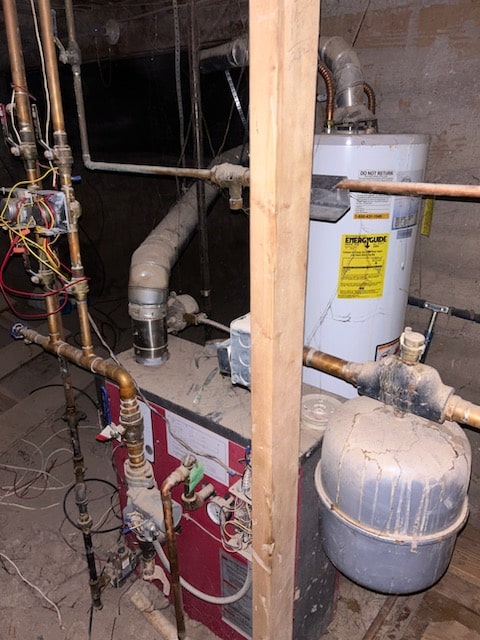
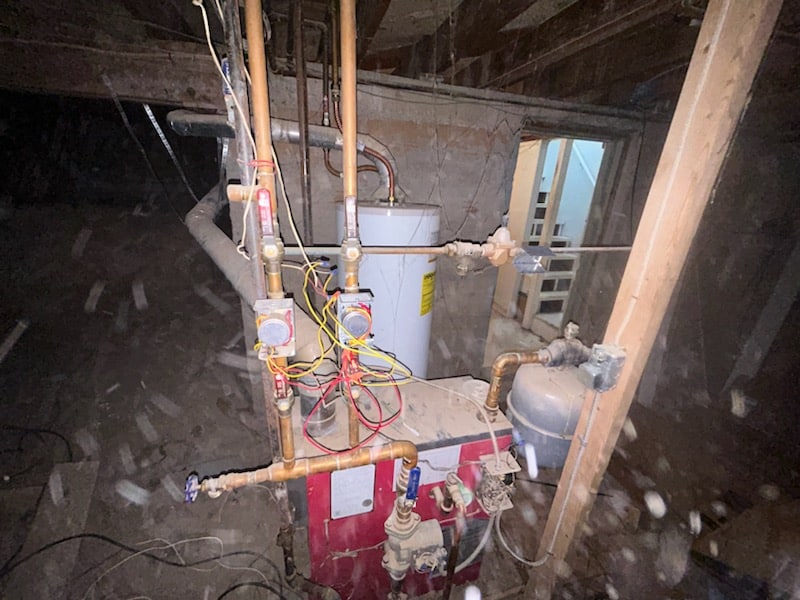
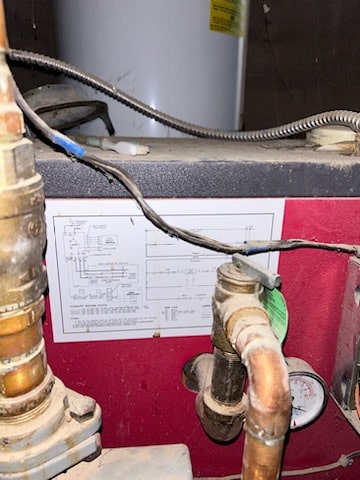
Boiler Start Up for Season for this 6-Plex - Lakewood
- Problem: Start up boiler for the 6-plex
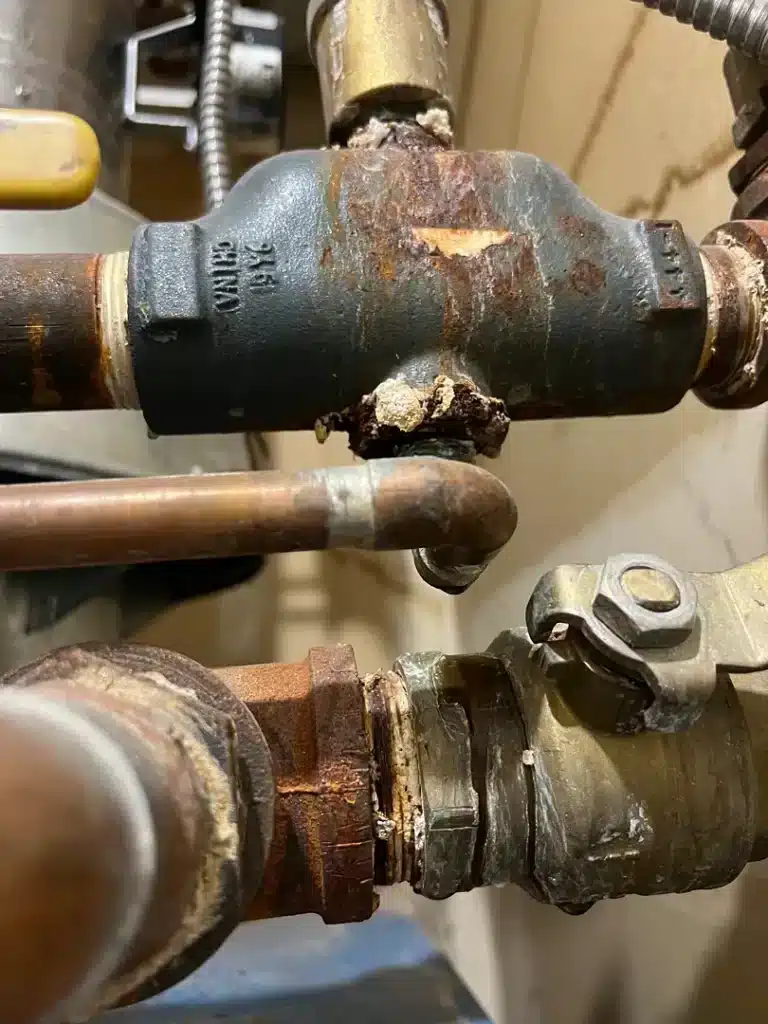
- Found: Weird noises. Leak at air scoop, looks rusted.
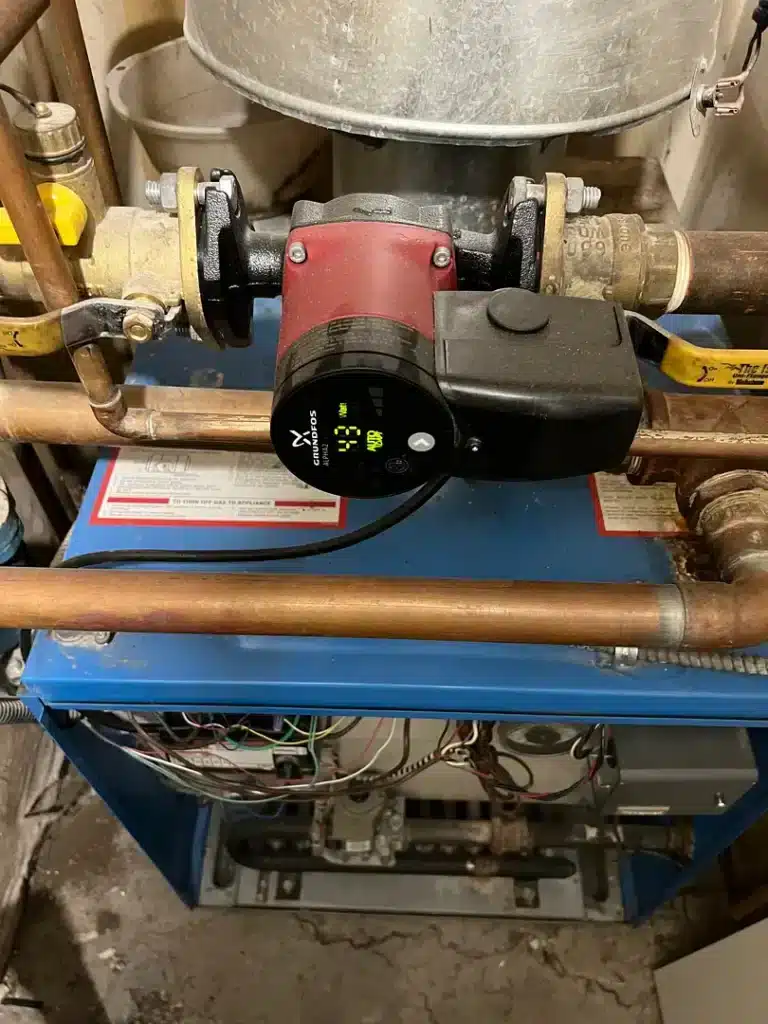
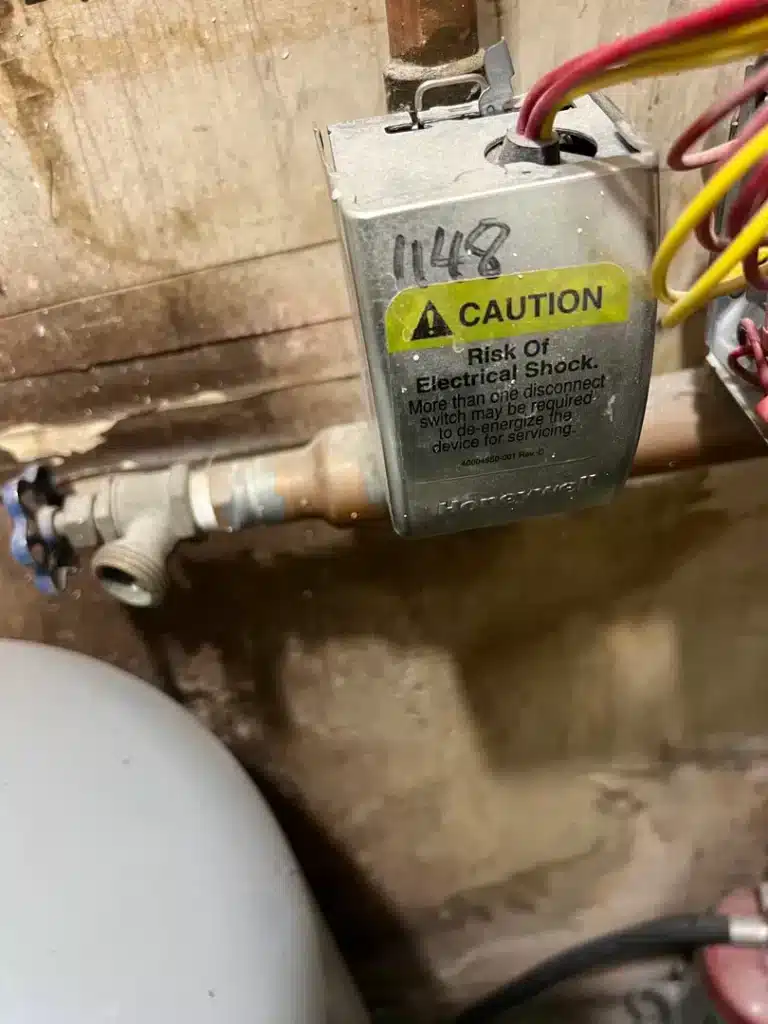
- Fixed: The flame sensor is dirty or going bad so I cleaned it up.
- Outcome: Refired and did not have an issue again.
Housing Characteristics & Boiler Repair Considerations
Lakewood's housing stock spans nearly a century of construction, creating diverse boiler repair scenarios across different neighborhoods. Understanding what's likely in your home helps anticipate common issues and appropriate solutions.
Housing Age and Boiler Systems by Era
- Pre-1960 homes – Often feature original cast iron radiator systems, gravity-fed designs, or converted coal boilers. These systems may have been retrofitted multiple times with varying quality.
- 1960s-1970s construction – Common in Green Mountain and Applewood areas. Typically installed with standing pilot boilers, copper or steel piping, and baseboard radiator distribution.
- 1980s-1990s homes – More likely to have electronic ignition boilers, zone valves, and mixed heating systems combining boilers with forced air.
- 2000s and newer – High-efficiency condensing boilers, radiant floor heating, and combination boiler-water heater units become more common.
Neighborhood-Specific Patterns
Certain Lakewood neighborhoods show consistent boiler characteristics. The older sections near Belmar and along Wadsworth often contain mid-century homes with original hydronic systems that have been patched and modified over decades. These require technicians who understand legacy equipment and can work with mixed-generation components.
Homes in the Bear Creek and Green Mountain areas – many built during the 1970s energy crisis – sometimes feature oversized boilers installed when fuel efficiency wasn't prioritized. These units may still function but operate inefficiently and experience different failure patterns than properly sized equipment.
Basement and Mechanical Room Considerations
- Finished basements may restrict access to boiler equipment
- Older homes often have boilers in cramped utility closets
- Crawlspace installations in some ranch-style homes complicate service
- Radon mitigation systems in many Lakewood homes affect boiler combustion air
Environmental Conditions & Boiler Repair Implications
Lakewood's environmental conditions directly impact how boiler systems perform and what problems they develop. From water chemistry to soil movement, local factors create specific repair patterns our technicians encounter regularly.
Water Quality and Its Effects
Denver Water supplies most of Lakewood, delivering water that tests at moderate hardness levels – typically 50-150 parts per million of calcium carbonate depending on the source blend. While not extremely hard, this mineral content accumulates inside boiler heat exchangers over years of operation.
- Scale deposits reduce heat transfer efficiency by 10-25% in affected systems
- Mineral buildup restricts water flow through narrow passages
- Sediment collects in low points of piping systems
- Corrosion accelerates where scale creates hot spots on metal surfaces
Annual flushing and periodic chemical treatment help manage mineral accumulation, but many Lakewood boilers go years without proper maintenance, allowing significant scale buildup.
Climate Impacts on Boiler Systems
The Front Range climate subjects boilers to demanding operating conditions. Winter temperatures regularly drop below zero, requiring sustained high-output operation. Yet afternoon sunshine can warm homes enough to reduce heating demand dramatically – sometimes within hours.
- Temperature cycling stress – Repeated expansion and contraction fatigues metal components
- Freeze risk – Boilers in poorly insulated spaces or with exterior piping face freezing during cold snaps
- Low humidity effects – Winter humidity often drops below 20%, affecting system seals and gaskets
- Spring shoulder season – Intermittent operation during mild weather can cause condensation problems
Soil and Foundation Factors
Lakewood sits on expansive clay soils that swell when wet and shrink when dry. This seasonal movement causes foundation shifting that stresses rigid boiler piping connections. Homes without proper drainage often show cracked solder joints or failed fittings where pipes couldn't flex with foundation movement.
Lakewood Climate Data and Heating Demand Patterns
Understanding Lakewood's heating requirements helps homeowners recognize when boiler problems might emerge and why certain repairs become necessary. Local climate data reveals the demands placed on residential heating systems throughout the year.
Lakewood averages approximately 6,000 heating degree days annually – a measurement that quantifies how much heating a building needs based on outdoor temperatures. This places significant demands on boiler systems, particularly during December through February when average low temperatures hover in the teens and single digits. The National Weather Service records show Lakewood experiences roughly 160 days per year where heating is needed to maintain comfortable indoor temperatures.
Key Climate Statistics Affecting Boiler Operation
- Average January low temperature: 16°F – requiring sustained boiler operation
- Record low temperature: -25°F – extreme cold that tests system limits
- Days below freezing annually: Approximately 155 days
- Average heating season length: October through April – seven months of regular use
- Temperature swing potential: 40-50 degree changes within 24 hours during Chinook events
These conditions mean Lakewood boilers operate under demanding circumstances. The extended heating season – longer than many U.S. cities – accumulates wear on ignition systems, circulator pumps, and controls. Boilers here may cycle thousands of times per season, with each start-stop cycle stressing components designed for finite lifespans.
How This Affects Repair Timing
Most boiler failures occur during peak demand periods – specifically the first sustained cold snap of winter when systems transition from light use to continuous operation. Components that functioned marginally during mild weather fail under heavy loads. Scheduling maintenance during fall – before heating season begins – identifies developing problems while repair scheduling remains flexible and parts availability is good.


