Gas piping services in Lafayette, CO address critical issues like leaks and aging infrastructure that can pose safety risks. Understanding the unique environmental conditions in Lafayette is essential for effective gas system management.
Residents should watch for signs like hissing sounds or pilot lights that won’t stay lit, as these can indicate gas leaks. Professional assessments are vital due to Lafayette's elevation and soil conditions that stress gas systems. Cardom Plumbing & Heating offers thorough inspections, pressure testing, and repairs to ensure safe and compliant gas piping.
Gas Piping Services in Lafayette, CO That faint smell near your water heater.
A pilot light that won’t stay lit.
What are the signs of gas piping issues in Lafayette, CO?
Signs of gas piping issues in Lafayette, CO include a faint smell near the water heater, a pilot light that won't stay lit, and appliances that seem sluggish despite appearing functional. These indicators suggest the need for immediate professional attention to ensure safety and proper functioning.
Gas Piping Services in Lafayette, CO
That faint smell near your water heater. A pilot light that won't stay lit. Appliances that seem sluggish despite appearing functional. These subtle signs often point to gas piping issues that demand immediate professional attention – and in Lafayette's unique environment, understanding your gas system's behavior matters more than you might realize.
Gas piping services encompass the complete network delivering natural gas throughout your home or business. This includes supply lines from the meter, branch lines to individual appliances, connectors, shut-off valves, and the fittings that join everything together. Whether you're connecting a new gas range, extending service to a backyard fire pit, or addressing corrosion in aging supply lines, professional diagnosis prevents the dangerous guesswork that turns minor issues into serious hazards.
Why Professional Gas Piping Assessment Matters
Lafayette sits at 5,280 feet elevation where atmospheric pressure affects gas combustion differently than sea-level locations. The town's housing stock – ranging from 1970s-era homes near Old Town to newer developments in Indian Peaks – presents varied piping materials and installation standards. Add in clay-heavy soils that shift seasonally and temperature swings exceeding 50 degrees in a single day, and you have conditions that stress gas piping systems in ways unique to the Front Range.
Pressure testing identifies leaks invisible to standard detection methods
Professional sizing calculations prevent undersized lines that starve appliances of adequate fuel
Code-compliant installations protect your family and satisfy insurance requirements
Proper material selection accounts for Lafayette's specific soil chemistry and moisture patterns
Cardom Plumbing & Heating provides Gas Piping Services services in all neighborhoods of Lafayette including Anna's Farm, Autumn Meadows, Blue Heron Estates, Cross Ridge, Greenlee Park, Indian Peaks, Nyland Cohousing Community, South Pointe, Spring Creek, Steel Ranch Subdivision, The Boulder, The Ranch, Trails at Coal Creek, Waneka Landing, Waneka Pointe, and Water's Edge.
Lafayette's position along the Front Range creates a distinct set of challenges for residential and commercial gas systems. The semi-arid climate delivers intense UV exposure during summer months while winter brings freeze-thaw cycles that shift soil and stress underground piping. Homes built during Lafayette's growth periods in the 1970s through 1990s often contain black iron piping that's now approaching or exceeding its expected service life.
The expansive clay soils common throughout Boulder County create particular problems for buried gas lines. During wet periods, these soils swell significantly. During drought conditions – increasingly common along the Front Range – they contract and crack. This constant movement places stress on underground connections and can gradually work joints loose over years of seasonal cycling. Properties near Coal Creek face additional considerations, as the historic mining activity in the region altered subsurface conditions in ways that affect modern utility installations.
Warning Signs Lafayette Residents Should Monitor
Gas leaks don't always announce themselves dramatically. Often, the first indicators are subtle changes you might dismiss as unrelated issues. Paying attention to these signals can mean the difference between a simple repair and an emergency evacuation.
Hissing or whistling sounds near gas appliances or along exposed piping runs
Dead vegetation patches in your yard above buried gas lines – especially during otherwise healthy growing seasons
Higher-than-expected gas bills without changes in usage patterns
Pilot lights that repeatedly extinguish despite proper adjustment
Yellow or orange burner flames instead of the steady blue indicating complete combustion
Appliances that produce soot, excessive moisture, or unusual odors during operation
Seasonal Timing Factors
Lafayette's heating season typically runs from October through April, placing maximum demand on gas systems precisely when failures create the greatest hardship. Fall represents the ideal window for inspection and maintenance – catching issues before cold weather arrives and scheduling permits. Spring thaw often reveals damage from winter soil movement, making March and April prime months for addressing underground line concerns before summer landscaping projects begin.
Addressing gas piping concerns requires systematic evaluation rather than guesswork. Our approach combines proven diagnostic techniques with knowledge of Lafayette's specific building practices and environmental conditions.
Our Gas Piping Service Process
Initial Assessment – We begin by discussing your concerns, reviewing your home's gas appliance inventory, and examining accessible piping for visible issues like corrosion, improper supports, or outdated materials.
Pressure Testing – Using calibrated gauges, we isolate and pressurize gas line sections to identify leaks that visual inspection cannot detect. This testing exceeds minimum code requirements to provide comprehensive system evaluation.
Leak Location – When pressure testing indicates a problem, we employ electronic detection equipment and tracer methods to pinpoint leak locations without unnecessary excavation or wall opening.
Repair Planning – We develop a repair strategy that addresses immediate safety concerns while considering your home's layout, future appliance plans, and budget considerations.
Installation and Repair Work – All work follows current International Fuel Gas Code requirements and Xcel Energy specifications, using appropriate materials for each application.
Final Testing and Documentation – Completed work undergoes pressure testing before appliance reconnection. We provide documentation of all work performed for your records and any required inspections.
Methods and Techniques
Electronic combustible gas detectors for pinpoint leak identification
Manometer testing for precise pressure measurement
Proper thread sealant selection based on gas type and piping material
Flexible connector installation meeting current seismic and safety standards
CSST (corrugated stainless steel tubing) bonding to prevent lightning-related damage
Communication Throughout the Process
We explain findings in plain language before recommending any work. You'll understand what we discovered, why it matters, and what options exist for addressing it. For larger projects, we provide written proposals detailing scope, materials, and general timeline expectations. Emergency situations receive immediate attention with clear guidance on safety precautions while we're en route.
Why Choose Cardom Plumbing & Heating
Gas work demands more than general plumbing knowledge. Our technicians hold specific certifications for gas piping installation and repair, maintaining current credentials through ongoing training. We understand the nuances of working with Xcel Energy's requirements, Boulder County inspection protocols, and the particular challenges Lafayette properties present.
Local presence means faster response when gas concerns arise. We're familiar with Lafayette's neighborhoods – from the older sections near Public Road to the developments around Waneka Lake – and understand how construction practices varied across different building periods. This familiarity translates into more accurate initial assessments and fewer surprises during projects.
What Sets Our Approach Apart
Licensed and insured for gas piping work – not just general plumbing
24/7 availability for gas emergencies requiring immediate response
Direct communication with the technicians performing your work
Detailed documentation supporting permit applications and insurance claims
Follow-up verification to confirm repairs remain sound after initial settlement periods
We invest in diagnostic equipment that many contractors consider optional – electronic leak detectors, calibrated pressure testing apparatus, and camera systems for inspecting concealed spaces. These tools reduce guesswork, minimize invasive exploration, and provide definitive answers about your system's condition.
Housing Characteristics & Gas Piping Services Considerations
Lafayette's residential development occurred in distinct phases, each bringing different construction standards and gas piping practices. Understanding your home's era helps anticipate the specific issues most likely to affect your gas system.
Historic and Mid-Century Properties
Homes in Lafayette's original town center and surrounding areas built before 1970 may contain galvanized steel gas piping – a material prone to internal corrosion and joint deterioration over decades of service. These properties often feature:
Smaller-diameter supply lines inadequate for modern high-efficiency appliances
Routing through unheated spaces where temperature extremes stress fittings
Connections predating current flexible connector requirements
Outdated shut-off valves that may not seal reliably
1970s Through 1990s Construction
Lafayette experienced significant growth during these decades, producing much of the current housing stock. Black iron piping became standard, offering improved durability but presenting its own aging concerns. Many of these installations are now 30-50 years old – approaching the point where joint compound degradation and fitting corrosion become increasingly common.
Contemporary Construction
Newer developments in Indian Peaks, Saddleback, and other recent additions typically feature CSST flexible gas piping. While this material offers installation advantages, it requires proper bonding to the home's electrical grounding system – a step sometimes overlooked during original construction. Lightning strikes in the Lafayette area have caused CSST failures in improperly bonded installations, making verification of this bonding an important safety consideration.
Recent Work
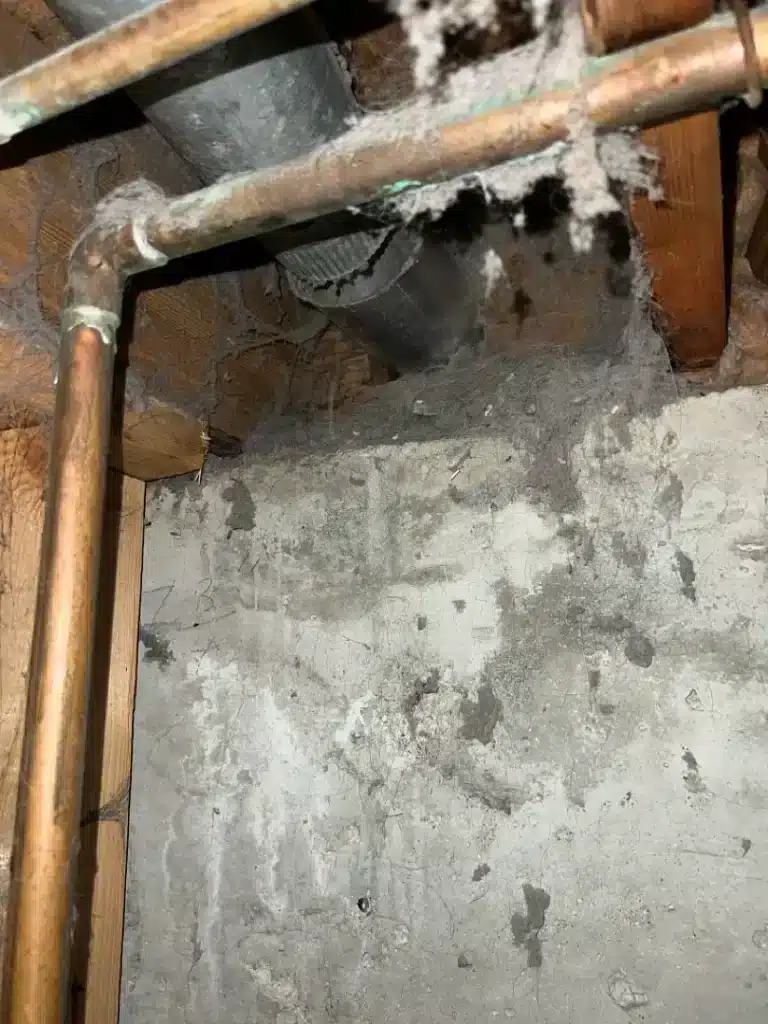
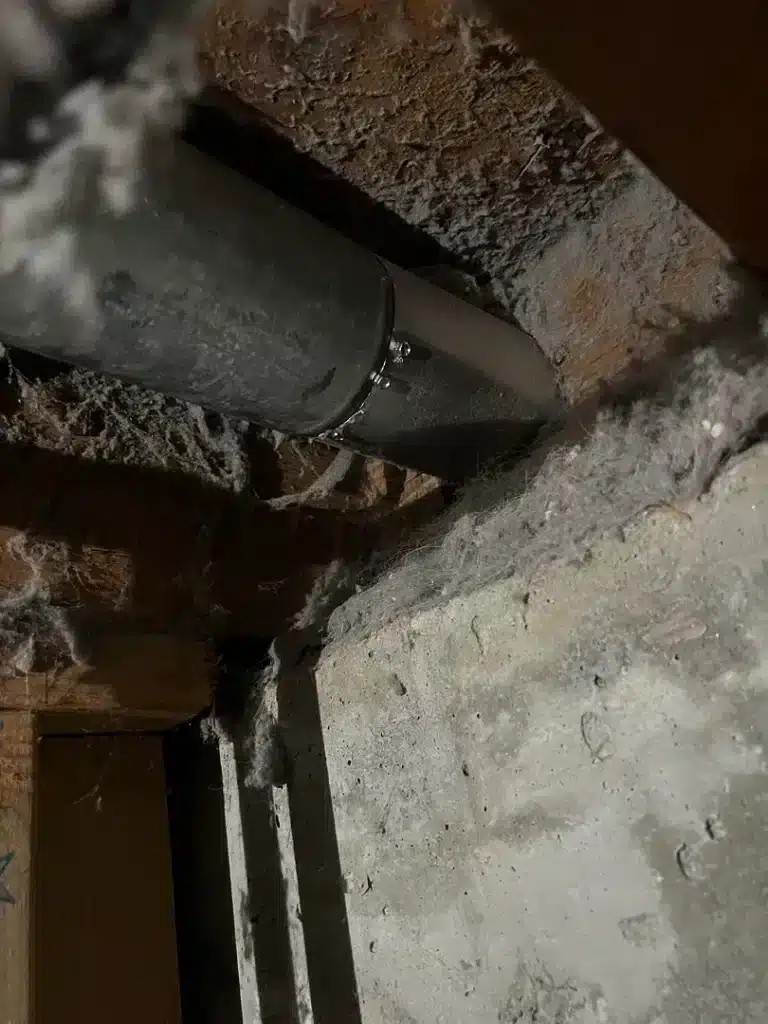
Gas smell - Lafayette
Problem:Gas leak in house
Found:We found it separated about 4 inches
Fixed:We re attached this and secured with zip screws, their is a lot of lint all over crawlspace. We took apart the vent line from the dryer and into the crawlspace to remove any remain lint in the line
Environmental Conditions & Gas Piping Services Implications
Lafayette's environmental conditions create specific stresses on gas piping systems that differ from other Front Range communities. Understanding these factors helps explain why certain issues develop and how to prevent them.
Soil Characteristics and Underground Piping
Boulder County soils contain significant clay content, classified as moderately to highly expansive in many Lafayette areas. This expansion and contraction cycle – driven by moisture changes – creates forces that gradually stress buried gas line connections. Properties near Coal Creek face additional considerations from historic mining activity that altered subsurface drainage patterns.
Expansive soil movement can exceed 2 inches vertically during seasonal cycles
Underground connections require flexible accommodation for this movement
Proper bedding and backfill materials reduce stress on buried piping
Corrosive soil conditions in some areas accelerate external pipe deterioration
Climate Impacts on Gas Systems
Lafayette's 300+ days of sunshine deliver intense UV exposure that degrades exposed flexible connectors and protective coatings. Winter temperature swings – sometimes exceeding 40 degrees within hours during Chinook wind events – cause rapid thermal expansion and contraction in piping materials. The combination of low humidity and temperature extremes accelerates the degradation of thread sealants and joint compounds.
Altitude Considerations
At 5,280 feet, atmospheric pressure is approximately 17% lower than at sea level. This affects gas combustion characteristics and requires appliance adjustment for proper operation. Gas piping systems must deliver adequate volume at appropriate pressure to compensate for altitude effects on burner performance. Undersized lines that might function adequately at lower elevations can starve appliances of sufficient fuel in Lafayette's thinner atmosphere.
Natural Gas Infrastructure and Utility Data in Lafayette
Lafayette's natural gas service, provided primarily by Xcel Energy, serves approximately 12,000 residential and commercial meters throughout the city. The distribution network includes both older cast iron and steel mains in established neighborhoods and modern polyethylene piping in newer developments. Understanding this infrastructure context helps explain why certain gas piping issues arise and how they're addressed.
Xcel Energy's distribution pressure in Lafayette typically ranges from 0.25 to 2 PSI at the meter, with residential systems then regulated down to approximately 0.25 PSI (7 inches water column) for appliance delivery. Homes with high-demand appliances – such as tankless water heaters, commercial-style ranges, or pool heaters – may require larger meter installations or upgraded service lines to maintain adequate pressure during peak usage.
Relevant Infrastructure Statistics
Boulder County processes approximately 400 gas piping permits annually, with Lafayette representing roughly 15% of that volume
Xcel Energy reports responding to over 200 gas odor calls in the Lafayette area yearly – most proving to be minor issues, but some revealing significant leaks
The average age of Lafayette's residential gas infrastructure is approximately 28 years, with significant portions approaching recommended replacement intervals
Colorado's adoption of updated fuel gas codes in recent years has changed requirements for CSST bonding, flexible connector specifications, and earthquake-resistant installations
These infrastructure realities directly affect gas piping service needs. Older distribution mains may deliver gas with trace moisture or particulates that accumulate in residential piping over time. Pressure fluctuations during peak demand periods – common during cold snaps when heating loads spike – can stress connections and reveal marginal leaks that remain undetected under normal conditions. Professional gas piping services account for these system-wide factors when diagnosing and addressing individual property concerns.
Common signs include a faint smell of gas, a pilot light that won't stay lit, or appliances that seem sluggish despite being functional. If you notice any of these issues, it's important to seek professional help immediately to avoid potential hazards.
Lafayette's elevation of 5,280 feet impacts gas combustion due to lower atmospheric pressure. This can lead to performance issues in gas appliances if the piping system is not properly sized and installed.
Hiring a professional ensures that your gas piping system is installed and maintained according to local codes and safety standards. Professionals can perform pressure tests to identify leaks and ensure that the system is sized correctly for optimal performance.
You can find reliable gas piping services by searching online for local plumbing and heating companies, checking customer reviews, or asking for recommendations from friends or family in the area.
Common materials include black iron, copper, and flexible corrugated stainless steel tubing. The choice of material often depends on the specific application and local building codes.
It's advisable to have your gas piping inspected at least once every few years, especially if your home is older or if you've noticed any changes in your gas appliances' performance. Regular inspections can help catch issues before they become serious.
If you smell gas, evacuate the area immediately and avoid using any electrical devices or open flames. Once you are safely outside, call your gas provider or a professional gas service to report the leak.