Toilet plumbing in Denver faces unique challenges due to the city's elevation and hard water conditions. Professional diagnosis is essential to identify issues that can lead to costly water bills and plumbing failures.
Toilet problems often stem from silent leaks, clogs, and mineral buildup caused by Denver's hard water.
Seasonal temperature fluctuations can freeze supply lines, leading to cracks and leaks.
Older homes may require specialized solutions due to outdated plumbing systems and materials.
What are common toilet plumbing issues in Denver?
Common toilet plumbing issues in Denver include constant running, improper flushing, and leaks around the base. These problems can be exacerbated by the city's elevation, which affects how plumbing systems function compared to those at sea level. Prompt attention to these issues is necessary to prevent further complications.
Toilet Plumbing Services in Denver, CO
That gurgling sound coming from your bathroom at 6 AM isn't something you should ignore. Whether your toilet runs constantly, refuses to flush properly, or has developed a mysterious leak around the base, these problems rarely resolve themselves – and at Denver's elevation, toilet plumbing behaves differently than it does at sea level.
Toilet plumbing encompasses the complete system that makes your fixture function: the supply line delivering water, the fill valve and flapper controlling the tank, the flush mechanism, the wax ring seal, and the drain connection to your home's waste system. When any component fails, you're dealing with wasted water, potential damage, or a fixture that simply won't work when you need it most.
Why Professional Diagnosis Matters
A toilet that "seems fine" might actually be costing you significantly on your Denver Water bill each month. Professional plumbers identify issues homeowners often miss:
Silent leaks between the tank and bowl that waste thousands of gallons annually
Partial clogs building deep in the drain line before complete blockage occurs
Failing wax seals allowing sewer gas infiltration and subfloor moisture damage
Fill valve problems caused by Denver's mineral-heavy water supply
Denver's combination of hard water, dramatic temperature swings, and aging infrastructure in many neighborhoods creates specific challenges for toilet systems. Homes in Capitol Hill or Park Hill built in the early 1900s often have cast iron drain connections that interact differently with modern toilets than newer PVC installations in Stapleton or Green Valley Ranch.
Denver's unique geography and climate create toilet plumbing challenges you won't encounter in coastal cities. At 5,280 feet elevation, water boils at a lower temperature and atmospheric pressure differences affect how toilet tanks fill and drain. These factors combine with local water quality and infrastructure age to produce distinct patterns of toilet problems throughout the metro area.
The Denver Water system draws from mountain snowmelt, which picks up significant mineral content as it travels through Rocky Mountain geology. This hard water – measuring between 4-8 grains per gallon depending on your neighborhood – deposits calcium and lime scale inside toilet tanks, on flappers, and within fill valves. Over time, these deposits prevent proper sealing and cause the constant running that drives up water bills.
Seasonal Considerations
Winter brings particular risks to Denver toilet plumbing. When temperatures drop below zero – which happens multiple times each winter – supply lines in exterior walls or unheated spaces can freeze. Expansion during freezing often cracks the porcelain tank itself or damages shut-off valves beneath the toilet.
Local Factors Affecting Your Toilet
Hard water mineral buildup – Accelerates wear on flappers, fill valves, and flush mechanisms, requiring replacement every 3-5 years rather than the 7-10 year lifespan expected elsewhere
Elevation effects on flush pressure – Lower atmospheric pressure means gravity-fed toilets may struggle with complete waste removal, leading to partial clogs
Aging sewer infrastructure – Many Denver neighborhoods connect to clay tile sewer lines installed before 1960, prone to root intrusion and bellying that causes toilet backup
Foundation movement – Denver's expansive clay soils shift seasonally, potentially breaking the wax seal between toilet and flange
Temperature fluctuation stress – Daily temperature swings of 40+ degrees create expansion and contraction cycles that loosen toilet mounting bolts
Low-flow fixture complications – Many Denver homes have 1.6 or 1.28 GPF toilets that require properly functioning components to clear waste effectively
Warning Signs Requiring Attention
Watch for these indicators that your toilet needs professional service:
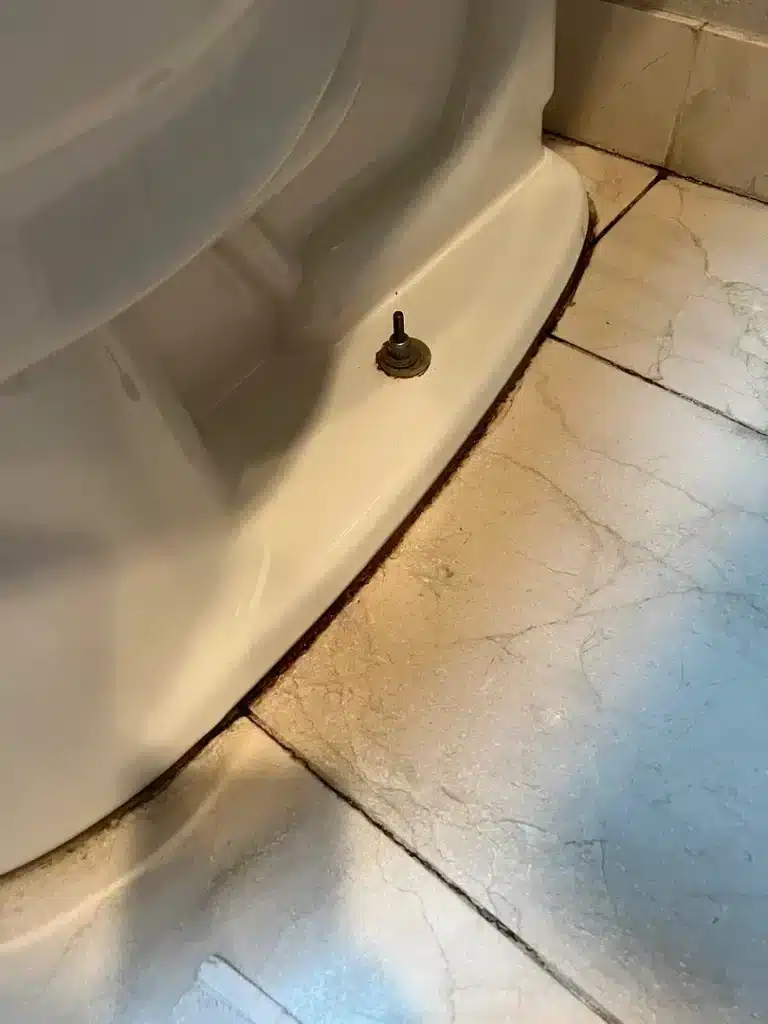
Water pooling around the toilet base after flushing
Toilet rocks or shifts when you sit down
Frequent need to jiggle the handle to stop running
Weak flush that requires multiple attempts
Sewage odors in the bathroom despite a clean toilet
Visible cracks in the porcelain tank or bowl
Recent Work
Water Closet Repair - Denver
Problem:Water Closet leak.
Found:Caulked problem.
Fixed:Emptied Water Closet. Disconnected and pulled water closet. Cleaned off the old wax ring and re-set with new wax ring and bolts.
Outcome:Tested for leaks. No issue.
Water Closet not Flushing Properly - Denver
Problem:Toilet doesn’t flush completely
Found:Found the flapper was sticking and only opening up part way
Fixed:Replaced with new. Also, the fill valve leaking out of head and replaced that also. The trip lever was very loose. Tightened it also. Adjusted water level.
Outcome:Tested and no leak.
Water Closet Repair - Denver
Problem:Water closet with several repairs needed.
Found:Leak on toilet.
Fixed:Replaced all three items. Adjusted fill valve and water level. Flapper was disintegrated and needed replacing. Fill valve was spraying up onto tank lid and down to the floor. Installed and tested. Adjusted water level in tank.
Outcome:No leak and working properly.
Water Closet is Rocking - Denver
Problem:Water closet repair.
Found:Broken water closet
Fixed:Pulled toilet check flange, left side bolt snapped off on flange, remove and replace toilet flange , with new bolts and wax ring I also threw some hydraulic cement under the toilet to help keep it solid.
Outcome:Tested and working properly
Water Closet Leaking in Main Floor Bath - Denver
Problem:Water closet leaking.
Found:Found water on the main floor around the main level water closet.
Fixed:Tested water closet and it was working but water was coming out around the base of the water closet. Pulled Water closet and reset wit new wax ring. Reset water closet and hooked up supply and closet bolts. Tested water closet several times.
Outcome:No leak and water closet was working properly at that time
Repair leak at Water closet. - Denver
Problem:Leak at Water closet.
Found:Found water present near the base of the main level water closet.
Fixed:Pulled water closet and checked for cracks. Reset water closet with new wax ring. Connected and tested.
Outcome:Functioning properly. Flushed numerous times and still not leak at the base of the water closet
Our approach to toilet plumbing combines systematic diagnosis with solutions tailored to Denver's specific conditions. We don't guess at problems – we identify root causes and address them completely.
Our Toilet Service Process
Initial Assessment – We examine the entire toilet system, including supply lines, tank components, bowl condition, mounting stability, and drain connection
Diagnostic Testing – Using dye tablets, pressure gauges, and camera inspection when needed, we pinpoint exactly where problems originate
Clear Explanation – Before any work begins, we explain what we found, what needs to happen, and what options you have
Repair or Replacement – We complete the agreed-upon work using quality components rated for hard water conditions
System Testing – Multiple flush cycles, leak checks, and stability verification confirm everything functions properly
Area Cleanup – We leave your bathroom clean and remove all old parts and packaging
Techniques and Methods
Different toilet problems require different approaches. Our technicians are equipped for the full range:
Wax ring replacement – Removing the toilet, inspecting the flange, installing a new seal rated for Denver's temperature extremes
Internal component rebuild – Replacing fill valves, flappers, and flush mechanisms with mineral-resistant parts
Drain line clearing – Using professional augers to remove clogs beyond the toilet trap
Camera inspection – Viewing the drain line interior to identify root intrusion, bellied sections, or pipe damage
Flange repair – Fixing damaged or corroded closet flanges that prevent proper toilet mounting
Complete toilet installation – Setting new fixtures with proper shimming, sealing, and supply connection
Communication Throughout
We keep you informed at every stage. If we discover additional issues during diagnosis – like a cracked flange hidden beneath an old wax ring – we discuss options before proceeding. You'll never face surprise work or unexpected charges.
Why Choose Cardom Plumbing & Heating
Licensed and insured – not just certified – for all residential and commercial plumbing work in Colorado, our team brings specific expertise to Denver toilet plumbing. We understand how local water quality affects component longevity, which toilet models perform best at altitude, and how to work with the various drain systems found throughout Denver's diverse housing stock.
Our technicians live in the Denver metro area and respond quickly when toilet emergencies happen. A failed wax seal or overflowing toilet can't wait until next week – water damage compounds by the hour. We prioritize urgent situations while maintaining the thorough diagnostic approach that prevents repeat problems.
What Sets Us Apart
Local water expertise – We stock components specifically chosen to resist Denver's hard water conditions
Altitude-appropriate recommendations – We know which toilet models flush effectively at elevation and which struggle
Old-home experience – Decades of work in Capitol Hill, Washington Park, and other historic neighborhoods means we understand vintage plumbing systems
Modern diagnostic tools – Camera inspection, pressure testing, and leak detection equipment identify hidden problems
Follow-up commitment – We stand behind our work and respond promptly if issues arise after service
Every toilet repair or installation includes verification testing and a clear explanation of maintenance steps that extend component life in Denver's demanding conditions.
Denver's housing stock spans more than 140 years of construction, creating a diverse landscape of toilet plumbing scenarios. Understanding your home's era and construction type helps predict common issues and appropriate solutions.
Historic Homes (Pre-1940)
Neighborhoods like Capitol Hill, Congress Park, and Curtis Park contain thousands of homes built before World War II. These properties typically feature:
Cast iron drain stacks connecting to clay tile sewer lines
Closet flanges set in lead or oakum joints that may have deteriorated
Non-standard rough-in distances requiring specific toilet models
Bathroom floors that have settled or shifted over decades
Toilet replacement in these homes often requires additional flange work or adapters to accommodate modern fixtures.
Mid-Century Construction (1940-1980)
Post-war expansion created neighborhoods like Montbello, Harvey Park, and Virginia Village with more standardized plumbing. These homes commonly have:
Galvanized steel supply lines prone to internal corrosion
ABS or early PVC drain connections
Standard 12-inch rough-in dimensions
Original toilets using 3.5-5 gallons per flush – often replaced with low-flow models that may not perform as well with aging drain lines
Modern Construction (1980-Present)
Newer developments in Stapleton, Green Valley Ranch, and Lowry feature contemporary plumbing systems. Toilet considerations include:
PVC drain systems with proper venting
Copper or PEX supply lines
Low-flow toilets that may need pressure-assist mechanisms for reliable performance at elevation
Builder-grade components that often require early replacement
Regardless of your home's age, Cardom Plumbing & Heating has experience with the specific plumbing configurations found throughout Denver's neighborhoods.
Denver's environment creates specific challenges for toilet plumbing that differ significantly from other major cities. Understanding these factors helps explain why certain problems occur and what solutions work best.
Water Quality Characteristics
Denver Water treats mountain snowmelt from multiple watersheds, producing water that meets all federal standards but carries notable mineral content. The treatment process adds chloramine for disinfection, which affects rubber components differently than chlorine used in other systems.
Hardness levels typically range from 4-8 grains per gallon
Calcium and magnesium deposits accumulate on tank components
Chloramine accelerates deterioration of certain rubber flappers
Seasonal variations occur as water sources shift between reservoirs
Soil and Drainage Effects
Denver sits on expansive clay soils that swell when wet and shrink during dry periods. This seasonal movement affects underground plumbing in several ways:
Sewer line connections may shift, creating belly sections where waste accumulates
Foundation movement can crack toilet flanges or break wax seals
Tree roots seek moisture in clay soil, often infiltrating older sewer lines
Improper drainage around foundations can affect bathroom subfloors
Climate Impacts
Denver's semi-arid climate with extreme temperature swings stresses toilet plumbing systems throughout the year. Summer highs above 95°F and winter lows below zero create expansion and contraction cycles that affect every component from supply lines to wax seals.
Freeze risk exists from October through April for exposed supply lines
Low humidity accelerates rubber component drying and cracking
Rapid temperature changes stress porcelain, potentially causing hairline cracks
Monsoon season increases demand on municipal sewer systems, occasionally causing backup pressure
Denver Water Infrastructure and Usage Statistics
Denver's water system serves approximately 1.5 million people across the metro area, delivering an average of 180 million gallons daily. This infrastructure directly impacts toilet plumbing performance throughout the city. The system maintains pressure between 40-80 PSI depending on neighborhood elevation – a factor that affects fill valve function and flush performance.
According to Denver Water, toilets account for nearly 27% of indoor residential water use, making them the single largest water consumer in most homes. Older toilets using 3.5 gallons or more per flush can consume over 20,000 gallons annually per household, while properly functioning low-flow models reduce this to under 8,000 gallons.
Key Infrastructure Data
System age – Portions of Denver's water distribution system date to the 1880s, with ongoing replacement of aging mains
Pressure variations – Homes at higher elevations in areas like Highlands or Sloan's Lake may experience lower pressure affecting toilet fill rates
Sewer system capacity – Metro Wastewater serves 1.8 million people through 450 miles of interceptor sewers, with some combined storm/sanitary lines in older areas
Water loss rates – Leaking toilets contribute to Denver's approximately 6% system water loss
Impact on Toilet Plumbing Services
These infrastructure realities shape how Cardom Plumbing & Heating approaches toilet service in Denver. We account for pressure variations when recommending toilet models, consider sewer line age when diagnosing backup issues, and select components rated for local water chemistry. Understanding the broader system helps us solve individual toilet problems more effectively.
Denver Water's ongoing infrastructure improvements occasionally affect water pressure and quality temporarily during main replacement projects. If your toilet suddenly develops fill problems or unusual sounds, recent utility work in your area may be a contributing factor worth investigating.
Common issues include constant running, improper flushing, and leaks around the base. These problems can be exacerbated by Denver's hard water and elevation, which affect how toilets function.
You might notice water pooling around the base or hear a constant running sound. A simple test is to add a few drops of food coloring to the tank; if it seeps into the bowl without flushing, there's a leak.
A constantly running toilet often indicates a problem with the flapper or fill valve. Mineral deposits from Denver's hard water can prevent these components from sealing properly, leading to wasted water.
At 5,280 feet, water boils at a lower temperature, which can impact how toilets fill and drain. This elevation can lead to unique plumbing challenges not found in lower-altitude areas.
If your toilet won't flush, check for clogs or issues with the flush mechanism. If these seem fine, it may be a problem with the fill valve or water supply that requires professional assessment.
You can find reliable plumbing services by searching online reviews, asking for recommendations from friends, or checking local directories. Look for companies with experience in handling Denver's specific plumbing challenges.
It's a good idea to have your toilet plumbing inspected at least once a year, especially in Denver where hard water can cause buildup. Regular inspections can help identify issues before they become major problems.