

Faucet services in Denver address common issues like leaks and low water pressure, which can lead to costly water damage if not resolved quickly. The unique environmental conditions in Denver, including hard water and temperature fluctuations, necessitate professional expertise for effective faucet repairs and installations.
- Denver's mineral-rich water can cause deposits that restrict flow and damage fixtures over time. Homeowners should watch for signs like dripping or reduced water flow to catch issues early. Cardom Plumbing & Heating offers skilled diagnostics and repairs tailored to the specific challenges of Denver's plumbing environment.
- Faucet Services in Denver, CO That dripping kitchen faucet keeping you awake at night isn’t just annoying – it’s costing you money and signaling potential problems within your plumbing system.
- Whether you’re dealing with a stubborn leak, low water pressure, or a faucet that’s simply reached the end of its lifespan, addressing these issues promptly prevents water damage and keeps your Denver home running smoothly.
Common faucet issues in Denver include dripping faucets, low water pressure, and faucets that have reached the end of their lifespan. These problems can lead to increased water bills and potential plumbing issues, making it important to address them promptly to prevent further damage and maintain efficient water flow.
Faucet Services in Denver, CO
That dripping kitchen faucet keeping you awake at night isn't just annoying – it's costing you money and signaling potential problems within your plumbing system. Whether you're dealing with a stubborn leak, low water pressure, or a faucet that's simply reached the end of its lifespan, addressing these issues promptly prevents water damage and keeps your Denver home running smoothly.
Faucet services encompass everything from simple repairs and cartridge replacements to complete fixture installations and upgrades. Professional faucet work involves understanding water supply connections, valve mechanisms, aerator function, and the specific demands that Denver's unique environment places on these everyday fixtures.
Why Professional Faucet Diagnosis Matters
A dripping faucet might seem like a minor inconvenience, but the underlying cause could indicate broader plumbing concerns. Denver's mineral-rich water supply accelerates wear on internal components, and our dramatic temperature swings stress fixture connections in ways that coastal or southern climates simply don't experience.
- Proper diagnosis identifies whether you need a simple washer replacement or a complete fixture upgrade
- Professional installation prevents cross-threading, leaks, and water damage behind walls
- Correct valve selection ensures compatibility with Denver's water pressure variations
- Expert assessment catches early signs of supply line deterioration or shut-off valve failure
Common Faucet Issues in Denver, CO
Denver homeowners face a distinct set of challenges when it comes to faucet longevity and performance. Our city sits at 5,280 feet elevation with water sourced primarily from mountain snowmelt, creating conditions that affect every faucet in your home differently than fixtures in lower-elevation cities.
The mineral content in Denver Water's supply – while safe for consumption – leaves calcium and magnesium deposits inside faucet valves, aerators, and cartridges. Over time, these deposits restrict water flow, cause uneven spray patterns, and force internal components to work harder. Homes in neighborhoods with older galvanized supply lines experience this buildup even more dramatically.
Seasonal and Climate Considerations
Denver's freeze-thaw cycles create particular stress on exterior faucets and any fixtures located on exterior walls. When temperatures plunge below freezing – which happens frequently from October through April – water trapped in hose bibs or poorly insulated supply lines can freeze and expand, cracking fixtures or bursting connections.
- Hard water mineral buildup – Denver's water averages 150-200 mg/L of dissolved minerals, accelerating cartridge and washer wear
- Temperature fluctuation stress – Daily temperature swings of 30-40 degrees cause expansion and contraction in fixture connections
- Dry climate effects – Low humidity dries out rubber washers and O-rings faster than humid environments
- High water pressure – Some Denver neighborhoods experience pressure exceeding 80 PSI, straining faucet valves
- Aging infrastructure – Homes built before 1980 often have original fixtures with deteriorated internal components
- Frozen exterior faucets – Hose bibs without proper winterization frequently crack during cold snaps
Warning Signs to Watch For
Catching faucet problems early saves water, money, and prevents the kind of water damage that leads to mold growth or structural issues. Pay attention to these indicators:
- Persistent dripping even when handles are fully closed
- Squealing, chattering, or banging sounds when turning water on or off
- Reduced water flow or uneven spray patterns
- Difficulty turning handles or stiff operation
- Water pooling beneath the sink or around the faucet base
- Visible corrosion, rust staining, or mineral crust on fixtures
How Cardom Plumbing & Heating Can Help
Our approach to faucet services combines thorough diagnostics with skilled craftsmanship. We don't just swap parts and hope for the best – we identify root causes and implement lasting solutions tailored to Denver's specific plumbing conditions.
Our Faucet Service Process
- Initial assessment – We examine the affected faucet, check water pressure, inspect supply lines, and test shut-off valves to understand the complete picture
- Diagnosis and explanation – Before any work begins, we explain what we've found and discuss repair versus replacement options based on your faucet's age and condition
- Water supply isolation – We properly shut off water to the affected fixture, protecting your home from accidental flooding during repairs
- Repair or installation – Our technicians complete the work using manufacturer-specified parts and professional-grade tools
- System testing – We run the faucet through multiple cycles, check for leaks at all connection points, and verify proper hot/cold mixing
- Area cleanup and walkthrough – We leave your space clean and demonstrate proper faucet operation before considering the job complete
Methods and Techniques
Different faucet types require different approaches. Our technicians are trained on all major faucet configurations:
- Compression faucets – Washer replacement, seat grinding, and stem packing
- Ball-type faucets – Spring and seat replacement, ball valve service
- Cartridge faucets – Cartridge extraction and replacement, O-ring service
- Ceramic disc faucets – Disc cylinder replacement, inlet seal service
- Touchless and smart faucets – Sensor calibration, solenoid valve service, battery replacement
Quality Control and Communication
Every faucet installation or repair includes leak testing under full pressure. We check connections with dry paper towels to detect even the smallest seepage. For new installations, we verify proper mounting, confirm smooth handle operation, and test aerator flow rates.
Throughout the process, we keep you informed. Expect a call when we're on our way, a clear explanation of findings before work begins, and a detailed summary of completed work before we leave.
Recent Work
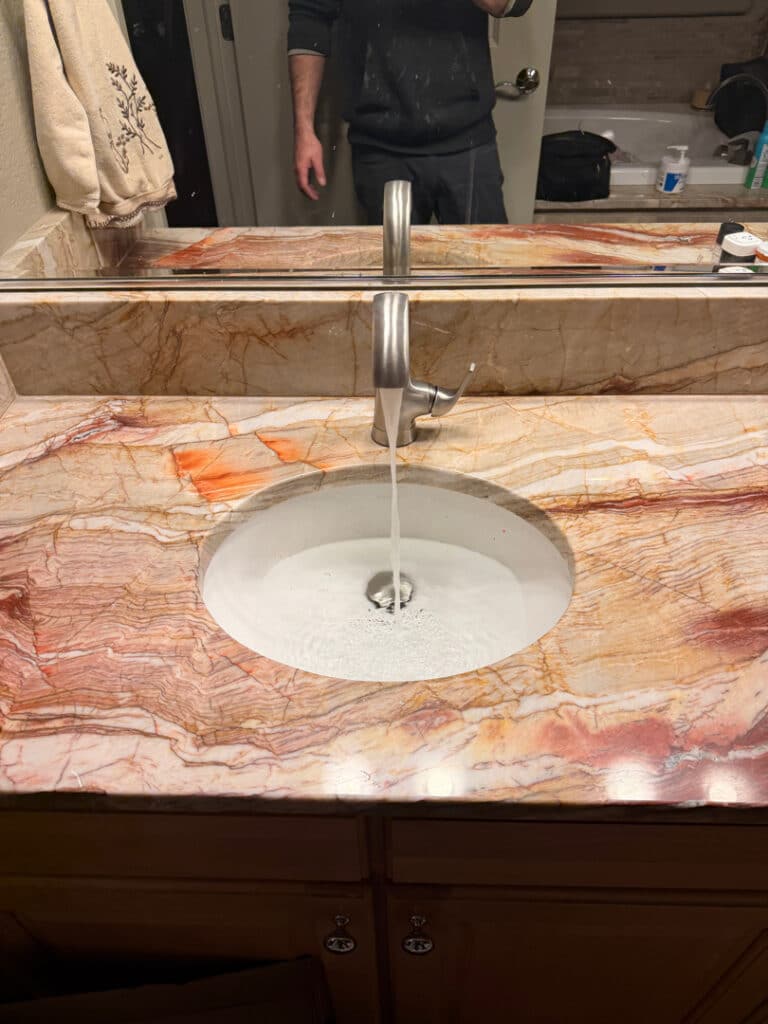
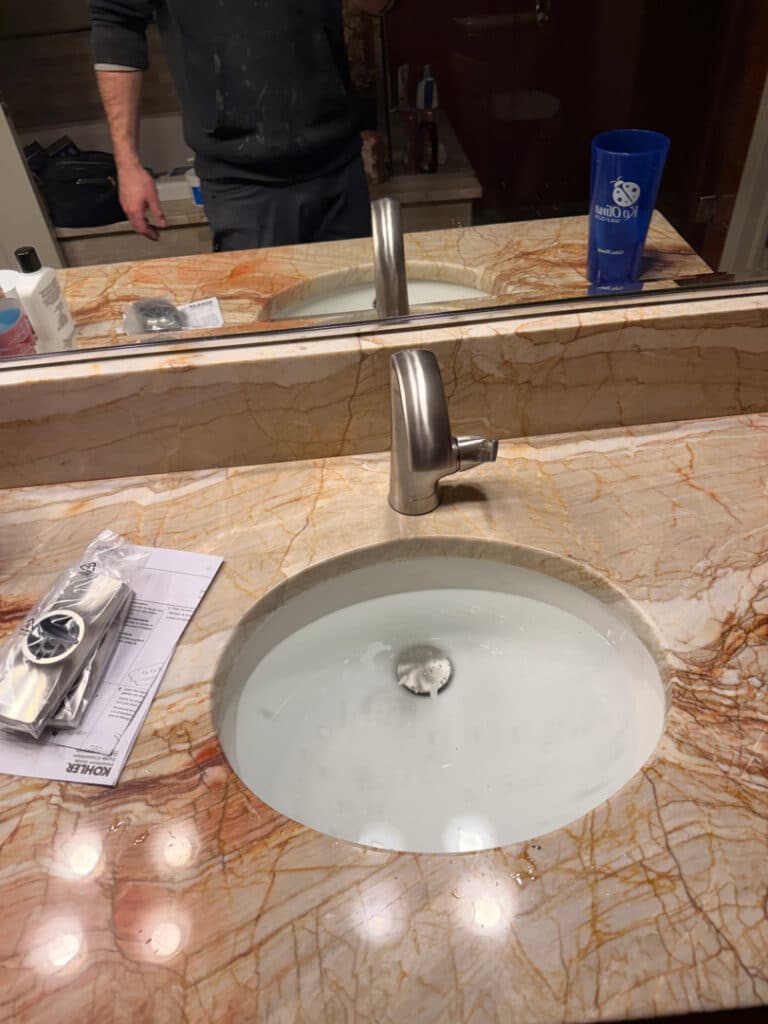
Replace Two Master Bath Lav Faucets with Owner Provided Ones - Denver
- Problem: Remove and replace 2ea. Master bath lavatory faucets
- Found: Old faucets
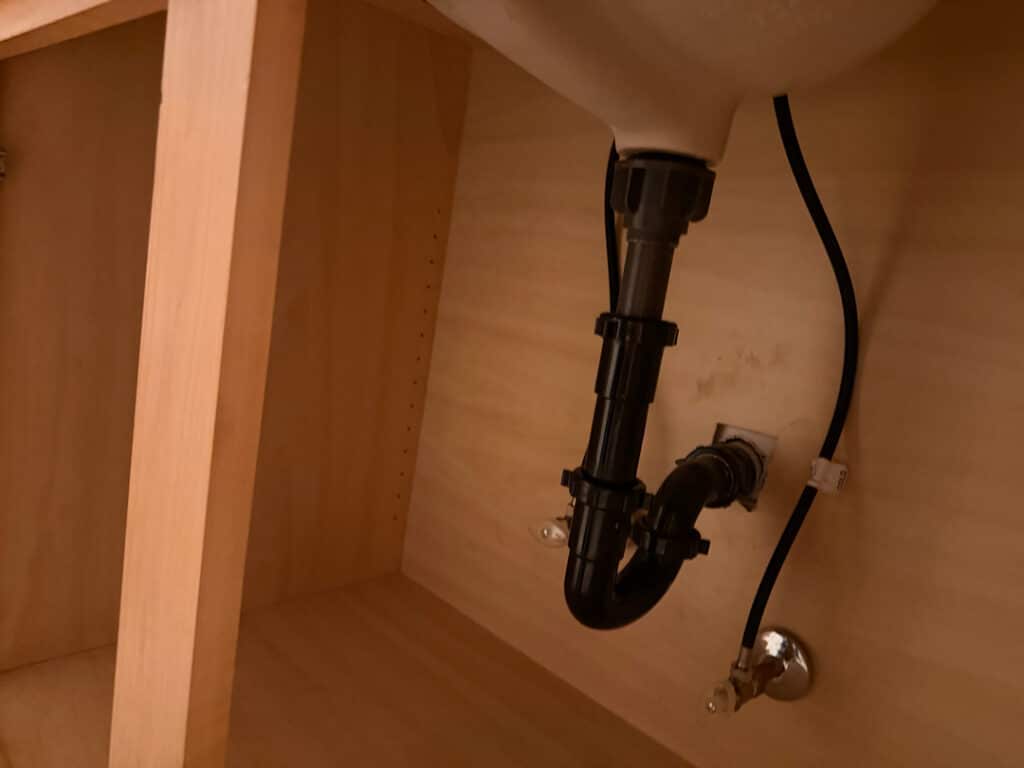
- Fixed: Turned off water to each lavatory faucet and removed the old faucets. Owner provided Kohler lavatory faucets. (Box store quality with plastic pop-ups). Set each faucet in place. Attached plastic pop-up assemblies. Tightened down faucet along with the hot and cold supply tubes.
- Outcome: Turned on water and tested each faucet for leaks on the water supply lines and P-trap. Jobsite cleanup.
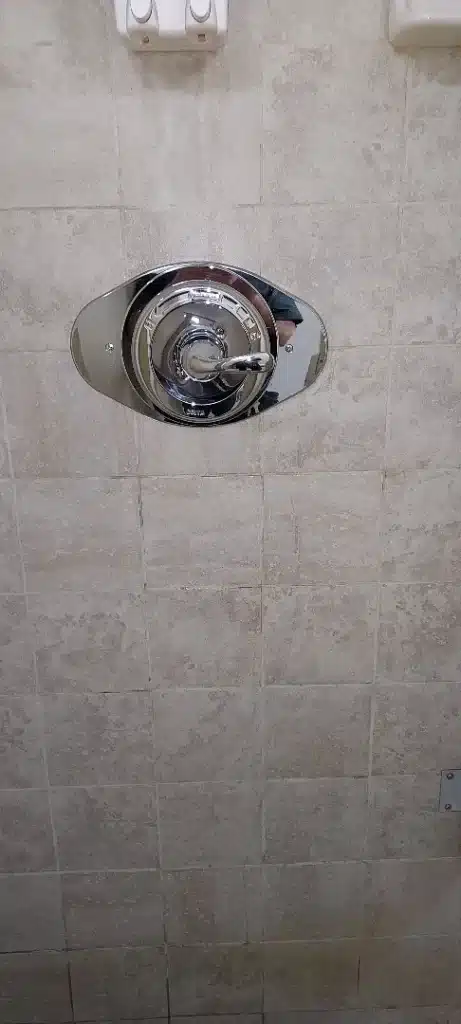
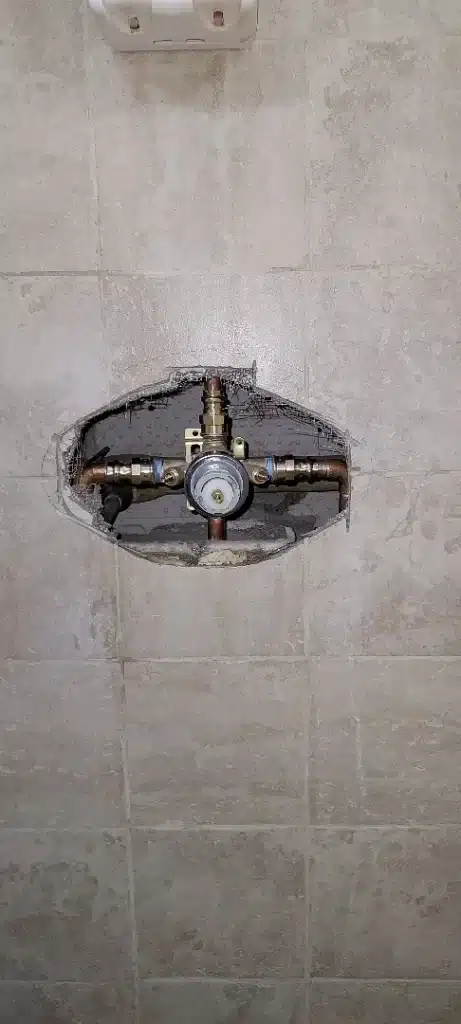
Shower Base Need Repair/Replacement - Denver
- Problem: Plugged shower valve.
- Found: Broken shower valve.
- Fixed: Cut out tile. Work inside small space to remove older valve and replace with new. Reassembled new valve with repair place, and Delta hardware with lever handle.
- Outcome: Tested and working properly.
Why Choose Cardom Plumbing & Heating
Cardom Plumbing & Heating brings decades of combined experience to every faucet repair and installation in the Denver metro area. Our technicians hold current Colorado plumbing licenses and maintain ongoing training on the latest fixture technologies – from traditional compression valves to smart faucets with touchless sensors and voice activation.
We stock common replacement parts for major faucet brands on our service vehicles, which means most repairs happen in a single visit. When installations require special-order fixtures, we coordinate delivery and scheduling to minimize disruption to your household.
What Sets Us Apart
- Local expertise – We understand Denver's water quality, pressure variations by neighborhood, and the specific challenges our climate creates for plumbing fixtures
- Responsive scheduling – Same-day and next-day appointments available for urgent faucet failures
- Upfront pricing – We provide clear quotes before work begins, with no surprise charges
- Workmanship backing – Our repairs and installations come with follow-up support if any issues arise
- Clean work practices – We protect your countertops, floors, and cabinets during service
When you call Cardom, you reach a real person who can answer questions and schedule service efficiently. We respect your time, your home, and your budget – treating every faucet job with the same professionalism whether it's a quick washer swap or a complete kitchen fixture upgrade.
Housing Characteristics & Faucet Considerations
Denver's housing stock spans more than a century of construction, and each era brought different plumbing standards, fixture styles, and installation practices. Understanding your home's age and construction type helps predict faucet issues and guides replacement decisions.
Historic Homes (Pre-1950)
Denver's older neighborhoods – including Capitol Hill, City Park, and parts of Highlands – feature homes with original plumbing that may include:
- Galvanized steel supply lines that restrict flow and introduce rust particles
- Non-standard faucet hole spacing that limits replacement options
- Original shut-off valves that no longer seal properly
- Porcelain sinks with integral faucet mounts requiring specialized fixtures
Mid-Century Homes (1950-1980)
Post-war construction in areas like Lakewood, Arvada, and Aurora introduced copper supply lines and standardized faucet configurations. However, these homes often have:
- Original two-handle faucets with worn compression valves
- Corroded brass connections beneath sinks
- Outdated hose bib designs prone to freeze damage
- Supply valves that have never been exercised and may seize when turned
Modern Construction (1980-Present)
Newer Denver homes typically feature single-handle faucets with cartridge or ceramic disc valves. While more reliable than older designs, these fixtures still face challenges from Denver's hard water. Homes built during rapid expansion periods may have builder-grade fixtures that wear out faster than premium alternatives.
High-rise condos and townhomes in LoDo, RiNo, and other urban neighborhoods often have water pressure issues related to building supply systems, affecting faucet performance and longevity differently than single-family homes.
Environmental Conditions & Faucet Implications
Denver's environment creates a unique combination of stresses on residential faucets. From water chemistry to temperature extremes, understanding these factors helps homeowners make informed decisions about faucet maintenance and replacement.
Water Quality Characteristics
Denver Water treats and delivers water from mountain reservoirs, primarily from the South Platte River and Blue River watersheds. While the water meets all safety standards, its mineral content significantly affects faucet longevity:
- Hardness levels typically range from 100-200 mg/L (moderately hard to hard)
- Calcium carbonate deposits accumulate inside cartridges, reducing smooth operation
- Mineral buildup clogs aerator screens, requiring regular cleaning or replacement
- Hot water lines experience faster mineral accumulation than cold
Climate Impacts on Plumbing Systems
Denver averages 157 days per year with temperatures at or below freezing. This extended cold season affects faucets in several ways:
- Exterior faucet freeze damage – Traditional hose bibs without frost-free designs frequently crack during winter
- Supply line stress – Pipes on exterior walls experience thermal cycling that loosens faucet connections over time
- Rubber component degradation – Washers and O-rings become brittle faster in cold, dry conditions
- Expansion joint fatigue – Repeated temperature swings wear out flexible supply lines
Soil and Drainage Considerations
While soil conditions primarily affect underground plumbing, Denver's clay-heavy soils contribute to foundation movement that can stress supply lines and affect faucet connections. Homes in areas with expansive soils may notice faucet leaks developing after periods of drought followed by heavy rain, as foundation shifts stress plumbing connections throughout the house.
The semi-arid climate also means Denver's low humidity accelerates the drying and cracking of rubber faucet components. Homeowners often find that washers and O-rings need replacement more frequently here than in humid coastal regions.
Denver Water Infrastructure and Faucet Performance
Denver Water serves approximately 1.5 million people across a 335-square-mile service area, maintaining over 3,000 miles of water mains that deliver treated water to homes and businesses. The age and condition of this infrastructure directly affects faucet performance in different Denver neighborhoods.
Water pressure varies significantly across the city due to elevation changes and distance from pumping stations. Homes in the foothills and western suburbs often experience pressure exceeding 80 PSI – the maximum recommended for residential fixtures. This high pressure accelerates wear on faucet valves and can cause premature failure of cartridges and washers.
Infrastructure Age by Area
- Downtown and central Denver – Some water mains date to the early 1900s, with ongoing replacement projects
- Post-war suburbs – Infrastructure from the 1950s-1970s, with mixed conditions
- Newer developments – Modern PVC and ductile iron mains with consistent pressure
- High-growth areas – Recent infrastructure may experience pressure fluctuations as systems stabilize
How Infrastructure Affects Your Faucets
Older water mains can introduce sediment and mineral particles that clog aerators and damage cartridge seals. After water main breaks or repairs in your neighborhood, you may notice temporary discoloration or debris – running faucets until water clears helps protect internal components.
Denver Water's ongoing infrastructure investments include pressure regulation improvements, which may change water pressure in some neighborhoods over time. If you notice sudden changes in faucet performance – either increased or decreased flow – the cause may be municipal system adjustments rather than fixture failure. Cardom Plumbing & Heating can help diagnose whether faucet issues stem from fixture problems or supply-side changes, recommending appropriate solutions for your specific situation.
Faucets in Other Service Areas


