

Faucet issues in Boulder, CO can lead to costly repairs and water waste if not addressed promptly. Cardom Plumbing & Heating specializes in diagnosing and resolving these problems, taking into account the unique challenges posed by the local environment.
- Boulder’s hard water and extreme temperatures can accelerate faucet wear and tear.
- Common issues include reduced water pressure and persistent leaks due to mineral buildup.
- Cardom Plumbing offers tailored solutions, including repairs and installations, to meet the specific needs of Boulder homeowners.
Common faucet problems in Boulder, CO include persistent drips, which waste water and increase utility bills, as well as issues like faucets that won't shut off completely or kitchen fixtures that experience low water pressure. Outdoor spigots can also be damaged by freezing temperatures, necessitating prompt repairs.
Faucet Services in Boulder, CO
That persistent drip from your kitchen sink isn't just annoying – it's costing you money and wasting one of Colorado's most precious resources. Whether you're dealing with a bathroom faucet that won't shut off completely, a kitchen fixture that's lost water pressure, or an outdoor spigot damaged by last winter's freeze, faucet problems demand attention before they escalate into larger plumbing emergencies.
Faucet services encompass everything from simple washer replacements to complete fixture installations, including diagnostic work to identify why your faucets are malfunctioning in the first place. In Boulder specifically, your faucets face unique challenges that homeowners in other regions simply don't encounter.
- Hard water mineral buildup – Boulder's water contains calcium and magnesium that accumulate inside faucet cartridges and aerators
- Freeze-thaw stress – Outdoor faucets and fixtures in unheated spaces endure temperature swings from -10°F to 70°F within days
- Altitude-related pressure variations – At 5,430 feet elevation, water pressure behaves differently than at sea level
- Aging infrastructure compatibility – Many Boulder homes feature original plumbing from the 1950s-1970s that requires specialized faucet solutions
Professional diagnosis matters because what appears to be a simple dripping faucet often signals deeper issues – corroded supply lines, failing shut-off valves, or water pressure problems affecting your entire home. Cardom Plumbing & Heating brings the expertise to identify root causes rather than just treating symptoms.
Common Faucet Issues in Boulder, CO
Cardom Plumbing & Heating provides Faucets services in all neighborhoods of Boulder including Arapahoe Ridge, Dakota Ridge, East Aurora, Frazier Meadows, Goss-Grove, Holiday, Keewaydin, Martin Acres, Meadow Glen, Park East, Promontory North, Table Mesa, The Hill, The Promontory, Washington Village, and Wonderland Hills.
Boulder's Front Range location creates a perfect storm of conditions that accelerate faucet wear. The combination of hard water, dramatic elevation, and extreme temperature fluctuations means your faucets work harder here than they would in most American cities.
Mineral deposits from Boulder's water supply gradually restrict water flow through faucet aerators and internal cartridges. You might notice reduced water pressure that worsens over months, or spray patterns that become uneven and erratic. These deposits also prevent washers and O-rings from seating properly, leading to those frustrating drips that seem impossible to stop.
Local Factors Affecting Your Faucets
- Water hardness levels – Boulder's municipal water measures approximately 120-180 mg/L of dissolved minerals, placing it in the "moderately hard" to "hard" category
- Freeze damage patterns – Outdoor hose bibs and faucets in garages, crawl spaces, and north-facing exterior walls frequently crack during Boulder's sudden cold snaps
- Historic home plumbing – Homes in Mapleton Hill, Whittier, and University Hill neighborhoods often have galvanized pipes that create compatibility issues with modern faucet designs
- Seasonal pressure changes – Spring snowmelt and summer irrigation demands cause municipal water pressure fluctuations that stress faucet components
- UV exposure – Boulder's intense high-altitude sunshine degrades plastic faucet components and rubber gaskets on outdoor fixtures faster than expected
- Construction vibration – Ongoing development throughout Boulder creates ground vibrations that can loosen faucet connections over time
Warning Signs You Shouldn't Ignore
Recognizing early faucet problems prevents costly water damage and emergency repairs. Watch for these indicators:
- Water continuing to run after the handle is fully closed
- Squealing or chattering sounds when turning faucets on or off
- Rusty or discolored water appearing only from specific fixtures
- Handle difficulty – requiring excessive force to operate
- Water pooling beneath sink cabinets or around faucet bases
- Visible corrosion, pitting, or mineral crust on fixture surfaces
Recent Work
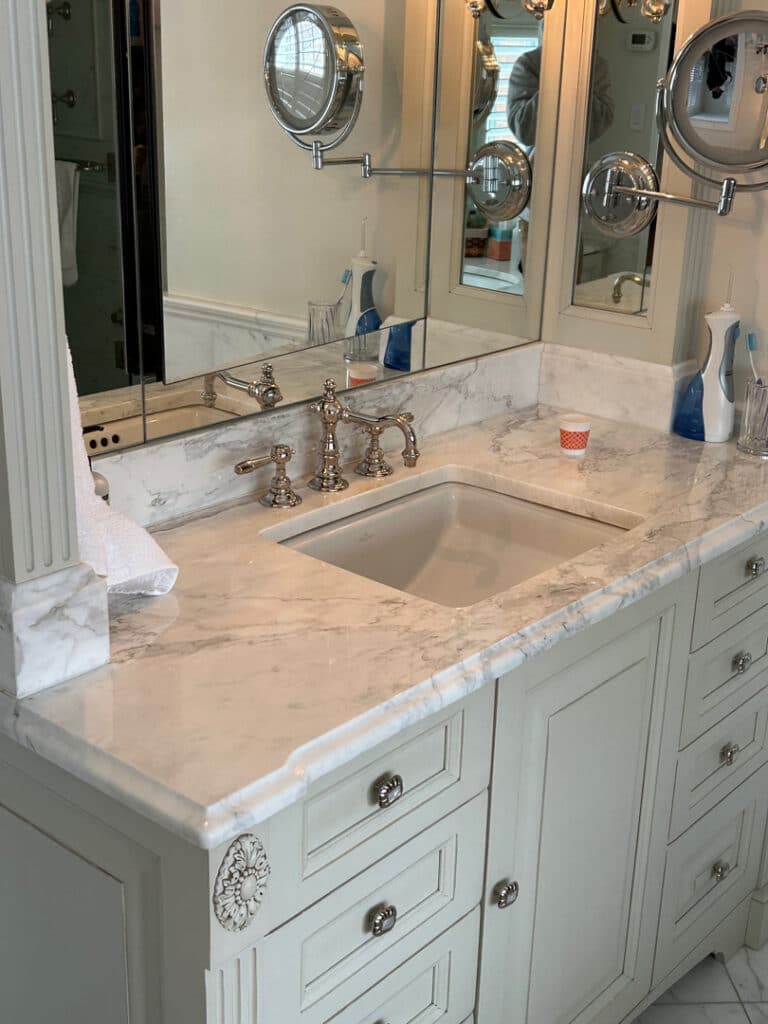
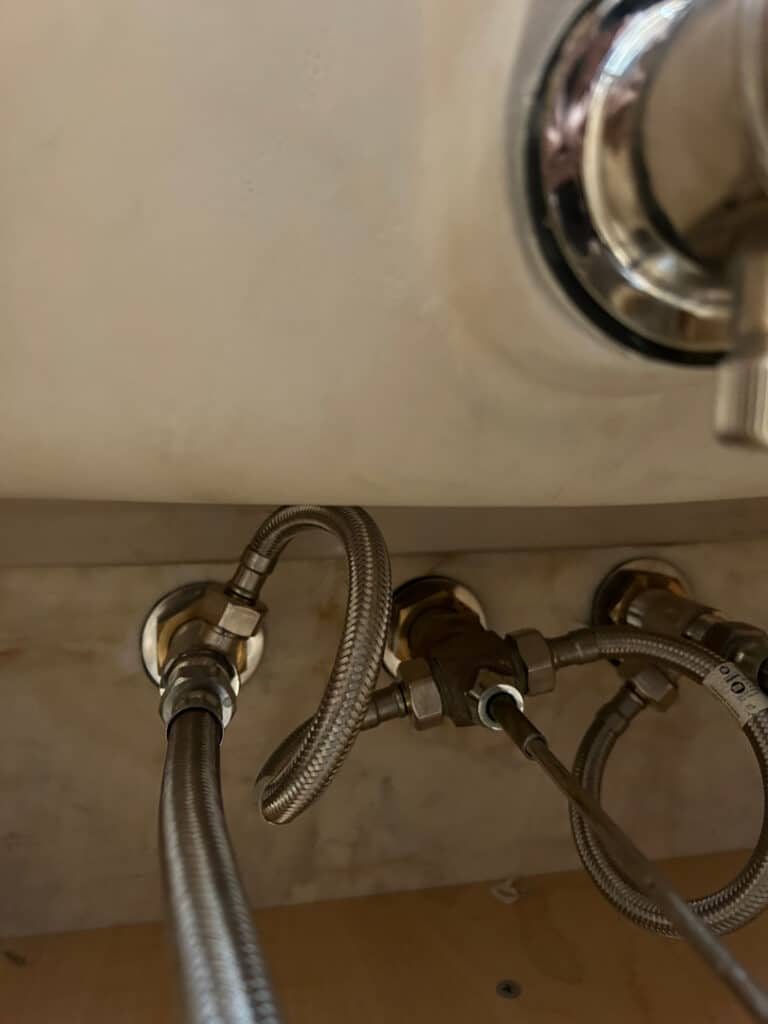
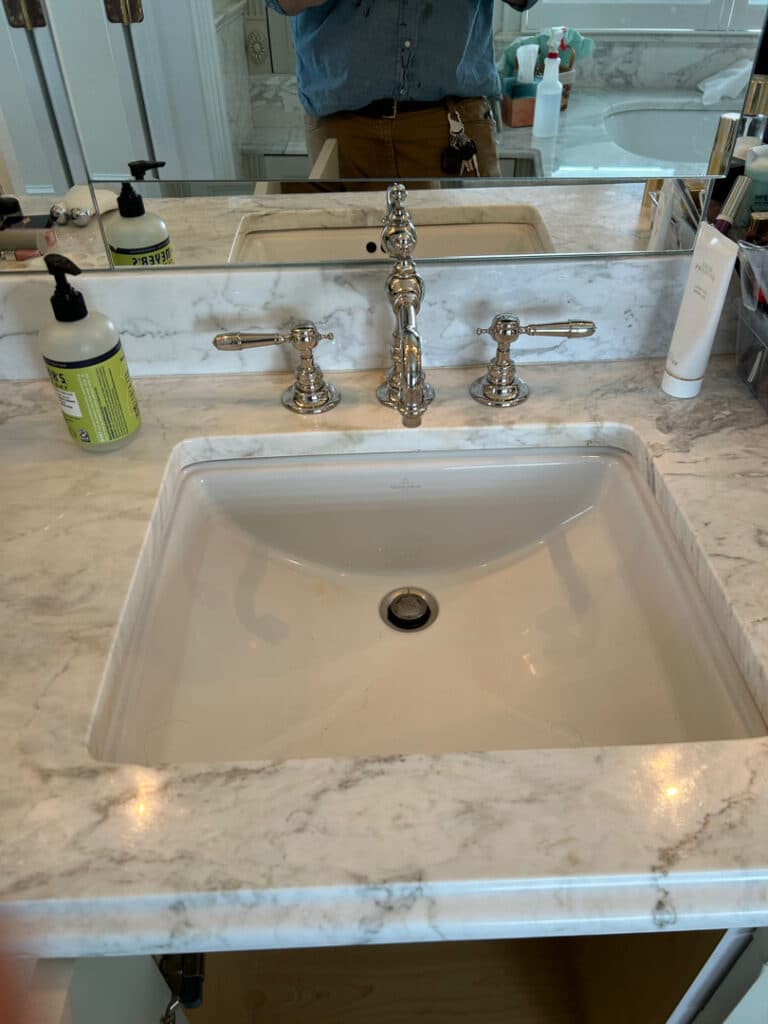
Handles on Lavatory Faucet Need to be Adjusted - Boulder
- Problem: Repair handles on lavatory faucet
- Found: The handles were loose underneath the counter causing them to rotate out of parallel with the faucet.
- Fixed: Adjusted nuts with basin wrench on two vanity sets and made sure they were snugged up more.
- Outcome: Approval from the client.
Replacing Faucet - Boulder
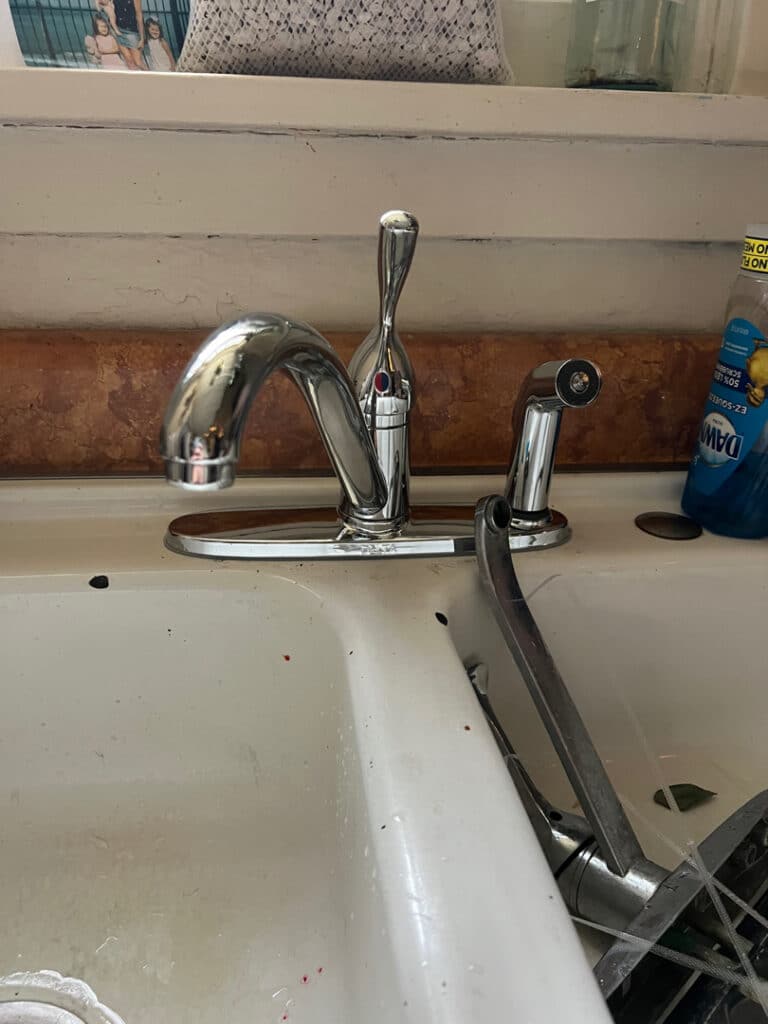
- Problem: Replace kitchen sink faucet
- Found: Tried to tighten up faucet but it was not loose, the faucet was rotted out and needs replacing.
- Fixed: Went back on 1-17-24 and replaced the faucet with a new Delta sinkle lever faucet with pull out sprayer.
- Outcome: Tested and no leak
Water Works Faucet Repairs - Boulder
- Problem: Repair Water Works faucets
- Found: Very hard to take apart the shower valve because it was roughed-in too deep.
- Fixed: Replaced both lavatory cartridges and a cartridge in the shower valve.
- Outcome: Tested and working properly
Water Works Faucet Repair - Boulder
- Problem: Water Works faucet has an issue with hot water.
- Found: Took apart faucet and determined that the stem was split.
- Fixed: Install part provided by owner to repair Water Works faucet.
- Outcome: Tested and working properly.
How Cardom Plumbing & Heating Can Help
Our approach to faucet services goes beyond simply swapping out parts. We investigate why your faucet is failing and address underlying conditions that would cause the same problem to recur.
Our Faucet Service Process
- Initial assessment – We examine the affected faucet, test water pressure, check supply line conditions, and inspect shut-off valves
- Water quality evaluation – For recurring issues, we assess mineral buildup patterns and recommend filtration solutions when appropriate
- Diagnosis presentation – We explain what's wrong, what caused it, and present repair versus replacement options with clear reasoning
- Repair or installation – Our technicians complete the work using manufacturer-specified techniques and Boulder-appropriate materials
- System testing – We verify proper operation through multiple on-off cycles, check for leaks under pressure, and confirm drainage
- Cleanup and walkthrough – We leave your space clean and demonstrate proper faucet operation before departing
Techniques and Methods We Employ
- Cartridge rebuilding – When possible, we restore existing cartridges rather than requiring full replacement
- Descaling treatments – Professional-grade mineral removal extends faucet life in Boulder's hard water
- Pressure balancing – We adjust or install pressure-reducing valves to protect new faucets from Boulder's variable municipal pressure
- Frost-proof upgrades – Outdoor faucet installations include freeze-resistant designs rated for Colorado winters
- Supply line replacement – We upgrade corroded or incompatible supply lines during faucet installations to prevent future failures
Communication Throughout the Process
You'll receive a confirmation call or text before we arrive. Our technicians explain findings in plain language – no jargon or pressure tactics. If we discover additional issues during diagnosis, we discuss them openly and let you decide how to proceed. After service completion, we provide documentation of work performed and maintenance recommendations specific to your fixtures and Boulder's water conditions.
Why Choose Cardom Plumbing & Heating
Cardom Plumbing & Heating operates as a licensed, bonded, and insured plumbing contractor serving Boulder County. Our technicians hold current Colorado plumbing licenses and participate in ongoing training covering the latest faucet technologies – from touchless sensors to smart water monitoring systems.
We've served Boulder homeowners long enough to understand the specific challenges this community faces. We know which neighborhoods have galvanized supply lines, where water pressure runs high or low, and which faucet brands perform best in local conditions. This knowledge translates into recommendations that actually work for your situation – not generic advice that ignores Boulder's unique plumbing environment.
What Sets Us Apart
- Same-day response – For urgent faucet leaks causing water damage, we prioritize rapid dispatch
- Stocked service vehicles – Our trucks carry common faucet parts, cartridges, and supply lines, often enabling single-visit repairs
- Transparent pricing – We provide written estimates before beginning work, with no surprise charges
- Workmanship backing – Our repairs and installations include follow-up support if issues arise
- Respectful service – Technicians wear shoe covers, protect your surfaces, and clean up completely
We also maintain relationships with plumbing supply houses throughout Boulder County, giving us access to specialized parts for older fixtures and hard-to-find replacement components. When your 1960s bathroom faucet needs a specific cartridge that big-box stores don't carry, we have sourcing options.
Housing Characteristics & Faucet Considerations
Boulder's housing stock spans over a century of construction methods, plumbing standards, and fixture designs. Understanding your home's era helps predict faucet challenges and guides appropriate solutions.
Historic Neighborhoods (Pre-1950)
Homes in Mapleton Hill, Whittier, and the downtown core often feature original plumbing systems with non-standard dimensions. Faucet replacement in these properties requires careful measurement and sometimes custom adapters.
- Supply line connections may use obsolete thread patterns
- Sink cutouts don't always match modern faucet footprints
- Shut-off valves often need replacement before faucet work can proceed
- Lead solder joints near fixtures may require remediation
Mid-Century Development (1950-1979)
Martin Acres, Table Mesa, and North Boulder subdivisions from this era typically have copper supply lines – generally durable but approaching the end of their expected lifespan. Faucet connections in these homes frequently show corrosion at joints.
- Galvanized steel drain lines may restrict water flow beneath faucets
- Original three-handle tub/shower faucets often lack pressure balancing
- Kitchen faucets may have separate sprayer connections requiring additional work
Modern Construction (1980-Present)
Newer Boulder homes in Gunbarrel, Louisville-adjacent areas, and recent infill developments use PEX or CPVC supply lines with standardized connections. Faucet replacement is typically straightforward, though hard water still causes premature cartridge wear.
- Builder-grade faucets often fail within 5-10 years
- Undermount sink installations require specific faucet mounting approaches
- Smart home integration options exist for newer plumbing systems
Environmental Conditions & Faucet Implications
Boulder's environmental factors directly impact faucet performance and longevity. From the composition of your tap water to the soil beneath your foundation, these conditions shape how we approach faucet services.
Water Quality Characteristics
Boulder's water comes primarily from the Boulder Creek watershed and Barker Reservoir, treated at the Betasso Water Treatment Facility. The city maintains excellent water quality standards, but natural mineral content creates challenges for plumbing fixtures.
- Hardness – Ranges from 4-8 grains per gallon depending on seasonal source blending
- pH levels – Typically 7.2-8.0, slightly alkaline which can affect rubber components
- Chlorine residual – Present for disinfection, but accelerates degradation of some faucet seals
- Sediment – Occasional spikes after main breaks or hydrant flushing can clog aerators
Climate Impact on Faucets
Boulder experiences over 300 days of sunshine annually, but winter temperatures regularly drop below freezing – sometimes plunging 40-50 degrees within hours during Arctic front passages. This thermal cycling stresses faucet materials.
- Outdoor faucets face freeze risk from October through April
- Unheated garage and basement faucets require insulation or heat tape
- UV exposure on outdoor fixtures degrades plastic and rubber components rapidly
- Low humidity causes rubber washers and O-rings to dry out and crack faster
Soil and Foundation Considerations
Boulder's expansive clay soils cause foundation movement that can stress plumbing connections. Homes on the east side of town – where clay content is highest – sometimes experience supply line shifts that affect faucet connections beneath sinks. We check for these conditions during diagnostic assessments.
Boulder Water Infrastructure and Quality Data
Understanding Boulder's water system provides context for faucet performance issues throughout the city. The municipal water infrastructure serves approximately 105,000 residents through a network that includes both century-old mains in historic areas and modern distribution lines in newer developments.
Boulder's water pressure varies significantly by neighborhood and elevation. Homes in the foothills and western portions of town often experience higher pressure – sometimes exceeding 80 PSI – which accelerates wear on faucet cartridges and washers. Conversely, properties at higher elevations in the city's western reaches may experience lower pressure during peak demand periods.
Key Water System Statistics
- System age – Some downtown distribution mains date to the early 1900s, while most residential areas have infrastructure from the 1950s-1980s
- Annual main breaks – Boulder experiences 20-40 water main breaks yearly, primarily in winter months when freeze-thaw cycles stress aging pipes
- Water hardness – Boulder's 2023 water quality report indicates hardness averaging 137 mg/L (approximately 8 grains per gallon)
- Service line materials – Older Boulder homes may still have lead service lines connecting to city mains, though an active replacement program addresses this
How This Affects Your Faucets
The combination of moderately hard water and variable pressure creates specific faucet challenges. Hard water deposits accumulate inside faucet cartridges, causing sticking handles and incomplete shut-off. High pressure accelerates this buildup while also stressing internal seals. When we service Boulder faucets, we evaluate pressure conditions and recommend regulators when readings exceed safe thresholds. We also suggest aerator cleaning schedules based on your neighborhood's water characteristics – homes closer to treatment facilities typically need less frequent maintenance than those at the end of distribution lines.
Faucets in Other Service Areas


