
Recent Posts
Categories
Preventing Tree Root Intrusion in Arvada’s Aging Sewer Systems
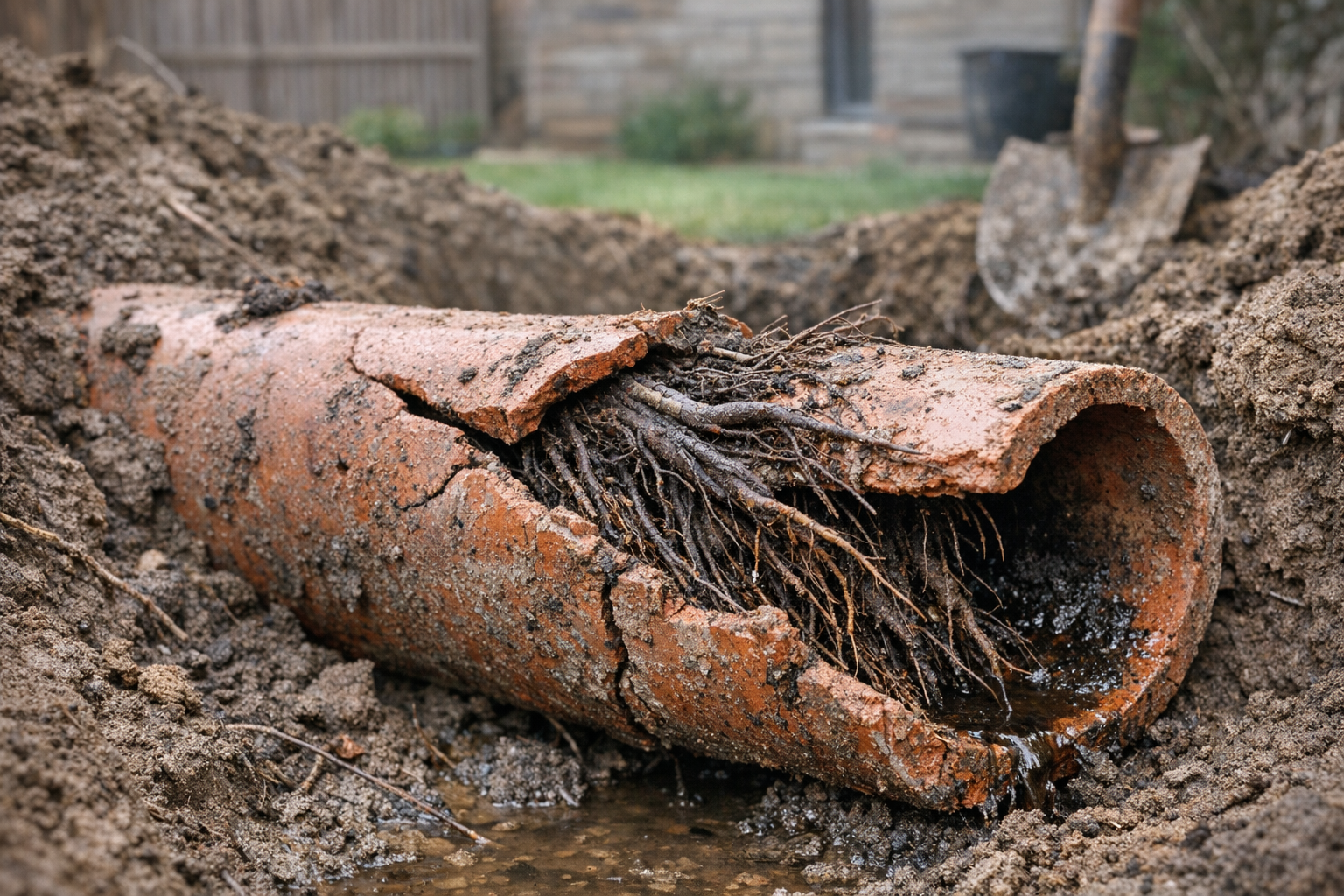
Tree root intrusion is a leading cause of sewer backups in older Arvada homes, particularly those built before the 1980s with clay or cast-iron pipes. Cardom Plumbing & Heating explains how roots enter pipes, warning signs to watch for, and prevention methods that work for local conditions.
- Roots enter through cracks and loose joints in aging pipes, with problems spiking in late spring and early summer when soil warms. Warning signs include gurgling toilets, slow drains in multiple fixtures, and sewage odors in the yard.
- Prevention includes camera inspections every two years at $150 to $350, twice-yearly foaming root treatments, and keeping aggressive trees like silver maples and cottonwoods at least 20 feet from sewer lines.
- Repair options range from hydro jetting at $400 to $900 for active root masses to trenchless lining at $80 to $250 per foot, while full excavation runs $3,000 to $12,000 for collapsed lines.
Prevent tree root intrusion by scheduling regular sewer line inspections with a camera to catch early growth. Install root barriers near vulnerable pipes and apply copper sulfate or foaming root killers annually as a deterrent. For older clay or Orangeburg pipes, consider trenchless pipe lining to create a seamless interior that roots cannot penetrate.
Many older Arvada homes sit under mature cottonwoods, elms, and silver maples planted decades ago. Those same shade trees send roots hunting for water, and your sewer line is the target. Tree root intrusion ranks among the top causes of sewer backups in neighborhoods built before the 1980s.
This post explains how roots get into pipes, the warning signs to watch for, and the prevention steps that work best on Arvada’s older clay and cast-iron lines. You will find real cost ranges and clear actions you can take this season.
What Tree Root Intrusion Is and Why Arvada Homes Are at Risk
Tree root intrusion happens when roots grow into small cracks or loose joints in a buried sewer pipe. Roots seek the moisture, nutrients, and oxygen inside the line. Once inside, they spread and form dense masses that trap waste.
Arvada’s older neighborhoods, like Olde Town and the areas around Ralston Valley, have sewer lines made from vitrified clay or cast iron. Clay pipe was standard here from the 1950s into the 1970s. Those pipes join in short sections, and each joint is a doorway for roots.
Why Aging Sewer Systems Attract Roots
Older aging sewer systems develop tiny leaks at joints over 40 to 60 years of ground movement. Arvada’s clay soil swells and shrinks with each freeze-thaw cycle. This shifting cracks pipe joints and creates the exact damp spots roots detect.
A single silver maple root can widen a hairline crack into a full break within two growing seasons. By the time most homeowners call, roots have already filled a third of the pipe.
Warning Signs of Root Intrusion in Your Sewer Line
Catching roots early saves thousands in repair costs. Watch for the signs below before a full backup hits your basement.
- Gurgling toilets when you run the washing machine or dishwasher
- Slow drains in multiple fixtures at the same time
- Sewage odor in the yard, near cleanouts, or in the basement
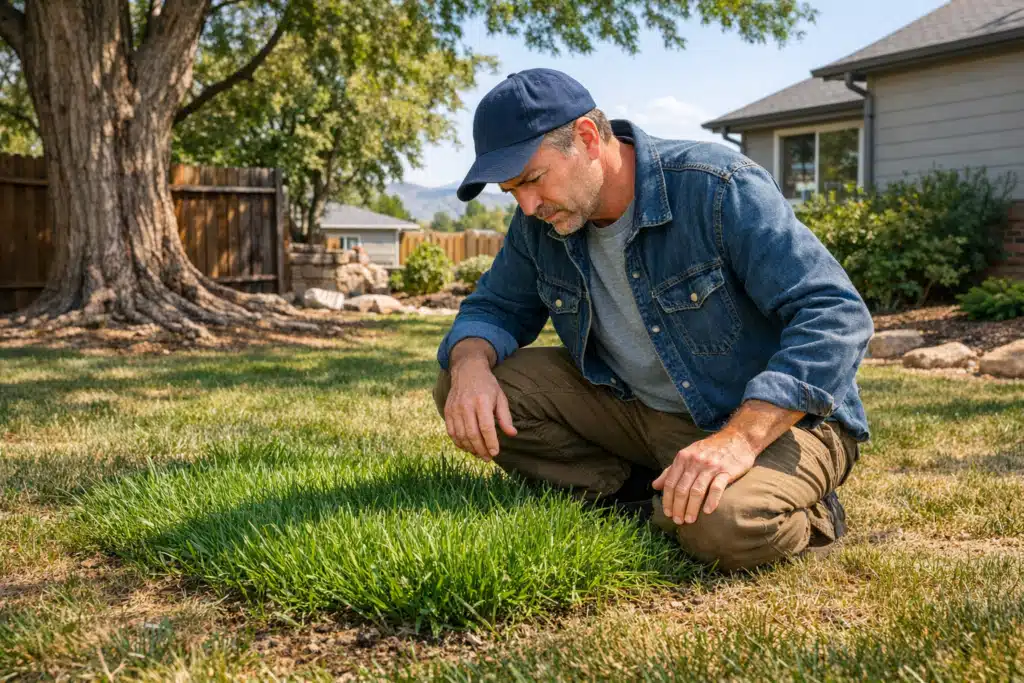
- Soggy patches or unusually green grass along the sewer path
- Repeated backups in the lowest drain of the house
Backups that return every few months point almost always to roots. A one-time clog from wipes or grease clears and stays clear. Roots grow back.
The Seasonal Pattern Arvada Homeowners Notice
Root problems spike here in late spring and early summer. Roots grow fastest when soil warms in May and June. Many Arvada calls come right after the first warm stretch following snowmelt.
Winter brings a second wave. Frozen ground stresses old joints, and roots that were quiet in fall suddenly block a line in January.
How to Prevent Tree Root Intrusion in Arvada Sewer Lines
Prevention costs far less than emergency excavation. Here are the methods that hold up against Arvada’s soil and tree mix.
1. Schedule a Camera Inspection Every Two Years
A sewer camera shows the exact condition of your line. For homes built before 1980, an inspection every two years catches roots early. The camera reveals cracked joints, sags, and the first thin root hairs.
A standard camera inspection runs about $150 to $350 in the Arvada and Wheat Ridge area. That small cost prevents backups that average $3,000 or more.
2. Use Root-Control Treatments the Right Way
Foaming root killers coat the full pipe interior and kill roots on contact. Copper sulfate crystals also slow regrowth but work slower. Apply foaming treatment twice a year, in early spring and again in fall.
Skip the grocery-store crystals flushed down a toilet. They settle at the bottom and miss roots growing from the top of the joint. A pipe-filling foam reaches the whole surface.
3. Plant Smart Around Your Sewer Path
Know where your sewer line runs before you plant anything. Keep aggressive trees at least 20 feet from the line.
- Worst offenders near sewer lines: silver maple, cottonwood, willow, elm, poplar
- Safer choices for Arvada yards: serviceberry, hawthorn, Japanese maple, crabapple
If a mature cottonwood already sits near your line, removal is rarely the answer. Better to manage the pipe with treatments and inspections.
4. Fix Small Cracks Before Roots Find Them
Trenchless pipe lining seals cracks without digging up your yard. A cured-in-place liner creates a jointless pipe inside the old one. Roots have nothing to grip and no gaps to enter.
Lining works best on clay lines that are cracked but not collapsed. It suits many Arvada homes where digging would tear up mature landscaping and driveways.
Repair Options and Cost Expectations for Arvada Homeowners
When roots already fill a line, you have three main paths. The right one depends on how bad the damage is.
- Hydro jetting: High-pressure water cuts roots and scours the pipe wall. Runs roughly $400 to $900. Best for active root masses in a pipe still in good shape.
- Trenchless lining: Seals a cracked pipe from the inside. Runs roughly $80 to $250 per foot. Best when joints leak but the pipe holds its shape.
- Full excavation and replacement: Digs out and replaces a collapsed section. Runs $3,000 to $12,000 depending on depth and length. Reserved for broken or crushed lines.
Hydro jetting beats a basic cable auger for roots. A cable punches a hole; jetting strips roots back to the pipe wall. That difference buys you far more time before the next blockage.
What Arvada’s Permit Rules Mean for Sewer Work
Sewer line repair and replacement in Arvada requires a permit from the city. Work in the public right-of-way needs approval before digging starts. A licensed plumber pulls the permit and schedules the required inspection.
This matters if roots enter your line near the street tap. The city owns part of the main; you own the lateral to your home. Knowing the split affects who pays for the fix.

I also have them working on a more esoteric problem with a fountain that has been unsolvable but with both Tom and Zeth on the job coming up with affordable and creative solutions I am confident it will be up and running!
They could not be nicer and made my problem theirs.
 Posted on Google
A Simple Yearly Plan to Keep Roots Out
Property managers and homeowners both benefit from a set schedule. Here is a plan built for Arvada’s older housing stock.
- March: First foaming root treatment before spring growth
- May: Watch drains as soil warms; note any slowing
- September: Second foaming treatment
- Every two years: Full camera inspection of the line
- After any backup: Camera the line, do not just clear it
Homes with a known cracked joint should camera the line yearly. Once you line the pipe, root treatments become unnecessary.
Conclusion
Tree root intrusion is the leading sewer threat for Arvada’s older homes, but it responds to steady prevention. Regular camera inspections, twice-yearly foam treatments, and trenchless lining keep roots out of aging sewer systems for good. Acting early turns a $3,000 backup into a $250 checkup.
Cardom Plumbing & Heating knows Arvada’s clay lines, soil, and tree mix from years of local work. Call or text us at 720‑775‑8322, email tomd@cardomcolorado.com, or visit https://www.cardomcolorado.com to schedule a sewer camera inspection in Arvada or nearby Front Range communities.
Sources
- U.S. Environmental Protection Agency – Septic Systems and Sewer Care
- City of Arvada – Sewer Utilities and Services
- Colorado State University Extension – Yard and Garden Tree Planting


